
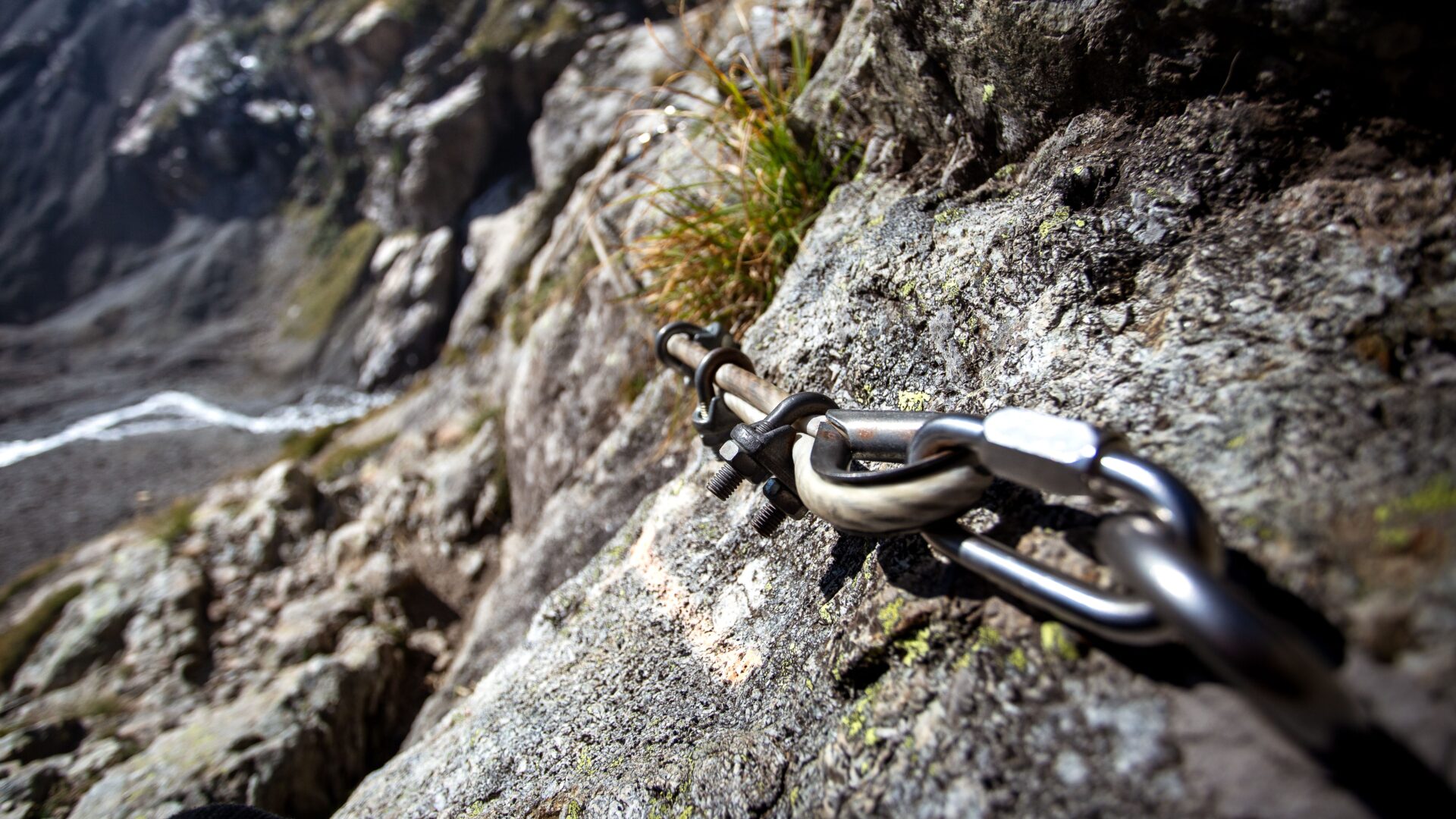
The via ferrata guide for the person who has walked the mountain path and wants more exposure but has not taken the rock climbing course and is not planning to: the via ferrata (the “iron road” — the fixed steel cable and the iron rung route that gives the mountain face vertical experience with the harness-and-lanyard protection system that requires the equipment purchase and the technique that takes 20 minutes to learn) gives the specific mountain wall experience at the difficulty level the beginner can manage. The Dolomites for the European classic routes. The Brecon Beacons for the UK introduction. And the Ordesa Canyon in Spain for the specific Spanish route that is simultaneously spectacular and manageable at the beginner level.
Reading time: 7 minutes | Last updated: 2026
The Via Ferrata System
The via ferrata uses two pieces of equipment: the harness (the climbing harness — the leg loops and the waist belt, purchased or hired) and the via ferrata lanyard (the Y-shaped double-lanyard with the energy absorber — the two hooks that clip alternately to the steel cable, the energy absorber that deploys in a fall to reduce the impact force).
The critical Y-lanyard instruction: The Y-lanyard’s two hooks allow the continuous attachment — one hook is always clipped to the cable while the other is moved to the next anchor point. The via ferrata user who unclips both hooks simultaneously is unprotected. This is the primary safety instruction and it takes 5 minutes to understand and 20 minutes to perform automatically.
The hire option: Most European via ferrata routes have the equipment hire available at the base of the route or at the nearest village. Hire: €10-20 / £8.62-17.24 per person. Own equipment purchase: £80-150 for the harness and the Y-lanyard.
The Routes
1. Via Ferrata Michielli Strobel — Dolomites, Italy (Grade B — Beginner)
The route: The via ferrata on the Averau peak above the Passo Falzarego (the mountain pass accessible by road from Cortina d’Ampezzo — the cable car from the pass to the Rifugio Averau, the via ferrata from the rifugio to the summit at 2,649 metres):
The grade B classification (the Italian via ferrata grade — Grade A: the easy walk with occasional handholds; Grade B: the moderate, the beginner’s technical route with significant exposure but no genuinely difficult moves; Grade C: the intermediate, the challenging sequences; Grade D-E: the advanced and expert).
The route character: the steel cable and the iron rungs on the limestone face, the Dolomite panorama visible throughout (the Tofane massif, the Lagazuoi, the Marmolada glacier visible in the distance), the route completing in 2-3 hours with the appropriate equipment.
The Dolomites via ferrata instruction: The routes are seasonal (June-October) — the June opening depends on the snow conditions at altitude. The thunderstorm risk in the Dolomites is significant in July-August (the afternoon storms typically forming between 2-4pm): start early, the summit by noon, descent before the storm.
2. Via Ferrata Roc de la Peine — Gorges du Verdon, France (Grade B)
The route: The route above the Gorges du Verdon (the canyon south of Castellane in Provence — the 700-metre limestone canyon visible from the via ferrata route, the Verdon river visible 700 metres below):
The grade B classification with the extended exposure — the Roc de la Peine gives the beginner route with the sustained vertical exposure that the Dolomite Grade B routes give in shorter sections. The cable run for 350 metres of the 600-metre route.
The specific instruction: the Gorges du Verdon via ferrata routes are accessible from the La Palud-sur-Verdon village (the equipment hire at the outdoor shop, the shuttle bus to the route start). The canyon air is significantly cooler than the surrounding Provençal plain — the jacket that is unnecessary at the road is necessary at the route.
3. Brecon Beacons Via Ferrata — Wales, UK (Grade A-B, Introduction)
The route: The Via Ferrata at the Llangattock Escarpment (the limestone escarpment above Llangattock — the Clydach Gorge, the fixed steel cable on the escarpment face, the specific UK via ferrata that gives the introduction to the fixed-cable system without the commitment of the Alpine day):
The UK instruction: Vertrek Adventures (vertrekoutdoors.com — the Brecon Beacons guided via ferrata, the half-day course including the equipment and the instruction, the grade A-B route suitable for the first via ferrata): £65-85 per person.
The correct first via ferrata: the guided UK route (the guide demonstrates the Y-lanyard system, the correct clipping sequence, and the body positioning on the rung), the mountain environment manageable, the exposure significant enough to give the specific via ferrata experience.
The Grading Summary
| Grade | Experience required | Exposure | UK example |
|---|---|---|---|
| A | None — walking fitness | Low | Brecon Beacons lower section |
| B | Some scrambling helpful | Moderate-high | Dolomites Michielli Strobel |
| C | Climbing confidence | High | Dolomites Alleghesi |
| D-E | Technical climbing | Very high | Expert routes only |
The beginner via ferrata targets Grade A-B. The Grade B route gives the genuine mountain-wall experience without the technical demand of Grade C+.