
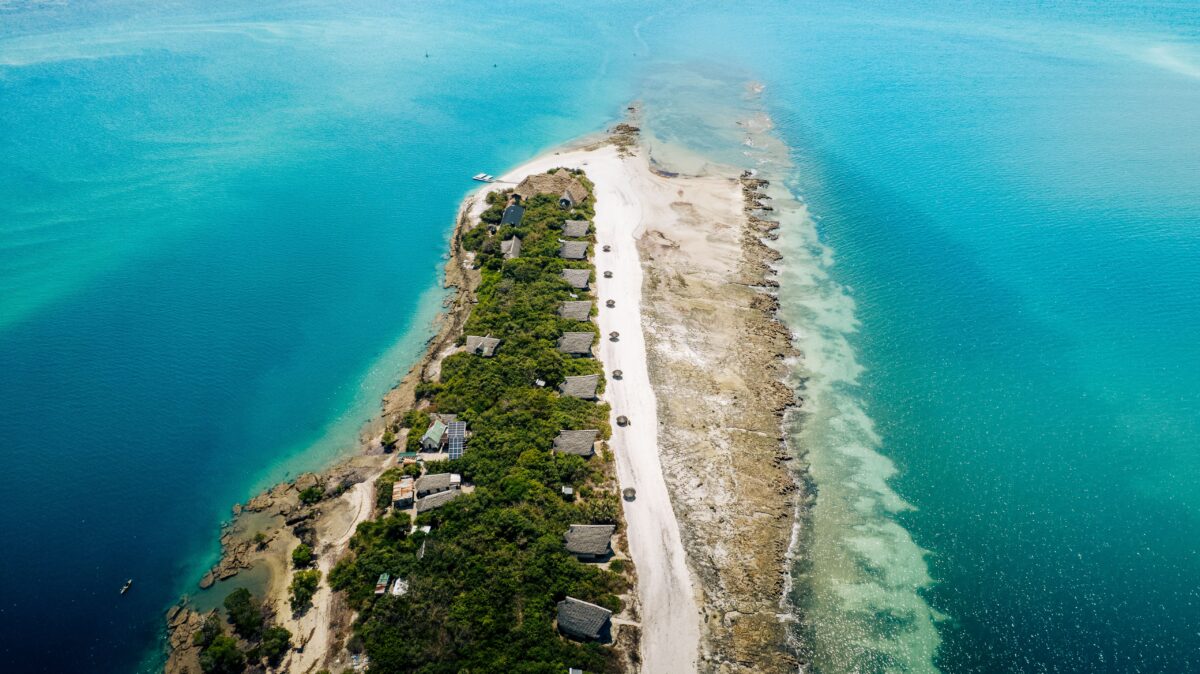
The route that gives Mozambique its argument before the travel market arrives: two days in Pemba for the old town (the Baixa — the Portuguese colonial quarter, the dhow building visible at the harbour, the specific Swahili-Arab-Portuguese culture that the Mozambique coast gives), and five days in the Quirimbas Archipelago (the 32 islands north of Pemba — the dhow from the Pemba harbour to the Ibo Island (the island fort, the Portuguese colonial architecture visible in the slow surrender to the tropical vegetation), the snorkel at the Quirimbas Biosphere Reserve coral (the dugong (Dugong dugon) visible in the seagrass beds at 3-5 metres — the Mozambique Channel hosts the largest dugong population in East Africa), and the specific Mozambique beach (the Medjumbe Island (the private island, the most remote beach in this library), the Guludo Beach (the community lodge adjacent to the Quirimbas National Park, the turtle nesting beach from October to February).
Reading time: 10 minutes | Last updated: 2026
Mozambique is the East Africa destination that the tourism market hasn’t found — the same Indian Ocean that the Maldives, the Zanzibar, and the Seychelles have indexed, at a fraction of the visitor volume and a fraction of the established resort pricing. The northern Mozambique coast (the Cabo Delgado province — verify the current FCDO advisory, as parts of the province have experienced insurgent activity since 2017, with the situation evolving — check gov.uk before planning) and the Pemba base give the specific Mozambique accessible from the regional Pemba Airport.
The FCDO advisory note: Northern Mozambique (Cabo Delgado province specifically) has been subject to FCDO travel advisories related to insurgent activity in the Mocímboa da Praia and Muidumbe areas. The Pemba city and the Quirimbas islands to the north of Pemba have been generally accessible during more stable periods. Check the current FCDO advice at gov.uk/foreign-travel-advice/mozambique before planning any Mozambique itinerary — this situation changes and the guide cannot provide the current status.
Before You Leave
Getting there: Fly London-Johannesburg (direct, 11 hours), then connect Johannesburg-Pemba (LAM Mozambique Airlines or SA Airlink, 2-3 hours). Alternatively, fly via Nairobi or Dar es Salaam.
UK citizens: Mozambique visa on arrival (USD 50 / £39.37, paid in USD cash at the Pemba airport immigration counter).
Currency: Mozambican Metical (MZN). 1 GBP ≈ 80 MZN (2025). ATMs available in Pemba; bring USD cash for the Quirimbas islands where ATMs are not available.
The Route
Pemba (2 nights) → Quirimbas by dhow (5 nights: Ibo Island 2 nights, Medjumbe or Guludo 3 nights)
DAYS 1-2 — Pemba
The Pemba Old Town (Baixa):
The Baixa (the low town — the Portuguese colonial quarter of Pemba on the harbour promontory, the specific Mozambique colonial architecture visible in the same slow surrender to the tropical vegetation that characterises the abandoned Portuguese settlements throughout the island archipelago):
The dhow building (the Pemba harbour — the wooden dhow (dhow — the generic name for the Indian Ocean sailing vessel, the lateen sail, the specific Indian Ocean maritime technology that connected the Swahili coast to Arabia and India for 2,000 years) visible in the construction stage at the harbour workshops from 7am):
The Wimu Makonde Sculptors’ Cooperative:
The Makonde (the Mozambican-Tanzanian ethnic group renowned for the ujamaa sculpture — the ebony carvings of the interlocked human figures, the specific Makonde sculptural tradition visible in the Pemba cooperative at the source price):
At the Wimbi Beach cooperative: a medium ujamaa sculpture at MZN 2,000-5,000 / £25-62.50 (versus the London African art gallery at £200-800 for the equivalent piece).
DAYS 3-7 — The Quirimbas Archipelago
The dhow to Ibo Island:
The overnight dhow from Pemba to Ibo Island (the traditional sailing dhow — the 8-10 hour crossing, the night at sea in the Indian Ocean, the Ibo Island harbour visible at dawn as the specific Mozambique arrival):
The Ibo Island Fort (Forte de São João — the 18th-century Portuguese star fort on the Ibo Island harbour, the walls in the specific tropical-weather slow-collapse that the Mozambique independence in 1975 and the subsequent civil war left unrestored, the fort visible as the most beautiful ruin in the Indian Ocean):
The silversmiths (the Ibo Island silversmiths — the Makua craftsmen who have been making silver jewellery on Ibo Island for 200 years, the workshop visible in the old town, the silver wire worked into the filigree at the bench in the doorway): the jewellery at the source (MZN 500-2,000 / £6.25-25 per piece).
The dugong snorkel:
The dugong (Dugong dugon — the marine mammal, 2.5-3 metres, the Indian Ocean herbivore that feeds exclusively on seagrass, the species that the sailors’ mermaid legend was based on (the visual confusion between the nursing dugong and the mermaid, the error visible once the dugong is seen and the specific mammal anatomy understood)):
The Quirimbas seagrass beds (the beds visible at 3-5 metres depth in the channels between the islands — the Mozambique Channel hosting the largest East African dugong population): the guided dugong snorkel from the Ibo Island lodge: USD 50-80 / £39.37-63 per person.
The turtle nesting beach (October-February):
The Guludo Beach (the Guludo Beach Lodge adjacent to the Quirimbas National Park — the community lodge that employs from the Guludo village, the specific Mozambique community tourism model visible in the income distribution): the turtle nesting (the loggerhead turtle (Caretta caretta) and the green turtle (Chelonia mydas) nesting on the Guludo beach from October to February, the guided night walk to observe the nesting without disturbance):
USD 15 / £11.81 per person for the guided turtle walk.
What It Costs
| Category | Budget | Mid-Range |
|---|---|---|
| Return flights (UK-Pemba via Johannesburg) | £500-850 | £700-1,100 |
| Mozambique visa on arrival | £39 | £39 |
| 2 nights Pemba accommodation | £40-100 | £100-250 |
| Dhow to Quirimbas | £30-60 | £30-60 |
| 5 nights Quirimbas lodge | £250-600 | £600-1,500 |
| Food and activities | £80-200 | £150-350 |
| Total | £939-1,850 | £1,580-3,299 |