

The guide that names the alternative to every overcrowded destination the travel industry has successfully turned into the queue: Santorini has the queue, but the Cyclades have the same geology without the 3 million annual visitors; Bali has the Instagram café, but Lombok has the same coastline at a fraction of the infrastructure weight; Amsterdam has the tourist pressure that the Dutch government has been actively discouraging since 2019, but Rotterdam has the Markthal and the Cube Houses and the specific contemporary Netherlands that the tourist map bypasses entirely. For each of the ten most overcrowded destinations, this guide gives the one specific alternative — not a lesser substitute but the specific destination that gives what the famous one promises and what the fame has made it impossible to deliver.
Reading time: 8 minutes | Last updated: 2026
Instead of Santorini — Go to Milos
Why Santorini is broken: 3 million visitors per year on an island with 15,000 residents. The Oia sunset queue (the 2,000 people competing for the same photograph at 7pm in August). The accommodation at £400-800/night during peak season. The cruise ship days (when 10,000 day-trippers arrive, the island’s infrastructure was designed for a fraction of that).
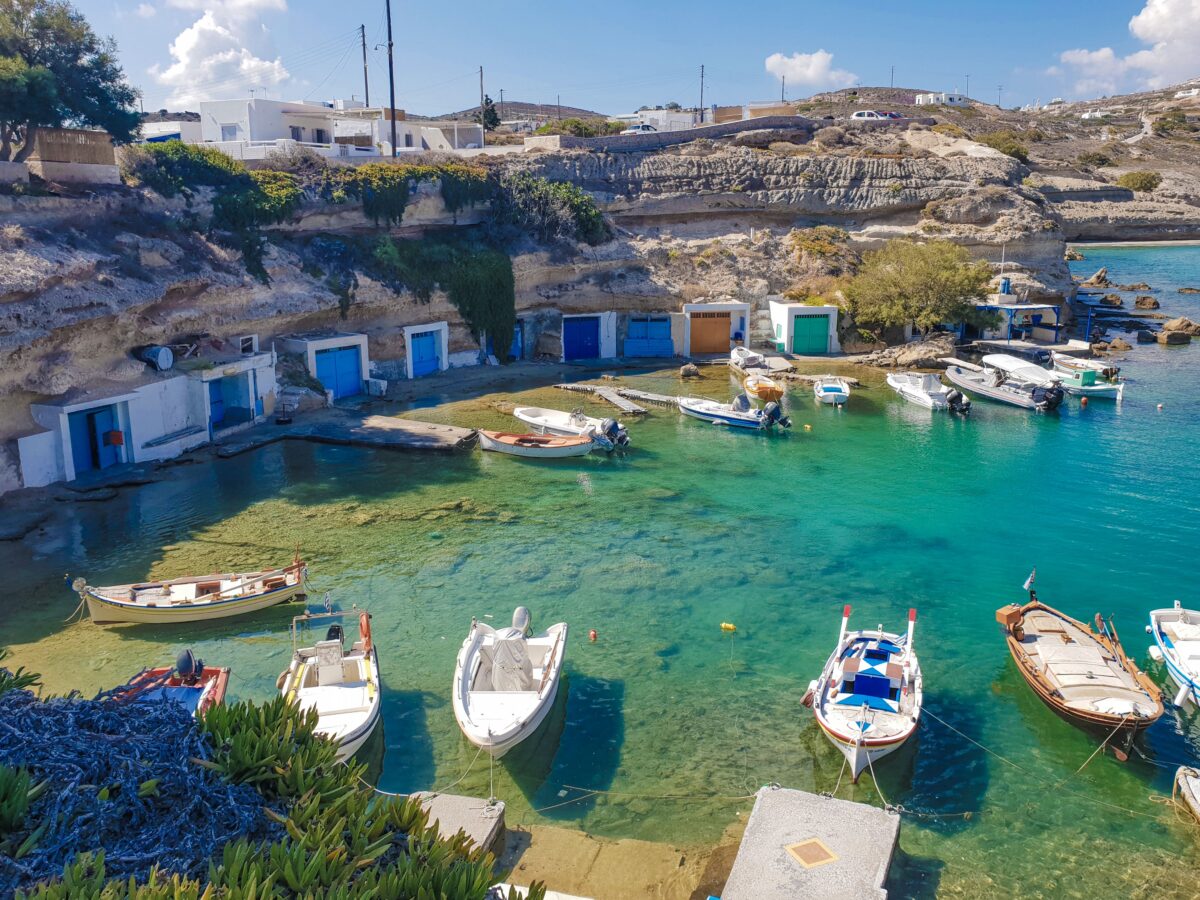
Why Milos: Milos is in the Cyclades — the same white-and-blue Greek island aesthetic, the same volcanic geology (Milos is itself a volcanic island), the same Aegean. The Sarakiniko beach (the white volcanic rock formations above the turquoise water — the most visually striking single beach in Greece that isn’t Santorini). The Kleftiko sea cave (accessible by boat from the Milos port, the cave system visible at water level from the small boat). The Plaka village above the island (the white Cycladic village on the hill with the kastro, the Aegean visible in every direction). The accommodation at £80-150/night in August, for the equivalent that would be £400 in Santorini.
Getting there: ferry from Piraeus (Athens), 3-4 hours. Or fly Athens-Milos (Sky Express, 40 minutes).
Instead of Dubrovnik — Go to Kotor, Montenegro
Why Dubrovnik is broken: Full coverage in Overtourism — 12 Destinations Suffering. The short version: up to 10,000 cruise ship passengers per day, the city walls at capacity by 9:30am in summer.
Why Kotor: Kotor is the bay city that Dubrovnik would be if Dubrovnik had not been discovered: the UNESCO medieval walled city on the enclosed bay, the Venetian architecture, the city walls climbing the mountain above the old town (the 1,350 steps to the fortress, the bay visible from every level of the ascent). The Boka Bay (the Kotor bay — the southernmost fjord in Europe, the 28km enclosed bay with the mountain on every side) gives the specific geography that the Adriatic coast south of Dubrovnik gives nowhere else. The accommodation at 40-50% of Dubrovnik prices.
Full detail: 7 Days in Montenegro.
Instead of Venice — Go to Trieste
Why Venice is broken: 13 million visitors to a population of 50,000. The resident flight (1,000 per year leaving). The day-tripper cruise ship problem (the massive cruise ships visible from the Riva degli Schiavoni until the 2021 routing ban). The accommodation prices that reflect the scarcity of the sinking city’s specific beauty.
Why Trieste: Trieste is the Austro-Hungarian city at the top of the Adriatic — the specific city where the Italian, the Slovenian, the Austrian, and the Jewish cultures produced the specific literature (James Joyce wrote part of Ulysses here), the specific architecture (the Ringstrasse style of the Hapsburg administration), and the specific café culture (the Caffè San Marco, open since 1914, the specific literary café that the Viennese coffeehouse tradition gave the Italian coast). The Grand Canal (Trieste’s own canal in the city centre — 400 metres, not the Venice Grand Canal, but the specific Trieste version that the local population uses for the evening passeggiata). The accommodation at £60-120/night.
Instead of Amsterdam — Go to Rotterdam or Utrecht
Why Amsterdam is broken: 22 million visitors per year to a city of 921,000. The Dutch “Stay Away” campaign. The cannabis café restriction. The I Amsterdam sign removed to discourage the congregation.
Why Rotterdam: The Markthal (the 2014 market hall with the 11,000 square metre artwork on the ceiling, the fresh food below — the specific Netherlands contemporary architecture that Amsterdam’s preserved historic core cannot produce). The Cube Houses (Kubuswoningen — the tilted cube houses by Piet Blom, 1984, the specific Rotterdam architectural experiment). The Euromast (the 185-metre tower with the restaurant and the abseil rope experience). The Port of Rotterdam (the largest port in Europe — the port tour giving the specific industrial scale at the human level, the container ships visible at the dock).
Why Utrecht: Utrecht is 30 minutes from Amsterdam by train (€7.68 / £6.50), has the same canal heritage (the Oudegracht — the canal with the unique double-level wharves, the lower level giving the café terrace at the water rather than above it), the Dom Tower (the tallest church tower in the Netherlands), and the central market at a fraction of the Amsterdam tourist density.
Instead of Bali (Seminyak/Canggu) — Go to Lombok or East Bali
Why Seminyak/Canggu is broken: The specific 20km coastal corridor that the Instagram Bali occupies has been at saturation since 2019. The coworking space that was the Canggu secret in 2015 has 400 TikTok tags per week in 2025.
Why Lombok: The Gili Islands (Gili Air and Gili Meno — less crowded than Gili Trawangan, the same turtle snorkel, the same turquoise water). The Senggigi beach (the northwest Lombok coast, the same Bali aesthetic, 15% of the visitor density). The Rinjani volcano (the 3,726-metre volcano in the north of Lombok — the trekking peak that the Bali tourist skips because Bali has no comparable volcano).
Why East Bali: The Amed (the fishing village coast, the Japanese WWII shipwreck at 28 metres depth, the snorkel at the Liberty Wreck in Tulamben — the most accessible wreck dive in Asia). The Sidemen (the rice terrace valley with the Agung visible above, the Ubud of 2005 in the specific sense of the visitor-to-resident ratio that Ubud had before the Eat Pray Love effect).
Instead of the Amalfi Coast — Go to the Cilento Coast
Why the Amalfi Coast is broken: The SS163 (the single road that connects the Amalfi Coast — the road that the tourist bus, the taxi, the hire car, and the delivery lorry all share for 50km with no alternative route). The Positano at the specific moment when the town of 4,000 residents has 4 million annual visitors.
Why the Cilento: The Cilento National Park coast (the 100km of coastline south of the Amalfi, the same Tyrrhenian sea, the same limestone cliffs, the accommodation at 30-40% of the Positano price). The Palinuro (the town at the Cilento’s southern tip — the cape with the sea cave visible by boat, the beach at the cape base). The Paestum (the Greek temples at the Cilento’s northern edge — three Doric temples in the state of preservation that the Agrigento Valley of the Temples approaches and that the proximity to the Cilento coast makes the day-trip destination).
The Quick Reference
| Instead of… | Go to… | What you get | What you save |
|---|---|---|---|
| Cinque Terre | Manarola only + Vernazza only at 7am | The same Ligurian coast | The trail queue |
| Ko Phi Phi, Thailand | Ko Lanta | The same Andaman sea | 70% fewer visitors |
| Ha Long Bay | Lan Ha Bay | Same limestone karst, fewer boats | The boat traffic |
| Plitvice Lakes, Croatia | Krka National Park | The waterfalls, the swim | 60% of the crowds |
| Angkor Wat (9am) | Angkor Wat (6am) + Preah Khan | The UNESCO temples | The tour bus queue |
| Machu Picchu (July) | Machu Picchu (May, 6am slot) | The same Inca citadel | The August density |