

The route that gives Bangladesh the specific argument most travel writers avoid because the effort-to-reward ratio is not obvious from outside: two days in Dhaka for the Old Dhaka (the Lalbagh Fort (the 17th-century Mughal fort on the Buriganga River, the specific Dhaka historical weight visible in the unfinished citadel that the Mughal governor began in 1678 and abandoned when his daughter died within it), the Sadarghat River Terminal (the largest river port in the world — the rocket steamer and the cargo boat and the country boat visible simultaneously at the launch from Sadarghat, the specific Dhaka urban river energy that the visitor who arrives at the airport and goes directly to the hotel misses entirely), three days in the Sundarbans (the 10,000 square kilometre mangrove forest on the Bay of Bengal — the Bengal tiger (Panthera tigris tigris) visible to the visitor who takes the slow boat at dawn at the probability that the Sundarbans gives: 5-15% per day of patrolled channels, the highest accessible wild tiger encounter probability on Earth), and two days in the Chittagong Hill Tracts (the forested hill region in the southeast — the Kaptai Lake, the Buddhist monastery of the Chakma people, and the specific Bangladesh that no travel brochure photographs because the permits required acknowledge that the Hill Tracts exist outside the tourist map).
Reading time: 9 minutes | Last updated: 2026
Before You Leave
Getting there: Fly London-Dhaka (Biman Bangladesh Airlines direct, 10 hours; also via Dubai (Emirates), Doha (Qatar)). UK citizens: Bangladesh on-arrival visa (USD 50 / £39.37) or e-Visa at evisa.immigration.gov.bd.
Currency: Bangladeshi Taka (BDT). 1 GBP ≈ 148 BDT (2025). Bangladesh is excellent value — mid-range daily budget: BDT 3,000-6,000 / £20-40.
The context: Bangladesh is the world’s eighth most populous country (170 million people in 147,570 square kilometres — the population density of the Netherlands extended to a country the size of England and Wales). The specific Bangladesh experience: density, river, delta, and the specific resilience of the country that floods every year and rebuilds every year. The travel is not comfortable by the standards of the countries adjacent to it in the search results. It is specific.
The Route
Dhaka (2 nights) → Sundarbans (3 nights, 5 hours by road then boat from Dhaka) → Chittagong Hill Tracts / Rangamati base (2 nights, fly or bus from Dhaka)
DAYS 1-2 — Dhaka
Day 1: Old Dhaka
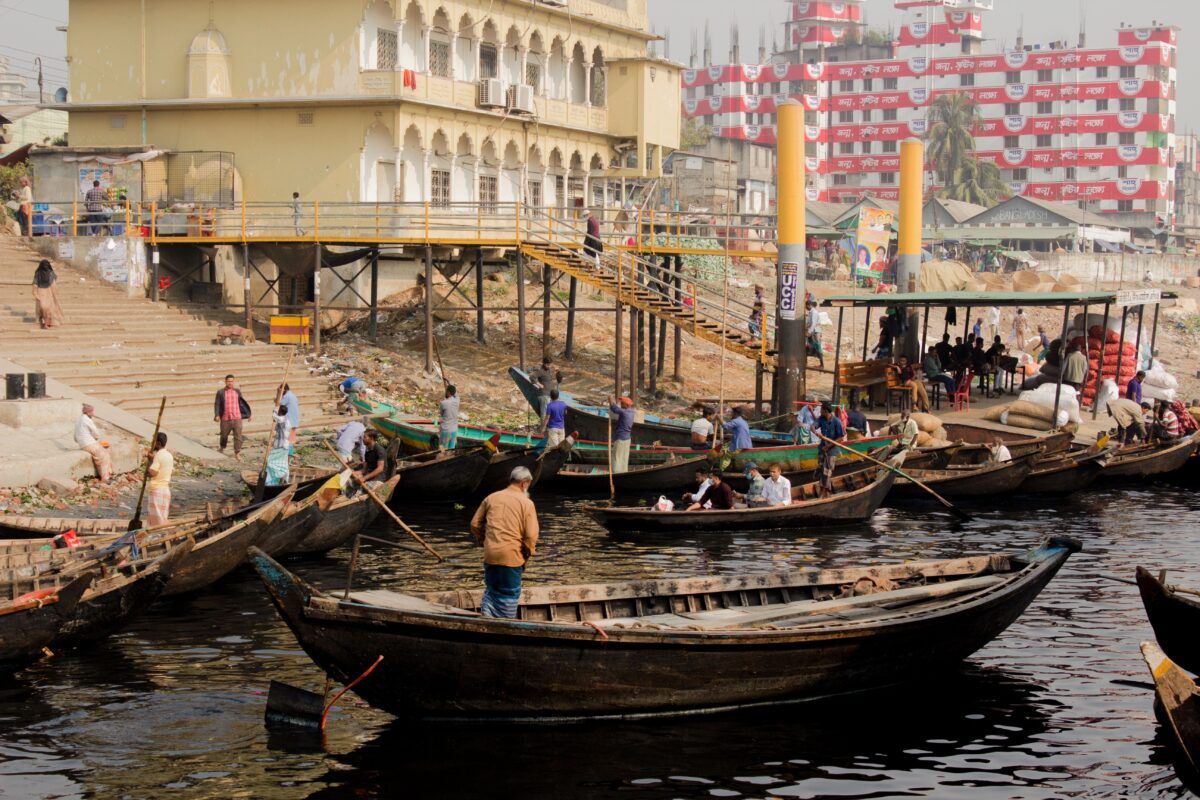
6am — The Sadarghat River Terminal:
The Sadarghat (the Buriganga River terminal in Old Dhaka — the rocket steamer departures visible at dawn, the country boats, the cargo lighters, the river that connects Dhaka to the Sundarbans and the Bay of Bengal visible at the working scale):
At 6am: the specific Dhaka river energy before the heat — the boatmen, the porters, the early passenger visible in the specific density that the Sadarghat gives at the first hour.
The Lalbagh Fort:
The Lalbagh Fort (the 1678 Mughal fort — the Aurangabad Mosque within the complex, the mausoleum of Pari Bibi (the daughter of the Mughal governor Shaista Khan, who died in 1684 and for whom the governor ceased the fort’s construction in grief, the fort remaining unfinished)):
Entry: BDT 200 / £1.35.
The Pink Palace:
The Ahsan Manzil (Rang Mahal — the 1872 Nawab of Dhaka’s palace, the pink-painted Italian-influenced facade on the Buriganga River, the museum of the Dhaka Nawab family and the Dhaka urban history): BDT 100 / £0.68.
Day 2: The Cloth Market and the Dhaka Food
The Shankhari Bazaar:
The Shankhari Bazaar (the Hindu goldsmith and conch-shell craft street in Old Dhaka — the specific Dhaka religious plurality visible in the street that has operated since the Mughal period, the sankha (the conch shell bangle, the Bengali Hindu wedding symbol, the craftsman visible cutting the bangle from the whole shell)):
The Dhaka food:
The kacchi biryani (the Dhaka mutton biryani — the meat slow-cooked in the pot under the rice, the dum technique, the specific Dhaka biryani that the Hajir Biryani restaurant (Nalgola Road) has been making with the same recipe since 1939): BDT 300-500 / £2.03-3.38.
DAYS 3-5 — The Sundarbans
The Sundarbans:
The Sundarbans (the UNESCO World Heritage mangrove — the forest that covers both Bangladesh and India (the larger Bangladesh portion, the smaller West Bengal India portion), the largest mangrove forest in the world, the Bengal tiger population of approximately 350-400 individuals in the Bangladesh section):
The boat tour:
The Sundarbans boat tour (the launch from Mongla port, 4 hours south of Dhaka — the government-licensed tour operator, the 3-day package (the only viable format for the Sundarbans — the day trip from Dhaka is 8 hours travel for 4 hours of forest):
The slow boat through the sundri tree channels (the Heritiera fomes — the tree that gives the Sundarbans its name, the sundri at 20m height, the canopy roof visible from the boat, the tiger pugmark visible in the mud bank when the guide cuts the engine and points):
3-day Sundarbans package: BDT 25,000-45,000 / £169-304 per person all-inclusive (boat, accommodation on the boat, guide, food, national park entry).
The tiger probability:
The honest Bengal tiger sighting assessment: the guides who work the channels for 20 years report sightings on approximately 15-25% of days at the peak activity periods (dawn and dusk). The visitor who spends 3 days in the Sundarbans has approximately a 50-60% cumulative probability of a sighting, ranging from the distant pugmark to the tiger at the river bank visible from the boat. This is the highest wild tiger encounter probability available on Earth at this accessibility level.
DAYS 6-7 — The Chittagong Hill Tracts
The permit:
The Chittagong Hill Tracts (the three hilly districts in the southeast — the Rangamati, the Bandarban, and the Khagrachhari) require the Inner Line Permit for the foreigner (the permit obtainable from the Chittagong District Commissioner’s office or the Bangladesh Tourism Board in Dhaka — the permit process that acknowledges the political sensitivity of the Hill Tracts (the 1997 Peace Accord following the 20-year insurgency is still imperfectly implemented)):
The Rangamati:
The Kaptai Lake (the artificial lake created by the 1960 Kaptai Dam that flooded the Chakma heartland — the specific Bangladesh development-displacement history visible in the lake that 100,000 Chakma people were displaced to create):
The Rajban Vihara (the Buddhist monastery on the Kaptai Lake island — the monastery of the Chakma Buddhist community, accessible by the country boat from the Rangamati embankment):
BDT 200-500 / £1.35-3.38 for the boat to the island.
What It Costs
| Category | Budget | Mid-Range |
|---|---|---|
| Return flights (UK-Dhaka) | £400-700 | £600-1,000 |
| Bangladesh e-Visa | £40 | £40 |
| 7 nights accommodation | £40-120 | £120-320 |
| Sundarbans 3-day package | £169-304 | £169-304 |
| Food in Dhaka (4 days) | £10-30 | £30-80 |
| Internal transport (bus/boat) | £15-35 | £20-50 |
| Total | £674-1,229 | £979-1,794 |