
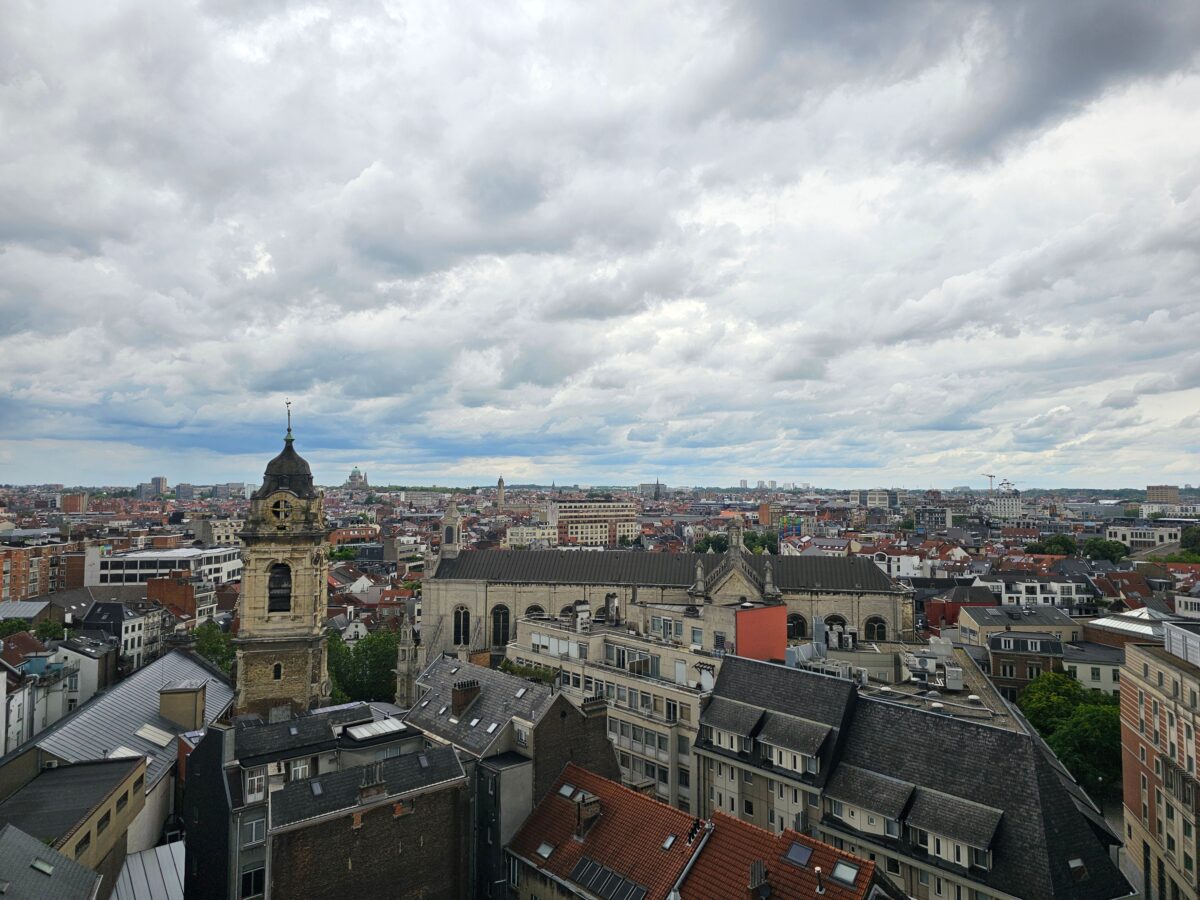
The route that gives Belgium the treatment the smallest big country in Western Europe deserves: two days in Brussels for the Grand Place (the 1695 restored guild houses visible from the cobblestone at 6am, the specific baroque-and-Gothic square that Victor Hugo called the most beautiful in the world and that deserves the observation without the pressure of the 10am tourist crowd), the Magritte Museum (the Surrealist’s complete archive — the bowler hats, the men in suits, the pipes that are not pipes, the specific Belgian contribution to 20th-century visual culture), and the Manneken Pis (the 55cm bronze boy urinating — the specific Brussels public art whose scale and fame are precisely inverted, the monument that is most famous for being exactly as disappointing as described), one day in Bruges for the Groeningemuseum (the Jan van Eyck, the Hans Memling — the Flemish Primitives at their most concentrated) and the Belfry (the 366 steps, the Bruges roofscape visible from the top, the carillon audible from the base), and two days in Ghent for the Ghent Altarpiece (the Van Eyck masterpiece, the Adoration of the Mystic Lamb — the 12-panel polyptych, the most stolen artwork in history (13 times), now behind the bulletproof glass in St Bavo’s Cathedral at the heart of the specific Ghent that the day-tripper from Bruges doesn’t reach), and two days in the Belgian Ardennes for the Walloon countryside, the specific Belgian saison, and the Trappist monastery at Orval.
Reading time: 10 minutes | Last updated: 2026
Before You Leave
Getting there: Eurostar London-Brussels (2 hours, from £49 — the most civilised single transport act available from the UK to the continent) or fly London-Brussels (Ryanair from Stansted, 1.5 hours, from £25). Belgium is Schengen — UK citizens visa-free 90 days.
Currency: Euro. Belgium mid-range daily budget: €70-110 / £60-95.
The Route
Brussels (2 nights) → Bruges (1 night, 55 minutes by train) → Ghent (2 nights, 30 minutes from Bruges or 30 minutes from Brussels) → Belgian Ardennes / Namur base (2 nights)
DAYS 1-2 — Brussels
Day 1: The Grand Place and the Magritte
6am — The Grand Place:
The Grand Place (the central square — the guild houses built in 1695 after the French army of Louis XIV bombarded the medieval originals to rubble, the specific Brussels architectural joke: the French destroyed the Gothic square and the Flemish rebuilt it in the fashionable French Baroque style and it is now the most celebrated square in Europe):
At 6am: the cobblestone square before the waffle vendors open, the Hôtel de Ville (the 15th-century Town Hall, the only original building in the square that survived the 1695 bombardment) visible in the first light.
10am — The Magritte Museum:
The Magritte Museum (Place Royale 1 — the Royal Museums of Fine Arts building housing the Surrealist’s 200+ paintings and drawings):
The La Trahison des Images (the “This is Not a Pipe” — the original is at the Los Angeles County Museum of Art; the Brussels Magritte holds the related works and the comprehensive archive), the Golconde (the men in bowler hats falling like rain), the specific Magritte Belgium:
Entry: €15 / £12.93.
Day 2: The Belgian Comic Strip Centre and the Atomium
The Bande Dessinée Centre:
The Belgian Comic Strip Centre (Centre Belge de la Bande Dessinée, Rue des Sables 20 — the museum in the 1906 Victor Horta Art Nouveau building, the Tintin and Hergé collection, the Belgian comic strip tradition (the bande dessinée — the Belgian national art form that produced Tintin, the Smurfs, Lucky Luke, and Spirou)):
Entry: €12 / £10.34.
The Atomium:
The Atomium (the 1958 World Exposition structure — the 102-metre iron crystal unit at the scale of 165 billion (the atom magnified 165 billion times), the spheres connected by the tubes, the specific Brussels structure that the city has concluded is actually good and has stopped apologising for): €16 / £13.79.
DAY 3 — Bruges
The Groeningemuseum:
The Groeningemuseum (Dijver 12 — the Flemish Primitive collection: the Jan van Eyck Portrait of Margaret van Eyck (the painter’s wife, 1439 — the specific Flemish portrait technique at the first generation of oil painting), the Hans Memling Triptych of Jan Crabbe, the Hieronymus Bosch): €14 / £12.07.
The Belfry:
The Bruges Belfry (Belfort van Brugge — the 83-metre medieval tower, the 366 steps, the carillon (the 47 bells, the carillonneur visible in the bell chamber playing the manual keyboard)): €16 / £13.79.
The Bruges canal at 7am:
The specific Bruges instruction: the canal city at 7am before the day-trippers from Brussels and Ghent arrive at 10am. The Rozenhoedkaai (the Quay of the Rosary — the most photographed Bruges canal viewpoint): at 7am, the reflection on the still water, zero other photographers.
DAYS 4-5 — Ghent
Day 4: The Ghent Altarpiece
St Bavo’s Cathedral:
The Ghent Altarpiece (Het Lam Gods, the Adoration of the Mystic Lamb — the 12-panel polyptych painted by Hubert and Jan van Eyck, completed 1432):
The specific altarpiece facts: the most stolen artwork in history (13 separate theft or confiscation events, including theft by Napoleon, appropriation by the Nazis, theft of the lower left panel in 1934 that has never been recovered). The panels currently in St Bavo’s Cathedral are protected by bulletproof glass since the 1934 theft. The lower left panel (The Just Judges) visible in the cathedral is a reproduction — the original was stolen in 1934 from a left-luggage locker at the Brussels Midi station and has not been recovered.
Viewing in the Ghent Altarpiece Visitor Centre (the new dedicated space in the Groot Begijnhof, open 2024): entry €12 / £10.34.
Day 5: The Gravensteen and the Graslei
The Gravensteen:
The Gravensteen (the Castle of the Counts — the 12th-century Flemish medieval castle in the centre of Ghent, the castle moat visible from the city bridge, the torture instruments museum on the upper floor): €14 / £12.07.
The Graslei:
The Graslei (the medieval harbour quay — the 12th-14th century guild houses visible from the Korenlei on the opposite bank, the specific Ghent medieval commercial waterfront):
At the Ghent gentse waterzooi (the Ghent fish or chicken stew — the vegetable and cream broth, the specific Ghent culinary claim on the Belgian food tradition): at the Waterhuis aan de Bierkant (Groentenmarkt 9, the specific Ghent canal-side restaurant): €18-25 / £15.52-21.55.
DAYS 6-7 — The Belgian Ardennes
The Orval Trappist Monastery:
The Abbaye Notre-Dame d’Orval (the Trappist monastery in the Gaume region — the Orval Trappist beer (the ITCM — International Trappist Association — certified beer, brewed by the monks since 1931, the only Orval beer sold in the monastery shop (In de Vrede equivalent) at the monastery price)):
The Orval: €2.50-3.50 / £2.16-3.02 per 33cl bottle at the monastery shop versus €5-8 / £4.31-6.90 at the Belgian craft beer bar in London.
The monastery ruins (the 12th-century original abbey ruins visible in the monastery park, the rose garden, the specific Belgian religious architecture in the specific Ardennes forest setting): entry to the site €6 / £5.17.
What It Costs
| Category | Budget | Mid-Range |
|---|---|---|
| Return (Eurostar or flight, UK-Brussels) | £49-120 | £49-200 |
| 7 nights accommodation | £140-350 | £350-840 |
| Food (7 days) | £45-110 | £110-280 |
| Magritte + Atomium + Comic Strip | £37 | £37 |
| Bruges: Groeningemuseum + Belfry | £26 | £26 |
| Ghent Altarpiece + Gravensteen | £24 | £24 |
| Orval monastery | £6 | £6 |
| Trains (Brussels-Bruges-Ghent-Ardennes) | £25-45 | £25-45 |
| Total | £352-718 | £627-1,458 |