
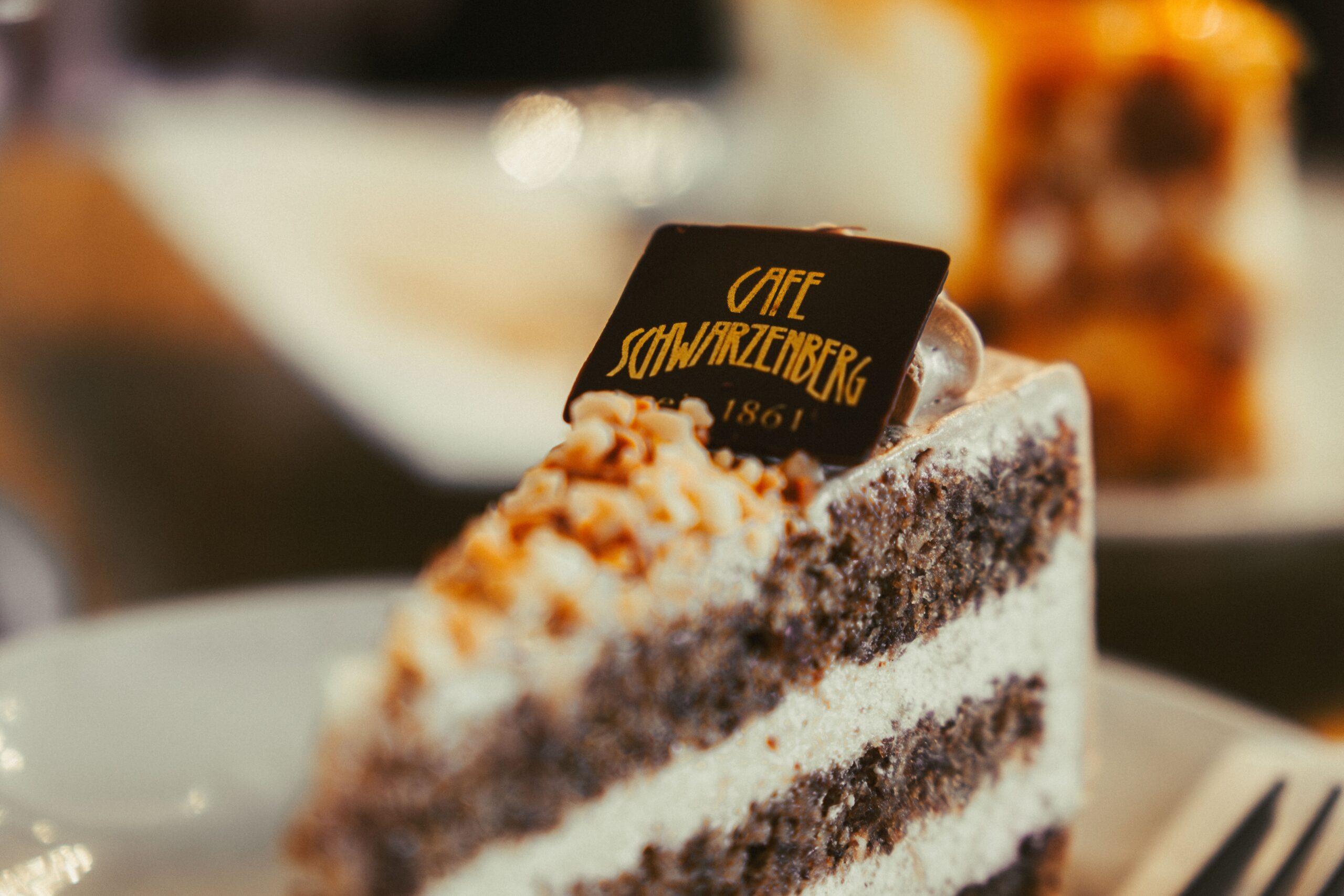
The route that gives Vienna its complete argument: two days in the city centre for the Kunsthistorisches Museum (the Rubens, the Vermeer, the Cellini salt cellar — the single most concentrated collection of European art outside the Louvre and the Prado, visible without the Louvre queue because Vienna does not have the Louvre’s marketing budget), two days in the Ringstrasse for the Staatsoper (the Vienna State Opera at standing room prices, the best-value single cultural experience in Europe at €4-6 / £3.45-5.17 for the standing ticket that gives the same acoustic as the €200 seat), and three days in the Viennese coffee house for the specific Vienna philosophical proposition — the Kaffeehaus (the Café Central, the Café Hawelka, the Café Landtmann) as the specific institution that produced Freud’s psychoanalysis, Herzl’s Zionism, and Wittgenstein’s philosophy in the same square kilometre and that the visitor who sits down with the Melange and the newspaper reader can still access for €4.50 / £3.88 per hour.
Reading time: 10 minutes | Last updated: 2026
Vienna is the city that was the capital of the Habsburg Empire for 640 years and that has spent the subsequent 107 years (the Empire dissolved in 1918) being the capital of a small republic with the cultural infrastructure of a great power — the opera house, the art museums, the concert halls, the coffee houses all built for the empire and maintained by the republic at the scale the republic cannot technically justify but cannot bring itself to reduce.
Before You Leave
Getting there: Fly London-Vienna (Ryanair from Stansted, easyJet, British Airways, Austrian Airlines — 2.5 hours, from £30 one way). Vienna is Schengen — UK citizens visa-free 90 days.
Currency: Euro. Vienna is expensive by Eastern European standards (cheaper than London, more expensive than Prague). Daily budget: €80-120 / £68-103 mid-range.
The Vienna Card: The Vienna City Card (€29 / £25 for 72 hours — the unlimited public transport plus discounts at 210 museums, restaurants, and attractions). Buy at the airport or at any U-Bahn station ticket machine.
The Route
First District (2 nights) → Third and Fourth Districts (2 nights) → Naschmarkt and Prater area (3 nights)
DAYS 1-2 — The First District: Art and Music
Day 1: The Kunsthistorisches
9am — The Kunsthistorisches Museum:
The KHM (the Kunsthistorisches Museum — the 1891 Ringstrasse museum, the imperial art collection of the Habsburgs visible as the specific consequence of 640 years of acquisitive Catholic empire):
The four rooms that justify the visit on their own:
Room X — The Flemish and Dutch: the Rubens (the Helene Fourment in a Fur Coat, the Massacre of the Innocents), the Brueghel the Elder collection (the largest Brueghel collection in the world — the Tower of Babel, the Hunters in the Snow is in the Kunsthistorisches, not in Amsterdam).
Room XV — Vermeer: the Art of Painting (the Vermeer that the Nazis seized, that Austria returned to the Czernin family, that the family sold back to the Austrian state — the specific provenance that makes the painting a document of the 20th century as well as the 17th).
The Kunstkammer (the Cellini Salt Cellar — the gold Saliera created by Benvenuto Cellini for Francis I of France, stolen from the museum in 2003, recovered in 2006, the specific object that combined gold figure sculpture and functional saltcellar in the single most expensive theft in Austrian history): now in the Kunstkammer display at the ground floor.
Entry: €21 / £18.10. Book at khm.at to skip the queue.
8pm — The Vienna State Opera (Standing Room):
The Wiener Staatsoper (the Opera House on the Ringstrasse — the standing room (Stehplatz) tickets available at the box office 80 minutes before the performance):
Standing ticket: €4-6 / £3.45-5.17. The performance from the Stehparterre (the ground floor standing area, directly behind the seated stalls): the acoustic from this position is the acoustic of the house, not the compromised acoustic of the cheap seat.
Day 2: The Schönbrunn and the Naschmarkt
8am — The Schönbrunn Palace Gardens:
The Schönbrunn (the imperial summer palace — the gardens open from 6:30am, the Gloriette (the Habsburg triumphal arch on the hill above the garden, the Vienna city visible below): garden entry free; palace tour from €16 / £13.79.
11am — The Naschmarkt:
The Naschmarkt (the 1.5km open market on the Wienzeile — the specific Vienna market that the tourist guide correctly identifies and that is still genuinely good despite the correct identification):
The Käsekrainer (the cheese-filled grilled sausage — the specifically Austrian hot dog, the cheese visible in the cross-section at the grill, the Senf (the mustard) and the Semmel (the bread roll) alongside, the street food that the Vienna morning requires): €3.50-5 / £3.02-4.31 at the market sausage stand.
The cheese stall (the Austrian farmhouse cheese — the Bergkäse from the Vorarlberg, the Graukäse from the Tyrol, the specific Alpine dairy tradition visible at the market stall at the artisan price): €5-12 / £4.31-10.34 per 200g depending on the age.
DAYS 3-4 — Music and Memory
Day 3: The Belvedere and the Klimt
The Oberes Belvedere:
The Upper Belvedere (the 1723 Prince Eugene of Savoy palace converted to the gallery — the Klimt collection: the Kiss (Der Kuss, 1908 — the most reproduced single painting in Austrian history, the gold leaf and the oil and the specific Klimt technique of the flat gold background against the naturalistic figure), the Judith, the Portrait of Adele Bloch-Bauer I (the painting that the Nazis looted, that the Altmann family recovered through 8 years of legal action (the subject of the Helen Mirren film Woman in Gold), that a replica now occupies in the Belvedere while the original is in New York)):
Entry: €16 / £13.79.
Day 4: The Vienna Coffee House
The Kaffeehaus morning:
The specific Vienna coffee house instruction: the Kaffeehaus is not a café. It is the institution that replaced the salon, the club, and the office for the specific Vienna professional class from the 1680s (the first Viennese coffee house opened in 1683 — the year the Ottoman siege of Vienna ended, the coffee found in the abandoned Ottoman camp, the specific Vienna origin story) to the present.
The Melange (the Viennese coffee — the espresso with the hot milk and the milk foam, the specific Vienna coffee that is not the cappuccino (the Vienna predates the cappuccino nomenclature), the drink served with the glass of water (the Krakel — the water that the Ober (the waiter) replaces without being asked)): €4-5 / £3.45-4.31.
The Café Central (Herrengasse 14 — the 1876 coffee house where Trotsky, Lenin, Freud, and Herzl all worked at separate tables in the same decade, the specific Vienna intellectual geography visible in the interior): open from 7:30am, the breakfast Frühstück set from €9-15 / £7.76-12.93.
The Café Hawelka (Dorotheergasse 6 — the coffee house that Josephine and Leopold Hawelka ran from 1939 until 2015, the Buchteln (the sweet rolls filled with plum jam, baked fresh nightly and served after 10pm) the specific reason the Viennese literary community assembled here for 76 years): open until 2am.
DAYS 5-7 — The Neighbourhoods
Day 5: The Musikviertel and the Sigmund Freud Museum
The Sigmund Freud Museum:
The Sigmund Freud Museum (Berggasse 19 — the apartment where Freud lived and worked from 1891 to 1938, the consulting room where the psychoanalytic session developed, the waiting room chairs visible in the museum display): entry €14 / £12.07.
The Musikverein:
The Musikverein (the 1870 concert hall — the Goldener Saal (the Golden Hall, the concert hall with the specific acoustic that the New Year’s Concert broadcasts globally each January 1, the acoustic rating consistently the highest of any concert hall in the world)): standing room from €6 / £5.17, seated from €15 / £12.93. Book at musikverein.at.
Days 6-7: The Ringstrasse Circuit and the Prater
The Ringstrasse:
The Ringstrasse (the 5.3km boulevard — the Emperor Franz Joseph’s 1858 redesign of the city perimeter, the Rathaus (the City Hall), the Parliament, the Burgtheater, the Kunsthistorisches, the Naturhistorisches, the Opera all visible from the Ring in sequence):
The Rathauspark at dusk: the Gothic-revival City Hall illuminated, the city park walkers, the specific Vienna public space that the imperial city gave its citizens and that the republic maintained.
The Prater:
The Prater (the public park — the Riesenrad (the 1897 Ferris wheel, 64.75 metres, the Vienna visible from the gondola at the top, the wheel that Harry Lime and Holly Martins meet on in The Third Man): €13 / £11.21.
The Prater Schweizerhaus (the Czech beer garden in the Prater — the Budvar (the original Czech Budweiser, the beer that the American brand appropriated the name from) in the 0.5 litre Seidel at the outdoor table, the specific Vienna summer beer garden at the Austrian-Czech cultural intersection): €5.50-6.50 / £4.74-5.60 per Seidel.
What It Costs
| Category | Budget | Mid-Range |
|---|---|---|
| Return flights (UK-Vienna) | £30-100 | £60-200 |
| 7 nights accommodation | £140-350 | £350-840 |
| Food (7 days) | £50-120 | £120-300 |
| KHM + Belvedere + Freud | £44 | £44 |
| Opera standing ticket (2 performances) | £7-12 | £7-12 |
| Vienna City Card | £25 | £25 |
| Total | £296-651 | £606-1,421 |