
The festival travel guide built on the specific planning argument: the festival is the single most efficient way to access the specific culture of the destination — the Holi in Rajasthan gives the specific India colour and chaos and communal joy that the monument visit approximates and that the festival enacts, the Diwali in Varanasi gives the specific Hindu relationship to light and the divine that the temple visit describes and that the festival makes physical. For each of the 12 months, one festival worth the specific trip — not the most famous festival (the Oktoberfest is in October, it is very famous, and this guide names it), but the festival that the destination uses to express something specific about itself that the regular travel does not give.
Reading time: 9 minutes | Last updated: 2026
January — The Harbin Ice Festival, China
What it is: The Harbin International Ice and Snow Sculpture Festival (the Northeast China city of Harbin, the annual festival running from January 5 to February 5 — the ice sculptures lit internally from January 5, the snow sculptures in the Sun Island park, the specific Harbin winter at -20°C to -30°C that the festival uses as the raw material):
The specific scale: the ice sculptures at Harbin Ice and Snow World reach 46 metres in height (the ice equivalent of the 15-storey building), the city of Zun Yi (the ice recreation of an entire city block) visible on the central festival site. The ice sourced from the Songhua River frozen at 40cm depth in December.
The planning: Harbin is 2 hours by air from Beijing. The ice festival peak is the first two weeks of January. The correct visit time is the evening (the LED illumination of the ice sculptures from 5pm, the blue and green and red visible through the ice blocks, the specific Harbin visual that the daylight version does not give).
February — The Rio Carnival, Brazil
What it is: The 5-day Carnival preceding Ash Wednesday (the date varies: February or early March depending on the Easter calculation) — the Sambadrome parade (the samba schools competing on the 700-metre Sambódromo runway, the floats, the costumes, the drumline visible from the 90,000 spectator stands) and the street Carnival (blocos — the neighbourhood street parties, each with the theme and the costume and the specific music):
The planning: The Sambadrome tickets (the grandstand at Sector 11 or 13 for the parade view) sell out 4-6 months ahead. Book through the official Riotur website or the authorised resellers. The blocos (the street parties — the Bola Preta attracts 2 million; the Cordão do Bola Preta, the Sargento Pimenta, the Monobloco) are free and ticketless.
March — Holi, Rajasthan, India
What it is: The Hindu festival of colour (the full-moon day of the Phalguna month — late February or March) celebrated across India but most specifically in the Braj region (the Mathura, the Vrindavan, the Nandgaon — the towns of Krishna’s mythology) and in the Rajasthan towns (the Jaipur, the Pushkar):
The Braj Lathmar Holi (the specific Nandgaon and Barsana Holi where the women beat the men with lathis (sticks) while the men try to shield themselves — the specific re-enactment of the Krishna-Radha legend): the most specifically ritual Holi available, 5 days before the main Holi date.
The planning: Jaipur gives the accessible Holi (the Elephant Festival at the city’s polo grounds on the Holi eve, the colour play in the old city on Holi day). The Braj region requires the Mathura base (3 hours from Delhi) and the early morning departure for the Barsana Lathmar (the ceremony begins at 10am, crowds visible from 8am).
April — Songkran, Chiang Mai, Thailand
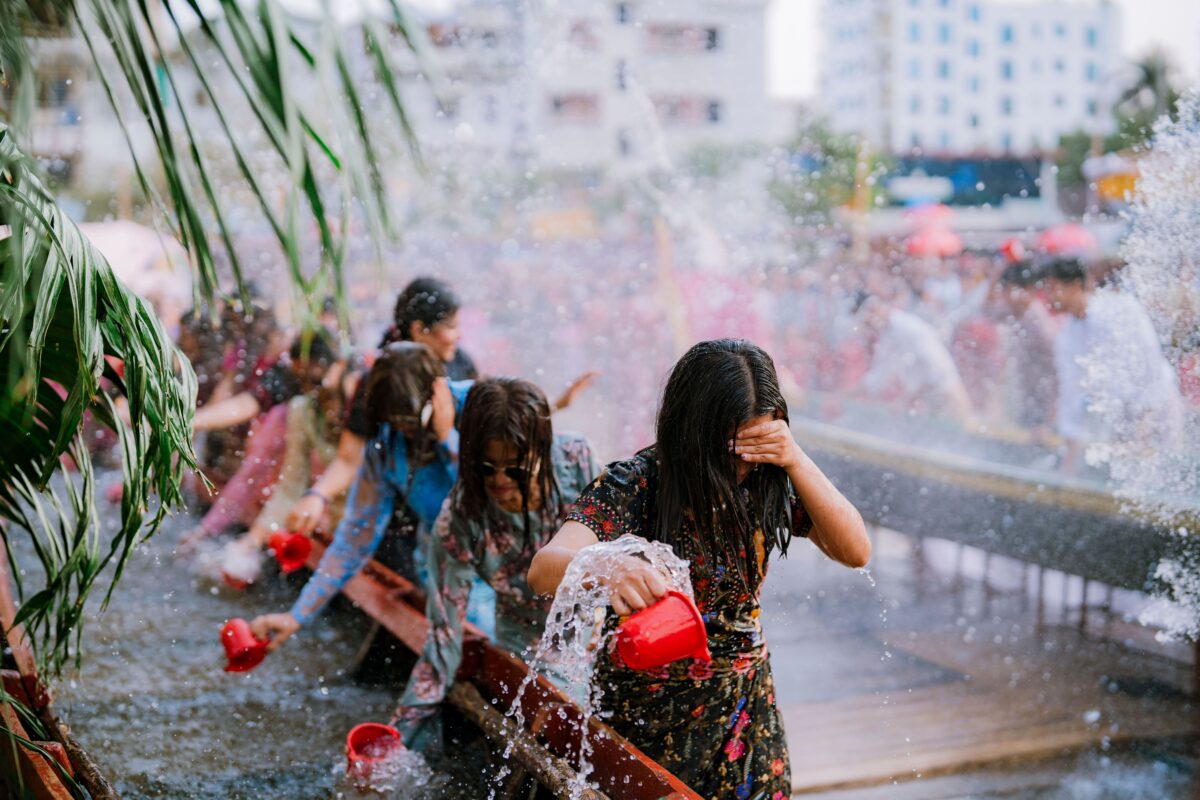
What it is: The Thai New Year water festival (April 13-15, the specific date fixed by the Thai solar calendar) — the water-throwing (the tradition of the gentle water-sprinkling blessing that the street celebration has converted to the water gun battle of between 6 hours per day for 3 days visible on the Nimman Road and the Old City moat road):
The specific Chiang Mai Songkran (the largest single-city Songkran celebration in Thailand — the moat around the old city the specific water battle arena, the pick-up trucks with the water tanks, the super-soakers, the bucket, the specific Thai communal joy visible at scale):
The planning: Book the Chiang Mai accommodation 3-4 months ahead for the April 13-15 window. The waterproof phone case (the Lifeproof or the Catalyst) is the specific Songkran gear requirement. The dry clothes in the sealed bag at the guesthouse are the specific Songkran return logistics.
May — The Chelsea Flower Show, London, UK
The UK festival worth naming: The Royal Horticultural Society Chelsea Flower Show (the Royal Hospital Chelsea, the last week of May — the show gardens, the floral marquee, the plant nurseries, the specific British horticultural achievement):
The specific Chelsea instruction: the press day photographs give the show at its peak bloom; the public days give the show at the accessible hour. Tuesday (the first public day) is the least crowded public day.
Tickets: £35-75 depending on the day, at rhs.org.uk.
June — The Inti Raymi, Cusco, Peru
What it is: The Festival of the Sun (the Quechua Inti Raymi — the Inca festival of the winter solstice, June 24, the most important Inca ceremonial event of the year): the re-enacted ceremony at the Sacsayhuamán fortress above Cusco (the procession from the Qorikancha (the Sun Temple in Cusco) to the Sacsayhuamán, the ceremony at the fortress with the actors in the Inca ceremonial dress, the approximate 100,000 spectators):
The planning: The Inti Raymi is performed in Quechua — the specific ceremony with the language of the Inca. The spectator platforms at Sacsayhuamán are sold in advance (the numbered platform tickets from the official Cusco tourism office, approximately USD 60-80 / £47-63 per person for the reserved viewing). The free viewing is available from the hillside above the fortress — the aerial view of the full ceremony from the hill.
July — The Tour de France (Grand Départ stage)
What it is: The Grand Départ (the Tour de France opening stages, July 1-3 approximately — the specific city that changes annually and that the BGGD guide names based on the confirmed 2026 location):
The specific Tour de France spectator experience: the road stage (the mountain stage — the Alpe d’Huez, the Col du Tourmalet, the Col de l’Izoard) gives the race at close range with the crowd, the riders visible at 1 metre as the peloton passes, the caravan (the promotional vehicles preceding the race) giving the specific Tour de France road-side experience that the televised broadcast cannot replicate. Free to attend.
August — The Edinburgh Festival Fringe, Scotland
What it is: The world’s largest arts festival (August, 25 days, 3,000+ shows across 300 venues in Edinburgh — the theatre, the comedy, the dance, the circus, the spoken word, the 50,000 performers):
The specific Fringe instruction: the free shows (the stand-up comedy shows with the bucket collection at the end) are the correct first Edinburgh Fringe experience. The big-name shows (the productions that transfer to London) book out 3-4 months ahead. The street performance on the Royal Mile is always free and always the specific Edinburgh August.
September — Oktoberfest, Munich, Germany
What it is: The Munich beer festival (the 16-18 day festival starting the third Saturday in September, ending the first Sunday in October — the 6-7 million visitors, the 6 million litres of Märzen beer, the 6 specific Munich breweries with the exclusive contracts):
The specific Oktoberfest instruction: the table reservation (the Tischreservierung — the advance reservation for the inside the tent, required from the March release date for the October visit) is the difference between the guaranteed seat and the 2-hour queue. The free-to-enter tents fill from 9am on weekends; arrive before 10am or after 5pm for the seat.
October — Diwali, Varanasi, India
What it is: The Hindu festival of lights (the new moon of the Hindu month Kartika — October or November) celebrated most specifically in Varanasi (the Ganga Aarti at the Dashashwamedh Ghat during Diwali week — the river ceremony with the oil lamps, the incense, the fire, the priests, and the specific Varanasi Hindu devotional practice visible at the scale that the festival amplifies):
The Dev Diwali (the Kartik Purnima — the full moon 15 days after Diwali, the specific Varanasi additional ceremony where the ghats are illuminated with the oil lamps and the river at night gives the specific visual that the photographs do not capture because the photograph cannot give the warm lamp smell and the specific silence in the crowd during the prayer):
The planning: Varanasi accommodation for Diwali week books 2-3 months ahead. The ghat-side guesthouse (the view of the ceremony from the rooftop) is the correct accommodation for the Diwali and the Dev Diwali.
November — The Day of the Dead, Oaxaca, Mexico
What it is: The Día de los Muertos (November 1-2 — the All Saints’ Day and the All Souls’ Day syncretism with the Aztec and the Zapotec ancestor veneration traditions):
The Oaxaca specific (the panteones — the cemeteries of the Oaxacan towns on the night of November 1-2, the families visible at the graves with the cempasúchil (the marigold flower, the guide for the returning dead spirits), the ofrenda (the offering — the food, the drink, the photographs of the deceased visible at every grave), the candles, the music):
The specific Oaxaca instruction: the San Pablo Villa de Mitla and the Atzompa village cemeteries give the Día de los Muertos without the organised tour group. The Oaxaca city central cemetery (the Panteón General) is the accessible tourist version; the village cemeteries are the specific ceremony that the village performs for the village, with the visitor present as the respectful guest.
December — Christmas Markets, Germany and Austria
The Christkindlmarkt: The Nuremberg Christkindlmarkt (the most historically significant Christmas market in Germany — the Christkind (the Christ Child) opening ceremony from the church balcony on the Friday before the first Advent Sunday, the market running until December 24) and the Vienna Wiener Christkindlmarkt (the market on the Rathausplatz, the City Hall illuminated above the market, the specific Vienna December):
The planning: The Nuremberg market is walkable from the central station (15 minutes). The Vienna market is accessible from the Rathaus U-Bahn station. Both are free to enter. The Glühwein (the mulled wine, the specific Christmas market drink): €3-5 / £2.59-4.31 per cup, the ceramic cup as the keepsake or the returnable deposit.