



Tokyo’s scale means neighbourhood choice genuinely shapes the entire trip, affecting everything from morning commute times to the kind of evening atmosphere right outside the hotel door. This is a direct comparison of the three most commonly recommended base areas for first-time visitors.
Quick answer: Shinjuku offers the strongest all-round base with the best transport connectivity and a genuine mix of nightlife and business districts. Shibuya suits younger travellers prioritising shopping and nightlife energy. Asakusa delivers the most traditional atmosphere at generally lower prices, at the cost of being further from central Tokyo’s other major districts.
Shinjuku vs Shibuya vs Asakusa: Head-to-Head
| Factor | Shinjuku | Shibuya | Asakusa |
|---|---|---|---|
| Transport connectivity | Excellent, Japan’s busiest station | Very good, major JR and metro hub | Good, but further from other central districts |
| Atmosphere | Mixed business, nightlife, and skyscraper district | Youthful, shopping and nightlife focused | Traditional, temple-centred, more relaxed pace |
| Accommodation cost (mid-range, per night) | ¥14,000-¥22,000 (£75-£118) | ¥15,000-¥24,000 (£80-£128) | ¥9,000-¥16,000 (£48-£86) |
| Best for | First-time visitors wanting central, well-connected base | Shopping, nightlife, younger crowd | Traditional atmosphere, budget-conscious travellers |
| Nearest major sight | Golden Gai, Kabukicho | Shibuya Crossing, Harajuku (short train ride) | Senso-ji Temple |
Shinjuku: The All-Rounder
Shinjuku Station is the busiest railway station in the world by passenger volume, and this connectivity is the neighbourhood’s single strongest argument as a base, genuinely putting nearly all of Tokyo within easy reach.
- Transport: direct access to JR Yamanote Line (Tokyo’s main loop line), multiple metro lines, and the Narita Express airport connection
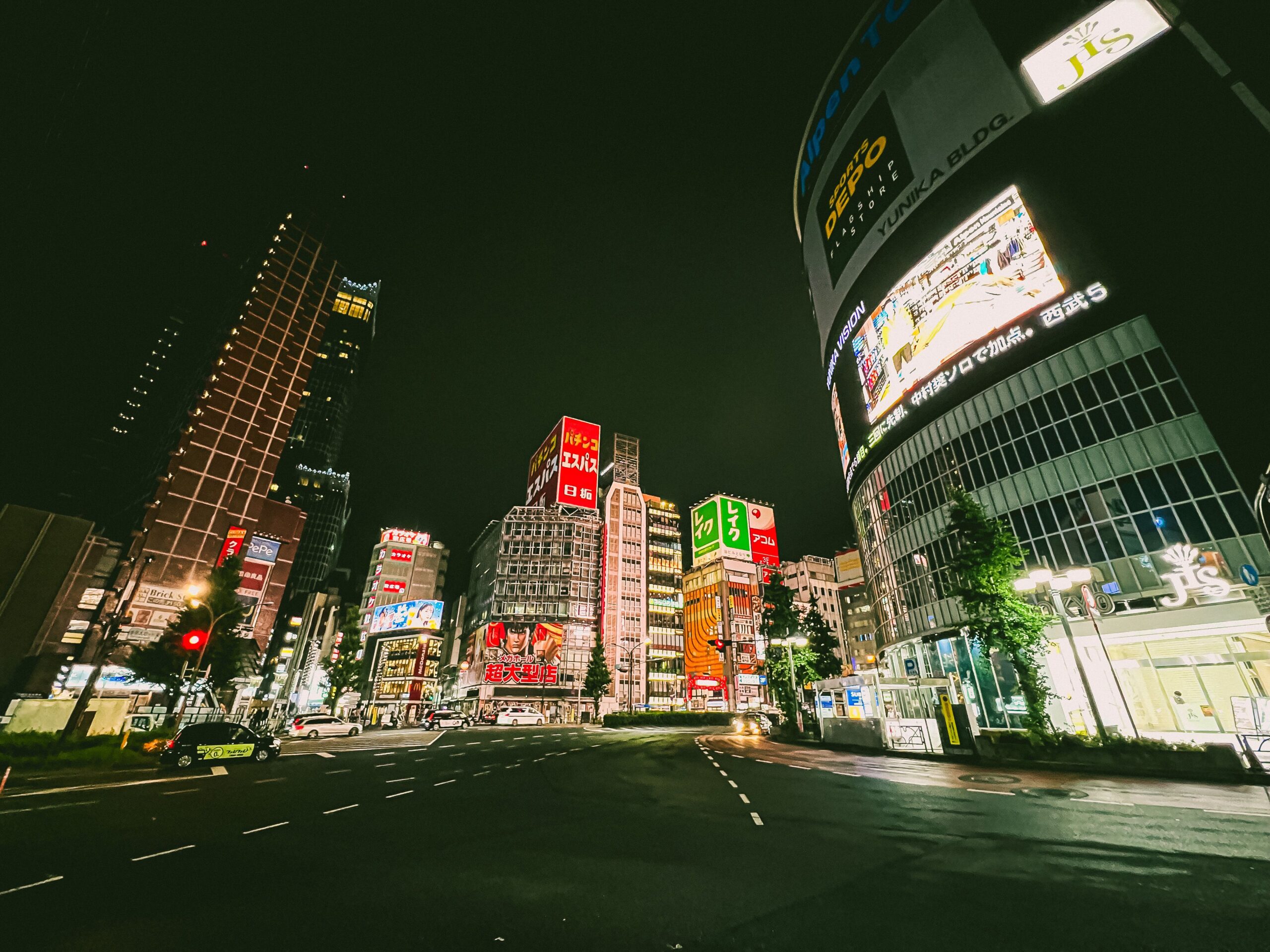
- Atmosphere: genuinely varied, from the neon-lit Kabukicho entertainment district to the quieter, more traditional Golden Gai’s tiny bars, alongside a significant business district feel during the day
- Accommodation: the widest range of options across all budget tiers, from capsule hotels to luxury towers like the Park Hyatt (of Lost in Translation fame)
- The honest verdict: Shinjuku’s main drawback is that it doesn’t offer a single strong personality the way Shibuya or Asakusa do, but this is arguably the point, it works as a genuinely practical base rather than a themed one
Shibuya: Energy and Shopping
Shibuya’s famous scramble crossing anchors a district built around fashion, shopping, and a younger, more nightlife-focused crowd than Shinjuku’s broader mix.
- Transport: excellent, second only to Shinjuku in connectivity, with direct access to the Yamanote Line and several major metro lines
- Atmosphere: genuinely energetic, particularly in the evening, with Shibuya Crossing itself functioning as both a sight and a constant backdrop to daily life in the area
- Accommodation: slightly pricier than Shinjuku on average, reflecting strong demand from both domestic and international visitors specifically seeking this neighbourhood
- The honest verdict: Shibuya suits travellers prioritising shopping, nightlife, and a younger overall atmosphere, though it can feel genuinely overwhelming for anyone wanting a quieter base to return to after a full day of sightseeing
Asakusa: Traditional Tokyo, Lower Cost
Asakusa centres on Senso-ji, Tokyo’s oldest and most significant Buddhist temple, retaining a noticeably more traditional character than either Shinjuku or Shibuya.
- Transport: good but less central than the other two options, with the Ginza and Asakusa metro lines providing connections, though journeys to Shibuya or Shinjuku specifically take longer than a same-district stay would
- Atmosphere: genuinely traditional, with Nakamise shopping street’s traditional snacks and souvenirs, and a noticeably slower pace than the more frenetic central districts
- Accommodation: consistently the cheapest of the three options, reflecting both lower demand from business travellers and the area’s different overall positioning
- The honest verdict: Asakusa rewards travellers prioritising atmosphere and budget over central connectivity, genuinely one of the best value bases in Tokyo, provided the longer commute to other districts is an acceptable trade-off
What a Week’s Accommodation Actually Costs
| Neighbourhood | 6 Nights (GBP, split two ways, per person) |
|---|---|
| Shinjuku | £225-£354 |
| Shibuya | £240-£384 |
| Asakusa | £144-£258 |
Asakusa’s savings, roughly £80-£130 over a week compared to Shinjuku, are genuinely significant enough to fund additional activities or a longer trip, worth weighing against the added daily commute time to other districts.
Step-by-Step: Choosing Where to Stay
- Prioritise Shinjuku for a genuinely balanced first Tokyo visit, given its combination of connectivity and varied atmosphere without committing too heavily to any single neighbourhood’s specific character.
- Choose Shibuya specifically if shopping and nightlife are the trip’s main draw, accepting a slightly higher cost and busier daily atmosphere in exchange for being directly within the district most associated with that experience.
- Choose Asakusa if budget and traditional atmosphere matter more than central connectivity, and factor in slightly longer journey times to reach Shibuya, Harajuku, or other central districts.
- Get a Suica or Pasmo IC card immediately on arrival regardless of chosen base, since Tokyo’s rail network is comprehensive enough that neighbourhood choice matters less once this card removes the friction of individual ticket purchases.
- Consider splitting a longer trip across two neighbourhoods, a common and genuinely practical strategy for visits of 7+ days, allowing a taste of both a central base and Asakusa’s different pace without fully committing to either for the whole trip.
Frequently Asked Questions
Which neighbourhood is best for a first-time Tokyo visitor?
Shinjuku is generally the strongest recommendation for first-timers, given its unmatched transport connectivity and genuinely varied atmosphere, without requiring the longer journeys Asakusa’s more peripheral position involves.
Is Asakusa too far from central Tokyo to be a practical base?
Not impractically so, though journeys to Shibuya or Shinjuku specifically add 20-30 minutes compared to staying centrally. For travellers prioritising cost savings and traditional atmosphere, this trade-off is generally considered worthwhile.
Is Shibuya safe for solo travellers at night?
Yes, Shibuya, like most of central Tokyo, is generally considered very safe even late at night, with low crime rates by international standards. Standard urban awareness applies as anywhere.
How does Ginza compare to these three neighbourhoods as a base?
Ginza offers a more upscale, shopping-focused alternative with strong central connectivity, generally at a higher price point than any of the three neighbourhoods covered here, worth considering for travellers specifically prioritising a premium, polished base over Shinjuku’s grittier energy or Asakusa’s traditional character.
What About Staying Near Tokyo Station Instead?
Tokyo Station and the surrounding Marunouchi district offer a fourth genuine option, particularly for travellers planning day trips beyond the city (to Kanazawa, Kyoto, or elsewhere via the Shinkansen network), given Tokyo Station’s role as the primary hub for bullet train departures. This area trades some of Shinjuku or Shibuya’s evening atmosphere for a more business-district feel, but genuinely simplifies logistics for any itinerary involving multiple Shinkansen journeys during the trip.
The Bottom Line
Shinjuku delivers the strongest all-round Tokyo base for most first-time visitors, Shibuya rewards those prioritising shopping and nightlife energy, and Asakusa offers genuine savings and traditional atmosphere at the cost of longer journeys to other districts. The right choice ultimately depends on whether central connectivity or a specific neighbourhood character matters more for the trip’s overall shape.