

Seville’s summer daytime temperatures regularly exceed 40°C, making traditional daytime sightseeing genuinely uncomfortable, sometimes unsafe, for weeks at a stretch. The city’s own residents have long since adapted by shifting life toward the evening, and this guide covers how to build an entire Seville trip around that same after-dark rhythm.
Quick answer: Seville’s summer heat makes an after-dark itinerary genuinely necessary rather than a novelty, with most major sights, dining, and even some cultural activities shifting toward the cooler evening hours from roughly 8pm onward. Building a trip around this pattern, sightseeing in the early morning and late evening, resting or staying indoors through the peak afternoon heat, delivers a noticeably more comfortable and, arguably, more authentic Seville experience.
Why Noctourism Isn’t Just a Trend in Seville Specifically
Seville regularly ranks among the hottest major cities in mainland Europe, with summer afternoon temperatures frequently exceeding 40°C and occasionally pushing toward 45°C during genuine heatwave conditions. Local life has adapted accordingly for generations: shops close for a genuine afternoon siesta, restaurants don’t open for dinner until 9pm or later, and the city’s evening paseo tradition, the early-evening stroll, reflects a centuries-old adaptation to exactly this climate.
An After-Dark Seville Itinerary
Early Morning (7-10am): The Other Cool Window
Before the after-dark strategy takes over, Seville’s early morning offers a second genuinely comfortable window, worth using for the sights that specifically benefit from daylight.
- Real Alcázar: €13.50 (£11.55), book the earliest available entry slot, since even in summer the palace and gardens remain bearable until roughly 10-11am
- Seville Cathedral and Giralda Tower: €11 (£9.40), similarly best tackled in this early window before the tower’s climb becomes genuinely gruelling in full heat
Midday to Late Afternoon (11am-7pm): Retreat Indoors
This is Seville’s genuine no-go window in summer, and fighting it rather than working with it is the single biggest mistake visitors make.
- Air-conditioned museums: the Museum of Fine Arts (€1.50/£1.30, remarkably cheap for the collection quality) offers a genuinely comfortable indoor option during the worst heat
- Hotel pool or siesta: many mid-range and upscale Seville hotels have pools specifically because of this exact climate pattern; using the peak heat hours for genuine rest mirrors local practice rather than fighting it
- Flamenco museum and shorter indoor cultural stops: several smaller museums and cultural sites offer air-conditioned refuge with genuine content worth the visit
Evening (8pm Onward): Where Seville Actually Comes Alive
From around 8pm, Seville’s temperature drops to genuinely pleasant levels, and the city’s evening life begins in earnest.
- Plaza de España at sunset: free, one of the most striking public spaces in Spain, genuinely transformed by evening light and the day’s crowds having largely dispersed
- Flamenco show (evening tablao): €20-€35 (£17.10-£30) at a genuine venue, with most shows scheduled specifically for the 9-11pm slot when both performers and audience can comfortably manage the setting
- Dinner: Seville’s restaurant culture genuinely operates on a 9pm-midnight rhythm for dinner, not a tourist accommodation but the authentic local pattern
- Late-night tapas crawl: Seville’s tapas bars stay busy well past midnight in summer, offering a genuine way to experience the city’s food culture the way locals actually do
Late Night (11pm-1am): The River and Barrio Santa Cruz
- Guadalquivir riverside walk: free, genuinely pleasant and cool by this hour, with Triana’s riverside offering strong views back toward the Torre del Oro and cathedral, both illuminated at night
- Barrio Santa Cruz by night: the old Jewish quarter’s narrow streets, genuinely atmospheric after dark with far fewer visitors than the daytime crowds, offer some of Seville’s best late-evening wandering
Rooftop Bars: A Genuinely Underrated Evening Option
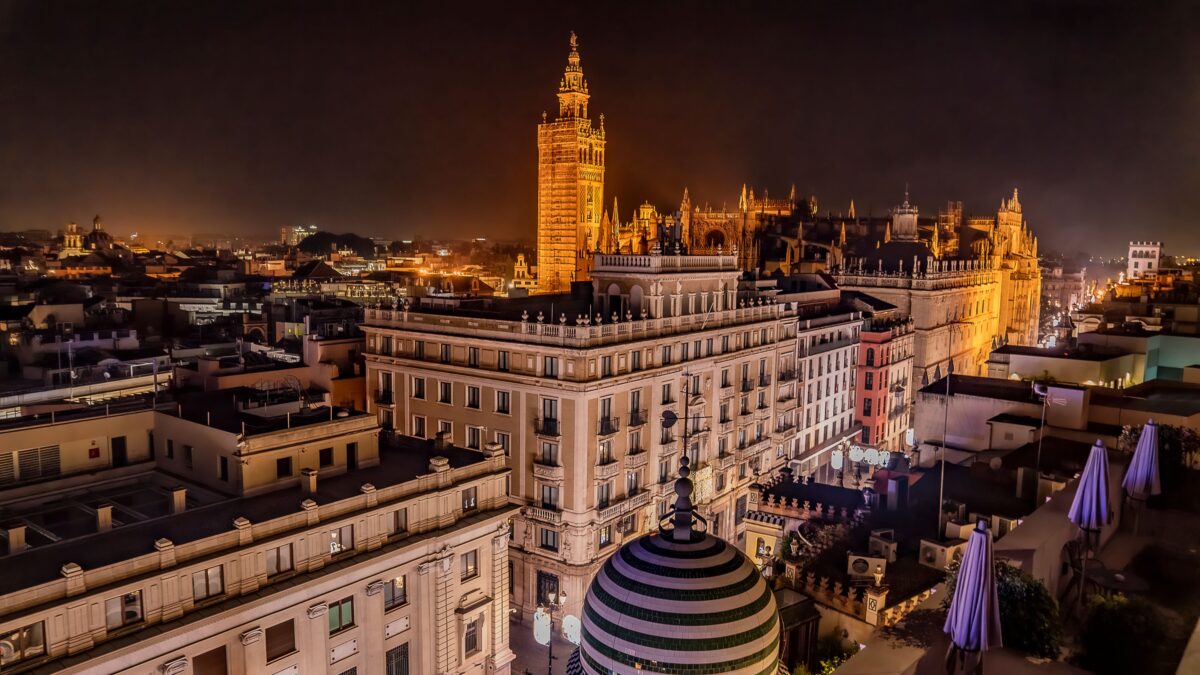
Several Seville hotels and independent venues offer rooftop bars with views toward the cathedral and Giralda tower, a genuinely comfortable way to spend the early evening transition period as temperatures drop, typically from around 7-8pm. EME Catedral Hotel’s rooftop terrace offers one of the most direct cathedral views in the city, while several smaller, less tourist-marketed rooftops around Triana offer a quieter, more local alternative at generally lower prices.
What a Noctourism Day Actually Looks Like
| Time | Activity | Temperature Reality |
|---|---|---|
| 7-10am | Real Alcázar or Cathedral | Warm but manageable, 24-28°C |
| 11am-7pm | Indoor museum, hotel rest, air-conditioned refuge | Genuinely dangerous heat, 38-45°C |
| 8-10pm | Plaza de España, flamenco show | Cooling rapidly, 28-32°C |
| 10pm-1am | Dinner, tapas crawl, riverside walk | Genuinely pleasant, 24-28°C |
Step-by-Step: Planning a Noctourism Seville Trip
- Book Real Alcázar and Cathedral tickets for the earliest available morning slot, treating this as the only reliable daylight sightseeing window during summer months.
- Choose accommodation with a pool or genuinely effective air conditioning, non-negotiable for surviving the midday retreat comfortably.
- Shift meal timing to match local patterns, dinner from 9pm rather than the earlier UK-standard dinner hour, both for the experience and because many quality restaurants simply aren’t open earlier.
- Book flamenco shows for the evening slots specifically, since these are scheduled deliberately around the cooler hours rather than as a tourist-only concession.
- Carry water constantly during any outdoor movement, even during the “safer” morning and evening windows, since Seville’s heat remains genuinely serious even outside the peak afternoon danger zone.
Frequently Asked Questions
Is it actually dangerous to be outside in Seville during peak summer afternoon heat?
Yes, genuinely. Temperatures regularly exceeding 40°C, sometimes approaching 45°C during heatwave conditions, pose real heat exhaustion and heatstroke risk for anyone spending extended time outdoors without shade, water, or rest, particularly for visitors unaccustomed to this level of heat.
What is the best time of year to visit Seville if avoiding extreme heat matters more than the noctourism approach?
Spring (April-May) and autumn (October) offer significantly more comfortable daytime temperatures, generally 20-28°C, allowing for a more traditional sightseeing schedule without needing to structure the entire trip around a nocturnal rhythm.
Do UK citizens need a visa for Spain?
No. Spain is part of the Schengen Area, allowing UK passport holders to visit visa-free for stays up to 90 days within any 180-day period.
Is noctourism a genuine local practice, or is it a tourism marketing invention?
Genuinely local. Seville’s siesta culture, late dinner hours, and evening paseo tradition all predate any tourism marketing by generations, reflecting centuries of adaptation to exactly the climate conditions this guide describes.
Does the noctourism approach work for a family trip with young children?
Partially, with adjustment. Young children’s earlier bedtimes don’t always align naturally with Seville’s 9pm-midnight dinner culture, making the early morning window (7-10am) and the transitional early evening (6-8pm) the more practical family-friendly hours rather than the deepest late-night activities covered here.
The Bottom Line
Seville’s summer heat genuinely necessitates a fundamental shift in how a trip is structured, and building the itinerary around the same after-dark rhythm locals have followed for generations delivers both a more comfortable and more authentic experience than fighting the climate with a conventional daytime-focused schedule. The trade-off is a trip that runs on a genuinely different clock than most UK visitors are used to, worth embracing rather than resisting.