



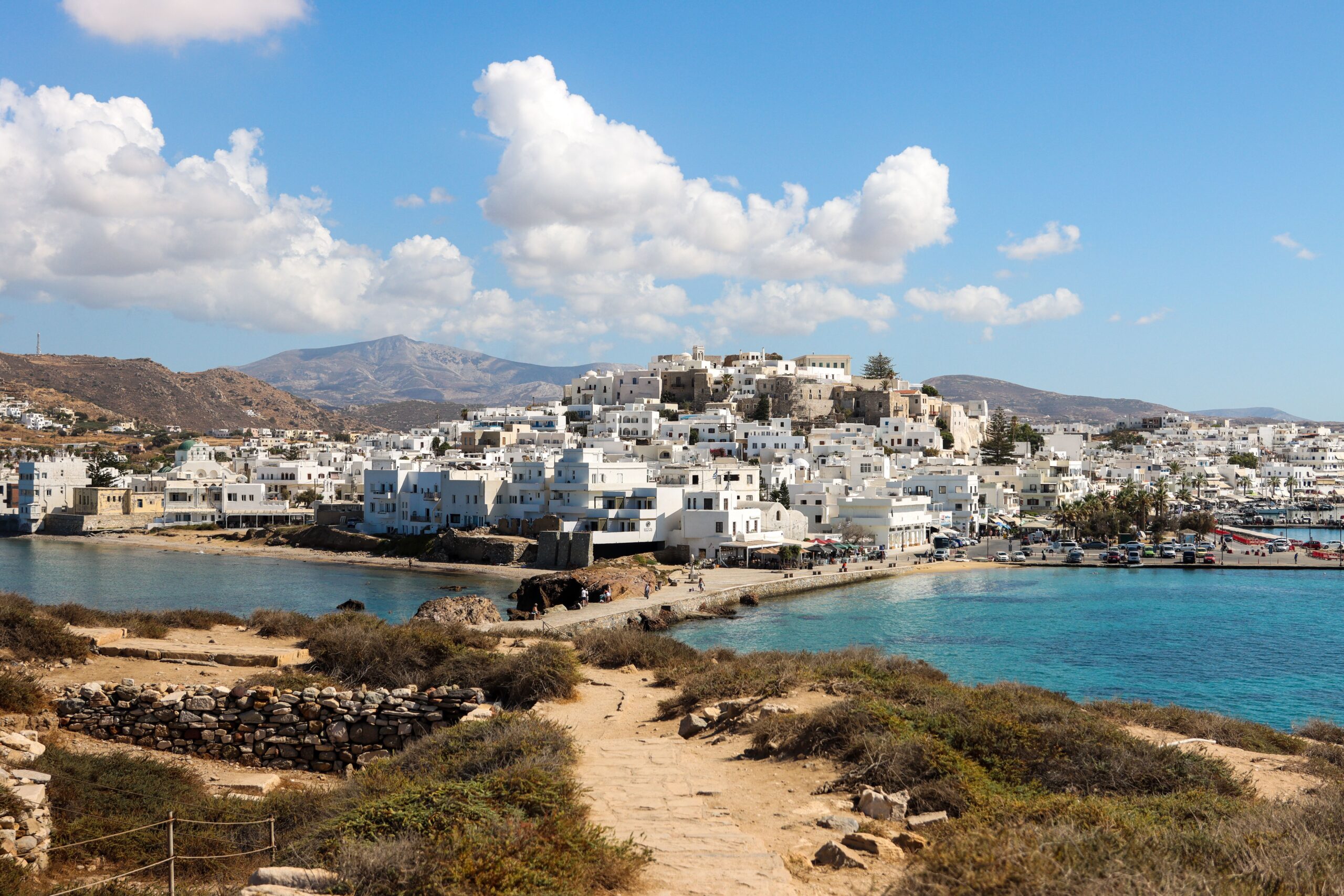
Mykonos’s beach club culture has pushed prices to genuinely extreme levels, sunbeds regularly running over €100 a day at the most exclusive spots, while Naxos and Paros, a short ferry ride away, deliver comparable Cycladic beauty at a fraction of the cost.
Quick answer: swap Mykonos for Naxos and Paros if the priority is genuine Cycladic island beauty, beaches, and villages without the extreme beach club pricing. Keep Mykonos on the list if the specific party scene and celebrity-adjacent beach club culture is the point of the trip, since neither Naxos nor Paros attempts to replicate that particular atmosphere.
Mykonos vs Naxos & Paros: Head-to-Head
| Factor | Mykonos | Naxos | Paros |
|---|---|---|---|
| Beach club sunbed (per day) | €40-€120+ | €10-€25 | €12-€30 |
| Accommodation (mid-range, per night) | €150-€350 | €70-€140 | €80-€150 |
| Nightlife intensity | Very high, internationally famous | Moderate, more local | Moderate to high, particularly in Naoussa |
| Signature scenery | Windmills, Little Venice | Mount Zas, Portara ruins, agricultural interior | Naoussa’s fishing harbour, Lefkes hillside village |
| Crowd density (August) | Severe | Moderate | Moderate to high in specific spots |
What Naxos Actually Offers
Naxos is the largest of the Cyclades and genuinely the most agriculturally productive, meaning its interior offers something Mykonos simply doesn’t have: real villages built around farming rather than tourism, alongside beaches that rival anything on Mykonos.
- Portara: a massive freestanding marble doorway, the remnant of an unfinished ancient temple, free to visit and one of the most striking ancient ruins in the Cyclades
- Plaka and Agios Prokopios beaches: genuinely excellent white sand beaches with a fraction of Mykonos’s sunbed pricing
- Mount Zas hiking: the Cyclades’ highest peak, offering a genuine hiking experience unavailable on the flatter, more beach-focused Mykonos
- Naxos Town’s Kastro (old town): free to explore, a Venetian-era quarter with genuinely fewer crowds than Mykonos’s famous Little Venice district
What Paros Actually Offers
Paros splits the difference between Naxos’s quieter authenticity and Mykonos’s livelier evening scene, with Naoussa specifically offering a genuine nightlife alternative without Mykonos’s most extreme pricing.
- Naoussa fishing harbour: genuinely picturesque, with a lively evening restaurant and bar scene that offers a taste of Mykonos-style nightlife at considerably lower cost
- Lefkes: a hillside traditional village, largely untouched by the coastal development affecting much of the rest of the island
- Kolymbithres Beach: distinctive granite rock formations creating natural pools, a genuinely different beach experience from the standard sand-and-sunbed formula
- Windsurfing at Golden Beach (Chrysi Akti): a genuine watersports destination, hosting international windsurfing competitions
Why Mykonos Still Wins for One Specific Thing
Mykonos’s specific beach club and nightlife culture, Cavo Paradiso, Scorpios, and similar internationally famous venues, is genuinely unique within the Cyclades and can’t be replicated by Naxos or Paros’s more low-key evening scenes. For travellers specifically wanting that exact atmosphere, world-renowned DJs, a see-and-be-seen beach club culture, the swap doesn’t deliver an equivalent.
The honest verdict: if the trip’s purpose is specifically Mykonos’s world-famous party scene, that requires Mykonos itself. For everyone else wanting genuine Cycladic beauty, beaches, and villages without the extreme pricing, Naxos and Paros deliver considerably more value, and arguably a more authentic Greek island experience.
Ancient History Naxos Has That Mykonos Doesn’t
Beyond the Portara, Naxos holds a genuinely significant collection of ancient marble quarries and unfinished statues (kouros figures), abandoned mid-carving thousands of years ago and still lying in the island’s interior where they were left. The Apollonas and Flerio kouroi, both freely accessible, offer a genuinely unusual archaeological experience unavailable anywhere on Mykonos, whose own ancient significance is comparatively minor next to nearby Delos rather than the island itself.
What a Week Actually Costs
| Category | Mykonos (per person) | Naxos & Paros (per person) |
|---|---|---|
| Accommodation (6 nights, split two ways) | £540-£1,260 | £250-£505 |
| Food | £180-£280 | £120-£190 |
| Beach clubs/activities | £150-£350 | £50-€100 |
| Total (excluding flights) | £870-£1,890 | £420-£795 |
Naxos and Paros run roughly 55-60% cheaper than Mykonos, one of the more dramatic cost gaps within the Cyclades island group specifically.
Step-by-Step: Planning a Naxos & Paros Trip
- Fly into Athens and connect via a short domestic flight or ferry to either island, since neither Naxos nor Paros has extensive direct UK flight connections, unlike Mykonos’s more developed international route network.
- Book the inter-island ferry between Naxos and Paros in advance during peak summer, since the roughly 30-45 minute crossing is popular and capacity-limited on the busiest days.
- Rent a car on both islands, since the best villages and beaches (Lefkes, Mount Zas trailheads, Kolymbithres) are spread out enough to benefit genuinely from independent transport.
- Base a few nights in Naoussa specifically if wanting a taste of livelier evenings within this swap, since it offers the closest equivalent to Mykonos’s nightlife energy at a fraction of the cost.
- Book Kolymbithres and Plaka beach accommodation early for peak season, since both are increasingly popular and see rising demand relative to Mykonos-fatigued travellers seeking genuine alternatives.
Frequently Asked Questions
Is Naxos or Paros better for a first-time Cyclades visit?
Both work well, though Naxos offers slightly more variety (mountains, ancient ruins, extensive beaches) for a single-island stay, while combining both across a week delivers the strongest overall experience.
How do you get between Naxos and Paros?
Regular ferries connect the two islands, typically taking 30-45 minutes, making a combined stay across both genuinely straightforward without requiring a return to Athens between legs.
Is Naoussa as lively as Mykonos Town in the evening?
Not quite at Mykonos’s scale or international fame, but genuinely lively by Cycladic standards, offering a reasonable evening atmosphere without the extreme pricing or crowd density of Mykonos’s most famous venues.
What is the best time of year to visit Naxos and Paros?
June and September offer the strongest combination of warm weather and manageable crowds, with July-August bringing peak heat and, while still far less crowded than Mykonos, the busiest period for both islands.
Is it easy to combine both islands into a single trip without wasting time?
Yes, genuinely straightforward, since regular ferries connect Naxos and Paros in roughly 30-45 minutes, making a split stay (3-4 days each) an efficient way to experience both islands’ distinct characters within a single week-long trip.
Do Naxos and Paros have direct flights from the UK?
Limited direct options exist seasonally, with most UK travellers routing via Athens and a short domestic flight or ferry connection, similar to the connection pattern required for Milos and several other non-Santorini, non-Mykonos Cycladic islands.
The Bottom Line
Naxos and Paros deliver genuine Cycladic beauty, mountains, ancient ruins, excellent beaches, and a taste of nightlife in Naoussa, at roughly half the cost of Mykonos and without its extreme beach club pricing. The trade-off is losing Mykonos’s specific, world-famous party scene, which remains genuinely unique within the Cyclades.