

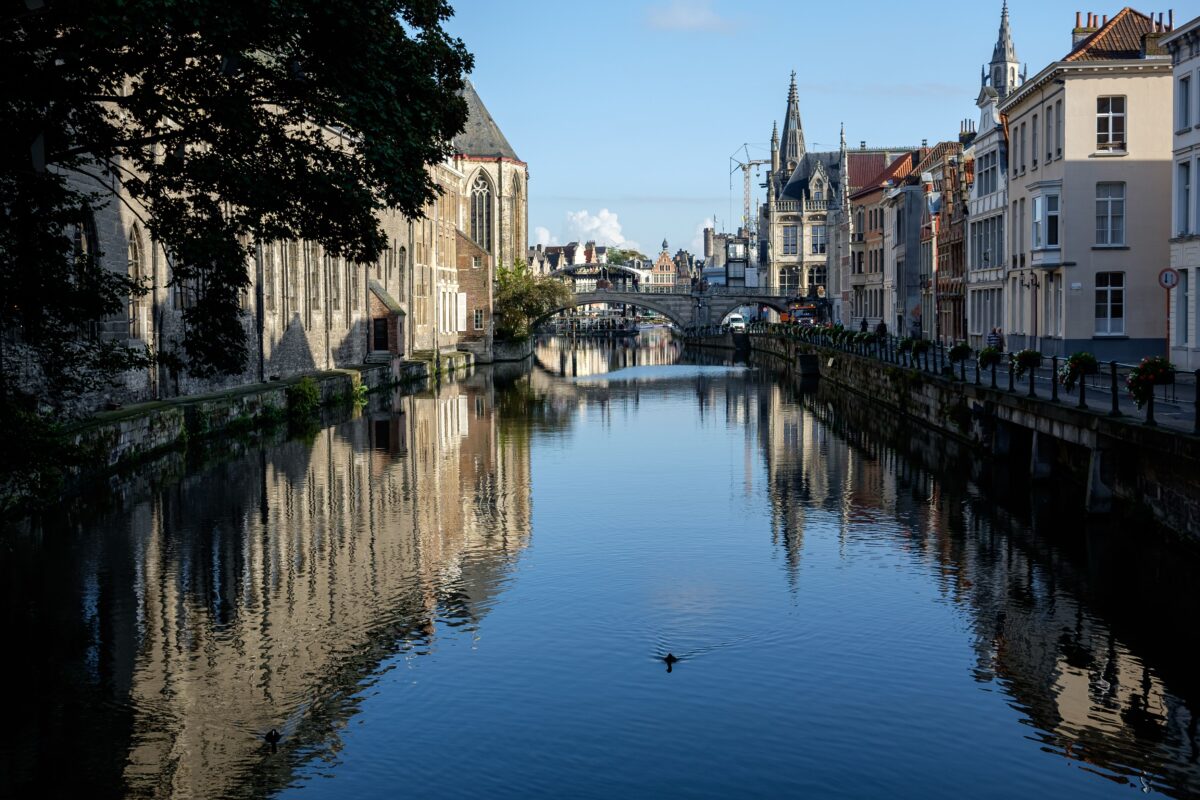
Bruges’ compact, perfectly preserved medieval centre has become such a concentrated day-trip destination that its canals and cobbled squares can feel more like a film set than a living city during peak hours. Ghent, a short train ride away, offers comparably striking medieval architecture within a genuine working university city.
Quick answer: swap Bruges for Ghent if the priority is genuine medieval Belgian architecture without Bruges’ day-tripper saturation. Keep Bruges on the itinerary if its specific compact, fairy-tale preservation and canal-boat culture is the non-negotiable draw, since Ghent, while beautiful, has a noticeably different, more lived-in character.
Bruges vs Ghent: Head-to-Head
| Factor | Bruges | Ghent |
|---|---|---|
| Annual visitors | Over 8 million, largely day-trippers | A fraction of Bruges’ total |
| Character | Preserved, museum-like medieval centre | Genuine working university city with medieval core |
| Accommodation (mid-range, per night) | €110-€180 (£94.30-£154.30) | €75-€130 (£64.30-£111.45) |
| Canal boat tours | Extensive, tourist-focused | Available, considerably less crowded |
| Student population | Minimal | Large, giving genuine local energy |
What Ghent Actually Offers
Ghent’s status as a genuine university city, home to Ghent University’s roughly 47,000 students, gives it a fundamentally different energy from Bruges’ more museum-like, tourism-first atmosphere.
- Gravensteen Castle: a genuinely intact medieval fortress, offering a more substantial single historical attraction than anything in Bruges, with an included audio guide covering the castle’s use through various periods including as a courthouse and prison
- Ghent’s canals and Graslei/Korenlei waterfront: offering comparably striking guild-house architecture to Bruges’ famous canal views, with noticeably fewer tour groups crowding the same photo spots
- St Bavo’s Cathedral and the Ghent Altarpiece: home to Jan van Eyck’s Ghent Altarpiece, one of the most significant works in Western art history, genuinely rivalling anything in Bruges’ museum collections
- Genuine local nightlife and food scene: Ghent’s student population supports a considerably livelier, more affordable evening scene than Bruges, where much of the city empties of tourists (and correspondingly, of atmosphere) once day-trip coaches depart in the late afternoon
Why Bruges Still Wins for Specific Things
Bruges’ compact, remarkably well-preserved medieval centre, small enough to walk in its entirety within a few hours, delivers a genuinely fairy-tale atmosphere that Ghent’s larger, more sprawling city doesn’t quite replicate. The Markt square, the Belfry, and the canal-boat tour experience specifically remain genuinely unique to Bruges’ particular scale and preservation.
The honest verdict: if the specific fairy-tale, compact medieval postcard experience is the trip’s purpose, that requires Bruges despite its crowds. For travellers wanting comparable architecture within a genuinely living city, with better nightlife, food, and noticeably lower costs, Ghent delivers a meaningfully different, more authentic Belgian experience.
What a Weekend Actually Costs
| Category | Bruges (2 nights, per person) | Ghent (2 nights, per person) |
|---|---|---|
| Accommodation (split two ways) | £94.30-£154.30 | £64.30-£111.45 |
| Food | £70-£110 | £55-£90 |
| Activities/entry fees | £30-£50 | £25-£45 |
| Total | £194.30-£314.30 | £144.30-£246.45 |
Ghent runs roughly 20-25% cheaper than Bruges, a meaningful gap for a genuinely comparable weekend of Belgian medieval architecture and canal scenery.
Step-by-Step: Planning a Ghent Trip
- Fly into Brussels and take the direct train to Ghent (roughly 35-40 minutes), a straightforward connection comparable to the Brussels-Bruges route.
- Book Gravensteen Castle tickets online for the earliest available slot, since this remains Ghent’s most popular single attraction and benefits from an early, less crowded visit.
- Take an evening canal boat tour rather than a daytime one, since Ghent’s illuminated guild houses at night offer a genuinely striking, less crowded alternative to the standard daytime tour.
- Explore the Patershol district for Ghent’s strongest concentration of independent restaurants, a genuinely local dining scene distinct from more tourist-facing options near the main squares.
- Consider a day trip to Bruges from Ghent if wanting both experiences, since the roughly 1-hour train connection makes this genuinely feasible within a longer weekend.
Frequently Asked Questions
Is Ghent as picturesque as Bruges?
Genuinely comparable in its historic core, though Ghent’s larger overall size means the medieval architecture is somewhat more spread out rather than concentrated into Bruges’ compact, walkable centre.
How do you get from Brussels to Ghent?
Direct trains connect Brussels to Ghent in roughly 35-40 minutes, comparable to or slightly faster than the Brussels-Bruges connection.
Is Ghent worth visiting if you’ve already done Bruges?
Yes, genuinely offering a different, more lived-in atmosphere alongside comparably significant medieval architecture and art, making it a worthwhile second Belgian city break rather than a repeat of the same experience.
What is the best time of year to visit Ghent?
May-June and September offer the strongest combination of comfortable weather and manageable crowds, with the Ghent Festival (mid-July) bringing a genuinely lively but considerably busier atmosphere for those specifically wanting that event.
Ghent’s Design and Contemporary Art Scene
Beyond its medieval core, Ghent has developed a genuinely strong contemporary design and art scene, reflecting the influence of its large student population and the city’s broader identity as more than a preserved historical centre. The Design Museum Gent and S.M.A.K. (Municipal Museum of Contemporary Art) both offer a meaningfully different cultural dimension from Bruges’ more exclusively historical museum offerings, worth building into an itinerary for travellers wanting a fuller picture of the city beyond its medieval architecture.
Beer Culture: A Genuine Point of Comparison
Both cities offer strong Belgian beer culture, though Ghent’s student population supports a noticeably more affordable and varied bar scene than Bruges’ more tourist-priced options. ‘t Dreupelkot, a genuine Ghent institution specialising in Belgian jenever (a traditional juniper-based spirit), offers something distinctly local that most Bruges bars, oriented more heavily toward passing tourist trade, don’t quite replicate in the same authentic way.
Getting Around: Bikes as the Genuine Local Transport Choice
Ghent’s flat terrain and extensive cycle infrastructure make bike rental a genuinely practical way to explore beyond the immediate historic centre, reflecting how the city’s large student population actually gets around day to day. Several rental points throughout the centre offer affordable daily or hourly rates, and cycling along the canals or out toward the quieter Patershol district offers a meaningfully different, more locally-authentic perspective than the standard on-foot tourist circuit most Bruges visitors follow given that city’s more compact, pedestrian-focused layout.
The Bottom Line
Ghent delivers comparably striking medieval Belgian architecture and significant art history within a genuinely living university city, at roughly three-quarters the cost of Bruges and with a considerably livelier evening atmosphere once day-trip crowds depart. The trade-off is losing Bruges’ specific compact, fairy-tale preservation and canal-boat culture, both genuinely unique to that city’s particular scale and character.