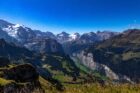
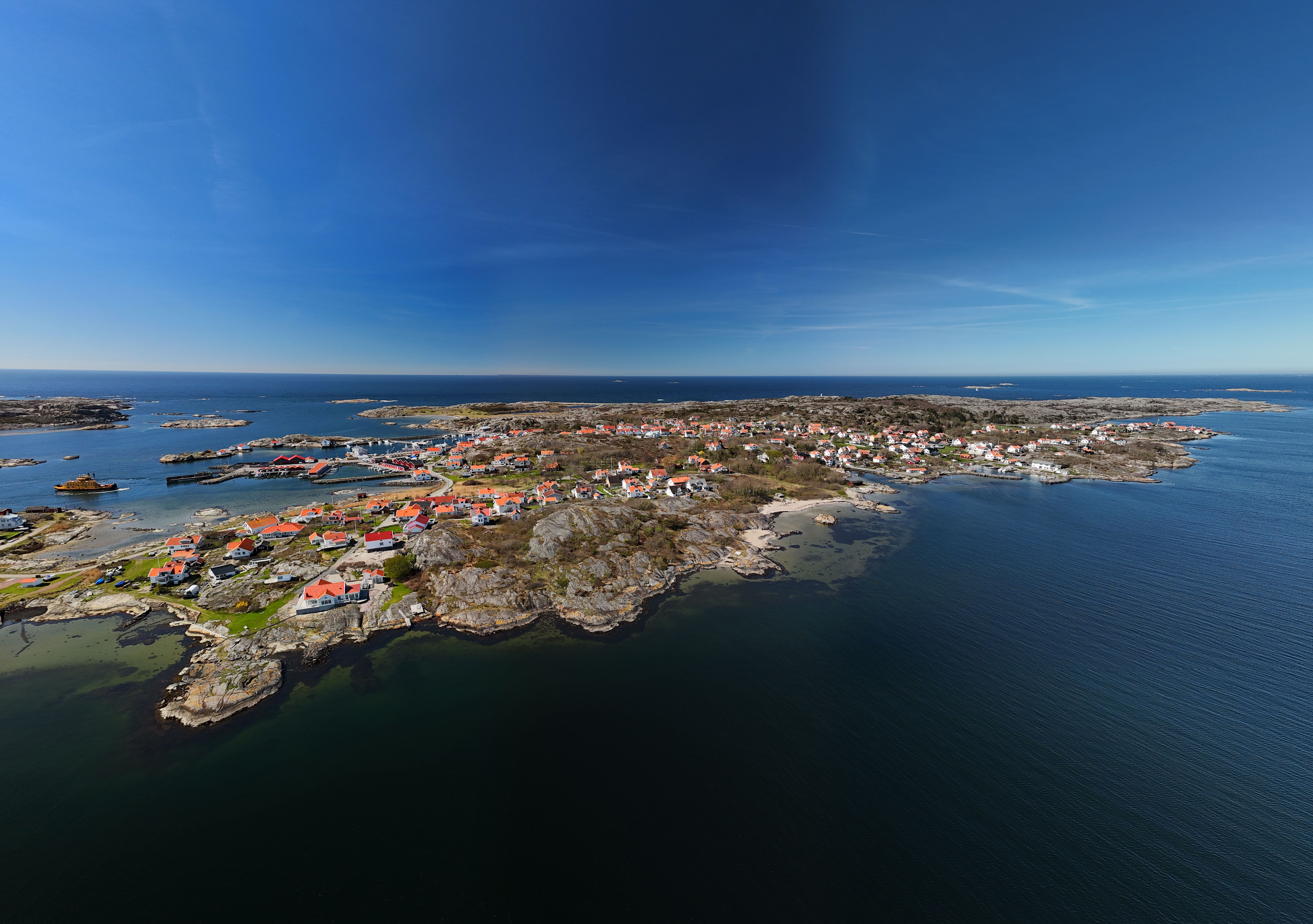

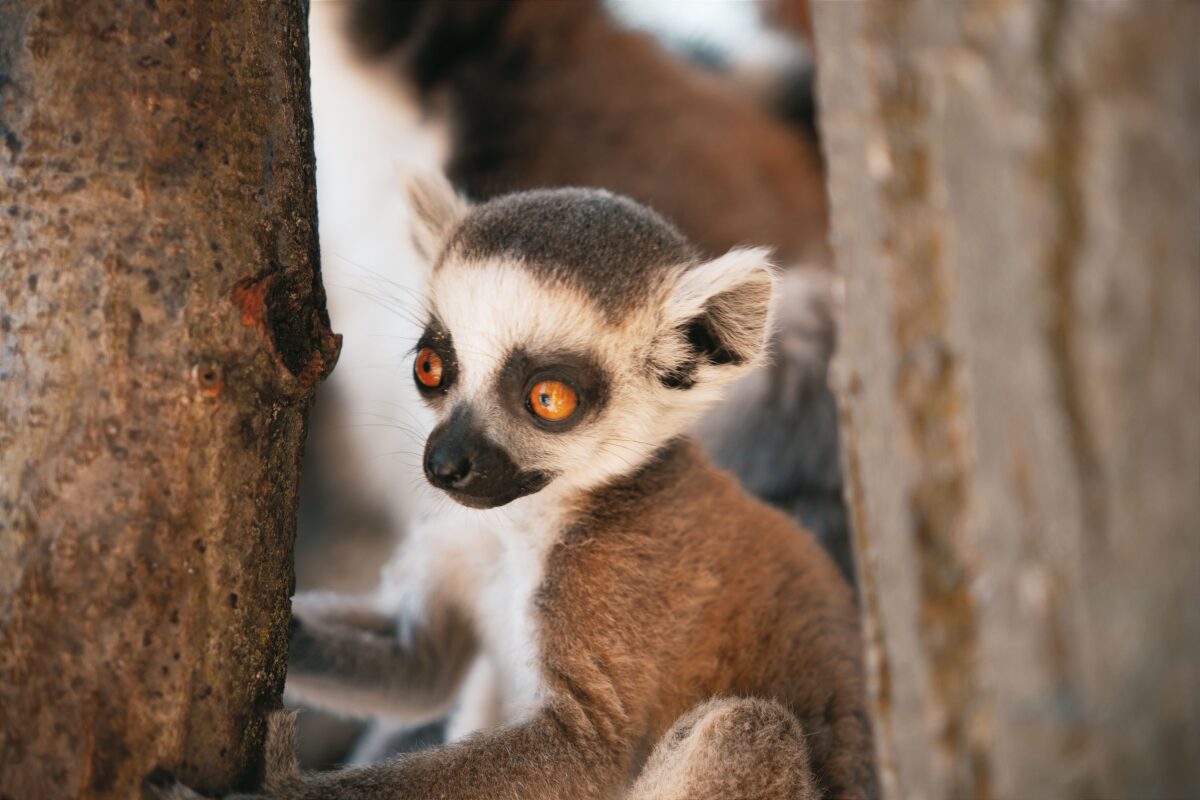
The route that gives Madagascar the treatment the world’s fourth largest island deserves: two days in Antananarivo for the Rova of Antananarivo (the royal palace complex above the capital — the city visible from the hilltop palace in every direction, the Merina kingdom architecture specific to the high plateau) and the Analakely market, two days in the Andasibe-Mantadia National Park (the indri (Indri indri) — the largest living lemur, the black-and-white coloration visible at 10 metres in the canopy, the wailing territorial call audible at dawn across the rainforest — the specific Madagascar sound that no other island makes), and three days in the Morondava region for the Avenue of the Baobabs (the alley of giant baobabs (Adansonia grandidieri) that the land clearing left standing, the silhouette at sunset giving the specific Madagascar landscape image that appears on every Madagascar photograph), and the Kirindy Reserve (the fossa (Cryptoprocta ferox) — the top predator of Madagascar, the cat-like carnivore visible in Kirindy as the specific Madagascar apex predator).
Reading time: 10 minutes | Last updated: 2026
Madagascar is the evolutionary argument for isolation: the island separated from Africa 165 million years ago and from India 88 million years ago, the island that subsequently evolved 90% of its wildlife found nowhere else on Earth. The 200 species of lemur, the 7 species of baobab (6 of the 8 Adansonia species are endemic to Madagascar — the 7th is the common baobab found across Africa), and the fossa (the top carnivore, the mongoose relative that the isolated Madagascar evolved independently into the equivalent of the African leopard) all exist only here.
Before You Leave
Getting there: Fly London-Antananarivo (Tana — the Ivato International Airport) via Nairobi (Kenya Airways), Paris (Air France), or Addis Ababa (Ethiopian Airlines) — 14-18 hours total. UK citizens: Madagascar e-Visa at e-visa.gov.mg (USD 65 / £51.18, 60-day tourist visa).
The car: Essential outside Tana. The Madagascar RN7 (the Route Nationale 7 — the main road south from Tana to Tulear, 950km, the road that connects the main tourist circuit through 4-6 days of driving) is the spine of the island circuit. A 4WD is required for the Kirindy Reserve approach (the last 60km is sand track).
The season: April-October (the dry season — the roads accessible, the wildlife active, the lemur visible). November-March (the wet season — the roads flooded on many circuits, the cyclone risk in the northern and eastern regions).
The Route
Antananarivo (1 night) → Andasibe (2 nights, 3 hours east by car) → return Tana, fly Tana-Morondava (1 hour) → Morondava and Avenue of Baobabs (3 nights) → Kirindy Reserve (1 day trip) → fly Morondava-Tana, fly home
DAY 1 — Antananarivo
The Rova:
The Rova of Antananarivo (the royal palace complex on the hilltop — the Merina Kingdom palace destroyed by fire in 1995 and partially restored, the hilltop position giving the Tana capital visible in the bowl of the high plateau below):
Entry: MGA 20,000 / £3.66.
The Analakely Market:
The Analakely (the central Tana market — the zoma (the Friday market, the largest outdoor market in Africa) reduced to the daily covered market, the vanilla, the cloves, the ylang-ylang (the specific Madagascar spice export), and the lamba (the traditional Madagascar silk wrap)):
At 8am: the market at the working hour.
DAYS 2-3 — Andasibe National Park
The indri at dawn:
The indri (Indri indri — the largest living lemur, the black-and-white coloration, the specific dawn territorial call (the wailing chorus audible across the rainforest at 6am, each indri family calling from their territory simultaneously, the specific sound that the Madagascar endemic produces)):
The guide instruction: The indri sighting requires the licensed park guide (mandatory entry to the Andasibe-Mantadia National Park), the dawn departure (6am — the indri is most active and most vocal in the 2 hours after dawn), and the quiet approach to within 10-20 metres of the indri in the canopy above:
Park entry: MGA 80,000 / £14.65 per day. Guide: MGA 30,000-50,000 / £5.50-9.17 per day.
The night walk:
The guided night walk (the Andasibe forest at night — the mouse lemur (Microcebus — the world’s smallest primate, 30-45g, the specific Madagascar endemic visible by torchlight at eye level in the understorey), the chameleon (Madagascar has 50% of the world’s chameleon species — the Parson’s chameleon (Calumma parsonii), the world’s largest chameleon at 70cm, visible by torchlight at the branch level)):
MGA 20,000-30,000 / £3.67-5.50 per person for the guided 2-hour night walk.
DAYS 4-7 — Morondava and the Baobabs
The Avenue of the Baobabs:
The Avenue of the Baobabs (the RN8 road between Morondava and Belo-sur-Tsiribihina — the 20+ Adansonia grandidieri baobab trees standing in the former forest cleared for the agricultural land, the specific Madagascar landscape image):
At sunset (the hour before sunset — the specific orange light on the baobab trunks, the red laterite road visible below, the trees silhouetted against the sky behind): free.
At dawn: the same scene in the first light, the mist at the base, the 10-15 people at dawn versus the 150 at sunset. Both are the correct visit; both give the different image of the same trees.
The Adansonia grandidieri specific note: the 6 Madagascar-endemic baobab species include the grandidieri (the most massive), the za (the most common), the rubrostipa, the madagascariensis, the suarezensis, and the perrieri. The Avenue of the Baobabs is the grandidieri — the species that the IUCN classifies as Endangered, the population declining as the habitat clears.
The Kirindy Reserve and the Fossa:
The Kirindy Reserve (the dry deciduous forest 60km north of Morondava — the fossa (Cryptoprocta ferox) visible in the Kirindy as the specific Madagascar apex predator encounter):
The fossa at the Kirindy feeding station (the guides at Kirindy have identified the individual fossa in the reserve territory — the stations where the fossa is reliably encountered at 9am and 5pm during the dry season): the specific Madagascar encounter that no other destination gives because the fossa exists nowhere else.
Reserve entry and guide: MGA 50,000 / £9.17 per person.
What It Costs
| Category | Budget | Mid-Range |
|---|---|---|
| Return flights (UK-Tana) | £550-900 | £750-1,200 |
| Madagascar e-Visa | £51 | £51 |
| Internal flight (Tana-Morondava return) | £80-150 | £80-150 |
| 7 nights accommodation | £70-175 | £175-490 |
| Car hire with driver (Andasibe + Morondava circuits) | £150-300 | £200-450 |
| Park fees and guides | £50-100 | £70-140 |
| Food (7 days) | £25-70 | £70-175 |
| Total | £976-1,746 | £1,395-2,656 |