
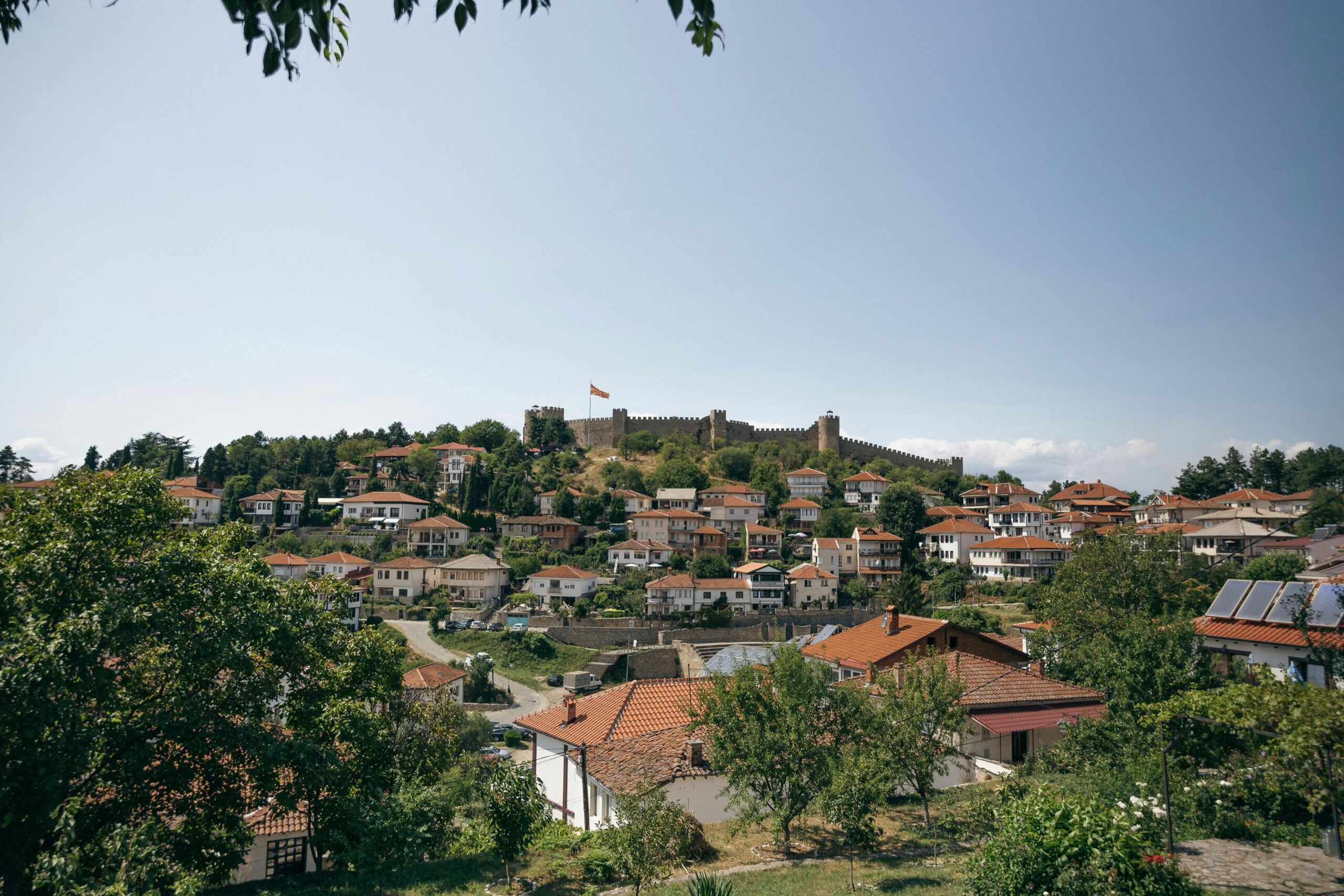
Lake Ohrid is older than every fish species living in it and every country that has ever claimed it. Skopje’s old bazaar (the Čaršija) predates the baroque statues the government built to distract from it by several hundred years. The Matka Canyon is 30 minutes from the capital and receives fewer annual visitors than a medium-sized UK shopping centre. And the entire country — the size of Yorkshire, with a population of 2 million — costs less per day than the hotel breakfast at a London mid-range.
Reading time: 10 minutes | Last updated: 2025
North Macedonia declared independence from Yugoslavia in 1991, got embroiled in a 27-year naming dispute with Greece (the Prespa Agreement of 2018 resolved it — “North Macedonia” rather than simply “Macedonia,” Greece’s concession being recognition of an independent state its politicians had opposed for decades), and spent most of that period invisible to Western European tourism.
The dispute is over. The country exists, runs, and is very good. The Balkans Triple guide covers North Macedonia in the context of the regional circuit. This guide covers it on its own terms.
When to Go
May-June and September-October — the primary windows. Lake Ohrid swimmable from June (the lake reaches 22-24°C by mid-June), the summer crowds on the lake not yet established in May. The Matka Canyon hiking accessible from April. September: the grape harvest visible in the Tikveš wine region.
July-August — peak season. Lake Ohrid fills with Macedonian, Albanian, and Kosovar summer visitors — the lake towns are busy, the boats on the lake running at capacity. The water at its warmest (26-28°C). Manageable.
November-March — the quiet season. The lake still beautiful in the winter light. The Matka Canyon atmospheric with fewer visitors. Skopje cold and unspectacular in November-February.
Getting There
Skopje International Airport (SKP): Wizz Air from London Luton (2.5 hours, return £50-120). Ryanair from several UK airports. Direct flights from the UK are frequent and cheap.
The overland alternative: From Ohrid specifically — the combination of Tirana (Albania) + Ohrid is logical for travellers already in Albania. The distance from Tirana to Ohrid: 100km, 3 hours by shared minibus (the connection runs daily through the border at Qafë Thanë).
Lake Ohrid
Lake Ohrid is the oldest lake in Europe — 4-10 million years old (disputed; the geological evidence supports 4 million years minimum), a relic lake that has survived every climate event since the Miocene. The specific consequence: the endemic species found nowhere else on Earth. 17 endemic fish species, hundreds of endemic invertebrate species, the Ohrid trout (the salmo letnica — the largest of the endemic species, the one that appears on every restaurant menu in the lake towns, the population now protected by catch limits after near-extinction from over-fishing).
The lake is shared between North Macedonia (the northern two-thirds) and Albania (the southern third). The Macedonian side: Ohrid city, Struga, and the 34km of lake coast between them. The Albanian side: Pogradec and the Lin Peninsula.
Ohrid city:
The most significant medieval heritage in North Macedonia — 365 churches (the claim of one per day of the year is traditional rather than strictly accurate; the current count is lower, though the density is genuine), the Ohrid Fortress (the medieval fortification above the old city, the view over the lake from the walls), and the Church of Saint Sophia (the 11th-century Byzantine cathedral with the fresco programme that is the most significant surviving Byzantine painting in the country: entry 200 MKD / £2.67).
The Church of Saint John at Kaneo — the small Byzantine church on the clifftop above the lake, visible from the water, the most photographed single image in North Macedonia. Entry free. At dawn, before the photography groups arrive: the church, the lake, the Albanian mountains on the far shore.
The old bazaar (the Čaršija): the Ottoman trading quarter, the çarşı tradition visible in the craft shops — the Ohrid pearl (the imitation pearl made from fish scale extract, unique to Ohrid, the production technique a local trade secret since the 17th century), the traditional jewellery, and the fabric shops.
The lake circuit:
The boat from Ohrid harbour to the Monastery of Saint Naum (30km south, at the Albanian border — the monastery built in the 10th century, the peacocks in the monastery courtyard, the springs of the Black Drin River visible bubbling up from the lake floor at the monastery dock): 1,000-1,500 MKD / £13.37-20.05 per person return on the tourist boats, departing hourly from 9am.
Skopje
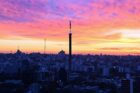
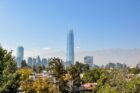
Skopje is one of the more peculiar European capitals — the city that was almost entirely destroyed by a 1963 earthquake and was rebuilt in a brutalist architectural style, then overlaid in the 2010s by a government project (“Skopje 2014”) that added baroque facades, neoclassical statues, triumphal arches, and fountain-studded plazas to the city centre. The result is a capital city that simultaneously has some of the finest socialist modernist architecture in the Balkans and some of the most aggressively kitsch neoclassical decoration in Europe — often visible simultaneously.
The correct approach: accept both as the specific Skopje experience rather than looking for a coherent aesthetic.
The Čaršija (the old bazaar):
The Ottoman trading quarter north of the Stone Bridge — the oldest continuously inhabited part of Skopje, the bazaar that the earthquake didn’t damage because it was largely built in stone, the Mustafa Pasha Mosque (1492, the finest Ottoman mosque in North Macedonia), and the network of craftspeople’s streets (the jewellers, the cobblers, the coppersmith street). The Čaršija at 9am before the tourist day begins: the working market, the café culture, the specific Skopje that predates the government’s neoclassical enthusiasm by 500 years.
The Mother Teresa Memorial House (she was born here in 1910 when the city was still part of the Ottoman Empire): the museum covering her life and the Catholic Albanian community of early 20th-century Skopje. Entry: free.
The Matka Canyon:
15km from Skopje by taxi (600-800 MKD / £8.02-10.70) or by local bus (line 60, 60 MKD / £0.80) — the canyon where the River Treska has cut through the limestone plateau, the canyon walls 100m above the water, the cave system accessible by small motorised boat (Cave Vrelo: the longest underwater cave in the Balkans, the stalagmites and stalactites visible from the boat). Boat hire for the canyon circuit: 900-1,200 MKD / £12.03-16.04 per boat (shared between the group).
The canyon walk from the restaurant near the dam: 2km along the canyon wall, the path carved into the limestone, the water below visible at the path’s edge. Free access.
Macedonian Food
The tavče gravče:
The baked bean dish cooked in a traditional earthenware tavče pot — the white beans slow-baked with onion, tomato, peppers, and paprika, the dish that is the most specifically Macedonian single food item. Available at any traditional Macedonian restaurant. 200-350 MKD / £2.67-4.68 per portion.
The ajvar:
The roasted red pepper condiment — the peppers roasted, skinned, and ground with garlic and olive oil into a paste that is simultaneously a spread, a dip, and a sauce. The Macedonian ajvar has been given EU Protected Geographical Indication status; the specifically Macedonian version uses the capija pepper (the large, sweet Macedonian pepper) and a specific slow-cooking process. From any Skopje market: 150-300 MKD / £2.01-4.01 per jar.
The Macedonian wine:
The Tikveš wine region (south-central North Macedonia, the most important wine-producing area of the Balkans) produces Vranec (the local red grape, producing wines of deep colour and significant tannin, the Tikveš Barovo the most internationally recognised example) and Smederevka (the white, lighter and aromatic). At any Skopje restaurant: 200-400 MKD / £2.67-5.35 per glass for a Tikveš Vranec.
What It Costs
North Macedonia is among the cheapest countries in Europe.
| Category | Daily Budget |
|---|---|
| Accommodation (Ohrid guesthouse) | 800-1,500 MKD / £10.70-20.05 |
| Accommodation (Skopje hotel) | 1,200-2,500 MKD / £16.04-33.42 |
| Food (restaurants + market) | 600-1,000 MKD / £8.02-13.37 |
| Transport | 100-500 MKD / £1.34-6.68 |
| Daily total | 1,500-3,000 MKD / £20.05-40.10 |
7-day North Macedonia including flights: £450-750 total.
The 5-Day Itinerary
Day 1: Fly Skopje. Afternoon: Čaršija, Skopje old bazaar. Evening: rakija at the old bazaar kafana.
Day 2: Skopje (Matka Canyon morning, the monument circuit afternoon — including the Skopje 2014 architecture viewed as the phenomenon it is rather than pretended away).
Day 3: Bus to Ohrid (3.5 hours, 500 MKD / £6.68). Afternoon: Church of Saint John at Kaneo at 5pm, the sunset from the cliff.
Day 4: Ohrid. Morning: Church of Saint Sophia. Afternoon: boat to Saint Naum monastery (10am departure, return 2pm). Evening swim in the lake.
Day 5: Morning in Ohrid old town. Bus to Skopje, fly home.