



The rules that experienced travellers actually use, not the rules that keep you eating at hotel restaurants.
The Five Principles
1. Heat kills everything that matters.
Food that has been cooked to 70°C+ in the previous 5 minutes is safe. The sizzling pad kra pao from the wok at 11am is safe. The pad kra pao that’s been sitting in a bain-marie since 9am is the risk.
The visual test: Is there heat visible? Is there steam? Is there active cooking happening? Yes: the food is probably safe. No: proceed with caution.
2. High turnover means fresh.
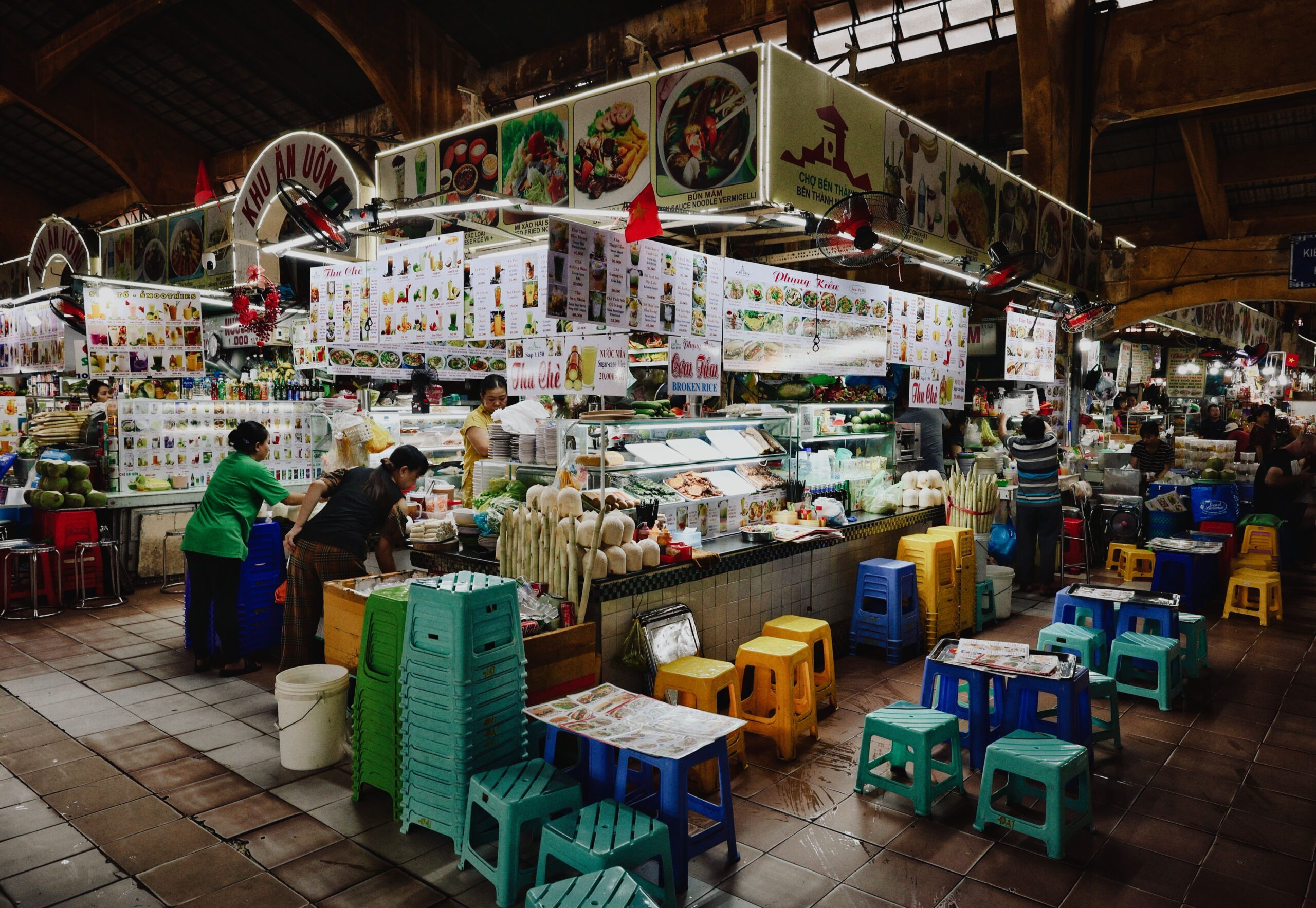
The stall with the longest queue is the safest stall. The queue indicates volume of customers — high volume means the food sells before it deteriorates. The empty stall next door (even if the food looks identical) has food that’s been sitting since it was prepared.
The specific application: the Hanoi pho stall that’s full of Vietnamese workers at 7am is safer than the empty stall across the road. The queue is the hygiene certificate.
3. The cooked-in-front-of-you principle.
Food prepared in front of you — the taco al pastor where the taquero slices the meat directly onto your tortilla, the Marrakchi mechoui hacked to order, the Bangkok pad thai made fresh in the wok — is the safest street food. Prepared-in-advance food sitting in pots or trays: higher risk, not prohibitive, but handle with the awareness that time at temperature matters.
4. Peel it, boil it, cook it, or forget it.
The old traveller’s maxim for raw produce: fresh fruit you can peel yourself (banana, mango, papaya, pineapple) is safe. Fruit already cut and pre-peeled on the stall: potential surface contamination. Salads washed in tap water in countries where tap water is unsafe: the most consistent cause of traveller’s diarrhoea beyond bad luck.
5. Tap water is the variable, not the food.
Most traveller’s stomach issues in Southeast Asia, the Middle East, and Africa come from tap water rather than food — the ice in the drink, the water used to wash the salad, the water used to brush teeth. The food itself, if freshly cooked, is typically safe.
The ice question: factory-made ice (the cylinder or pillar ice with the hole through the centre, made in a controlled factory environment) is typically safe — the vendors purchase it from certified facilities. The cracked ice (the irregular chunks, cracked from a block) is the one to decline.
The Digestive Preparation
Probiotics: Starting a probiotic course 2 weeks before a SE Asia trip significantly reduces the incidence of traveller’s diarrhoea in the clinical evidence. Symprove, Optibac, or any quality probiotic strain (Lactobacillus acidophilus and Bifidobacterium specifically) taken consistently before and during the trip.
Oral rehydration salts: The most important thing to carry. Diarrhoea causes dehydration; dehydration causes the secondary symptoms that make traveller’s diarrhoea serious (the headache, the weakness, the inability to keep food or water down). One Dioralyte sachet in water every 2 hours during active diarrhoea restores electrolytes faster than water alone.
Imodium: For transit emergencies only (you have a 6-hour bus and cannot stop). Imodium (loperamide) stops diarrhoea by reducing gut motility — it does not address the underlying infection, it traps it. Allow the illness to resolve naturally where the itinerary allows.