
The GR20 trail that consistently ranks as the hardest long-distance trek in Europe, the maquis scrubland that gives the entire island a specific herbal smell from the sea, the Calanques de Piana that turn orange in the evening light, Bonifacio on its limestone cliff above the sea strait that separates it from Sardinia, and why Corsica — French but not France — is the finest island in the western Mediterranean that most British travellers have never seriously considered.
Corsica is an island of 3,500 square metres in the western Mediterranean — 180km from Nice, 12km from Sardinia at its nearest point, 90km from the Italian coast. It is French (acquired from the Genoese Republic in 1768, the year before Napoleon was born in Ajaccio) but specifically Corsican: the Corsican language, the Corsican food tradition (the charcuterie, the cheese, the chestnut), and the Corsican political identity (the independence movement, the periodic violence, the perennial tension between the island and the Paris administration) are all present and all real.
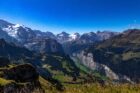
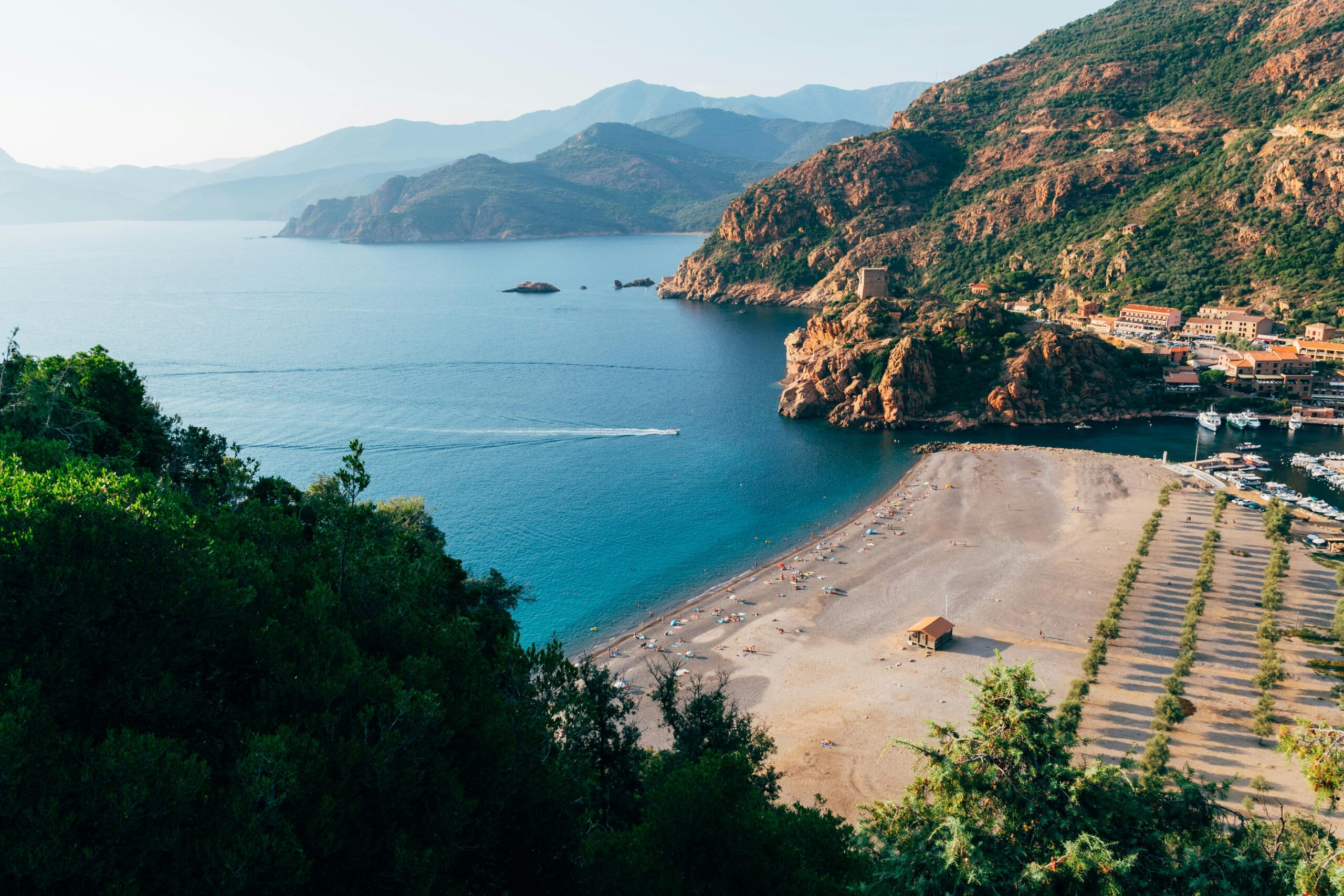
The landscape: granite mountains (the highest peak, Monte Cinto, 2,706m) in the interior, dropping to the Mediterranean in a coastline of extraordinary variety. The eastern coast is flat and sandy; the western coast is dramatic cliff, the Calanques de Piana the most dramatic section of the western coastline.
When to Go
May-June and September-October: The primary windows. The GR20 open (snowbound above 2,000m before May, the snow potentially remaining until June in a heavy winter), the sea warm enough to swim (23-25°C by June, 26°C in September), the tourist density manageable.
July-August: Peak season. Ajaccio and the coastal towns at full capacity, the GR20 with its maximum hiker density (the refuges fully booked months ahead), the car rental prices at the annual high.
Getting There
Ajaccio (AJA), Bastia (BIA), Figari (FSC), and Calvi (CLY): four airports with direct summer flights from UK airports. easyJet and Jet2 from various UK airports. Return: £80-180.
The ferry alternative: Corsica Ferries or Moby Lines from Nice (7.5 hours overnight), Toulon (12 hours), Livorno (4 hours). The overnight ferry from Nice: the correct approach for the traveller with a vehicle — the car allows the full GR20 village circuit and the coastal road independently.
The GR20 — The Honest Guide
The GR20 (Grande Randonnée 20) runs 180km from Calenzana in the north to Conca in the south — the standard approach is north-to-south (slightly easier due to the gradient direction), covering the route in 15 days with overnights at the mountain refuges managed by the Parc Naturel Régional de Corse (PNRC).
The difficulty rating:
The GR20 is rated the hardest of France’s long-distance trails (GR routes) and frequently cited as one of the hardest in Europe — not for extreme altitude (the highest point is 2,607m at the Bocca di Larone variant) but for the sustained roughness of the terrain. The trail traverses granite boulders, snow-covered passes, steep ascents and descents, and sections requiring hands for balance. The estimate: “experienced hikers find it harder than expected; inexperienced hikers find it much harder than expected.”
The refuge booking:
The PNRC refuges (pnr-corse.fr) — 19 refuges along the route, approximately one per stage, capacity 30-50 beds each in dormitory format. Booking opens in January for the following season. The refuges in July-August: fully booked weeks ahead. The camping areas adjacent to each refuge (first-come-first-served) give overflow capacity.
The partial GR20:
The southern section (Vizzavona to Conca, 9 days) is the most accessible introduction to the trail — the terrain less severe than the northern section, the landscapes equally spectacular, the logistical access (Vizzavona is on the Corsican railway) making the start point reachable without a full northern circuit.
The Calanques de Piana
The UNESCO-listed granite rock formations on the Corsican west coast — the specific orange-red granite carved by the sea into the most dramatic coastal scenery in the western Mediterranean. The Calanques accessible by the D81 coastal road between Piana and Porto, and by the boat trips from Porto (OMR 15-20 / no — Porto boat trips: €25-35 / £21.55-30.17 for the 2-hour circuit of the Calanques).
At sunset: the orange rock faces turn deep amber, the sea behind them going from turquoise to dark blue. The 30-minute window as the sun approaches the horizon above the rock faces.
The Food
The Corsican charcuterie — the prisuttu (the Corsican Prosciutto, cured for 24 months, the pigs fed on chestnuts and acorns in the Corsican maquis), the coppa (the cured shoulder), the lonzu (the cured loin). The figatellu (the liver sausage, dried or fresh, the specific Corsican preparation that appears on every island charcuterie board). At any village épicerie or market stall: the complete Corsican charcuterie for a picnic, €8-15 / £6.89-12.93.
The Brocciu: the fresh whey cheese of Corsica — the ewe’s or goat’s milk whey heated with salt, the curds rising to form the soft, lightly sour cheese that is the central ingredient in the fiadone (the Corsican cheesecake) and the chestnut beignets. The Brocciu at a village restaurant: €4-6 / £3.45-5.17 per plate.
Bonifacio
The clifftop citadel at the southern tip of Corsica — the medieval town on a white limestone promontory above the Straits of Bonifacio (the 12km strait separating Corsica from Sardinia), the most dramatically positioned town in the western Mediterranean.
The sea caves (the Grotte du Sdragonato — the Dragon’s Cave, the ceiling opening in the shape of Corsica, accessible by boat from the Bonifacio marina): €10-15 / £8.62-12.93 for the boat circuit.
Practical Notes
Car hire essential (the GR20 excluded — the trail is self-contained). Corsica’s roads are narrow and winding; a small car is more practical than a 4WD. The Bastia-Ajaccio railway (the Corsican railway, one of the most dramatic scenic railways in France) covers the interior with two routes — the mountain section between Corte and Vizzavona is the finest mountain railway in France.
Petrol: fill up in the coastal towns; the interior villages are often without fuel stations.