

After visiting 50+ countries across every climate from -8°C Wadi Rum in February to 42°C Bangkok in April, this is what stays in the bag, what was removed after the first trip, and the one item that most travellers don’t pack and should.
Reading time: 8 minutes | Last updated: 2026
The BGGD packing philosophy: carry-on only for trips up to 21 days. One 40-litre backpack or a 55cm × 40cm × 23cm case (the maximum carry-on dimensions for most airlines). Everything fits. Nothing is checked. No 45-minute baggage claim wait. No lost luggage.
This list is built around the 40-litre backpack for the warm-to-mild climate circuit (Southeast Asia, the Mediterranean, the Middle East, Central America). A separate cold-weather addition list follows for Iceland, the Himalayas, and mountain travel.
The Full List
Clothing
The 3-3-3 rule: 3 bottoms, 3 tops, 3 base layers (underwear + socks). This covers every itinerary up to 21 days with laundry access every 3-4 days (which is available at almost every guesthouse and hotel in the world for £1-3 per bag).
| Item | Quantity | Notes |
|---|---|---|
| Lightweight trousers (zip-off or convertible) | 1 | The zip-off converts to shorts — one item, two functions. Patagonia Quandary or REI Sahara recommended |
| Smart-casual trousers/chinos | 1 | For restaurant dining, temples requiring covered knees, cooler evenings |
| Shorts | 1 | Only if warm climate. Skip for mountain or cold-weather |
| T-shirts (merino wool) | 3 | Merino wool doesn’t smell after repeated use — 3 shirts covers 7-10 days between washes. Icebreaker Tech Lite or Uniqlo merino |
| Light long-sleeve (merino or synthetic) | 1 | For cold evenings, temple dress codes, and sun protection |
| Midlayer fleece | 1 | Mountain Essential (for air conditioning in Southeast Asia, chilly evenings in the Mediterranean) |
| Underwear (merino or synthetic) | 3 | Same logic as t-shirts — merino wool resists smell significantly longer than cotton |
| Socks (merino wool) | 3 pairs | Darn Tough or Smartwool. They don’t smell. Buy them once and they last 3 years |
| Swimwear | 1 | Doubles as athletic shorts |
| Light packable down jacket | 1 | The Uniqlo Ultra Light Down is the value standard (£49, packs to fist-size, adequate to 10°C). The Arc’teryx Cerium is the serious version |
| Rain jacket | 1 | The packable waterproof shell — Patagonia Torrentshell (£99, packs to 1L) is the reference |
The clothing total: 10 items, most packing flat. Fits in 2/3 of a 40L bag.
Footwear
| Item | Notes |
|---|---|
| One pair of walking shoes (trainers or trail shoes) | For 95% of travel. Allbirds Wool Runners (the lightest comfortable shoe) or Salomon Speedcross (for trail and rough terrain). On feet during travel — not in the bag |
| One pair of flip flops (packable) | Reef or Havaianas. For beach, hostel showers, and sandal occasions. Roll into socks for packing |
Two pairs only. The third pair that most people pack (the smart shoes, the hiking boots) stays at home or is regretted.
Toiletries
The 100ml / 3.4oz rule applies to all liquids in carry-on. The correct strategy: solid toiletries where possible (they’re not subject to the liquid restriction and last longer).
| Item | Notes |
|---|---|
| Shampoo bar | Ethique or Lush. One bar = 3 bottles of liquid shampoo. No liquid restriction issue |
| Conditioner bar | Same logic |
| Solid soap or body wash bar | The HiBAR or similar |
| Deodorant (solid stick, not aerosol) | The 100ml limit doesn’t apply to solid sticks |
| Toothpaste (toothpaste tablets or 100ml tube) | Huppy or Bite toothpaste tablets eliminate the tube entirely |
| Toothbrush | Compact travel version |
| Face moisturiser with SPF | The one liquid item worth carrying in a 100ml bottle |
| Lip balm with SPF | Essential at altitude and in strong sun |
| Razor | One reusable safety razor with 5-10 blades — lighter than a disposable and produces less waste |
| Sunscreen (100ml) | Refillable travel bottle, or buy on arrival in most warm destinations |
| Microfibre towel | The Sea to Summit Airlite is 75g and dries in 30 minutes. Covers guesthouses without towels and beach days |
Electronics
| Item | Notes |
|---|---|
| Phone | The GPS, the camera, the guide, the translation tool, the boarding pass, the map |
| Universal travel adaptor (compact) | The TESSAN compact adaptor covers 150+ countries in a 6cm cube |
| Power bank (10,000mAh minimum) | The Anker PowerCore 10000 fits in a jeans pocket, weighs 180g, charges a phone 2.5 times |
| USB-C charging cable (1m) | One cable charges the phone, the power bank, and most modern laptops |
| Laptop or tablet | Context-dependent. For photography editing and extended work: necessary. For standard travel: the phone + power bank is sufficient |
| Earbuds (wireless, with case) | For flights, overnight trains, and the morning meditation that doesn’t happen |
| Headtorch | Non-negotiable for cave temples, hiking before dawn, and accommodation with unreliable electricity. The Black Diamond Spot, 3 AAA batteries, 200 lumens |
Health and Safety
| Item | Notes |
|---|---|
| Prescription medications | In original packaging. Carry a signed letter from the prescribing GP for controlled substances |
| Diarrhoea treatment (Imodium) | For transit emergencies only — diarrhoea that needs to stop for a long bus journey. Not a substitute for allowing the illness to resolve |
| Oral rehydration salts | The most important item in this section — dehydration from diarrhoea, heat, or altitude is serious. Dioralyte or similar. Take 2-3 sachets |
| Antihistamine (cetirizine) | For insect reactions, hay fever at altitude, or the allergic reaction to the unknown ingredient |
| High SPF sunscreen (100ml) | Already listed above but worth emphasising: the Saharan plateau, the Himalayan snowfield, and the equatorial beach all produce burns in 15 minutes on unprotected pale UK skin |
| Small first aid kit | A resealable bag containing: 6 adhesive bandages, 2 gauze pads, medical tape, 2 blister plasters (Compeed), antiseptic wipes. Not a full first aid kit — a ‘holds the situation until pharmacy access’ kit |
| Malaria prophylaxis | For destinations with malaria risk (Southeast Asia, Sub-Saharan Africa, India) — prescribed by a travel clinic. Start the course before departure per the prescribing instructions |
Documents and Admin
| Item | Notes |
|---|---|
| Passport (6 months validity beyond travel dates) | Check the validity before booking, not after |
| Physical copies of key bookings | One printed A4 with: first night accommodation, return flight details, travel insurance emergency number, credit card emergency contact numbers. Stored separately from phone |
| Travel insurance documents | The emergency line number saved in the phone AND on the physical paper |
| Yellow fever certificate | For destinations requiring it (check the FCO advice) — a physical booklet from the travel clinic |
The Bag
| Item | Notes |
|---|---|
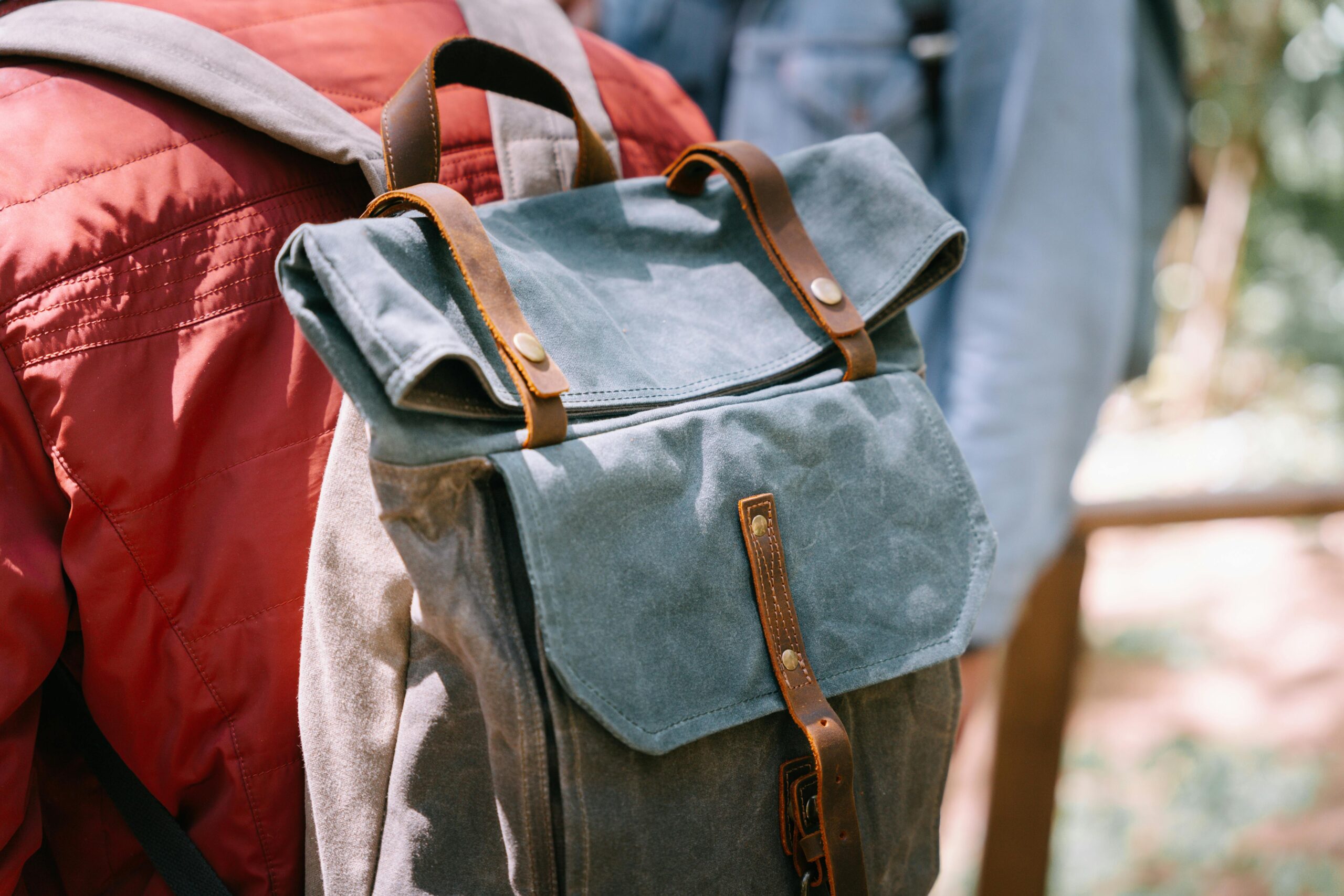
| Main bag: 40L daypack (Osprey Farpoint 40 or Tortuga Setout 45) | The Osprey Farpoint 40 has a suspended back panel, fits airlines’ overhead dimensions, and is comfortable on the back. The Tortuga Setout is broader and more luggage-like if preferred |
| Small day bag (15-20L packable) | For day trips, market visits, and the beach. The Osprey Daylite Plus packs flat into the main bag |
The Cold-Weather Addition List (Iceland, Himalayas, Mountain Travel)
When the destination reaches below 5°C and the standard packing list is insufficient:
| Item | Addition or Swap |
|---|---|
| Replace light trousers with thermal base layer leggings | Worn under the regular trousers for +10°C insulation |
| Add merino wool neck gaiter | Covers the neck gap between jacket and helmet/hat |
| Add wool beanie | Standard |
| Upgrade rain jacket to hardshell (if budget allows) | For sustained rain and wind above 2,000m |
| Add hand warmers (6 chemical packets) | For Himalayan dawn starts and Iceland aurora waiting |
| Upgrade power bank to 20,000mAh | Cold dramatically reduces battery performance — the phone at -10°C can lose 40% battery in an hour |
| Trekking poles (if hiking) | Hire at the trailhead in Nepal; bring your own for Iceland or the Alps |
What Was Removed
The items that went into the bag for the first trip and have never returned:
Multiple pairs of shoes: One pair of walking shoes and one pair of flip flops. The smart shoes stayed home.
The full-size toiletries: The transition to solid shampoo/conditioner bars was the most impactful packing change. The liquid toiletry bag went from 1.2kg to 200g.
The travel pillow: The airline pillow, the jacket-as-pillow, and the rolled t-shirt all perform adequately. The dedicated inflatable travel pillow goes in the bin.
The physical guidebook: The weight of a Lonely Planet (600g) versus downloading the relevant pages as PDFs (0g). The guidebook stays at home; the PDFs travel.
The first aid kit that would stock a field hospital: The small Ziploc bag with 8 items replaces the £45 first aid kit that weighs 450g and contains 90% items never used.
The One Item Most Travellers Don’t Pack
A packable laundry bag:
The £1.20 mesh laundry bag that separates the clean clothes from the dirty clothes in the 40L bag. Without it, the bag becomes a unified clean-and-dirty zone by day 3. With it, the organisation is maintained for the full trip.
The specific failure mode this prevents: pulling a clean merino t-shirt out of the bag on day 12 and discovering it is not clean because it’s been touching the days 3-12 socks since day 3.
Buy three. One for dirty clothes. One for the toiletry kit. One for the electronic cables.