
The BGGD World Discovery Guide
A free guide from bggdworld.com | @bggdworld
These are the places that make people argue about whether the photographs have been edited.
They haven’t been. The colours are real. The scale is real. The specific feeling of standing in front of something that shouldn’t exist — and does — is real.
50 destinations. Every continent. The full range from accessible to remote, budget to splurge, 2-day visit to 2-week circuit.
The guides to every destination in this list are at bggdworld.com.
The 50 Places
1. Deadvlei, Namibia
Dead black trees on a white clay pan surrounded by the highest sand dunes in the world. The colours — black, white, deep orange — look composited. They aren’t. The trees have been dead for 900 years. The dunes are 325 metres high. The palette is iron oxide against evaporated salt against 900 years of equatorial sun. Full guide: Deadvlei vs Sossusvlei — Namibia’s Most Photographed Landscapes → bggdworld.com/deadvlei
2. Sete Cidades, Azores
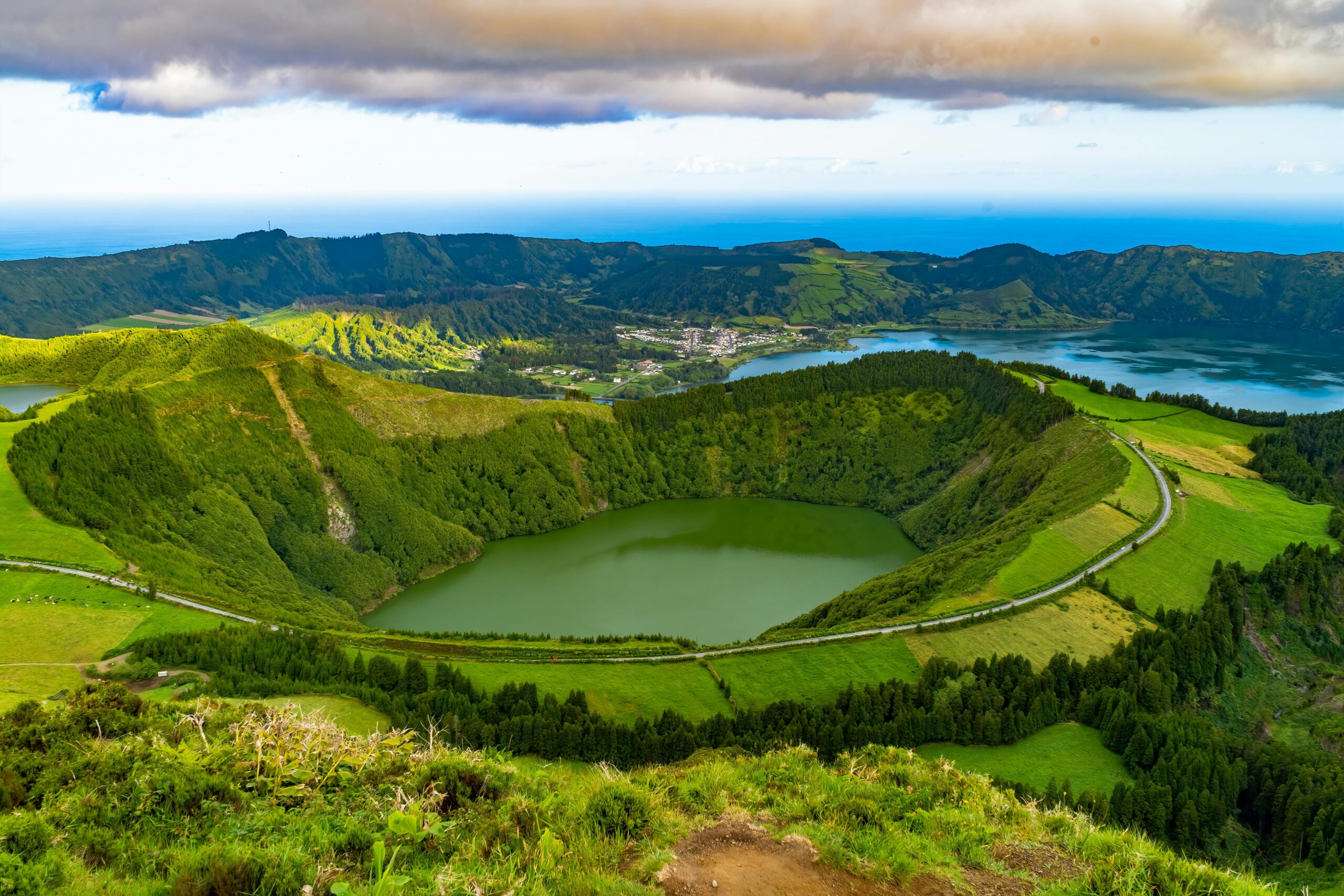
Twin crater lakes — one blue, one green — in the caldera of an extinct volcano on the island of São Miguel. The colour difference is produced by the specific algae composition in each lake. The miradouro above the crater gives the view that makes every photograph look like it was taken from a helicopter. It wasn’t. Full guide: The Azores — bggdworld.com/azores
3. Ha Long Bay, Vietnam
1,969 limestone karst islands rising from the Gulf of Tonkin. The morning mist lies in the valleys between the karsts at dawn. The photographs are accurate. The overnight cruise is the only version worth doing. Full guide: Ha Long Bay — Cruise vs Day Trip → bggdworld.com/halong
4. The Salar de Uyuni, Bolivia
The world’s largest salt flat — 10,582 square kilometres at 3,656m altitude. After rain: a mirror reflecting the sky so perfectly that up and down become indistinguishable. In the dry season: a white geometric expanse extending to the horizon. In both versions: one of the most other-worldly landscapes on Earth. Coming soon: Bolivia — The BGGD Guide
5. The Pamukkale Terraces, Turkey
Calcium-rich thermal spring water flowing over the edge of a plateau has deposited white travertine in tiers over millennia — the result is a white crystalline cascade that looks precisely like a frozen waterfall. The thermal pools are warm and swimmable. Full guide: Turkey — The BGGD Guide → bggdworld.com/turkey
6. Plitvice Lakes, Croatia
16 terraced lakes connected by waterfalls, the water so clear that the fish are visible in 8 metres of depth. The colour: an impossible blue-green produced by calcium and magnesium in the water reacting with the limestone. UNESCO-listed since 1979. Full guide: Croatia — The BGGD Guide → bggdworld.com/croatia
7. The Soča River, Slovenia
The most vivid river water in Europe — a glacial green-blue that looks filtered but is entirely produced by the limestone geology and the glacial meltwater of the Julian Alps. The colour is most saturated from above, on the bridges at Bovec and Kobarid. Full guide: Slovenia — The BGGD Guide → bggdworld.com/slovenia
8. Cappadocia at Balloon Dawn, Turkey
The hot air balloons rising simultaneously over the volcanic landscape at dawn — the fairy chimneys below, the balloons at varying altitudes, the light coming from the east. This happens every morning when conditions allow. The photographs are accurate. Full guide: Cappadocia — The Complete BGGD Guide → bggdworld.com/cappadocia
9. The Zhangjiajie Pillars, China
The sandstone pillar formations that inspired the floating mountains in Avatar — 3,000 quartzite pillars rising from the subtropical forest, clouds in the valleys between them. The Avatar connection is both the reason most people know the place and the most reductive way to describe it. Coming soon: China — The BGGD Guide
10. Lake Baikal, Russia
The world’s oldest and deepest lake — 1,642 metres deep, 25 million years old, containing 20% of the world’s unfrozen surface fresh water. In winter: the ice is transparent, the depth visible below, the ice fractured into geometric patterns by the pressure of the freeze. Coming soon: Russia — Trans-Siberian and Baikal
11. The Waitomo Glowworm Caves, New Zealand
Limestone caves in the Waikato region, the ceilings covered with thousands of Arachnocampa luminosa (a bioluminescent larva found only in New Zealand). The ceiling of the cave appears as a night sky. The silence required to not disturb the glowworms is the specific quality of the experience. Coming soon: New Zealand — The BGGD Guide
12. Antelope Canyon, Arizona, USA
A slot canyon carved by flash floods — the light beams that appear at midday in Upper Antelope Canyon are the most photographed single natural phenomenon in the American Southwest. The canyon walls are Navajo sandstone, the colours running from cream to deep orange to purple. Coming soon: USA Southwest — The BGGD Guide
13. Mount Roraima, Venezuela/Brazil/Guyana
A tepui (table-top mountain) rising 2,810 metres above the Amazon rainforest — the summit plateau has its own ecosystem, with species found nowhere else on Earth. The clouds that surround the tepui for most of the year obscure and reveal the rock face. The inspiration for Arthur Conan Doyle’s The Lost World. Coming soon: Venezuela — The BGGD Guide
14. The Faroe Islands
18 volcanic islands in the North Atlantic, 320km north of Scotland — the grass so green it appears saturated, the sea so grey it appears rendered. The specific quality of the Faroes: the light, the silence, and the specific loneliness of the Atlantic archipelago. Coming soon: The Faroe Islands — The BGGD Guide
15. Jeju Island Lava Tubes, South Korea
The Manjanggul lava tube — a 13km underground tunnel formed by the solidification of the outer surface of a lava flow while the molten interior continued flowing and eventually drained. The 7.4km accessible section is among the longest accessible lava tubes in the world. Coming soon: South Korea — The BGGD Guide
16. The Trolltunga, Norway
A rock formation extending horizontally from a mountain face 700 metres above Lake Ringedalsvatn — the 22km hike round trip, 1,100m elevation gain. The rock itself has been standing for 10,000 years. Coming soon: Norway — The BGGD Guide
17. The Chocolate Hills, Philippines
1,776 almost perfectly symmetrical hills across 50 square kilometres of Bohol Island — brown in the dry season (giving the name), green in the wet. The origin of the specific geometry is not entirely understood. Full guide: Philippines — The BGGD Guide → bggdworld.com/philippines
18. Lake Hillier, Australia
A pink lake on Middle Island off the south coast of Western Australia — the colour produced by the halophilic algae Dunaliella salina in combination with brine shrimp. The pink is permanent and visible from the air year-round. Coming soon: Australia — The BGGD Guide
19. The Stone Forest (Shilin), China
Limestone pillars in Yunnan Province, some reaching 30 metres — the largest covering 400 square kilometres. The specific formation: the limestone uplifted from the seafloor 270 million years ago, then eroded by rain into the current vertical forms. Coming soon: China — The BGGD Guide
20. The Namib Desert Night Sky
Namibia has the largest area of pristine dark sky in the southern hemisphere. The NamibRand Nature Reserve (adjacent to Sossusvlei) is an International Dark Sky Reserve. The Milky Way from a Namibian desert camp in June is one of the clearest views of the galactic core available on Earth. Full guide: Namibia — The BGGD Guide → bggdworld.com/namibia
21. The Fly Geyser, Nevada, USA
A man-made accidental geyser — a well drilled in 1964 struck geothermal water, was incorrectly sealed, and the pressure has been building terraced mineral deposits ever since. The specific colours (red, green) are produced by thermophilic algae in the hot water. Coming soon: USA — The BGGD Guide
22. The Spotted Lake (Khiluk), Canada
A hypersaline lake in British Columbia whose water evaporates in summer to reveal circular spots of different colours — each spot a different mineral concentration producing a different colour. From the road (the lake is on private Okanagan Nation Alliance land): the most specific landscape in Canada. Coming soon: Canada — The BGGD Guide
23. Fiordland, New Zealand
Milford Sound and Doubtful Sound — the fiords of the South Island, the waterfalls descending 1,200 metres to the water, the dolphins in the boat wake. The sound of Milford Sound in rain: extraordinary. Coming soon: New Zealand — The BGGD Guide
24. The Tianmen Mountain Glass Bridge, China
A glass-bottomed walkway on the cliff face of Tianmen Mountain in Hunan Province — 1,430m above the valley, the valley visible through the floor. The specific quality: the glass is 6cm thick and can bear a load of 800kg per square metre. The specific experience: standing on it anyway. Coming soon: China — The BGGD Guide
25. The Skeleton Coast, Namibia
The northern Namibian coast where the cold Benguela Current meets the Namib Desert — the fog rolls in from the Atlantic, the whale and ship skeletons visible on the beach, the specific desolation of a coast that the Bushmen called “The Land God Made in Anger.” Full guide: Namibia — The BGGD Guide → bggdworld.com/namibia
26. The Blue Caves, Kefalonia, Greece
Sea caves on the northwest coast of the island — the light entering from below the water’s surface fills the caves with an electric blue glow. Accessible by small boat from Assos or Fiskardo. Coming soon: Greece — The BGGD Guide
27. The Caño Cristales, Colombia
The “river of five colours” — a river in the Serranía de la Macarena that turns red, yellow, green, blue, and black between July and November when the Macarenia clavigera aquatic plant flowers in the riverbed. One of the most specific seasonal natural phenomena on Earth. Full guide: Colombia — The BGGD Guide → bggdworld.com/colombia
28. The Lençóis Maranhenses, Brazil
A coastal desert of white sand dunes flooded with rainwater from January to September — the rainwater fills the valleys between the dunes, producing hundreds of blue and green lagoons in the desert. No river connects them; they evaporate in the dry season and refill the following year. Coming soon: Brazil — The BGGD Guide
29. The Landmannalaugar, Iceland
A geothermal highland area in the Icelandic interior — the rhyolite mountains in green, yellow, pink, and grey, the geothermal steam visible from the walking trails, the natural hot spring pool at the campsite. Accessible only from mid-July to September. Full guide: Iceland on a Budget → bggdworld.com/iceland-budget
30. The Marble Caves, Chile
Lake General Carrera (the largest lake in Chile, shared with Argentina) contains the Cuevas de Mármol — marble formations on a peninsula, the lake water reflecting off the cave ceilings in shades of blue that change with the water level throughout the year. Coming soon: Chile and Patagonia — The BGGD Guide
31. The Danakil Depression, Ethiopia
The hottest place on Earth on average — 125 metres below sea level, the temperature above 50°C, the landscape of active lava lakes (Erta Ale volcano), sulphur springs in yellow and green, and salt plains. Accessible only with a guide and a permit. Full guide: Ethiopia — The BGGD Guide → bggdworld.com/ethiopia
32. The Glowworm Gulch, Tasmania
The specific Tasmanian bioluminescence bay where dinoflagellates in the water produce a blue glow when disturbed. Coming soon: Tasmania — The BGGD Guide
33. Moraine Lake, Canada
A glacially-fed lake in Banff National Park — the water is the specific blue produced by rock flour (glacial till ground to powder and suspended in the meltwater, refracting short-wavelength light). The lake is at its most vivid in late June when the meltwater peaks. Coming soon: Canada — The BGGD Guide
34. The Pamir Highway, Tajikistan
The second-highest international road in the world — from Dushanbe to Osh, crossing the Ak-Baital Pass at 4,655m, through the Pamir plateau at an average altitude of 4,000m. The yak herds on the plateau. The brown vastness in every direction. Full guide: Central Asia — The BGGD Planning Guide → bggdworld.com/central-asia
35. The Mendenhall Ice Caves, Alaska
Inside the Mendenhall Glacier near Juneau — the ice caves formed by the glacier melt, the ceiling of compressed ancient ice glowing electric blue. The glacier is retreating; the ice caves that exist today did not exist 20 years ago. They will not exist in their current form in 20 more years. Coming soon: Alaska — The BGGD Guide
36. The Punta Arenas Penguin Colony, Chile
Magdalena Island in the Straits of Magellan — 120,000 Magellanic penguins nesting from October to March. The specific experience: penguins walking across the path without concern, the colony noise from 500 metres. Coming soon: Patagonia — The BGGD Guide
37. Lake Bled, Slovenia
The Alpine lake with the island church and the castle above it — an image so symmetrically beautiful that it reads as manufactured. It isn’t. The island predates the church; the church predates the tourist economy by 600 years. Full guide: Slovenia — The BGGD Guide → bggdworld.com/slovenia
38. The Fly Ranch Geyser, Nevada
(The same as Fly Geyser above — noted for clarity)
39. The Richat Structure, Mauritania
The “Eye of the Sahara” — a geological dome 50km in diameter, visible from space as a series of concentric rings in the Saharan rock. The specific interest: the rings are the eroded remnants of a geological dome, each ring a different rock layer. The scale is incomprehensible from the ground. Coming soon: Mauritania — The BGGD Guide
40. Hierve el Agua, Mexico
Mineral springs in Oaxaca State — the calcium carbonate deposits over the cliff edge have formed natural rock formations that resemble frozen waterfalls. The pools at the top of the “waterfall” are warm and swimmable. Full guide: Mexico — The BGGD Guide → bggdworld.com/mexico
41. The Giant’s Causeway, Northern Ireland
40,000 interlocking basalt columns on the Antrim coast — formed by the cooling of volcanic basalt 50-60 million years ago, the hexagonal columns (some up to 12 metres high) covering 275 hectares. Two hours from Belfast. Coming soon: Ireland — The BGGD Guide
42. The Vinicunca Rainbow Mountain, Peru
A mountain in the Andes whose exposed mineral layers produce red, green, yellow, and brown stripes on the mountainside — visible above the snowline, accessible via a 5km hike from the nearest road at 5,000m altitude. The colours have been visible only since 2015 when the glacier covering the ridge retreated. Full guide: Peru — The BGGD Guide → bggdworld.com/peru
43. The Maldives Bioluminescence
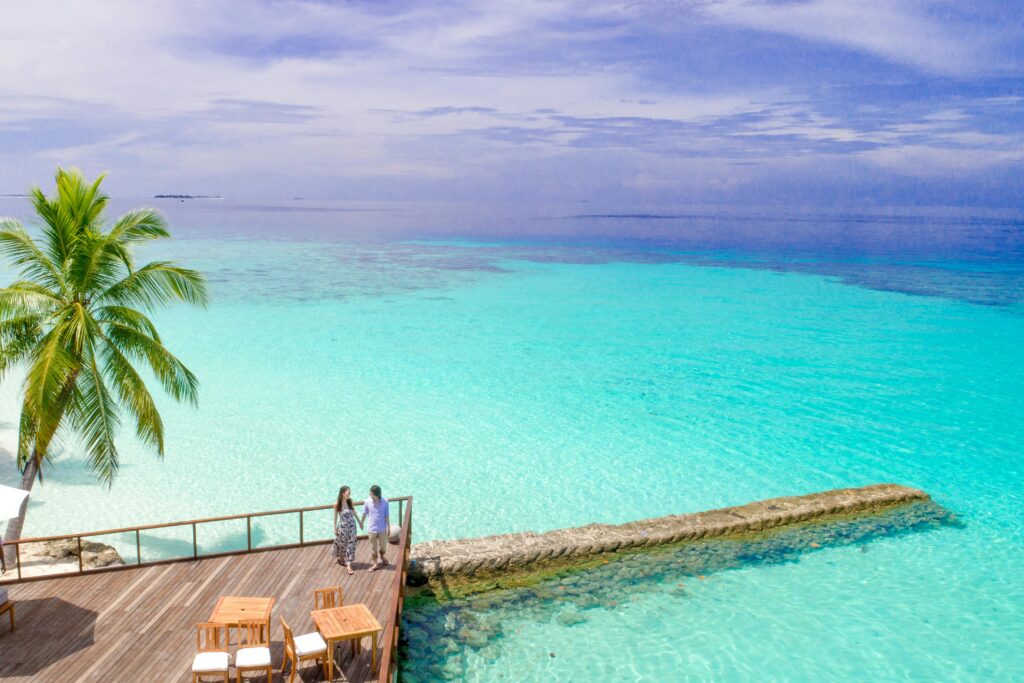
On Vaadhoo Island and specific Maldivian beaches — the Noctiluca scintillans plankton that glow blue when disturbed produce the night beach phenomenon where the waves break in light. Peak visibility: summer months. Coming soon: The Maldives — The BGGD Guide
44. The Wadi Rum Desert, Jordan
Red sandstone and granite desert in southern Jordan — the rock formations, the silence, the Bedouin camp at night, and the specific quality of the Milky Way from a dark sky site surrounded by rock rather than horizon. The landscape of Lawrence of Arabia. The landscape of The Martian. Full guide: Jordan — The BGGD Guide → bggdworld.com/jordan
45. The Zhouzhuang Water Town, China
A canal town near Shanghai — the stone bridges and the Ming and Qing dynasty houses reflected in the canal water. The specific quality at dawn before the day visitors arrive. Coming soon: China — The BGGD Guide
46. The Tulip Fields of Lisse, Netherlands
The Keukenhof gardens in April — 7 million tulip bulbs planted annually in 32 hectares of designed flower garden. The scale makes the colour physically overwhelming. Available for 8 weeks only (late March to mid-May). Coming soon: The Netherlands — The BGGD Guide
47. The Valley of Flowers, India
A national park in Uttarakhand at 3,658m — 600 species of wildflowers covering a Himalayan valley for the July-September monsoon season. UNESCO-listed. 17km trek from the nearest road. Full guide: India — The BGGD Guide → bggdworld.com/india
48. The Waitaki Valley Moeraki Boulders, New Zealand
Spherical boulders on Koekohe Beach, Otago — formed 65 million years ago from the accumulation of limestone around a nucleus, exposed as the surrounding mudstone eroded. The largest are 2 metres in diameter. The specific geometry (perfect spheres, some cracked to reveal their crystal interior) produces the most specific beach in New Zealand. Coming soon: New Zealand — The BGGD Guide
49. The Cenotes of the Yucatán, Mexico
Underground freshwater sinkholes formed when limestone cave roofs collapse — the crystal-clear water in chambers that vary from fully submerged to partly open to the sky. The sacred swimming holes of the Maya civilisation, still the finest swimming available in Mexico. Full guide: Mexico — The BGGD Guide → bggdworld.com/mexico
50. The Fairy Pools, Isle of Skye, Scotland
Crystal-clear pools fed by waterfalls from the Black Cuillin mountains — the water the specific blue-green of the Skye geology, accessible on a 2-mile walk from the road. The most spectacular accessible waterfall pools in the UK. Coming soon: Scotland — The BGGD Guide
The BGGD Free Guide Library
You downloaded this guide. Here’s everything else that’s free:
- SE Asia Budget Calculator — Day-by-day, country-by-country cost breakdown
- The BGGD Thailand Vault — The full Thailand planning guide in one document
- The Hidden Gems Map — 30 hidden destinations plotted by region and difficulty
- The India Planning Guide — Golden Triangle booking sequence + Rajasthan circuit
- The Portugal Planning Guide — Lisbon to Porto to the Alentejo in one download
- The Uganda Planning Guide — Gorilla permit booking + the 10-day circuit
All free. All at bggdworld.com/free-guides.
BGGD World — Unreal places. Real costs. No fluff. bggdworld.com | @bggdworld