
The Larco Museum’s pre-Columbian gold before the tour buses, the ceviche at the Surquillo market counter that is the finest version of Peru’s greatest dish, the Pacific sunset from Miraflores at the specific 6:30pm when the light on the Lima fog bank turns gold, the Barranco neighbourhood at night when the Casa de la Literatura and the restaurants on the Plaza are both operating simultaneously, and the 48 hours that give Lima as a city rather than a stopover between the airport and Cusco.
Reading time: 8 minutes | Last updated: 2026
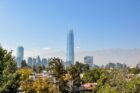
Lima is South America’s most overlooked major city — a metropolis of 10 million people on the Pacific coast of Peru, the departure point for the Inca Trail and the Machu Picchu circuit, treated by most visitors as the airport hotel between London and Cusco.
The misperception: Lima has the finest food scene in South America, the largest collection of pre-Columbian gold in a single museum, the most dramatically situated clifftop neighbourhoods on the Pacific, and a cultural life that was enriched by three simultaneous Peruvian Golden Ages in the 20th century (the muralists, the literary boom that produced Vargas Llosa, and the musical tradition of festejo and Afro-Peruvian music).
These 48 hours are the Lima that the Cusco connection doesn’t leave time for. They require rearranging the itinerary to arrive 48 hours before the onward journey rather than 8 hours.
Hour-by-Hour
Day 1
9:00am — Larco Museum
The Museo Larco in the Pueblo Libre district — the finest collection of pre-Columbian art in Peru, housed in an 18th-century viceregal mansion built on the remains of a 7th-century Mochica pyramid. The 45,000 objects span 3,000 years of Peruvian civilisation — the Mochica portrait ceramics (the most individualised pre-Columbian portraiture, the faces specific enough to be identifiable individuals), the Chimú gold, the Inca textiles, and the Erotic Gallery (the ceramics documenting sexual practice in pre-Columbian Peruvian society, the most visited section by a significant margin).
The museum reserve gallery (the storage facility behind the museum, open to visitors — 45,000 objects on open shelving, the largest visible museum collection reserve in South America): the most extraordinary version of the museum experience, the entire collection visible.
Entry: 30 PEN / £6.07. Open 9am-10pm. Go at 9am before the tour groups.
11:00am — Miraflores: The Pacific Cliffs
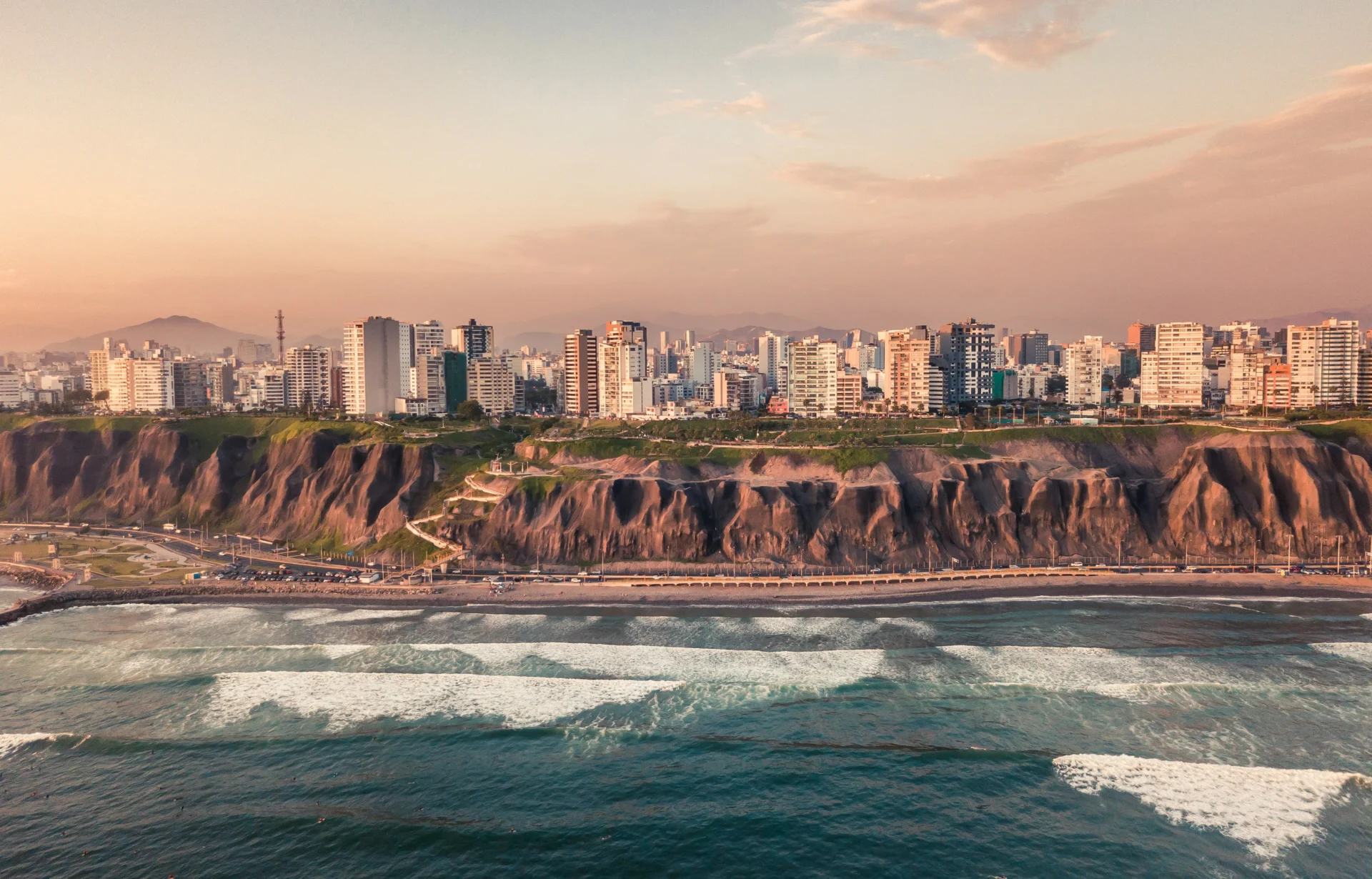
The Malecón de Miraflores — the clifftop park running along the Pacific edge of the Miraflores district, 80 metres above the ocean. The paragliders launching from the cliff edge (the thermal from the Pacific updraft giving 15-25 minute flights over the district, several operators on the cliff — S/100-150 / £20.24-30.36 for a tandem flight) and the Pacific view (the Lima coastline extending north and south, the brown water from the Rimac River visible offshore).
The specific Lima atmosphere: the garúa (the fog system that gives Lima its overcast sky for 8 months of the year, the city receiving no significant rainfall but existing in perpetual maritime cloud) giving the Pacific a specific muted, silver quality that the tropical Pacific doesn’t have. Lima is never the bright blue Mediterranean postcard — it is the grey-green Pacific in marine fog, the cliffs above it, the paragliders in the mist.
1:00pm — Ceviche: Surquillo Market or La Mar
Surquillo Market (Mercado de Surquillo, 10 minutes from Miraflores): The wholesale market supplying Miraflores’s restaurants. The ceviche counter at the market’s periphery — the fish section selling the morning’s catch directly to the cevichería stalls beside it. The ceviche here: the raw fish (flounder, sea bass, octopus) cured in leche de tigre (the tiger’s milk — a marinade of lime juice, chilli, onion, and the fish’s own juices), served immediately with choclo (Peruvian giant corn) and sweet potato. S/15-25 / £3.03-5.06. The freshest ceviche in Lima.
La Mar Cevichería (Miraflores): the restaurant version — chef Gastón Acurio’s cevichería, the finest restaurant ceviche in Lima, the menu extending through the full range of Peruvian ceviches and tiraditos. S/60-90 / £12.14-18.21 per person. Book ahead.
3:00pm — San Isidro: The Huaca Huallamarca
A 2,000-year-old adobe pyramid in the middle of the San Isidro financial district — the Huaca Huallamarca, a Lima-culture ceremonial mound that the city grew around rather than demolishing. The specific quality: the pyramid surrounded by apartment towers and office buildings, the pre-Columbian structure preserved within the modern city as a legal requirement. Entry: S/10 / £2.02.
The San Isidro Bosque el Olivar: the park containing 1,500 olive trees planted by Spanish colonists in the 17th century, some of the original trees still producing. The olive harvest (March-April): the trees picked by the park staff, the oil produced and sold. Free access.
5:30pm — Barranco
The bohemian district south of Miraflores — the Victorian-era summer houses of the Lima elite, now converted to galleries, restaurants, and bars. The Puente de los Suspiros (Bridge of Sighs): a wooden bridge above the Bajada de los Baños (the path to the ocean), the specific Barranco legend involving a crossed love and a wish. The Casa de la Literatura Peruana (the Peruvian House of Literature, in the neoclassical building of the former Desamparados station): exhibitions on Peruvian literature free to enter.
The Barranco evening: the galleries on the Avenida Grau, the outdoor tables of the restaurants on the Plaza de Barranco, the live music at the peñas (the Afro-Peruvian music venues, the festejo and landó tradition — the most specifically Peruvian musical form, more rooted than the tourist-facing salsa). The Peña del Carajo (Barranco): the finest live Afro-Peruvian music in Lima. Show starts at 10pm, entry S/50 / £10.12.
8:30pm — Dinner: Central or Maido (if booked) or La Picantería
Central (the most celebrated restaurant in South America, #1 on the Latin America’s 50 Best list multiple times): the tasting menu traversing elevations — from ocean to 4,000m altitude — the biodiversity of Peru expressed in 17 courses. S/595 / £120.36 per person. Book 2-3 months ahead.
Maido: the Nikkei (Japanese-Peruvian fusion) restaurant — S/400-500 / £80.97-101.21. Also months ahead.
La Picantería (Surquillo): for those without reservations at the above — the finest traditional Peruvian cooking in Lima, the menu changing with the market, the arroz con leche the finest version in the city. S/60-100 / £12.14-20.24. Open for lunch and dinner.
Day 2
9:00am — Historic Centre: Plaza Mayor and the Catacombs
The Plaza Mayor of Lima (the founding square of the colonial city, 1535 — the cathedral, the government palace, and the archbishop’s palace forming the three institutional sides): the finest colonial square in South America by scale. The Cathedral (the tomb of Francisco Pizarro, the conquistador who founded Lima — his bones rest in a glass case in the chapel to the right of the entrance): entry S/20 / £4.05.
The Convent of San Francisco and its Catacombs: the Franciscan complex 2 blocks from the Plaza Mayor contains the finest tilework in Lima (the Sevillian azulejo tiles in the cloister) and the catacombs beneath the church (75,000 human remains arranged by bone type in the ossuary chambers). Entry: S/15 / £3.03 including the guided catacombs tour.
12:00pm — Lunch: Chabuca Granda Market
The Mercado Chabuca Granda (named for the Lima-born singer who wrote “La Flor de la Canela,” the most beloved song in Peruvian music) at the edge of the historic centre: the food stalls serving the traditional Lima lunch — the aji de gallina (chicken in yellow pepper walnut cream sauce), the lomo saltado (the stir-fried beef with tomato, onion, and chips — the Chinese-Peruvian chifa influence made canonical), the causa (the layered cold potato and avocado terrine). S/15-25 / £3.03-5.06 per plate.
2:00pm — Departure to the Airport or Cusco
Lima to Cusco: 1.25 hours by air (LATAM, Avianca, Sky Airline — from $80 / £63.40 one way). The flight gives the Andes in the window — the Pacific coast, then the Andean uplift, then the Cusco valley at 3,400m.
Essentials
Getting there: Jorge Chávez International Airport (LIM) — all international flights to Peru. LATAM, Iberia, and Air France direct from Europe; no nonstop from the UK (connections via Madrid, Amsterdam, Miami). Return UK to Lima: £600-950.
Currency: Peruvian Sol (PEN). £1 ≈ 4.94 PEN. ATMs throughout Miraflores and San Isidro. Cash for markets and street food; cards everywhere else.
Transport: Uber works in Lima and is significantly cheaper and more reliable than taxis. The Metropolitano bus (rapid bus system) connects the historic centre to Miraflores.
Safety: Miraflores, Barranco, and San Isidro are safe tourist areas. The historic centre requires standard urban awareness. The Uber instruction is the most important practical safety note: don’t take street taxis in Lima.