
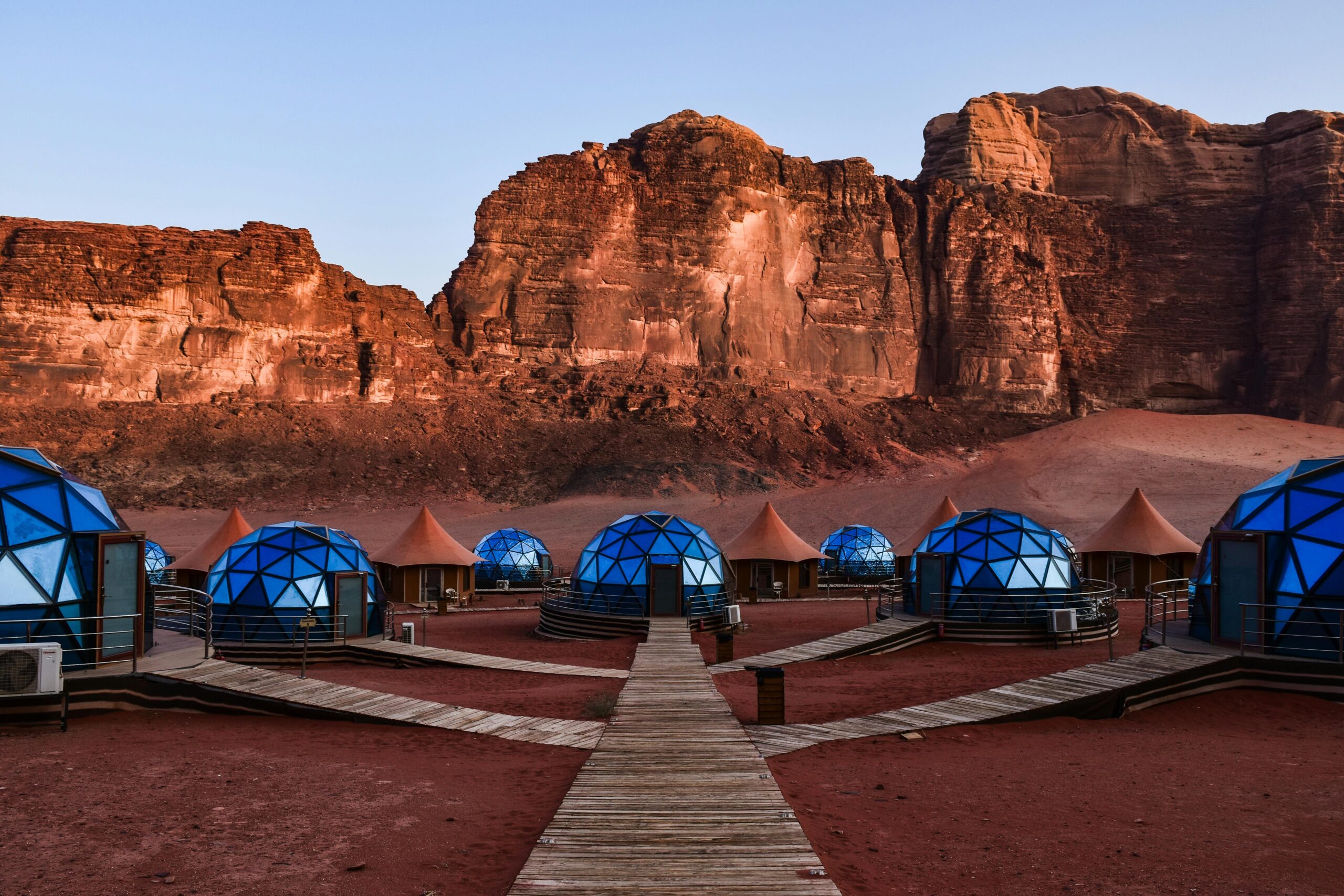
The desert is extraordinary. The camp infrastructure ranges from genuinely excellent to exploitative tourist product. This is the distinction.
What Wadi Rum Is
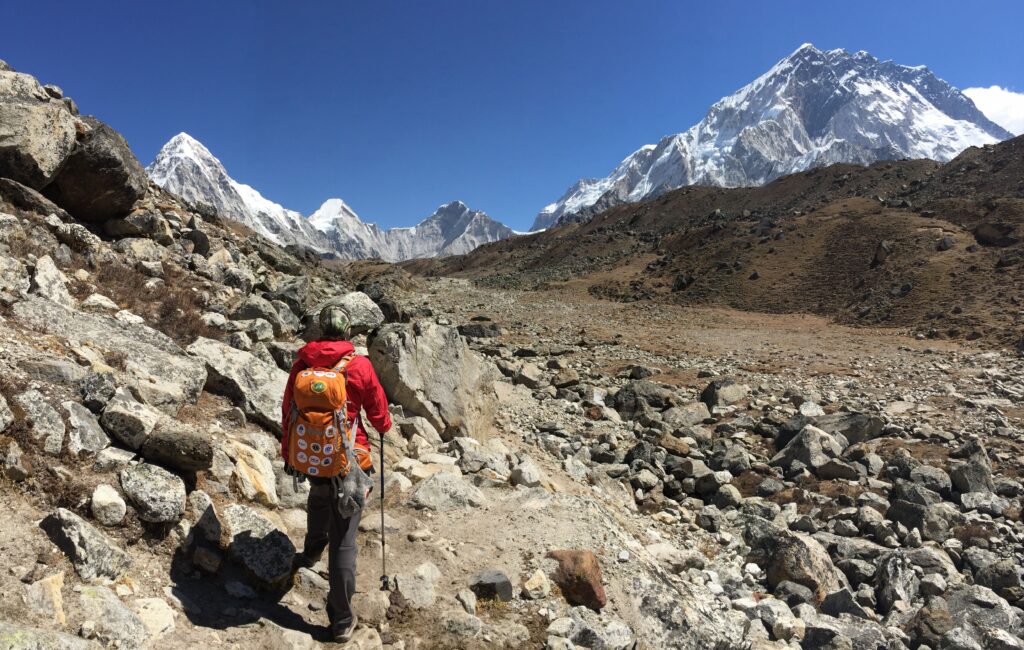
The Wadi Rum Protected Area — 720 square kilometres of desert in southern Jordan, the sandstone and granite valley system where T.E. Lawrence operated during the Arab Revolt, where The Martian and Dune were filmed, and where the Bedouin community has maintained its specific relationship with the desert landscape for centuries. The desert at Wadi Rum: the red sand against the brown rock, the silence in the valley that is complete except for the wind in the specific rock formations.
The overnight camp is the correct format for Wadi Rum — arriving in the afternoon for the jeep tour, the sunset from a sandstone summit, the zarb dinner, the night sky, and the dawn. The day visit (3-4 hours in the afternoon, return to Aqaba or Petra) gives the landscape without the sky, which is the reason to go.
The Camp Categories
The Bubble Tents:
The transparent dome tents with private beds, en-suite bathroom, electricity, and the Milky Way visible through the ceiling dome. The most photographed Wadi Rum accommodation and the reason many people come specifically to Wadi Rum.
The honest assessment: the transparency is genuine — lying in bed with the star field above is the specific experience. The comfort level is significantly higher than the traditional Bedouin tent. The isolation is also genuinely available — the camps are positioned in the desert valleys away from each other.
Cost: JD80-130 / £85-138 per person, including the 4WD jeep tour (2-3 hours), the zarb dinner, and breakfast.
The Traditional Bedouin Tents:
The goat-hair tent with floor mattresses, communal spaces, and the characteristic Bedouin camp atmosphere. Less photogenic but more atmospheric in the specific sense that the wind through the tent fabric and the proximity to the desert floor are present in ways the bubble tent’s construction excludes.
Cost: JD45-70 / £47.87-74.47 per person, same inclusions.
The Wrong Choice:
The unlicensed camps that have appeared as Wadi Rum’s popularity has grown — the camps not listed with the Wadi Rum Protected Area Authority (WRPA), the camps that promise bubble tents in photographs and deliver basic enclosures on arrival. The WRPA licensing system (the camps listed at wadirum.jo/en/camps) is the quality filter.
The Specific Recommendations
Wadi Rum Night Luxury Camp:
The original bubble tent operation in Wadi Rum — the camp that established the format and maintains the reference standard. The bubbles positioned in a valley 5km from the Rum Village, the positioning giving genuine dark sky (no light pollution from the village visible). The zarb prepared by the camp kitchen. The 4WD tour guides who know the specific rock formations and their names. Book at wadirum-night-luxury.com.
Sun City Camp:
The most accessible of the quality camps for travellers arriving from Petra (the camp vehicle collects from the Wadi Rum village visitors’ centre). The mix of bubble tents and Bedouin tents gives flexibility. Consistent reviews across multiple seasons.
Memories Aicha Luxury Camp:
The furthest of the main camps from the Rum Village — the additional distance gives the most complete silence. The bubble tents positioned individually rather than in a cluster. Higher price point (JD120-160 / £127-170 per person) but the isolation is commensurate.
The Jeep Tour
The 4WD jeep tour (included in the camp price or bookable separately at JD25-40 / £26.60-42.54 for a 2-hour tour) covers the principal sites of the Wadi Rum valley:
The Seven Pillars of Wisdom: The rock formation named for T.E. Lawrence’s memoir — the seven distinct rock faces visible from the road into the valley, the formation that was his self-imposed visual landmark during the Arab Revolt.
The Lawrence Spring: The natural spring on the mountainside above the valley floor where Lawrence drank during the campaign — a 30-minute scramble from the jeep to the spring and the view over the valley.
Khazali Canyon: The narrow slot canyon with Nabataean inscriptions on the walls — the carvings of ibex, human figures, and unidentified symbols dating from the 1st century CE. The canyon narrows to shoulder-width in the deepest section.
Burdah Rock Bridge: The natural arch 80m above the desert floor in the northeastern section — accessible by a 2-hour scramble from the valley (requires guide; not included in standard jeep tours). The most dramatic single landscape feature in the Wadi Rum Protected Area.
The Sunset Point: Every camp guide knows the specific sandstone summit that gives the best sunset panorama in their camp’s valley — the sandstone turning deep amber in the last 30 minutes of light, the sky behind it transitioning through orange to dark blue.
The Night Sky
The Wadi Rum Protected Area is designated as a Dark Sky Park — the nearest significant light pollution is Aqaba 35km south. In October (recommended month), the Milky Way is visible from 7:30pm and overhead by 10pm, the galactic core at its most concentrated.
The specific star-watching instruction: give eyes 20-30 minutes to adjust to the darkness before assessing what’s visible. The stars visible with dark-adapted eyes in Wadi Rum are different in number and density from the stars visible in any European location regardless of local conditions. The adjustment time is not optional.
The meteor shower calendar: the Perseids (August 11-13) and the Geminids (December 13-14) peak near the key months. The Geminids in Wadi Rum in December — cold (down to -5°C overnight) but the meteor rate (up to 120/hour at peak) against the dark sky is the finest stargazing event available in the Middle East.
The Logistics
Getting to Wadi Rum from Petra: Shared taxi from Wadi Musa (the Petra base) to Wadi Rum Village: 2 hours, JD25-35 / £26.60-37.24 per taxi (split between occupants). The taxi is arranged through the hotel or at the Wadi Musa taxi stand.
Getting to Wadi Rum from Aqaba: 45 minutes by taxi. JD15-20 / £15.97-21.29.
The visitors’ centre: The Rum Village visitors’ centre is the point where your camp vehicle collects you. Book the camp 2-4 weeks ahead in peak season (October, March-May); last-minute in low season.