



The injera is the plate. The stews are the painting. The shared communal eating is the point. This is what to order, where to eat it, and how to understand the fasting tradition that gives Ethiopian cuisine its most distinctive expression.
The Injera Foundation
Ethiopian cuisine cannot be understood without understanding the injera — the sourdough flatbread made from teff (the ancient Ethiopian grain, the only staple crop native to the Horn of Africa, the small brown seed with the specific flavour of fermented grain that no other bread quite approximates). The injera is simultaneously:
The plate: the large round injera is laid flat on a communal platter, the stews (the wots) placed on top.
The utensil: pieces of injera are torn and used to scoop the wots — no cutlery required or provided at most traditional restaurants.
The tablecloth: in the formal version (the mesob — the traditional woven basket-stand), additional injera is served alongside to replenish the base as the meal progresses.
The flavour component: the sourness of the teff fermentation (the injera batter ferments for 2-3 days before cooking) provides the counterpoint to the richness of the wots, the same role that a sourdough bread plays in a European meal.
The Wot Varieties
Doro Wot (Chicken in Red Chilli Sauce):
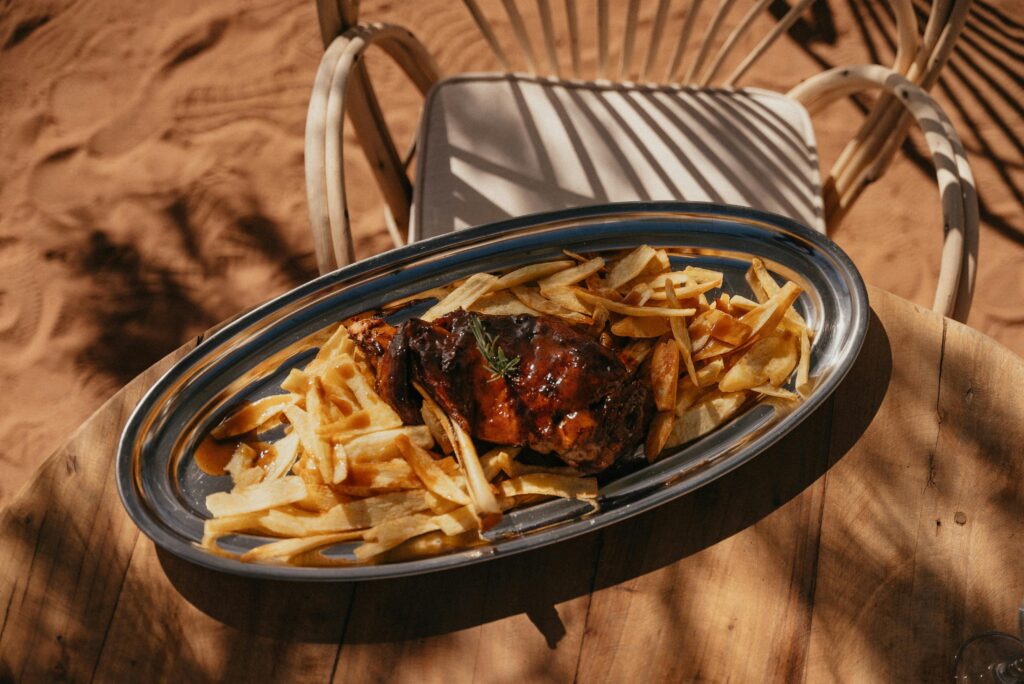
The national celebration dish — the whole chicken pieces (with bone) slow-cooked in a sauce of berbere (the Ethiopian spice blend of dried chillies, fenugreek, coriander, ginger, and a dozen other spices specific to each household), sautéed onions (the nitter kibbeh — the clarified butter infused with garlic, onion, ginger, turmeric, and black cardamom), and hard-boiled eggs. The berbere sauce cooks for 2+ hours; the completed dish has the colour of dark clay and the aroma of complex dried-chilli cooking that pervades the restaurant and the street outside it.
The doro wot is the Timkat and the Christmas dish — it marks the major celebrations of the Ethiopian Orthodox calendar and is served at every significant feast.
Where in Addis Ababa: Yod Abyssinia Cultural Restaurant (Alexander Pushkin Square) — the doro wot with the traditional dance performance, the tourist version that is nevertheless genuinely good food. 250-350 ETB / £1.80-2.53. For the non-tourist version: the neighbourhood restaurants of the Piazza area.
Beyaynetu (The Fasting Platter):
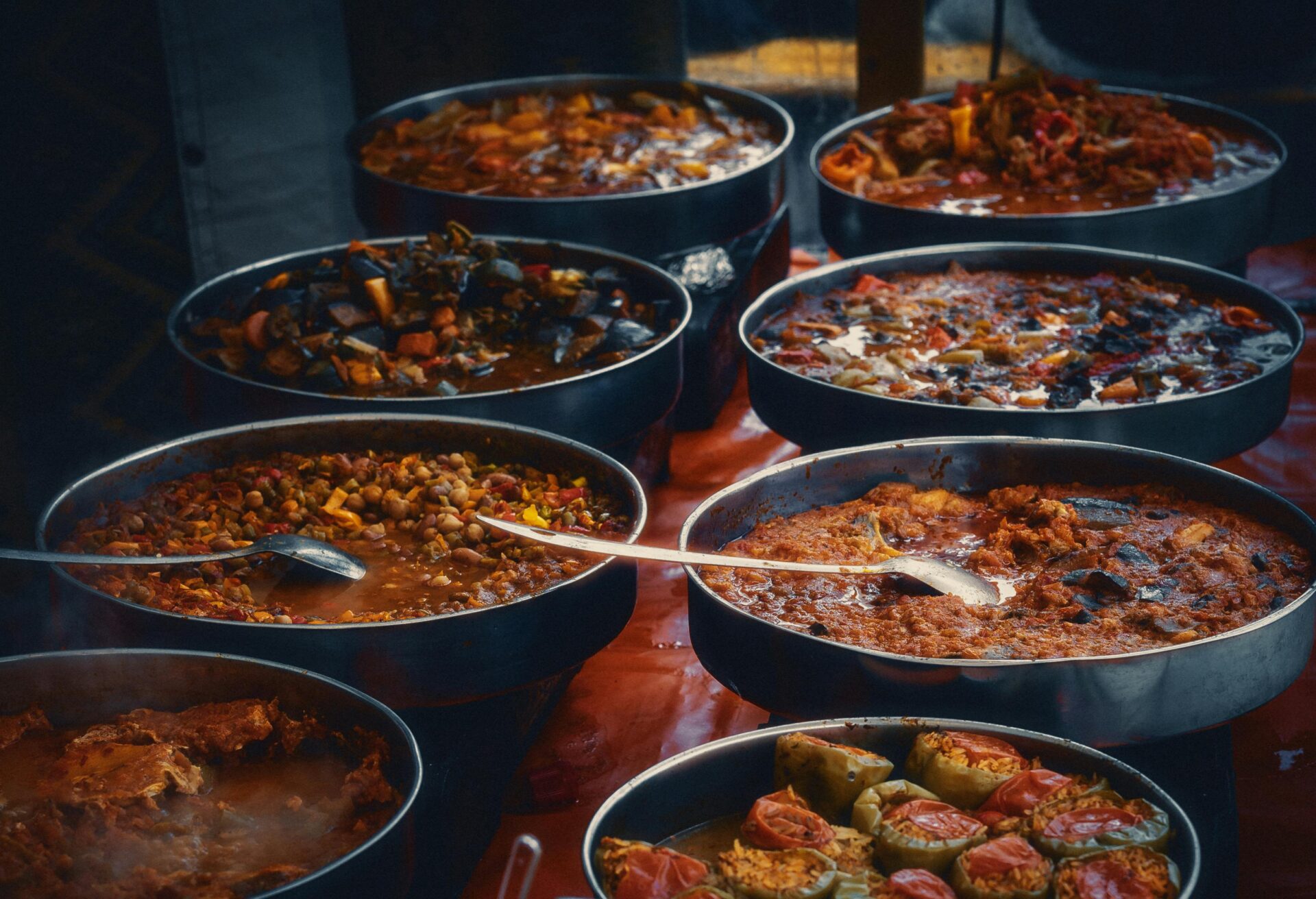
The most nutritionally complete and the most aesthetically striking of Ethiopian dishes — the platter of multiple plant-based stews arranged in separate portions on the injera, each a different colour and texture:
- Misir wot: the red lentils in berbere
- Fossolia: the green beans with tomato and onion
- Gomen: the collard greens with garlic and ginger
- Dinich: the potato with turmeric and onion
- Shiro: the chickpea flour stew (the most deeply flavoured of the components, the slow-cooked chickpea absorbing the nitter kibbeh)
- Tikel gomen: the cabbage with carrot and turmeric
- Beetroot: the simple roasted beet
The beyaynetu is served on Orthodox fasting days (Wednesday and Friday, plus the major religious fasts that account for approximately 180 days of the year). The combination of plant proteins across the platter — lentils, chickpeas, leafy greens — gives the beyaynetu genuine nutritional completeness. It is also the most affordable meal in Ethiopia.
Cost: 80-150 ETB / £0.58-1.08 at any local restaurant.
Tibs:
The sautéed meat — the most common restaurant main course in Ethiopia, available at every restaurant from the lowest to the finest. The tibs preparation: the meat (beef, lamb, or goat) cut into cubes, quickly sautéed with onion, tomato, and green chilli in the nitter kibbeh, seasoned with the berbere. The result: the seared exterior, the tender interior, the specific flavour of the clarified butter infused with the Ethiopian spice complex.
The tibs variations: the firfir tibs (served with torn injera mixed into the sauce, the injera absorbing the butter and the chilli), the gored gored (the cubed raw beef in the spiced butter sauce, eaten raw — the Ethiopian version of steak tartare, the most daring order on any Ethiopian menu).
The Coffee Ceremony
The Ethiopian coffee ceremony is not an abstract cultural performance — it is the primary social ritual of Ethiopian daily life, conducted in every home, at every significant meeting, and at every celebration.
The sequence:
- The green coffee beans are roasted in a flat pan over charcoal (the roasting takes 10-15 minutes, the beans constantly stirred — the smoke and the aroma announce the ceremony to the neighbourhood)
- The roasted beans are ground in a wooden mortar
- The grounds are brewed in a jebena (the clay pot with the long neck) with boiling water
- The coffee is poured from height through a strainer into small handleless cups
- The first round (the abol) is the strongest; the second (the tona) slightly weaker; the third (the baraka — “blessing”) the weakest and traditionally the most important
The ceremony is offered to guests as the primary gesture of hospitality. Refusing the ceremony is considered impolite.
Where: The Tomoca café (Wawel Street, Addis Ababa) — the oldest coffee roaster in Addis Ababa, operating since 1953, the standing-room-only coffee bar where the Addis professional class takes the morning’s first espresso. The Ethiopian espresso: 30-50 ETB / £0.22-0.36.