



Northern Thai cuisine is the least-known regional tradition in Thailand internationally and the most distinctive. Chiang Mai is its capital. This is what to eat there and where.
The Northern Thai Difference
Northern Thai food (the ahaan meuang — “food of the principality”) is categorically different from central Thai food (the Bangkok tradition that most international Thai restaurants serve). The differences:
Less spicy: The northern tradition relies on dried spice pastes rather than fresh chillies for depth; the heat is more restrained.
More fermented: The northern tradition uses fermented bean paste (thua nao), fermented pork (naem), and fermented tea leaves (miang kham) in ways that the southern and central traditions don’t.
More pork: Pork is the primary protein of the north rather than the seafood and poultry of the coast.
Different noodles: The egg noodles used in khao soi are specific to the north; the central tradition uses rice noodles.
1. Khao Soi
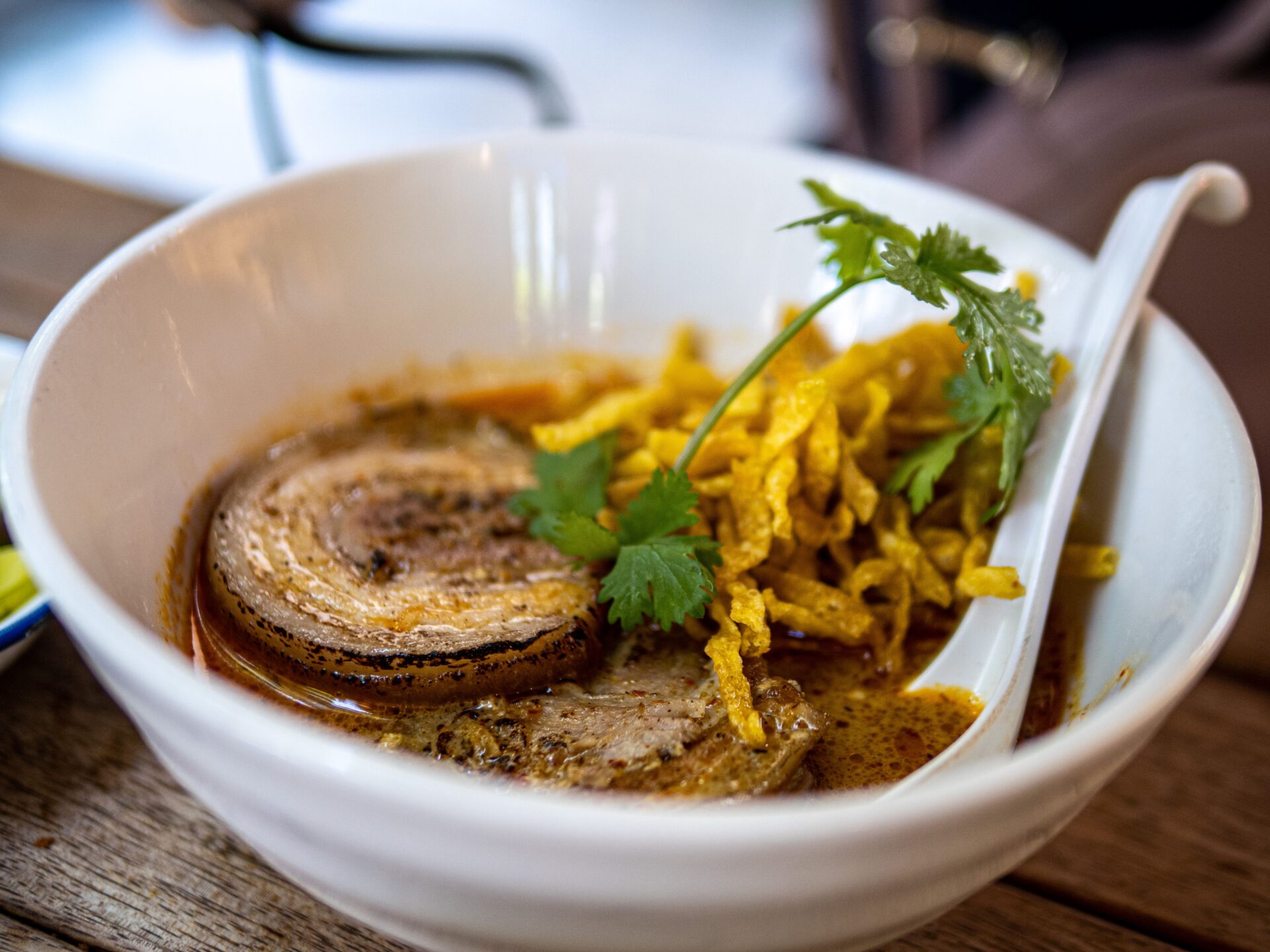
The signature dish of Chiang Mai and the most celebrated item in the northern Thai culinary canon — a coconut milk curry broth with egg noodles, the noodles both soft (in the soup) and crispy (fried and served on top as a garnish). The protein is usually chicken thigh or beef, the curry paste a specific northern Thai blend of dried chillies, shallots, turmeric, and galangal that differs from any other Thai curry paste.
The garnishes: pickled mustard greens, shallots, lime, and chilli oil, each served separately for the diner to add. The correct eating order — taste the soup first, then add the condiments in sequence to build the complexity.
The Chiang Mai origin debate: Khao soi is believed to have entered the northern Thai culinary tradition via the Muslim traders of the Yunnan-Burma-Thai trade route — the dish appears in similar forms in Myanmar (ohn no khao swe) and in Yunnan. The specific Chiang Mai version is the most refined.
Where:
Khao Soi Khun Yai (Corner of Charoenrat and Charoen Prathet roads, by the river): The most beloved local version — the soup at 8am before the restaurant opens, the line of regulars. Open 7am-3pm or until sold out. 60-80 THB / £1.32-1.76.
Khao Soi Islam (Charoen Prathet Road, near the Night Bazaar): The Muslim-Yunnanese version of the dish, the origin story present in the name. The beef version is the correct order here.
Khao Soi Lung Prakit Kad Kom (Faham Road): The outside-town version favoured by Chiang Mai locals for the least touristy experience.
The timing: Khao soi is primarily a lunch dish in Chiang Mai (available from 8am but at its best from 10am-2pm). Most khao soi restaurants close by 3-4pm when the day’s supply is exhausted.
2. Sai Oua (Northern Thai Sausage)
The sausage of the north — fresh pork minced with lemongrass, kaffir lime leaves, shallots, galangal, and dried chillies, stuffed into a casing and grilled over charcoal. The aroma of sai oua cooking is the specific Chiang Mai morning market smell — the lemongrass and the chilli and the pork fat rendering over charcoal.
Where: The Chiang Mai Gate Morning Market (the Saturday and Sunday walking street food markets, and the permanent market at the Chiang Mai Gate) from 6am. Any morning market in Chiang Mai has sai oua vendors. 30-50 THB / £0.66-1.10 per sausage.
3. Khanom Jeen Nam Ngiao (Tomato and Pork Blood Noodle Soup)
The most specifically northern Thai dish and the one most requiring an open mind — the fermented rice noodles (khanom jeen — the rice noodle specific to the north, slightly sour from the fermentation) served in a tomato-based broth with pork blood, dried tofu, crispy garlic, and the specific northern Thai dried shrimp paste. The pork blood (coagulated and cut into cubes) is the ingredient that separates the committed northern food explorer from the tourist menu.
Where: The Warorot Market (the main covered market in Chiang Mai, behind the Ping River market) — the food stalls on the market’s eastern side serve khanom jeen nam ngiao from 6am. 40-60 THB / £0.88-1.32.
4. Nam Prik Ong with Pork Rind and Vegetables
The northern dipping sauce (nam prik — literally “chilli water”) in its most accessible form — the tomato and minced pork version (nam prik ong) served with crispy fried pork rind and seasonal raw vegetables for dipping. The nam prik tradition is the foundation of the northern Thai table: each family has its preferred version, each restaurant its signature recipe.
Where: Any traditional northern Thai restaurant in Chiang Mai — the Huen Phen restaurant (112 Wichayanon Road) for the full northern Thai spread including nam prik ong, the restaurant running both as a daytime cafeteria-style lunch service and as a more formal dinner (the dinner menu is the same food at slightly higher prices in a more atmospheric setting). 60-120 THB / £1.32-2.64 per dip with accompaniments.
5. Miang Kham
The northern Thai snack of betel leaves — the fresh betel leaf filled with a combination of lime (the citrus, diced), dried shrimp, roasted peanuts, fresh ginger, shallots, toasted coconut, and the specific miang sauce (a sweet-salty paste of shrimp paste, fish sauce, and palm sugar). The leaf is folded around the filling and eaten in one bite, the explosion of textures and flavours (sweet, salty, sour, bitter from the leaf, the crunch of the peanut) in a single bite being the point.
Where: The Sunday Walking Street (Wualai Road, every Sunday 4-11pm) — the miang kham vendors are among the first stalls. The bite-sized nature of the snack makes it the correct walking street food. 30-50 THB / £0.66-1.10 for six pieces.
The Chiang Mai Market Circuit
Morning (6am-8am): Chiang Mai Gate Market — the local morning market serving the neighbourhood. The sai oua, the khanom jeen, the northern Thai specialties before the tourist circuit begins.
Midday (10am-2pm): Khao soi at Khun Yai or Lung Prakit.
Evening (Saturday/Sunday): The walking street markets (Saturday: Wualai Road; Sunday: Thanon Wua Lai — the silver smith street) — the food stalls from 4pm, the full northern Thai spread available until 10pm.