
The Tegallalang Rice Terraces at 7am when the subak irrigation system is running and the farmers are in the paddies and the terraces are in the early light before the infinity pools and the photo platforms open for business, the Ubud Monkey Forest at opening when the macaques are active and the temple compound has the specific quality of a sacred space being used as one, the cooking class that begins at the market at 8am and ends at the table at 2pm, and why Ubud — the Bali that is not the Seminyak beach strip — rewards the 48-hour visitor who arrives early and leaves the coworking space laptop at the hotel.
Reading time: 9 minutes | Last updated: 2026
Ubud is Bali’s cultural capital — the inland town at 225 metres in the Gianyar regency, 25km from the Ngurah Rai International Airport in Denpasar, surrounded by the rice paddies and the river gorges and the Hindu temples that characterise the Balinese landscape that exists beyond the coastal resort strip.
The Ubud that is described in Elizabeth Gilbert’s Eat Pray Love (published 2006) is still recognisable — the healer Ketut Liyer’s house is now a tourist destination following the book’s success, the Tegallalang rice terraces are on every Bali itinerary, and the Monkey Forest has been visited by approximately everyone who has been to Ubud since the 1990s. What the book described is still there. What it didn’t describe — the specific texture of the daily Balinese ritual (the canang sari offerings placed at every temple and household threshold before sunrise, the sound of the gamelan from the temple courtyard in the evening, the shadow puppet performance at the Ubud Palace) — is also still there and is the correct Ubud.
The 48 Hours
DAY ONE
6:30am — Campuhan Ridge Walk
The Campuhan Ridge Walk (the paved path along the ridge between the Wos River and the Campuhan River, beginning at the Gunung Lebah Temple and extending 9km to the Bangkiang Sidem village): at 6:30am, the walk in the morning light before the Ubud heat arrives.
The first 2km (the section most visitors complete) gives the rice paddy panorama, the primary jungle visible in the river gorge below, and the specific Ubud morning — the roosters audible throughout, the temple bells from the valley below, the mist in the river gorge burning off as the sun rises.
Free access. The correct entry: through the Gunung Lebah Temple gate at the Campuhan junction.
8:00am — Breakfast: the Ubud Market
The Pasar Ubud (the Ubud traditional market at the Jalan Raya Ubud junction — the morning market operating from 6am to noon when the tourist handicraft market takes over the same space): at 8am, the transitional hour where the local food vendors and the handicraft vendors coexist.
The market breakfast: the nasi campur (the mixed rice dish — the long grain rice with the assortment of small dishes, the sambal, the lawar, the sate, the tempe: IDR 15,000-25,000 / £0.73-1.22 per plate), the jaja (the Balinese rice cakes — the klepon, the pandan-flavoured glutinous rice ball filled with palm sugar and rolled in coconut, the most specific Balinese sweet: IDR 5,000-8,000 / £0.24-0.39 per piece).
10:00am — The Sacred Monkey Forest Sanctuary
The Mandala Suci Wenara Wana (the Monkey Forest — the 12.5-hectare nature reserve and temple compound in the southern Ubud, the 700+ long-tailed macaques that inhabit the forest in five groups): arrive at 10am opening for the lowest-density visit (the afternoon sees the peak tourist traffic).
The three pura (the temples within the forest compound — the Pura Dalem Agung, the Pura Beji, and the Holy Spring Temple): the forest as a functioning sacred space rather than a wildlife attraction, the temple priests and the devotees visible alongside the tourists.
The specific Monkey Forest instruction: do not carry visible food or bags with open pockets. The macaques are habituated to humans but not tame — the food theft is fast and the bag exploration is persistent. The camera and the phone in secure pockets, the bag with the zipper closed. Entry: IDR 80,000 / £3.90.
12:30pm — The Tegallalang Rice Terraces
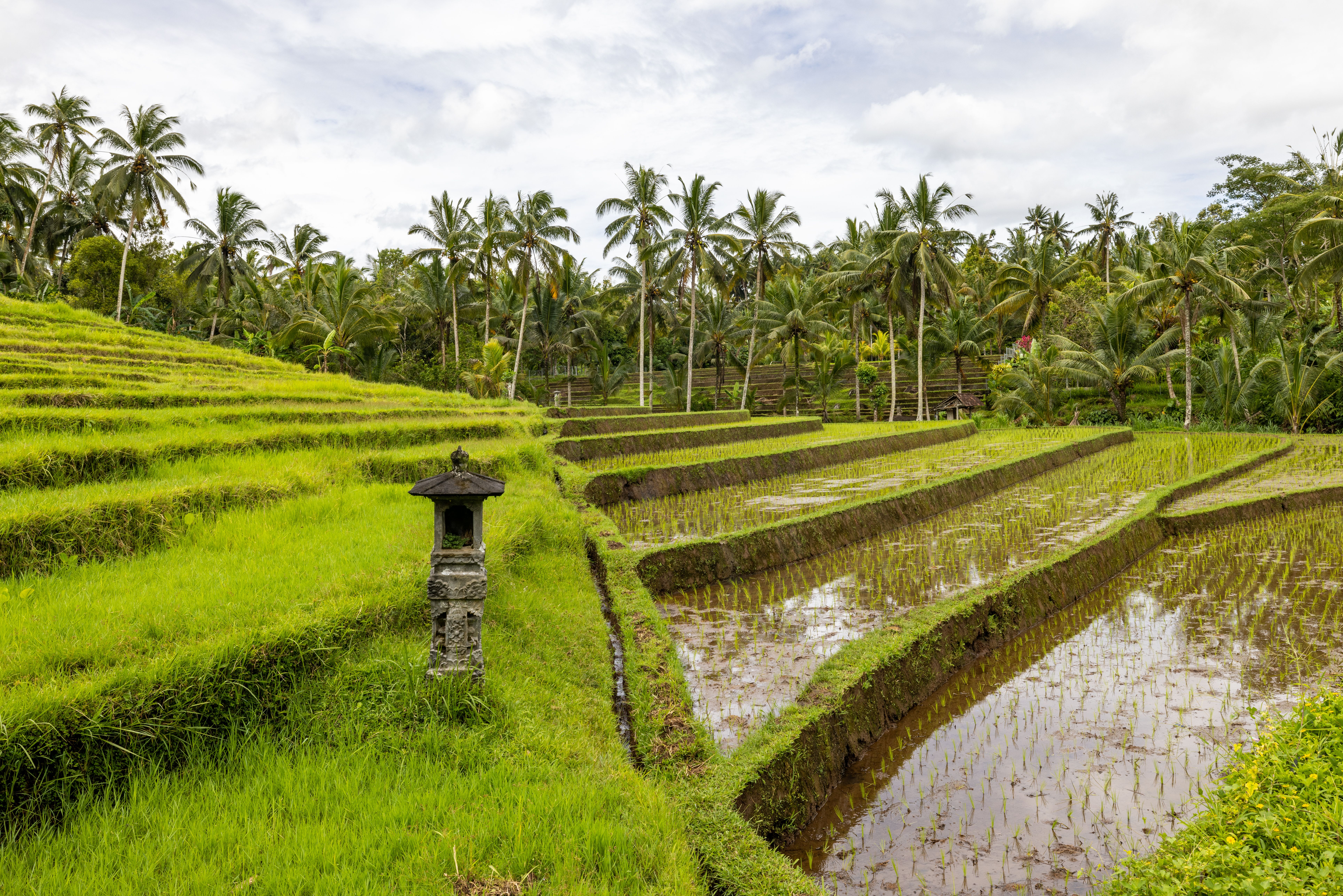
The Tegallalang Rice Terraces (6km north of Ubud, accessible by Grab or rented motorbike): the UNESCO-recognised subak irrigation system (the cooperative water management tradition of the Balinese rice paddies, the irrigation channel network that has been maintained communally since the 11th century) visible in its most dramatic form at Tegallalang.
At 12:30pm: the light directly overhead is not the ideal photography light, but the terraces are at their most agriculturally active in the midday — the farmers visible, the irrigation channels running, the paddies at various growth stages simultaneously (the subak system staggers planting times to manage the water supply).
The specific Tegallalang note: the infinity pool platforms and the Insta-famous swing are commercial additions to the landscape — they cost IDR 150,000-300,000 / £7.32-14.63 per hour and are the tourist version of the terraces. The terraces themselves are free to walk alongside on the public paths that follow the irrigation channels.
Entry to the main terrace viewing area: IDR 15,000 / £0.73. Stall pressure for drinks and photos is present — a decisive “tidak, terima kasih” (no, thank you) works.
3:00pm — The Tirta Empul Temple
The Pura Tirta Empul (Tampaksiring, 15km northeast of Ubud — the water temple where the sacred spring has been flowing since the 10th century, the ritual bathing pools where Balinese Hindus purify themselves at the 30 water spouts, each spout with a specific ritual purpose): the functioning temple, the ritual in progress throughout the day, the correct dress (the sarong and the sash required — available for rent at the temple entrance: IDR 20,000 / £0.98).
Entry: IDR 50,000 / £2.44.
The Tirta Empul at 3pm gives the temple in the softer afternoon light with the bathing ritual at its most consistent — the Balinese families completing the full purification sequence, the specific sound of the water and the prayer.
7:00pm — Dinner: the Locavore
The Locavore (Jalan Dewi Sita, Ubud — the restaurant that put Ubud on the international fine dining map, the tasting menu built entirely from Balinese and Indonesian ingredients sourced from within the island): book at restaurantlocavore.com 3-4 weeks ahead. Tasting menu from IDR 850,000-1,200,000 / £41.46-58.54 per person.
The accessible alternative: the Naughty Nuri’s Warung (the Ubud institution — the pork ribs, the cocktails, the long table communal dining): IDR 120,000-200,000 / £5.85-9.76 per person.
9:00pm — The Ubud Palace Kecak Performance
The Kecak fire dance at the Ubud Palace (the Puri Saren Agung — the royal palace at the main Ubud junction, the Kecak performance in the outer courtyard from 7:30pm most evenings): the male chorus of 50+ dancers performing the specific Balinese Hindu narrative (the Ramayana episode — the monkey army’s defeat of the demon king Ravana) through sound rather than instruments — the “cak cak cak” vocal percussion that gives the performance its name.
Entry: IDR 100,000 / £4.88. The courtyard setting (the temple compound lit by torches, the palace gateway visible behind the performers) is the most specifically Balinese performance context available in Ubud.
DAY TWO
7:30am — The Cooking Class
The Ubud cooking class that begins at the Ubud market and ends at the lunch table: the correct format for the visitor who wants to understand the Balinese kitchen rather than simply eat from it.
The Casa Luna Cooking School (Jalan Bisma — the cooking class that begins with the market walk, the identification of the fresh ingredients, the temple offering preparation, and the cooking of 4-6 Balinese dishes in the Casa Luna kitchen): IDR 350,000-450,000 / £17.07-21.95 per person including the market visit and the lunch.
The dishes covered: the base genep (the Balinese spice paste — the complex blend of shallots, garlic, ginger, galangal, turmeric, candlenut, coriander, pepper, and the clove and the nutmeg that distinguishes the Balinese base from the Thai curry paste), the sate lilit (the minced fish and coconut wrapped around the lemongrass stalk and grilled), and the lawar (the minced meat and vegetable dish with the young coconut and the long pepper and the base genep).
12:30pm — The Penglipuran Village
The Penglipuran Traditional Village (45km from Ubud — the Bali Aga village, the indigenous Balinese community that predates the Hindu Javanese migration, the village that has maintained its traditional house compound layout and communal governance structure for 700+ years): the most intact traditional Balinese village accessible from Ubud.
The village: the single road flanked by the identical house compound entrances (the two-part gate — the paduraksa gate for the ceremonial entrance and the angkul-angkul gate for the daily entrance), the bamboo forest maintained at the village’s northern edge, and the living community (the 237 families who live in the village, the women weaving the bamboo products in the open compounds visible from the path).
Entry: IDR 25,000 / £1.22.
4:00pm — The Goa Gajah (Elephant Cave)
The Goa Gajah (9km from Ubud — the 11th-century rock-carved cave sanctuary, the demonic face carved above the cave entrance, the bathing pool of the 6 female figures pouring water from their breasts, the meditation cave used by Hindu and Buddhist priests simultaneously in the syncretic Balinese tradition): the most historically specific single site accessible from Ubud.
Entry: IDR 50,000 / £2.44. Sarong required.
7:00pm — Final Dinner: the Sawah Terrace
The Mozaic Restaurant at Desa Visesa (the rice paddy terrace dinner — the tables set in the rice paddy at sunset, the Ubud valley visible behind the terrace, the Balinese dance performance during the dinner): IDR 600,000-900,000 / £29.27-43.90 per person.
The accessible terrace dinner alternative: the Swept Away restaurant (the Alaya Resort, the river gorge terrace): IDR 200,000-400,000 / £9.76-19.51 per person.
The Essentials
Getting to Ubud from the airport: Grab from Ngurah Rai International Airport to Ubud (25km, IDR 150,000-250,000 / £7.32-12.20, 45-60 minutes depending on traffic). Fixed-price taxi: IDR 200,000-300,000 / £9.76-14.63.
Getting around Ubud: The motorbike hire (IDR 70,000-100,000 / £3.41-4.88 per day from any hostel — the correct Ubud transport for the confident rider) or the Grab for individual journeys. The Ubud town centre is walkable (the Monkey Forest to the Palace to the market is a 20-minute walk), but the day trips (Tegallalang, Tirta Empul, Penglipuran) require transport.
The Bali overtourism context: Ubud receives approximately 3 million visitors per year in a town of 30,000 permanent residents. The rice terraces have been partially commercialised. The monkey forest is genuinely crowded at peak hours. The morning visit instruction (the 6:30am-9am window) is the specific strategy for experiencing Ubud before the visitor density changes its character. At 10am: Ubud is a different place from Ubud at 7am.
Where to stay: The COMO Uma Ubud (the design resort with the rice paddy views: £150-280/night), the Komaneka at Bisma (the river gorge views: £180-320/night), the Bisma Eight (the infinity pool above the forest: £80-150/night), the Gaia Retreat (the budget-friendly garden rooms: from £30-55/night).
The Closing Moment
I was at the Campuhan Ridge at 6:43am. The gamelan music was audible from the valley below — the temple preparation for the morning ceremony, the bronze keys struck in the pre-dawn session.
The rice paddies on the lower slopes were being walked by a farmer moving between the irrigation gates. The water was running from one terrace to the next through the hand-cut channels that the subak system has maintained for 1,000 years.
The mist was in the gorge. The sun was not yet visible but the sky was light in the east.
Bali’s specific quality — the one that the 1980s travellers who named it the Island of the Gods were describing — is the interpenetration of the sacred and the daily that the subak irrigation and the daily offering and the temple ceremony make structural rather than occasional.
The farmer checking the irrigation gates is also performing a religious act (the subak is a religious institution as much as an agricultural one — the water management coordinated through the temple system).
The gamelan in the valley is both music and prayer.
Both things are always happening simultaneously. That is the Bali that is worth the 6:43am.