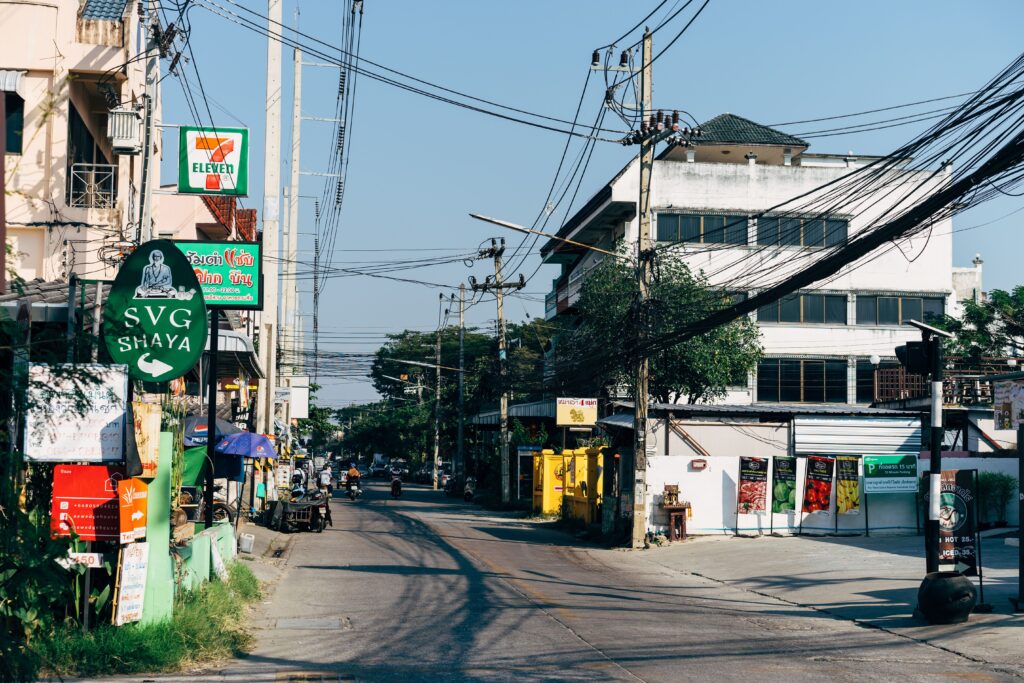


The Khao Soi Khun Yai stall at 8am when the first bowl of the day arrives still bubbling and the north Thai coconut curry broth has been on the heat since before 7 and costs 65 baht and is the finest single dish available for that price anywhere in Southeast Asia, the Doi Suthep at 6:30am when the monks are completing their morning chant and you are one of eight people on the terrace with the city 1,000 metres below, and why Chiang Mai — the city most visitors treat as three days on the way to the islands — rewards the visitor who treats it as the destination rather than the transit.
Reading time: 9 minutes | Last updated: 2026
Chiang Mai is the capital of northern Thailand and the former capital of the Lanna Kingdom — the independent kingdom whose specific cultural tradition (the northern Thai temple architecture, the northern Thai cuisine, the silver and lacquerware craft tradition) is distinct from the central Thai culture of Bangkok in ways that 48 hours begin to make clear.
The city of 300,000 people sits in a valley at 310 metres above sea level, the Doi Suthep mountain rising immediately to the west, the moat of the old city visible from the main roads as the marker of the medieval boundary. The temperature is 4-5°C cooler than Bangkok at all times. The pace is proportionally slower.
The 48 Hours
DAY ONE
6:30am — Doi Suthep at Dawn
The Wat Phra That Doi Suthep (the temple at 1,073 metres on the mountain above Chiang Mai — the most sacred temple in northern Thailand, the gold chedi visible from the city below): take the Songthaew (the red shared truck taxi) from the Chiang Mai Zoo area up the mountain (50 THB / £1.10 per person, 45 minutes). Arrive at 6:30am when the temple opens.
The Naga staircase (the 306-step staircase flanked by the seven-headed naga serpents — the alternative to the cable car is the correct choice: the climb takes 10 minutes and the perspective changes at each landing): at 6:30am, the monks completing their morning chant in the main viharn (the chanting audible from the staircase at halfway), the city below still in the morning haze.
The chedi at dawn (the 15th-century gold-plated pagoda, the Buddha relic inside — the relic brought here by white elephant, according to the founding legend: the elephant was released from the hands of King Kue Na, it climbed the mountain, turned around three times, and died, marking the spot for the temple’s construction): the chedi in the morning light, the Chiang Mai valley visible in every direction.
Return to the city by 9am.
9:00am — The Old City — Temples and Breakfast
The old city moat district (the 1.8km × 1.8km square, the moat still intact, the 30+ temples within the walls): the correct morning walk sequence.
Wat Chedi Luang (the 14th-century temple with the partially collapsed chedi — the original height was 88 metres, the 1545 earthquake reduced it to the current 60 metres, the restoration halted deliberately to preserve the specific ruin quality): the monk chat programme (the conversational English practice for novice monks, genuinely two-directional — the monks want to practise, the visitors get to ask questions, the conversation is real): 9am-6pm, free.
Breakfast: Khao Tom (the Thai rice congee, the north Thai morning soup) from the stalls at the Chiang Mai Gate Market (the morning market at the south gate of the old city, 6am-10am): 40-60 THB / £0.88-1.32 per bowl.
11:00am — The Khao Soi Circuit
The khao soi (the northern Thai signature dish — the egg noodles in the coconut milk curry broth, the crispy fried noodles on top, the pickled mustard greens, the shallots, the lime alongside): the single most important food experience in Chiang Mai and the one that most separates the northern Thai kitchen from anything available in Bangkok.
The three-stall comparison (the khao soi that the serious food visitor makes):
Khao Soi Khun Yai (Fa Ham Road, Nakhon Ping — the stall most consistently cited by food journalists and Chiang Mai residents alike): 65-80 THB / £1.43-1.77. Open from 8am, sold out by noon on busy days.
Khao Soi Islam (Charoen Prathet Road — the Muslim northern Thai version, the beef rather than pork, the broth slightly different in its spice profile): 60-80 THB / £1.32-1.77.
Khao Soi Lamduan (the Faham area — the stall favoured by the expat community in Chiang Mai, the argument for Lamduan vs Khun Yai a genuine culinary debate): 70-90 THB / £1.55-1.99.
The verdict: the khao soi debate is the Chiang Mai food equivalent of the Naples pizza debate. All three are extraordinary. Khun Yai at 8am remains the BGGD recommendation.
1:30pm — The Chiang Mai Night Bazaar (Daytime)
The Night Bazaar district (the Charoen Muang Road corridor — the night market that has been the tourist commercial heart of Chiang Mai since the 1970s operates day and night, the specific daytime atmosphere different from the evening version): the silver shops (the Chiang Mai silversmithing tradition, the repousée technique visible in the shop windows, the quality differential between the tourist-grade and the artisan-grade work visible in the thickness of the silver and the depth of the carving).
The Kalare Night Bazaar food court (the covered market attached to the main bazaar): the most concentrated northern Thai food court in the city. The sai oua (the northern Thai sausage — the minced pork with the galangal and lemongrass and kaffir lime leaves and dried red chilli, grilled over charcoal, served sliced with the sticky rice): 80-120 THB / £1.77-2.65 per sausage.
4:00pm — The Warorot Market
The Warorot Market (Wichayanon Road — the covered market serving the Chiang Mai residential population, the oldest market in the city, operating since 1910): the ground floor (the fabric vendors, the silk from the northern Thai weaving villages, the ready-made Thai clothing at local pricing) and the food basement (the dried goods, the northern Thai spice blends, the kanom jin noodles, the variety of preserved products that supply the north Thai kitchen).
The Warorot is the correct alternative to the tourist-facing Night Bazaar for the visitor who wants the working market. The prices are 30-40% lower. The atmosphere is entirely local.
7:00pm — The Saturday or Sunday Walking Street
Saturday: Wualai Walking Street (the silver street — the Chiang Mai Gate to the Wualai Road, the silversmith workshops visible in the open-fronted houses behind the market stalls, the most characterful of the two weekly walking streets): 5pm-10pm.
Sunday: Tha Phae Walking Street (the Tha Phae Gate to the east moat, the longest walking street market in Chiang Mai, the craft vendors, the food, the street performers): 5pm-10pm.
The specific walking street food: the mango sticky rice (60-80 THB / £1.32-1.77), the pad kra pao (the holy basil stir-fry, the ubiquitous Thai dish in its northern version — smaller chilli, slightly sweeter), and the northern Thai sausage grilled at the street vendors.
9:00pm — The Riverside Bars
The Ping River (the river east of the old city, the bar and restaurant strip along the Good View and the Riverside restaurants): the evening beer at the water’s edge, the live music visible from the riverside terrace, the specific Chiang Mai evening quality of a provincial city that has established its own cultural pace.
DAY TWO
7:00am — The Chiang Mai Gate Morning Market
The Chiang Mai Gate Market (the morning market at the south moat gate, 6am-10am): the northern Thai breakfast circuit. The khao man gai (the Hainanese chicken rice — the 7am stall that sells out by 9am), the moo tod (the fried pork), and the nam phrik ong (the northern Thai tomato and pork dipping sauce, served with the raw and blanched vegetables and the pork cracklings — the northern Thai breakfast condiment visible at every morning market stall but prepared properly only in the Chiang Mai region).
9:00am — The Elephant Nature Park or a Cooking Class
The Elephant Nature Park: The full guide in Thailand with Kids and Thailand — The BGGD Guide. The ethical elephant sanctuary at Chiang Mai. Book 2-4 weeks ahead for the day visit (2,500-3,000 THB / £55.18-66.21 per person including transport and lunch). The Elephant Nature Park is the most significant single activity available in Chiang Mai for the visitor with one day remaining.
The Cooking Class alternative: For the food-focused visitor who has already experienced the elephant sanctuary, the cooking class is the day two instruction. The Thai Farm Cooking School (the half-day class beginning with the market visit, the full-day including the farm visit and four dishes cooked and eaten at the table): 1,500-2,000 THB / £33.10-44.13 per person. The morning market section (the identification of the northern Thai ingredients, the galangal vs ginger distinction, the kaffir lime leaf, the holy basil) is the most education-dense 30 minutes of any Chiang Mai activity.
1:00pm — The Nimman Area
The Nimman (Nimmanhaemin Road and surroundings — the creative district west of the old city, the coffee shops, the boutique hotels, the street art in the Maya Mall area): the afternoon coffee at the CAMP (the open 24-hour coffee shop in the Maya Mall basement, the wifi and the flat surfaces and the no-time-limit culture that has made it the standard nomad work café in Chiang Mai), the One Nimman complex (the outdoor retail and dining area, the Chiang Mai contemporary commercial culture visible in the weekend market).
4:00pm — Wat Suan Dok at Dusk
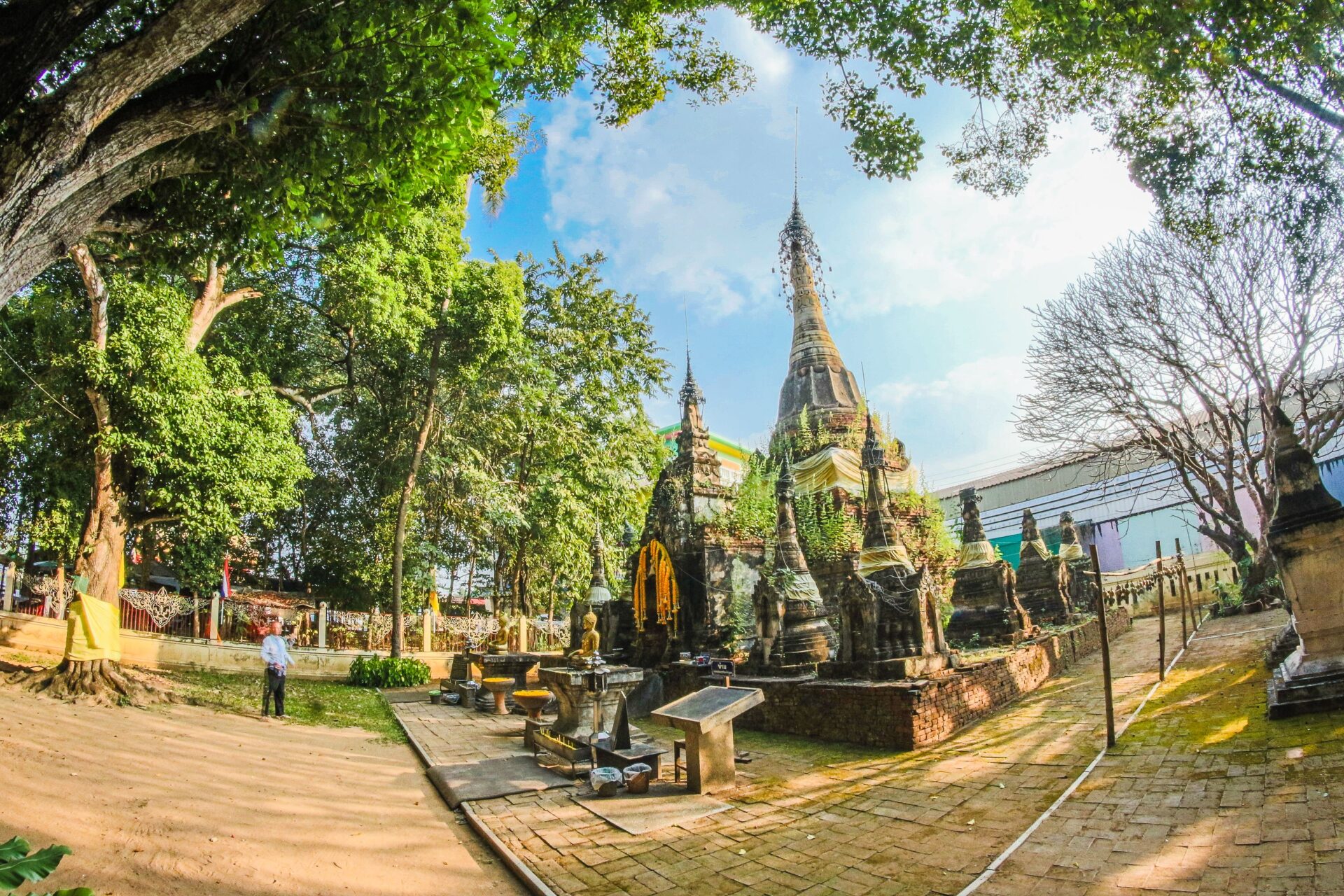
The Wat Suan Dok (Suthep Road — the 14th-century temple with the open-air assembly of white chedis, the Royal Cemetery of the Chiang Mai rulers): at 4-5pm, the monks feeding the birds in the temple garden (the merit-making practice visible from the temple grounds), the golden chedi in the late afternoon light, and the white assembly of smaller chedis behind it — the most photographically specific temple in Chiang Mai at this hour.
The monk chat at Wat Suan Dok (separate from the Chedi Luang programme — the Mahachulalongkornrajavidyalaya University Buddhist studies students who speak English and want to discuss Buddhist practice): Monday, Wednesday, and Friday evenings from 5:30pm.
7:00pm — Final Dinner: the Old City Restaurants
The Huen Phen (Ratchamankha Road — the restaurant serving the most complete northern Thai menu in the old city, the two-storey wooden house, the evening set menu that covers the full range of northern specialties): 350-600 THB / £7.73-13.24 per person including rice and accompaniments.
The specific order: the gaeng hang lay (the Burmese-influenced northern Thai pork belly curry with the ginger and tamarind, the dish that is the north Thai equivalent of massaman but specific to the Chiang Mai kitchen), the nam prik ong, the laab muang (the northern Thai meat salad, different from the Isan laab in its use of dried spices rather than fresh herbs), and the khao niaw (the sticky rice in the bamboo basket).
The Essentials
Getting to Chiang Mai from the UK: No direct flight. Bangkok-Chiang Mai internal (1 hour, AirAsia, Thai Lion, Nok Air: THB 600-1,800 / £13.24-39.74 booked ahead). Bangkok from the UK: British Airways, Thai Airways direct (11 hours). Total: 13-14 hours.
Getting around: The Songthaew (the red shared truck, the standard Chiang Mai transport: 20-30 THB / £0.44-0.66 per person per journey sharing, 100-150 THB / £2.21-3.31 for the hired private run). Grab for the evening and the Doi Suthep morning. The bicycle hire (50-100 THB / £1.10-2.21 per day from the guesthouses in the old city) for the old city temple circuit.
The air quality: Chiang Mai’s air quality in the burning season (February-April) is the most significant practical concern for visitors — the PM2.5 levels reach hazardous levels during the agricultural burning period. The November-January period is the correct visiting window for air quality, the cool-dry season coinciding with the best weather and the best air.
Where to stay: The Rachamankha (Phra Singh area: £80-150/night, the finest boutique hotel in the old city), the Tamarind Village (Ratchadamnoen Road: £60-110/night), the Banyan Tree Residence (the long-stay option with kitchen: from £35-65/night).
The Closing Moment
I was at Khao Soi Khun Yai at 8:06am. The bowl arrived in 4 minutes from the order — the broth already hot, the crispy noodles already on the surface, the bowl already full.
The woman at the stall next to me had been there since before I arrived. She was on her second bowl. She worked at the hospital visible at the end of the road and ate here every working morning.
The khao soi is not the best dish in Thailand. That is a claim that cannot be made. It is the best single dish at this price point, from this stall, at 8am, in the city where it was invented and where it is still made in the way it was made before anyone in Bangkok had heard of it.
The bowl cost 65 baht. I ate every drop including the broth.
That is the Chiang Mai instruction. The bowl. The broth. The 65 baht.