

The route that gives the Balkans in their full ethical and aesthetic complexity: two days in Montenegro for the Bay of Kotor and the old city of Cetinje and the specific Adriatic mountain backdrop that the Côte d’Azur charges ten times as much for, two days in Sarajevo for the Baščaršija bazaar and the Tunnel of Hope and the cevapi that the Bosnians treat as a civic institution, and three days driving the Dalmatian coast south from Split — Makarska, Omiš, the Pelješac Peninsula, and the final evening in Dubrovnik or Kotor depending on the loop direction chosen.
Reading time: 11 minutes | Last updated: 2026
The Balkans is the most geographically compressed meeting of cultures accessible from the UK: the Ottoman Empire (the bazaars, the mosques, the hammams), the Habsburg Empire (the Austro-Hungarian architecture, the coffee house culture, the bureaucratic tradition), the Byzantine (the Orthodox monasteries and the frescoes), and the Roman (the Diocletian’s Palace in Split, one of the best-preserved Roman structures in the world). All of this within a 4-hour drive of the Adriatic coast.
The Balkans also requires the traveller to engage with recent history — the 1990s conflicts that are within living memory for the residents of the region. Bosnia-Herzegovina’s Sarajevo Siege (1992-1996, the longest siege of a capital city in the history of modern warfare) and the NATO bombing of Serbia (1999) are not distant historical events. They are the specific context for the cities visited in this guide.
The guide covers them honestly.
Before You Leave
The visa situation (2025): UK citizens enter Montenegro, Bosnia-Herzegovina, Serbia, Croatia, and North Macedonia visa-free for 90 days. Albania: visa-free. Kosovo: visa-free. The Western Balkans are among the most accessible destinations in Europe for UK passport holders.
The car hire: Pick up in Dubrovnik or Split (the Croatian airports), drive to Montenegro and Bosnia-Herzegovina (the border crossings are straightforward — passport, no visa required), return to the starting airport or do the route in reverse.
The currency complexity: Croatia uses the Euro. Montenegro uses the Euro (despite not being in the EU). Bosnia-Herzegovina uses the Convertible Mark (BAM — pegged to the Euro at 1.95583 BAM to €1, so €1 ≈ 1.96 BAM). Serbia uses the Dinar. Having a mix of small Euro and local currency is the practical requirement.
The Route
Dubrovnik → Montenegro (Bay of Kotor, 2 nights) → Sarajevo (2 nights, fly or drive via Herceg Novi) → Return to coast: Split (1 night) → Dalmatian coast drive to Dubrovnik (fly home)
Alternatively: the loop in reverse from Split.
The 7 Days
DAY 1 — Dubrovnik to Montenegro (Bay of Kotor)
The drive:
From Dubrovnik, the coast road south (the Magistrala — the M2 coastal highway, the most scenic coastal road in the Balkans) crosses the Croatian-Montenegrin border at Debeli Brijeg (the border crossing, the passport check — typically 10-20 minutes wait in the shoulder season): 1.5-2 hours from Dubrovnik to Kotor.
The Bay of Kotor:
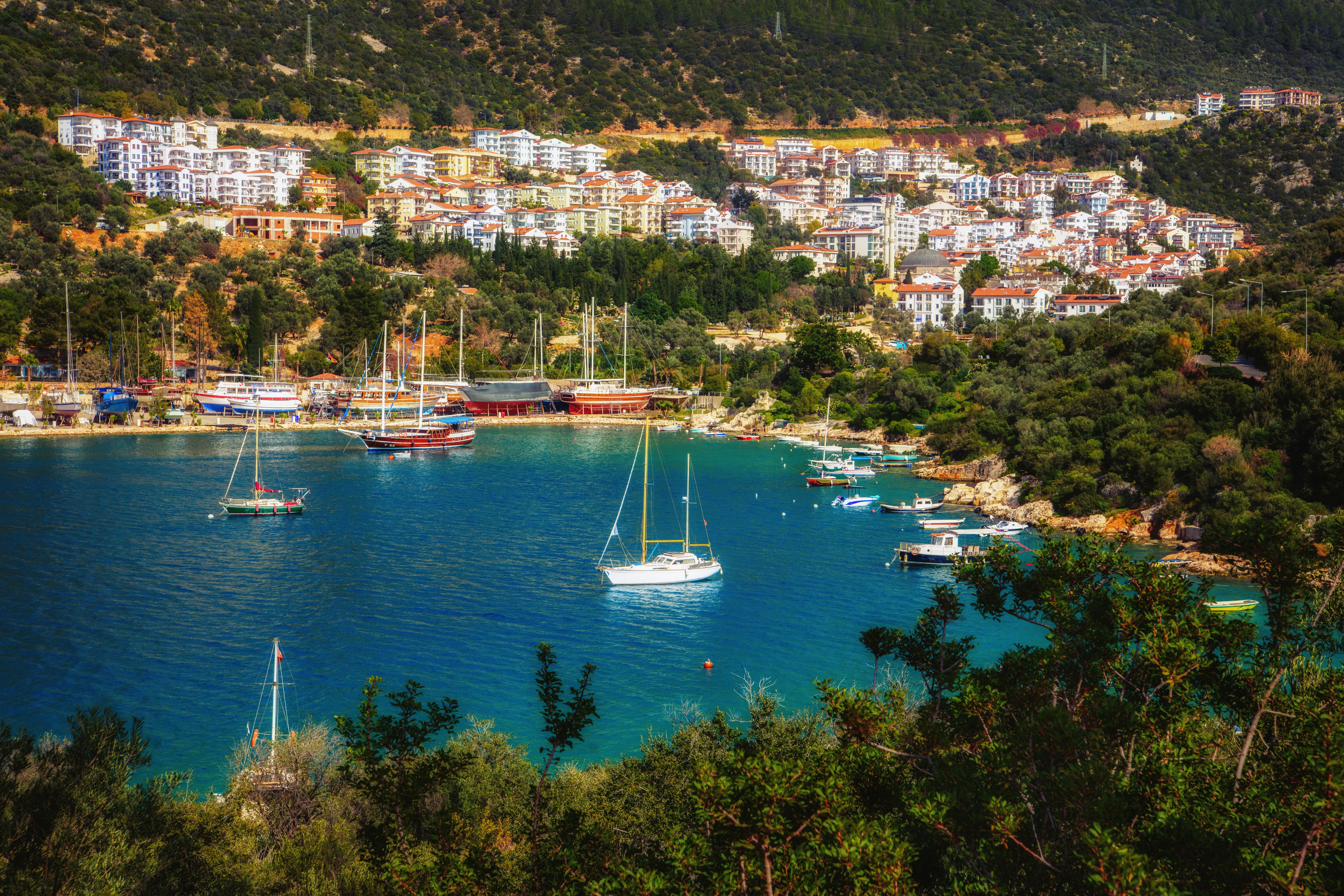
The Boka Kotorska (the Bay of Kotor — the most southerly fjord in Europe, the inlet that penetrates 28km into the Montenegrin mountains, the limestone peaks above the turquoise water, the medieval fortified towns visible from the coast road as the road circles the bay): the approach to Kotor from the north gives the full bay panorama — the water below, the walls of Kotor visible on the hillside, the Church of Our Lady of the Rocks on the island in the middle of the bay.
Kotor:
The Kotor Old City (the UNESCO-listed medieval city within its 4.5km of walls — the best-preserved Venetian-era city in the eastern Adriatic, the Venetian lions carved above every significant gate): arrive at 3pm, walk the walls (the staircase ascent to the Fortress of St. John above the city, 1,350 steps, the bay visible from 280 metres: €8 / £6.89), the Cathedral of Saint Tryphon (the 12th-century Romanesque cathedral, the treasury of relics), and the Piazza of Arms (the main square, the Venetian clock tower, the cats — the Kotor cat is a protected cultural symbol, the city officially cat-friendly since the medieval period when cats controlled the port rodent population).
Where to stay (Bay of Kotor): The Palazzo Drusko (the Kotor Old City guesthouse, the rooms inside the medieval walls: €80-150 / £68.97-129.31/night), the Forza Mare Boutique Hotel & Spa (Dobrota, the bay views: €120-200 / £103.45-172.41/night), the Old Town Hostel (Kotor Old City: private rooms from €30-55 / £25.87-47.41/night).
DAY 2 — Montenegro: Cetinje and the Coastal Drive
Morning: Cetinje
The Lovćen National Park and Cetinje (the mountain road from Kotor to the former royal capital of Montenegro — the serpentine road ascending from sea level to 1,400 metres in 25km, the views back over the Bay of Kotor from the Lovćen saddle visible for the full ascent):
The Lovćen Mausoleum (the mausoleum of Petar II Petrović-Njegoš on the summit of Jezerski Vrh at 1,657 metres — the 461 granite steps, the sculptures of the caryatids, the interior with the golden sarcophagus of the philosopher-poet-ruler who is the most revered figure in Montenegrin history): entry €3 / £2.59.
Cetinje (the royal capital of Montenegro from 1878-1918 — the small city in the valley below the Lovćen massif, the Royal Palace, the National Museum, the coffee house culture of a former capital that has been bypassed by the modern Montenegro): the Biljarda Palace (the museum of the Petrović dynasty, the billiard table that gives the palace its nickname — the first billiard table in Montenegro, brought from Trieste by Njegoš in 1838): entry €5 / £4.31.
Afternoon: the Coastal Drive to Budva
The coast road from Cetinje south to Budva (1 hour), then the Sveti Stefan view (the fortified island village connected to the mainland by a causeway, the entire island now a luxury hotel — the Aman Sveti Stefan — but visible from the public beach at the causeway): the most specifically Montenegrin single image.
The Budva Old City (the compact walled city on the peninsula — the Venetian fortifications, the narrow streets, the beach immediately outside the walls): the Mediterranean without the Western European price.
DAYS 3-4 — Sarajevo
Day 3: Drive or Fly to Sarajevo
The drive from Kotor to Sarajevo (230km via the E65 through Montenegro and the Bosnian border at Šćepan Polje — 4 hours, the mountainous terrain and the border crossing adding time): the most dramatically scenic drive in the Balkans — the Tara River Canyon (the second deepest canyon in the world after the Grand Canyon, the rafting visible from the bridge) and the Sutjeska National Park visible from the road.
The flight alternative (Montenegro Airlines or Air Serbia from Tivat or Podgorica to Sarajevo): 45 minutes, €60-120 / £51.72-103.45.
The Sarajevo arrival:
The Baščaršija (the Ottoman bazaar quarter — the market established by the Ottoman governor Isa-Beg Ishaković in 1462, the coppersmith workshops audible before visible, the Sebilj fountain at the centre of the bazaar square, the most intact Ottoman commercial district in the Balkans):
The arrival instruction for Sarajevo: walk the Baščaršija before doing anything else. The sound (the hammers on the copper, the call to prayer from the Gazi Husrev-bey Mosque, the coffee grinder in the Morica Han), the smell (the ćevapi grilling, the copper dust, the rose water from the hammam), and the specific Sarajevo quality of a city that is simultaneously Ottoman, Habsburg, and 20th-century socialist visible in the first 30 minutes.
Day 4: The Sarajevo Context
The Gazi Husrev-bey Mosque:
The 1531 mosque (the most beautiful Ottoman mosque in the Balkans outside Turkey — the painted interior, the specific blue-grey Bosnian stone, the courtyard with the saat-kula clock tower that shows the Islamic prayer time rather than the 24-hour clock): entry free, dress code required.
The Tunnel of Hope:
The Tunnel of Hope (Tunel spase — the tunnel dug by hand in 1993 under the Sarajevo airport runway, the 800-metre passage that was the only connection between the besieged city and the free Bosnian territory from 1993-1996): the museum at the Kolar family house (D-B Kolara 1, Butmir — the house at the tunnel’s southern entrance, the family who allowed the tunnel to be built under their property and who operated it under the noses of the UN forces controlling the airport above): entry BAM 10 / £4.36.
The tunnel is the most important single site in Sarajevo for understanding the siege. The 800 metres of tunnel gave the city its food, its weapons, its access to the world for the 1,425 days of the siege. The family who operated it charged a small fee for civilian passage (the black market economy of the siege visible in the specific tunnel economics).
The Sniper Alley Walk and the War Childhood Museum:
The Sniper Alley (the Zmaja od Bosne — the boulevard along which Serbian snipers shot at civilians attempting to cross during the siege): the bullet holes visible in the remaining buildings, the UNHCR plastic sheeting that was strung between the buildings to block the sniper lines visible in the photographs at the tunnel museum.
The War Childhood Museum (Logavina 32 — the museum of childhood objects from the Sarajevo siege, each object donated with the personal narrative of the child who owned it — the toy that was saved when everything else was lost, the favourite food that became impossible to obtain, the school exercise continued in the basement): entry BAM 10 / £4.36.
Lunch: the ćevapi
The Sarajevo ćevapi (the grilled minced beef sausages in the somun bread — the Bosnian equivalent of the hamburger, the civic institution that is the correct Sarajevo lunch every day): at the Ćevabdžinica Hodžić (Bravadžiluk 30 — the oldest cevapi restaurant in the Baščaršija, operating since 1884): BAM 7-12 / £3.05-5.23 per portion.
Where to stay: The Hotel Europe (the Austro-Hungarian grand hotel adjacent to the Baščaršija: €80-150 / £68.97-129.31/night), the Hotel Kovači (the Baščaršija boutique hotel: €55-100 / £47.41-86.21/night), the Hostel Goli + Bosi (the design hostel in the Baščaršija: private rooms from €25-45 / £21.55-38.79/night).
DAY 5 — Return to the Coast: Mostar and Split
Morning: Mostar
The drive from Sarajevo to Mostar (130km, 2 hours on the M17 through the Neretva River gorge — the river below the road the full distance, the canyon walls above): the road that follows the Neretva is the most scenic inland drive in the western Balkans.
Mostar:
The Stari Most (the Old Bridge — the 16th-century Ottoman arch bridge over the Neretva, destroyed by Croatian forces in 1993 and rebuilt in 2004 using the original stone and the original Ottoman construction techniques, UNESCO-listed): the most beautiful single structure in Bosnia-Herzegovina and the specific symbol of the city’s 1990s destruction and its subsequent reconstruction.
The bridge divers (the young men who dive from the 21-metre bridge into the Neretva for tourist donations — the tradition predating the war, the dive continuing as both a heritage practice and an economic necessity): the collection passed around the bridge at the moment before the dive.
The east-west divide (the Stari Most connects the predominantly Bosniak east bank and the predominantly Croat west bank — the divide along the Bulevar that was the front line in 1993, the buildings on the Bulevar still showing the bullet damage): the bridge is the most literal piece of urban reconciliation architecture in Europe.
Afternoon: Drive to Split
Mostar to Split (210km, 2.5 hours via the D1 through Herzegovina and the Makarska Riviera): the Makarska Riviera (the Biokovo mountain immediately above the coastal strip, the beach towns below — the most dramatic coastal topography on the eastern Adriatic).
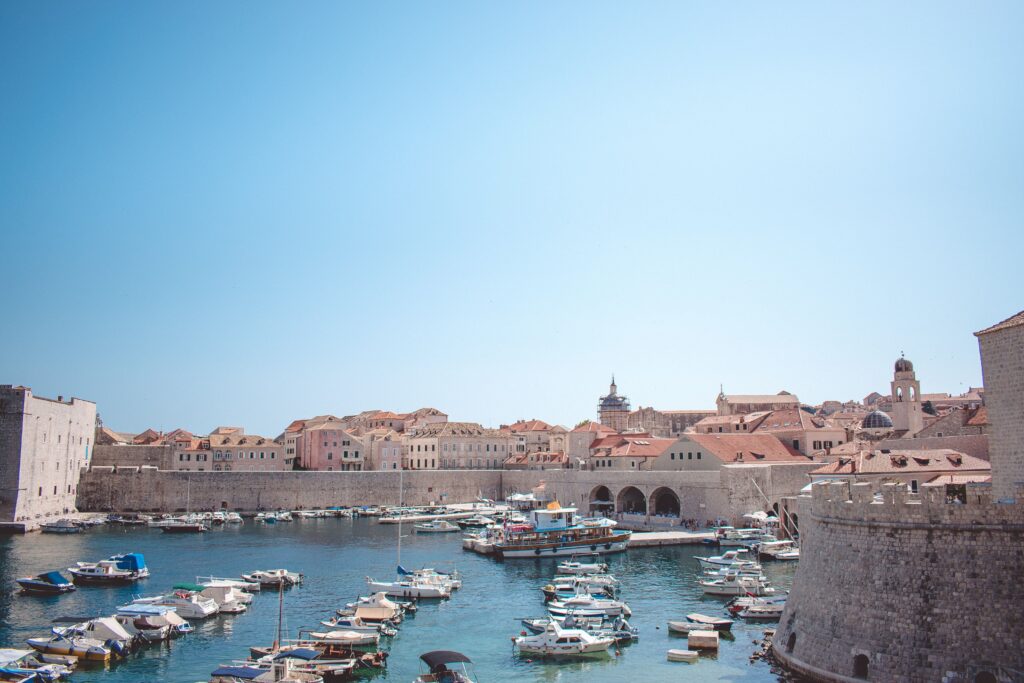
Split (the Roman city — the Diocletian’s Palace, the 3rd-century Roman emperor’s retirement residence, the palace that is now the living city centre of Split with 3,000 residents inside the walls): arrival in the evening.
Where to stay in Split: The Vestibul Palace (inside Diocletian’s Palace walls, the most atmospherically located hotel in Croatia: €150-280 / £129.31-241.38/night), the Cornaro Hotel (adjacent to the walls: €80-150 / £68.97-129.31/night), the Split Hostel Booze and Snooze (the Split institution for budget travellers: private rooms from €30-55 / £25.87-47.41/night).
DAYS 6-7 — The Dalmatian Coast to Dubrovnik
Day 6: Split to Korčula Island
The Diocletian’s Palace morning (the peristyle, the Cathedral of Saint Domnius — the mausoleum of the Emperor Diocletian converted to a cathedral in the 7th century, making it the oldest cathedral in the world continuously in use in its original structure, the sarcophagus of the persecutor of Christians now housing the relics of his Christian victims): entry €10 / £8.62.
The ferry from Split to Korčula Island (the Jadrolinija catamaran, 2.5 hours): the island of Korčula (the densely forested island, the Old City on the peninsula — the fishbone street pattern, the Cathedral of Saint Mark, the Moreška sword dance visible in the summer performances): the island that Marco Polo claimed as his birthplace (the claim is contested by Venice but maintained in Korčula with specific civic pride).
The afternoon on Korčula: the swim from the Old City peninsula (the sea on both sides, the specific island quality of the water visible from the street), and the white Grk wine (the indigenous Korčula white grape, available only from the Lumbarda village vineyards on the island’s eastern end): the most site-specific wine in Croatia.
Day 7: Korčula to Dubrovnik
The ferry from Korčula to Orebić (15 minutes), drive the Pelješac Peninsula (the oysters at Ston — the Mali Ston restaurant lunch, the walk on the Ston walls), and arrive in Dubrovnik for the evening flight home.
What It Costs
| Category | Budget | Mid-Range |
|---|---|---|
| Return flights (UK-Dubrovnik, Split-UK) | £60-200 | £100-280 |
| Car hire (7 days, Dubrovnik pick-up) | £140-250 | £180-350 |
| 7 nights accommodation | £175-420 | £420-980 |
| Food + coffee (7 days) | £80-160 | £180-360 |
| Activities (tunnel, museums, ferries) | £40-80 | £60-120 |
| Total | £495-1,110 | £940-2,090 |
The Balkans is the finest value-for-quality regional circuit in Europe for UK travellers. The accommodation in Montenegro and Bosnia is 40-60% cheaper than equivalent Croatia; the food is 30-50% cheaper throughout; and the specific cultural density (the Ottoman, the Habsburg, the Byzantine, and the very recent history) is not available at any comparable cost elsewhere in Europe.