


The Roman Forum that makes history feel like walking through a city rather than standing in front of a placard, the Pompeii visit timed so that the casts of the eruption victims are seen in the context of the city they lived in rather than as a shock exhibit, the Amalfi Coast ferry that gives the coast from the water and turns the 90-minute road into the 30-minute view, and why Italy — the country that the British have treated as an adults-only cultural experience for 300 years — is in fact the country where children are most specifically welcomed by the culture, the restaurants, and the particular Italian response to the presence of a child at the table.
Reading time: 10 minutes | Last updated: 2026
Italy is the country where the bambino at the restaurant table is greeted before the adults. Where the ice cream is the meal’s natural conclusion at every hour. Where the piazza is the family living room and the children running through it at 9pm are participating in the correct Italian evening rather than creating a disturbance. The specific Italian cultural relationship with childhood — the children as the communal responsibility of the extended family and the neighbourhood — makes Italy more genuinely welcoming to families than any country in Northern Europe, despite presenting itself as a country of grand art and serious cuisine.
The challenge: Italy’s cultural sites (the Colosseum, the Vatican, the Uffizi) are designed for adult attention spans. The Italian restaurant dinner (the 3-hour progression of antipasto, primo, secondo, dolce) requires patience from a 6-year-old. And the summer heat in Rome (37°C in August) is incompatible with a full afternoon of museum-going with children of any age.
This guide gives the Italy that works with children — the sites, the timing, the cooling strategies, and the specific Italian instructions that the standard Italy guide omits.
When to Go
April-June: The correct family Italy window. Rome at 22-25°C rather than August’s 35-38°C. The school holiday alignment (Easter week is the busiest single week in Italy — if possible, go the week after). The sea beginning to warm on the Amalfi coast by June.
September-October: The second family window. The summer crowds gone, the sea still warm (23-25°C in September on the Amalfi), the Rome site queues manageable. The October half-term in Italy: excellent — the Colosseum in October is a different experience from the Colosseum in August.
July-August: The heat (Rome 35-38°C in August), the crowds, and the Italian school holiday peak make this the most challenging family Italy window. Manageable with the correct strategy: all site visits before 11am, afternoon at the hotel pool or the fountain, evening out when the heat has broken.
Rome with Kids
The Colosseum and Forum — The Correct Sequence
Ages 6-10: the Colosseum first, the Forum second.
The Colosseum at 8am opening (book at coopculture.it — the 8am slot, the first entry): the arena floor level (the recently opened underground and arena floor access — the same ticket gives access to all levels, the arena floor where the gladiators stood giving the specific scale that the upper tiers don’t provide).
The specific Colosseum instruction for children: the scale. The Colosseum held 50,000 people. The Florence Cathedral holds 30,000. The specific comparison is useful. The gladiatorial fights were attended by the entire Rome social spectrum — the senators in the front rows, the slaves in the standing room at the top.
The Roman Forum (the civic centre of ancient Rome, directly adjacent to the Colosseum — the same ticket): the Temple of Saturn, the Arch of Septimius Severus, the Via Sacra (the road along which the triumph processions moved). The Forum at 9am: the tour groups not yet at peak density, the light good, the heat manageable.
The Palatine Hill (included in the Colosseum ticket): The hill above the Forum where the emperors built their palaces — the terrace view over the Forum and the Circus Maximus is the correct Palatine activity for children who are interested in the panorama rather than the archaeological detail.
Ages 4-6: The Colosseum exterior (the scale from outside is comprehensible to a 4-year-old without the interior complexity), the Circus Maximus walk (the former chariot racing circuit, now a public park — the specific scale of the largest sporting venue in the ancient world visible in the oval footprint of the park), and the ice cream from the Giolitti (the Pantheon-area gelateria, the most consistently cited for quality in the centro storico).
The Vatican for Kids
Ages 8+: The Vatican Museums at 9am opening (mandatory advance booking at museivaticani.va — the 9am first slot is the least crowded). The direct route to the Sistine Chapel (the museums are designed so that the Sistine Chapel is at the end of a 45-60 minute walk through the Gallery of Maps and the Raphael Rooms — the correct sequence gives the context for the ceiling). The Sistine Chapel at 9:30am with 200 people rather than the 2,000 at 11:30am.
The specific instruction for children at the Sistine Chapel: The ceiling is 18 metres above the floor. The binoculars make the figures comprehensible. The Creation of Adam (the most famous detail) is at the centre of the ceiling — the viewer must look directly overhead. The neck pain begins at 8 minutes. The children who are told what they’re looking for (the specific gap between the two fingers, the question of what Michelangelo was saying about the relationship between God and humanity) look for longer than the children who are not.
Ages 5-7: St. Peter’s Square (the scale is immediately comprehensible, no ticket required) and St. Peter’s Basilica (the Pietà in the first right chapel — the marble figure of Mary holding the dead Christ, the detail visible through the protective glass, the size of the figures — Mary’s body is much larger than Christ’s, the deliberate Michelangelo decision to make the perspective correct rather than the anatomy — is a specific observation for the engaged child).
The Borghese Gallery — The Hidden Rome for Kids
The Galleria Borghese (the Borghese villa in the park — mandatory booking at galleriaborghese.it, 2-hour timed entry, maximum 360 visitors at any time): the specific Rome museum that works for children of 8+ because of the Bernini sculptures.
The Bernini sculptures (the Apollo and Daphne, the Rape of Proserpina, the David) give the most immediately comprehensible great art in Rome: the David is in the moment of release (the stone already left his hand, the figure twisting from the throw — Michelangelo’s David is before; Bernini’s is during). The Daphne is transforming from human to tree as Apollo grasps her, the bark spreading from her fingertips. The movement is visible in the marble.
The child who sees the Bernini Apollo and Daphne has had the correct introduction to Baroque sculpture. It requires no explanation.
Pompeii with Kids
Ages 9+:
The Pompeii visit requires the correct sequencing and the correct guide for children to understand what they’re walking through.
The correct sequence:
The Pompeii entrance is at the Anfiteatro (the amphitheatre) or the Porta Marina (the sea gate). The Porta Marina entrance is the correct start — the route from the city gate through the Forum gives the spatial sense of a living city (the road ruts in the basalt from the cart wheels, the stepping stones that allowed pedestrians to cross the street above the cart level, the fountain on the corner of every second block fed by the municipal aqueduct system).
The Forum: the most important civic space, the temples, the market buildings, the specific Roman city organisation visible in its best-preserved form.
The House of the Vettii: the frescoes on the walls (the mythological scenes, the Eros figures, the garden frescoes) give the quality of Roman interior decoration in the house of wealthy merchants. The specific Pompeii quality: the frescoes painted the year before the eruption, still in the colours of 79 CE.
The casts: the plaster casts of the eruption victims (the people and animals whose bodies were buried in the ash that hardened around them, the voids left when the organic material decomposed, the voids filled with plaster in the 19th century to create the casts visible in the Garden of the Fugitives and in the museum): the emotionally charged moment of the visit. The children who understand the context (the eruption happened in the afternoon, the ash fell and the people sheltered thinking it would pass, the suffocating gases came before the ash burial — the sequence of death is documented in the casts’ positions) have a different experience from those who encounter the casts without the context.
The Pompeii guide for children: the licensed guides available at the entrance (€15-20 / £12.93-17.24 per hour) who specialise in the family visit are the correct Pompeii investment — 2 hours with a guide who pitches the story at a 10-year-old is better than 3 hours walking with the audio guide.
The heat: Pompeii in July is 34-36°C with no shade in the open areas. The afternoon visit (2pm-5pm) is inadvisable in peak summer with children. The 9am-12pm window gives the site in cooler conditions.
The Amalfi Coast with Kids
The ferry over the road:
The Amalfi Coast road (the SS163, the coastal road between Positano and Salerno) is the most scenic road in Italy and the most stressful in July-August when the single-lane sections are gridlocked and the buses require traffic management to pass. With children in the back seat, the 90-minute bus journey is the wrong choice.
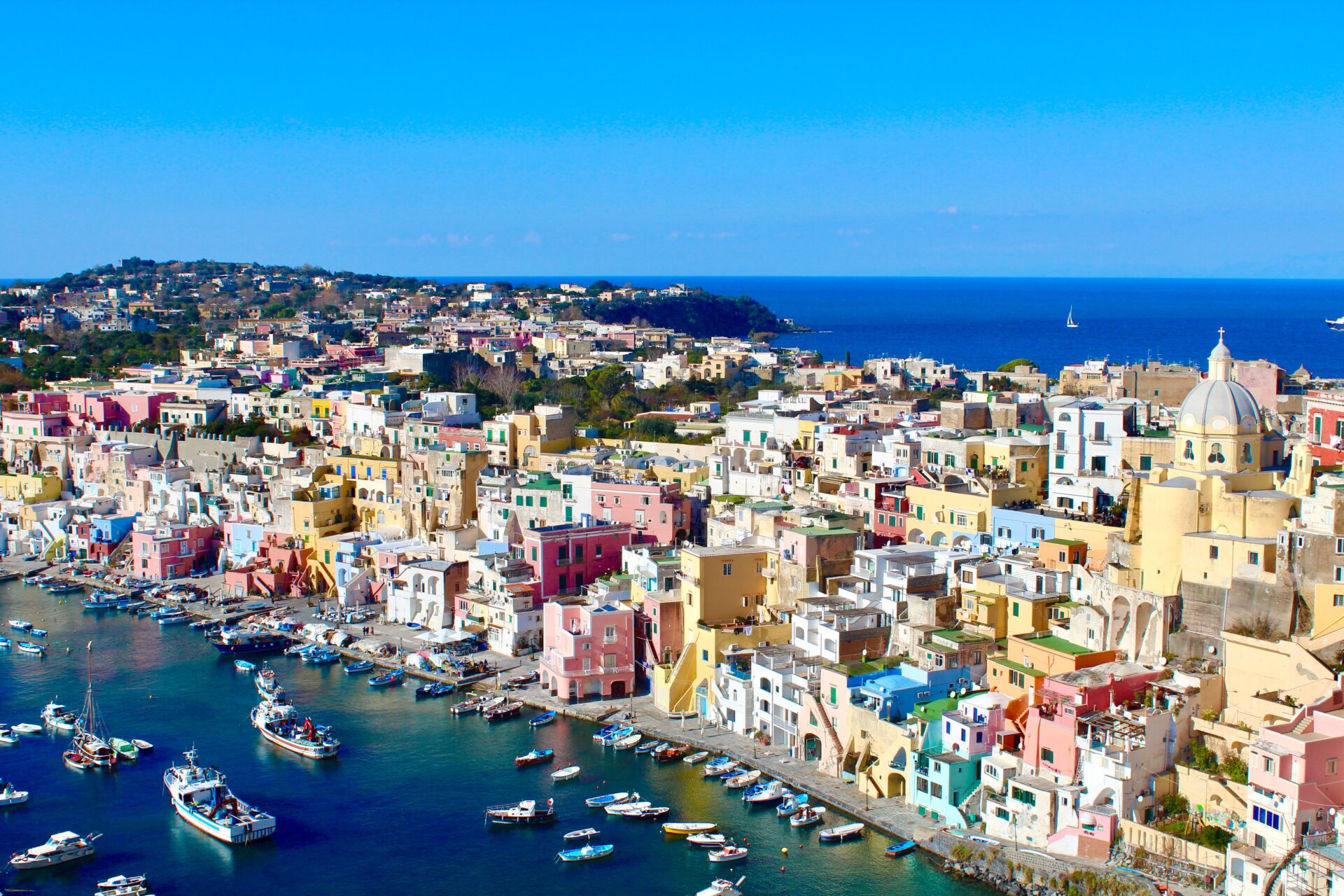
The ferry (the Alicost and Travelmar services connecting Positano, Amalfi, Ravello landing, and Salerno from April to October): the correct Amalfi Coast family transport. The coast from the water gives the perspective that the road denies (the cliffs, the villages visible from the sea, the terraced lemon groves, the specific Amalfi geography that the road runs along rather than over). Positano to Amalfi by ferry: 35 minutes, €12-18 / £10.34-15.52 per person.
The beaches:
The Amalfi Coast beaches are predominantly pebble (the Spiaggia Grande in Positano, the Spiaggia di Amalfi) rather than sand. For families with very young children, the sand beach option is the Lido Azzurro near Minori (15 minutes east of Amalfi by road) — the sand beach accessed by the local road rather than the tourist infrastructure.
The sea on the Amalfi Coast is clear (the Mediterranean transparency in June-October visible at 10 metres depth) and calm in the morning (the afternoon wind builds from the south). The 8-11am window is the correct family swimming time.
The specific Amalfi Coast instruction for children:
The Valle dei Mulini (the Valley of the Mills, Amalfi — the walk from the central Amalfi square up the valley, the abandoned paper mills visible (Amalfi was the first European producer of commercially manufactured paper, the mills operating from the 13th century, the water-powered machinery still visible in the ruins): free access, 45 minutes return. The child who walks through the abandoned mills that made the paper that the European Renaissance wrote on has encountered specific history in a specific place.
The Age-by-Age Italy Guide
Ages 3-6
The correct Italian sites for the under-6: the piazza (the outdoor space, the gelateria, the fountain), the vineyard (the visible agricultural activity, the grapes reachable at harvest season), and the beach. The Colosseum at this age is a large building. The Uffizi is incomprehensible without the context to read it.
The Italian under-6 advantage: every restaurant. The Italian attitude to children at the restaurant table (the spontaneous arrival of the breadsticks, the kitchen preparing the pasta in bianco — plain pasta with olive oil — without complaint or explanation, the chef appearing to say hello): the most child-welcoming restaurant culture in Europe.
Ages 7-12
The Colosseum (the arena floor), the Pompeii (with the guide), the Borghese Gallery (the Bernini), the Amalfi ferry. The cooking class (the specific Italian cooking class for families — the Lazio farmhouse cooking schools that teach the pasta-making, the children rolling the tagliatelle, the lunch they eat: €45-65 / £38.79-56.03 per family member including the meal).
Ages 12-16
The full Italy adult experience. The Uffizi (with the Botticelli context established in advance — the Primavera and the mythology are comprehensible to the teenager who has been given the context in the taxi on the way). The Cinque Terre (the hiking trail between the five villages — the Monterosso to Vernazza section, 90 minutes, the sea visible throughout, the appropriate challenge for the 14-year-old who wants to move faster than the museum pace).
What It Costs — Family of Four
| Category | Budget | Mid-Range |
|---|---|---|
| Return flights (UK-Rome or UK-Naples) | £600-1,000 | £900-1,500 |
| 10 nights accommodation | £700-1,400 | £1,400-2,800 |
| Food (10 days) | £400-700 | £700-1,200 |
| Site entries (Colosseum, Vatican, Pompeii, etc.) | £200-350 | £250-400 |
| Transport (ferries, trains) | £150-280 | £200-380 |
| Total (family of 4, 10 nights) | £2,050-3,730 | £3,450-6,280 |