



The carry-on packing guide that gives the specific method rather than the gear recommendation: the method is the constraint-first planning system (you have 55cm × 40cm × 20cm and 10kg; everything else is the negotiation within that constraint), the specific clothing selection (the 5-day capsule that covers 14 days through washing, not through carrying 14 days of clothing), and the specific gear choices that reduce the carry-on weight by 400g-1.2kg relative to the equivalent items most travellers pack. The one thing this guide does not do: tell you to pack lighter. You are already trying to pack lighter or you wouldn’t be reading this guide. This guide tells you how.
Reading time: 7 minutes | Last updated: 2026
The Constraint
The standard carry-on allowance (the budget airline dimension maximum): 55cm × 40cm × 20cm, 10kg. The standard carry-on allowance (the full-service airline): 56cm × 45cm × 25cm, 10-12kg. The personal item (the under-seat bag, the handbag, the small daypack): 40cm × 30cm × 15cm, not weighed on most airlines.
The strategy: The main carry-on (the 55cm × 40cm × 20cm roller or backpack) carries the clothing, the toiletries, and the shoes. The personal item (the small daypack) carries the electronics, the documents, the valuables, and the items needed during the flight. Nothing is checked.
The Clothing System (5-3-2 for 14 Days)
The 5-3-2 method: 5 tops, 3 bottoms, 2 shoes. 14 days of outfits through the combination and the rotation.
The selection criteria:
Tops: neutral base colours (the navy, the white, the grey, the olive) that combine with each other rather than requiring the specific pairing. The one patterned top is the statement piece that makes the outfit; the rest are the background.
Bottoms: one pair of walking trousers or jeans (the dark wash that does not show the daily wear), one lightweight chino or smart casual trouser, one shorts or skirt depending on the destination. Three bottoms cover the 14 days.
Shoes: one walking shoe that covers the temple, the hiking path, and the restaurant. One sandal or lightweight casual shoe for the beach and the resort evening. Two shoes. Never three.
The washing: The wool and the synthetic fabrics (the Merino wool, the Tencel, the quick-dry nylon) dry overnight when washed in the hotel sink and hung in the room. The cotton dries overnight in the hot climate and in 36 hours in the cool climate. Plan the wash day on Day 5-6 and the second wash on Day 10-11. The 5 tops cover 14 days on the 5-day rotation with the two wash days.
The Weight Savings That Matter
| Item | Standard choice | Weight saving alternative | Saving |
|---|---|---|---|
| Jacket | Cotton bomber jacket | Packable down jacket | 400-600g |
| Towel | Standard bath towel | Microfibre travel towel | 300-500g |
| Shoes (spare pair) | Casual leather shoe | Allbirds Wool Runner | 200-300g |
| Toiletries kit | Full-size products | 100ml solid alternatives (shampoo bar, solid conditioner, bar soap) | 400-600g |
| Umbrella | Standard umbrella | Repel Windproof compact | 100-150g |
Total potential weight saving: 1.4-2.1kg. The saving that converts the overweight carry-on to the under-limit carry-on.
The Packing Sequence
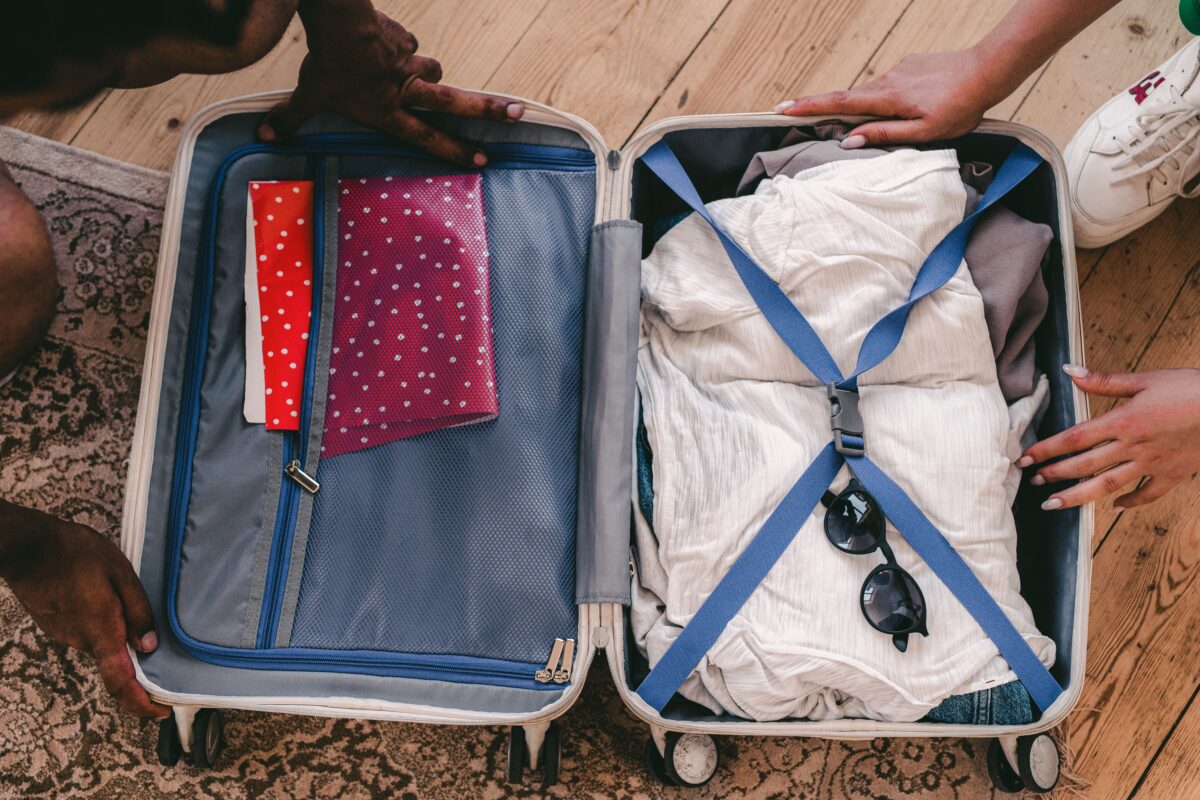
- The packing cubes first (the specific container system that converts the volume into usable space): the clothing in the flat compression cube (the 3L cube compresses to 50% volume with the compression zip), the toiletries in the small cube (the transparent 1L cube for the security screen), the electronics in the personal item.
- The shoes at the back (the heaviest items closest to the wheels/back panel where the weight distributes best through the bag structure).
- The packing cube stack (the cubes on top of the shoes, the flat stacking that eliminates the air gaps that the loose clothing creates).
- The jacket on top or compressed (the packable down jacket in its pocket-sized bundle takes the space of the shoe; the cotton jacket does not compress and belongs on the layer above the cube stack rather than in the cube).
The Non-Negotiable Carry-On Items (Never Check)
The electronics (the laptop, the camera, the hard drives). The documents (the passport, the travel insurance, the booking confirmations). The medication. The valuables. These items go in the personal item that stays under the seat in front, not in the overhead bin.
The overhead bin strategy: Gate-check the carry-on roller if the overhead bins are full (the airline gives the bag back at the jetway on arrival, not at baggage claim). Never gate-check the personal item — it stays with you.