
The route that gives Bulgaria its full argument in seven days: two days in Sofia for the Alexander Nevsky Cathedral and the Zhenski Pazar (the Women’s Market — the oldest market in Sofia, the rose hip, the dried herbs, the specific Bulgarian market that the city centre café culture does not show) and the National History Museum (the Panagyurishte Gold Treasure — the Thracian ceremonial vessels in pure gold, the most significant pre-Roman gold hoard in Southeast Europe), two days in Plovdiv for the Old Town (the Kapana Arts District and the 2nd-century Roman Theatre and the colourful National Revival architecture of the 18th-century merchants’ houses on the three hills above the Maritsa), and three days in the Kazanlak Rose Valley for the Damask rose harvest (May-June — the Bulgaria that produces 70% of the world’s rose oil, the harvest festival visible at the Rosa Damascena Festival in Kazanlak, the rosewater distillation in the village cooperatives).
Reading time: 10 minutes | Last updated: 2026
Before You Leave
Getting there: Fly London-Sofia (Ryanair, Wizz Air, Bulgarian Air Charter — from £20 one way, 3 hours) or London-Plovdiv (Ryanair seasonal). UK citizens: Bulgaria EU visa-free (Bulgaria joined Schengen in 2024 — the Schengen 90-day limit applies).
Currency: Bulgarian Lev (BGN). 1 GBP ≈ 2.38 BGN (2025) — the Lev is pegged to the Euro at 1.956 BGN/EUR. Bulgaria has not adopted the Euro.
The value: Bulgaria is one of the cheapest EU destinations — the Sofia restaurant meal at BGN 12-18 / £5.04-7.56, the Plovdiv craft beer at BGN 4 / £1.68, the guest house room in Kazanlak at BGN 40-60 / £16.81-25.21/night.
The Route
Sofia (2 nights) → Plovdiv (2 nights, 2 hours by bus or train) → Kazanlak / Rose Valley (3 nights)
DAYS 1-2 — Sofia
Day 1: The Alexander Nevsky and the Zhenski Pazar
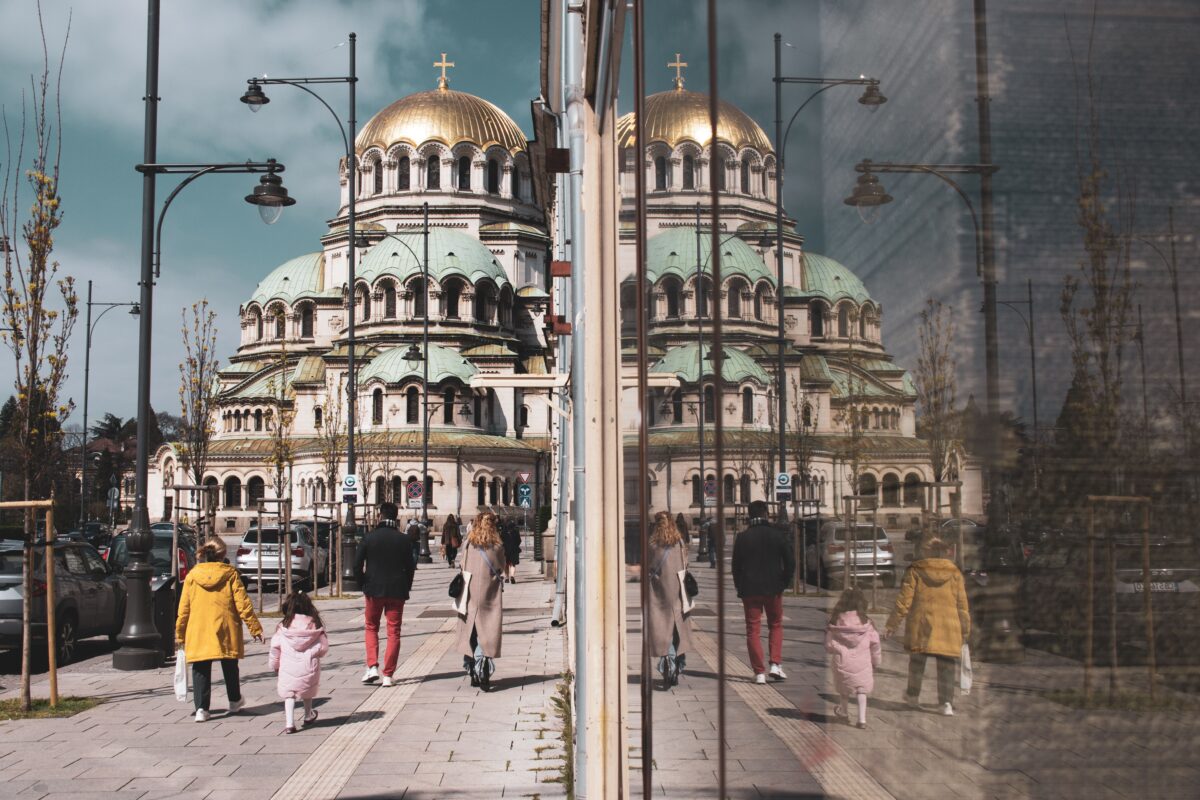
The Alexander Nevsky Cathedral:
The Alexander Nevsky Cathedral (the 1912 Neo-Byzantine cathedral — the gold dome visible from the Mount Vitosha above the city, the interior (the 1,000 icons, the marble colonnades, the specific Bulgarian Orthodox interior scale) accessible free, the crypt (the National Art Gallery icon collection — the Bulgarian medieval icon tradition, the specific Bulgarian cultural heritage):
Entry: free (cathedral); BGN 6 / £2.52 (crypt/icon gallery).
The Zhenski Pazar:
The Zhenski Pazar (the Women’s Market, established in 1901 — the Central Sofia market giving the Bulgarian produce: the rose hip tea (шипков чай), the dried herbs (мента, бял равнец), the Bulgarian cheese (the sirene — the white brine cheese, the specific Bulgaria dairy tradition visible at the market counter) and the lukanka (the Bulgarian cured flat sausage)):
At 8am: the market at the morning purchase hour.
Day 2: The National History Museum and Mount Vitosha
The Panagyurishte Gold Treasure:
The National History Museum (the museum 7km from the city centre — the building is not convenient but the Panagyurishte Gold Treasure (the 6.164kg of pure gold Thracian ceremonial vessels dated to the 4th-3rd century BCE, the rhytons, the amphora, the patera visible in the specific room that the Louvre and the British Museum have attempted to claim and that Bulgaria correctly retains)):
Entry: BGN 10 / £4.20.
Mount Vitosha:
The Vitosha Nature Park (the mountain above Sofia — the 2,290-metre summit, the cable car from the Simeonovo neighbourhood (accessible by bus from the National Palace of Culture metro station), the ski resort in winter, the specific Sofia walk at 1,600-2,290 metres that the Sofia resident uses on the Saturday when the traffic is heavy):
Cable car: BGN 12 / £5.04 return.
DAYS 3-4 — Plovdiv
The Plovdiv Old Town:
The Plovdiv Old Town (the National Revival architecture — the 18th-19th century Bulgarian merchants’ houses built on the three hills above the Plovdiv centre, the specific architectural style (the Plovdiv house — the projecting upper floors, the symmetrical wooden facade, the decorative interior visible at the house museums)):
The Hisar Kapiya (the Roman gate — the 2nd-century CE eastern gate of Philippopolis, the specific Plovdiv layered history visible in the single arch that the Ottoman, the Bulgarian National Revival, and the Roman periods all share as the street level):
The Kapana Arts District:
The Kapana (“The Trap” — the former craft district converted to the arts quarter, the gallery, the brewery, the street art, the specific Plovdiv urban regeneration visible in the neighbourhood that the 2019 European Capital of Culture designation accelerated):
The banitsa (the Bulgarian cheese-and-egg pastry — the Kapana bakery from 7am, the flaky filo, the specific Bulgarian breakfast at BGN 2-3 / £0.84-1.26):
The Roman Theatre:
The Ancient Theatre of Philippopolis (the 2nd-century CE Roman theatre built for the 3,000 spectators — the theatre in active use as the performance venue for the Plovdiv Opera season, the columns visible against the Rhodope Mountains behind the stage, the specific Plovdiv classical heritage at the city centre scale):
Entry: BGN 5 / £2.10.
DAYS 5-7 — The Rose Valley
The Bulgarian rose (Rosa damascena):
The Damask rose (the attar of roses production — the specific rose oil that Bulgaria produces in the Kazanlak-Karlovo valley (the Dolina na Rozite — Valley of Roses, the 130km-long valley between the Balkan Mountains and the Sredna Gora range) that accounts for 70% of the world’s rose otto production):
The specific rose oil production: 3-5 tonnes of rose petals to produce 1 litre of rose otto (the pure rose essential oil, the ingredient in the Chanel No. 5, the Dior J’adore, and the specific luxury perfume visible at the rose oil shop in Kazanlak at BGN 15-50 / £6.30-21 per 1ml versus the £200-400/ml at the Paris perfume house).
The harvest festival (May-June timing):
The Rosa Damascena Festival in Kazanlak (the first Saturday and Sunday of June, the festival that has been celebrated in the Rose Valley since the 19th century — the rose-picking demonstration at 6am (the roses must be picked before the morning heat to preserve the volatile oil content), the rose queen crowning, the folk music, the specific Bulgarian seasonal event):
The village rose distillery visit (the distillery in the village of Guneikite or Rosa — the traditional copper still, the rose water distillation visible at the production scale, the rosewater available at the distillery price (BGN 5-10 / £2.10-4.20 per litre versus BGN 15-25 / £6.30-10.50 at the Kazanlak tourist shop)):
What It Costs
| Category | Budget | Mid-Range |
|---|---|---|
| Return flights (UK-Sofia) | £20-80 | £50-160 |
| 7 nights accommodation | £60-180 | £180-490 |
| Buses (Sofia-Plovdiv, Plovdiv-Kazanlak) | £6-12 | £6-12 |
| Car hire (Rose Valley, 3 days) | £45-90 | £70-140 |
| Food (7 days) | £18-50 | £50-130 |
| Entries and activities | £15-35 | £20-50 |
| Total | £164-447 | £376-982 |