
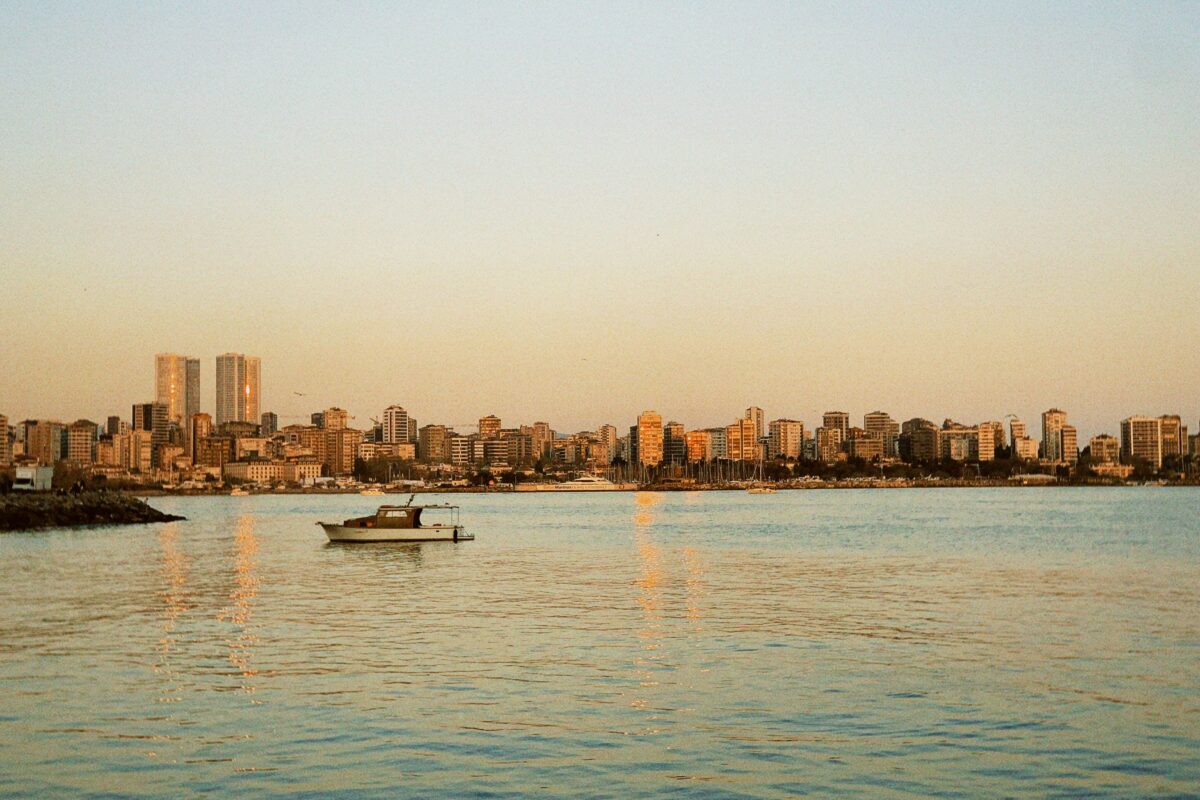
The specific Beirut argument — the one the travel industry has found difficult to make since 2006 and impossible since 2020: Beirut is the most fascinating city in the Middle East precisely because it has absorbed the most, refused to be simplified by any of it, and maintained the specific quality of the city that lives in contradiction without resolving it. The Hamra Street bookshop (open through every crisis since 1956), the Sursock Museum (rebuilt after the 2020 port explosion), the Gemmayze neighbourhood (the bar and the bullet hole in the same building), and the Corniche at 6pm (the joggers and the families and the sea and the Martyrs’ Square beyond) give the specific Beirut that the travel article cannot capture because it requires the physical presence of the city’s specific refusal to be anything other than itself.
IMPORTANT: Check the current FCDO travel advisory at gov.uk/foreign-travel-advice/lebanon before planning any Beirut visit. The security situation in Lebanon has changed significantly at multiple points since 2020. This guide covers the Beirut accessible during stable periods and does not substitute for the current official advice.
Reading time: 7 minutes | Last updated: 2026
Before You Arrive
Getting there: Fly London-Beirut (Middle East Airlines, British Airways, Wizz Air — 5 hours). UK citizens: Lebanon visa on arrival — verify current conditions at the Lebanese Embassy London before booking.
Currency: The Lebanon currency situation is complex — carry USD (the parallel market rate is significantly different from the official rate; USD transactions are the practical standard in the Beirut tourist economy). Verify the current Lebanese pound exchange rate situation before travel.
DAY 1
7am — The Corniche
The Beirut Corniche (the 4.8km seafront promenade from the Ain el-Mreisse to the Raouché Rocks — the Cape Rocks (the Pigeon Rock — the natural rock arch visible from the Corniche café at the promenade’s southern end)):
At 7am: the Corniche at the morning exercise hour — the joggers, the walkers, the ahweh coffee vendor, the specific Beirut morning that the city’s 2 million residents use as the daily reset.
10am — The National Museum
The National Museum of Lebanon (the museum covering Lebanon’s archaeology from prehistoric to the Ottoman period — the Phoenician artefacts (the sarcophagi from Tyre and Byblos, the Eshmunazar sarcophagus), the Roman mosaics, and the Phoenician glass):
The specific museum instruction: the National Museum was used as a front line during the Lebanese Civil War (1975-1990) — the museum’s objects were sealed in concrete to protect them. The concrete traces are visible on some objects in the collection.
Entry: USD 5 / £3.94.
1pm — The Sursock Museum and Gemmayze
The Sursock Museum (the reopened museum in the Sursock Palace — the contemporary Lebanese art, the renovation after the August 4, 2020 port explosion damage):
The Gemmayze neighbourhood (the traditional residential quarter adjacent to the port — the explosion damage visible in the buildings alongside the restoration, the specific Beirut coexistence of the rebuild and the ruin):
The kaak vendor (the Beirut sesame bread ring, the street bread): USD 0.50-1 / £0.39-0.79.
4pm — The Hamra Street
The Hamra Street (the West Beirut commercial and cultural street — the bookshops (the Antoine bookshop, the continuously operating since 1956), the café (the Café de Prague, the Café Younes), the specific Beirut intellectual street life):
The knefe (the knafeh — the shredded wheat pastry with the white cheese, the sugar syrup, the specific Lebanese sweet at the Knefe Salam shop on Hamra): USD 3-5 / £2.36-3.94.
DAY 2
8am — Byblos (day trip, 40km north)
The Byblos (Jbeil in Arabic — the Phoenician port city continuously inhabited since 5000 BCE, the specific claim to the title of oldest continuously inhabited city in the world (contested with Jericho)):
The archaeological site (the Phoenician, the Crusader, the Roman layers visible in the same excavation — the specific Middle Eastern archaeological palimpsest): LBP 6,000 / USD 4 / £3.15.
The Byblos harbour (the fishing harbour adjacent to the archaeological site — the fresh fish restaurants visible from the harbour wall, the samak meshwi (the grilled fish) at the harbour restaurant): USD 20-35 / £15.75-27.56.
SHARED taxi (service taxi) from Beirut: USD 3-5 / £2.36-3.94 one way.
1pm — The Fouad Chehab Bridge District
2pm — Downtown Beirut
The Downtown (the rebuilt commercial district — the Martyr’s Square, the Mohammed Al-Amin Mosque (the 2008 mosque adjacent to the 18th-century Saint George Cathedral — the two buildings in the same plaza as the specific Beirut religious plurality in stone)):
Free.
What It Costs (2 Days)
| Category | Budget | Mid-Range |
|---|---|---|
| 2 nights accommodation | USD 40-80 / £32-63 | USD 100-200 / £79-157 |
| Food (2 days) | USD 15-35 / £12-28 | USD 35-80 / £28-63 |
| Transport | USD 10-20 / £8-16 | USD 15-25 / £12-20 |
| Total (excluding flights) | £52-107 | £119-240 |