
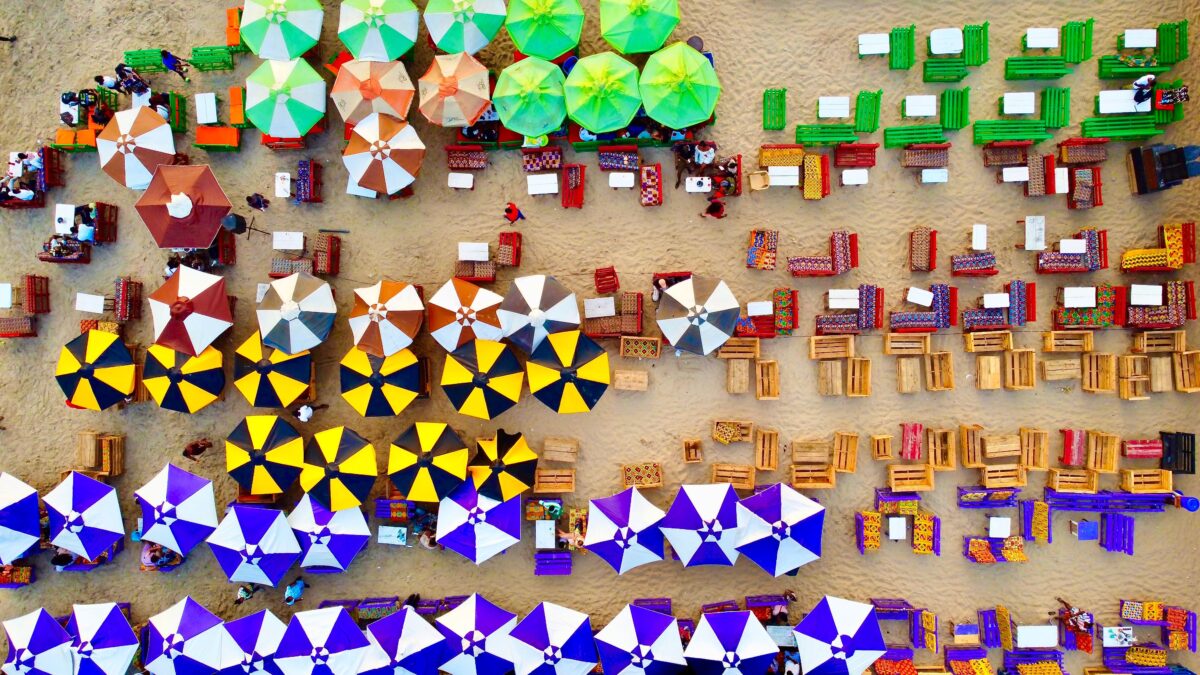
The specific Accra argument: Ghana’s capital is the West African city that the African diaspora returns to, the city where the “Year of Return” of 2019 made visible the specific emotional geography of the people whose ancestors left from this coast 400 years ago, and the city that the visitor who arrives expecting the developing-world capital discovers as the city of the kelewele at the night market, the Osu Oxford Street at 7pm, the Labadi Beach at 9am, and the specific Ghana teranga-equivalent that the Ghanaian calls akwaaba (welcome) and means it without the hospitality industry inflection. Two days give the independence monument, the Kwame Nkrumah memorial, the slave castle context (the full castle is in Cape Coast — a 3-hour drive), and the specific Accra food.
Reading time: 7 minutes | Last updated: 2026
Before You Arrive
Getting there: Fly London-Accra Kotoka International Airport (British Airways direct, 7 hours; also Virgin Atlantic). UK citizens: Ghana visa required — apply at ghanaimmigration.gov.gh (USD 100 / £78.74, apply 2-3 weeks ahead).
Currency: Ghanaian Cedi (GHS). 1 GBP ≈ 17.75 GHS (2025). ATMs widely available.
Yellow fever: The yellow fever vaccination certificate is required for entry. No certificate: no entry.
Where to stay: Osu (the commercial and restaurant neighbourhood — the Oxford Street, the restaurants, the craft market): GHS 200-500 / £11.27-28.17/night budget guesthouse, GHS 700-1,500 / £39.55-84.75/night mid-range.
DAY 1
7am — The Kwame Nkrumah Memorial Park
The Kwame Nkrumah Memorial Park (the mausoleum and museum of Ghana’s founding president — the black star fountain, the eternal flame, the museum covering the independence movement):
The specific Nkrumah instruction: the independence speech audio recording (the March 6, 1957 declaration, the first sub-Saharan African independence) is played at the museum. The recording of a head of state declaring his country free for the first time in the building where he is buried is the specific museum moment that the museum gives and that the photograph does not.
Entry: GHS 10 / £0.56.
10am — The W.E.B. Du Bois Centre
The W.E.B. Du Bois Centre (the memorial to the African American civil rights leader who moved to Ghana in 1961, became a Ghanaian citizen, and died in Accra in 1963 — the archives, the library, the house visible in the restored state of Du Bois’s final home):
Entry: GHS 20 / £1.13.
1pm — The Makola Market
The Makola Market (the central Accra market — the West African fabric (kente, wax print, the batakari), the spices, the produce, the specific West African market energy visible in the trading floor at the midday):
The kelewele (the spiced fried plantain — the ripe plantain cut into cubes and fried with the ginger, the cayenne, the clove, the anise, the street food available throughout the Makola at GHS 5-10 / £0.28-0.56 per portion): the specific Ghana street food that no other West African country makes identically.
4pm — The Osu Oxford Street
The Oxford Street (the Osu commercial street — the craft market at the Osu night market from 4pm, the kente cloth, the adinkra symbol fabric, the specific Ghana craft tradition visible at the market price (GHS 50-200 / £2.82-11.30 for the good piece) versus the hotel lobby price):
The jollof rice at the Osu restaurant (the specific Ghana jollof — the wood-fire-cooked jollof that the party jollof tradition gives, the smoky base layer visible in the correct version): GHS 30-60 / £1.69-3.39.
DAY 2
8am — The Labadi Beach
The Labadi (La-Pleasure Beach — the main Accra public beach):
At 9am: the beach before the heat and the weekend crowd, the Atlantic Ocean, the highlife music audible from the beach bar, the tilapia grilled at the beachside stall (GHS 40-70 / £2.26-3.95 for the whole fish with the banku — the fermented corn and cassava dough, the specific Ghana carbohydrate).
11am — The National Museum
The Ghana National Museum (Barnes Road — the collection of Ghanaian and West African traditional objects: the Asante stool (the dwa — the royal stool, the specific Asante political object), the kente cloth, the akrafena sword, the Asante gold):
Entry: GHS 15 / £0.85.
2pm — The Cape Coast Castle option
The Cape Coast Castle (the 3-hour drive west — the slave fort, the specific Ghanaian historical weight that the 7 Days in Ghana guide covers in full): the full castle visit requires the day trip from Accra rather than the 48-hour city guide. Confirm the specific Accra-only visit takes the National Museum and the Nkrumah memorial as the 48-hour alternative to the Cape Coast, and the Cape Coast as the reason to stay 3 days.
What It Costs (2 Days)
| Category | Budget | Mid-Range |
|---|---|---|
| Ghana visa | £79 | £79 |
| 2 nights accommodation | £22-56 | £79-169 |
| Food (2 days) | £5-15 | £15-40 |
| Transport (taxis) | £5-10 | £8-15 |
| Total (excluding flights) | £111-160 | £181-303 |