
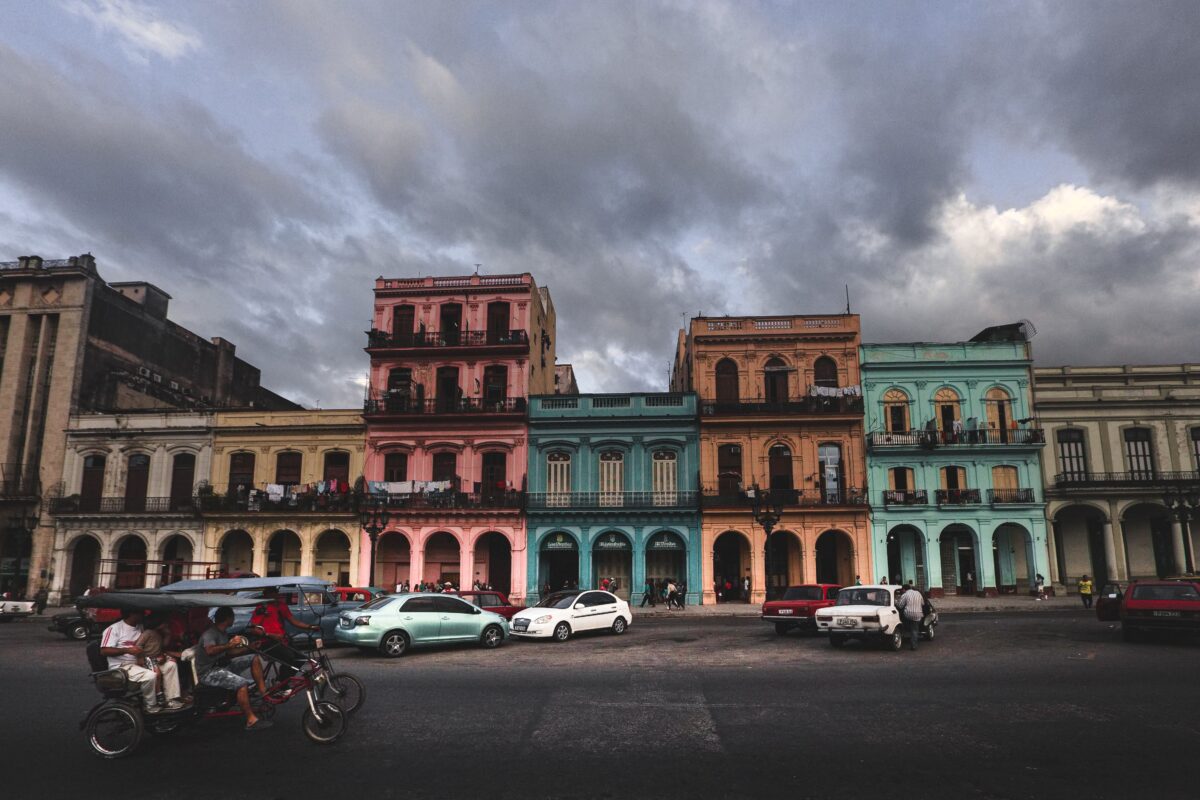
The specific Havana argument: Cuba’s capital is the most specifically itself of any capital city in this library — the 1950s American cars maintained by the embargo’s necessity into the specific mechanical art form (the almendrones — the shared taxi classics, the 1957 Buick, the 1955 Chevrolet, the 1952 Pontiac, still functioning as the daily transport), the Malecón (the seawall promenade where the Havana sea and sky and the city behind give the specific image that every Cuba photograph uses and that the physical presence makes three-dimensional), and the specific Cuban music (the son, the guaracha, the bolero, the son montuno — the Casa de la Música visible from the street before 8pm and packed from 9pm). Two days give the Old Havana UNESCO site, the Malecón, the music, and the ropa vieja. They do not give the political argument — that is longer than 48 hours and more complicated than a city guide.
Reading time: 7 minutes | Last updated: 2026
Before You Arrive
Getting there: Fly London-Havana (via Madrid (Iberia), Paris (Air France), Cancún (connecting), or Toronto — 12-16 hours total). UK citizens: Cuba requires the Cuban Tourist Card (the tarjeta del turista) — available from Cuban Embassy London (£25-30), from the airline check-in at departure, or online.
US citizens: The OFAC regulations restrict US citizens’ Cuba travel. This guide is for UK passport holders; the Cuba visit is straightforward for the UK traveller.
Currency: Cuba operates a dual currency system — the CUP (Cuban Peso) for locals and most transactions, with the USD and the EUR accepted in the tourist economy. The specific Cuba cash instruction: bring EUR or GBP cash (not USD — the US dollar surcharge applies). The Cadeca (the official exchange) or the hotel exchange desk gives the CUP.
Where to stay: Old Havana casa particular (the private room rental in the Cuban home — the legal private accommodation, the specific Cuba hospitality, the breakfast included): CUP 2,000-4,000 / £60-120/night at the 2025 rate.
DAY 1
7am — Old Havana
The Habana Vieja (the UNESCO World Heritage old city — the specific colonial Spanish city visible in the four main plazas: the Plaza de Armas (the oldest in Cuba), the Plaza de la Catedral (the Baroque cathedral, the cafés at the plaza edge), the Plaza San Francisco de Asís, and the Plaza Vieja (the most recently restored)):
At 7am: the plazas before the tourist circuit begins. The tostada con café (the buttered toast with the Cuban coffee — the cortadito, the small espresso with the small amount of steamed milk, the specific Cuba morning at CUP 100-200 / £3-6 at the plaza café).
The Museo de la Revolución:
The former Presidential Palace converted to the Museum of the Revolution (the specific Cuban political history from the Batista period through the 1959 Revolution to the present, the Granma yacht (the vessel that carried Fidel Castro and the 82 revolutionaries from Mexico to Cuba in 1956) visible in the glass pavilion behind the museum):
Entry: CUP 500 / £15.
2pm — The Malecón
The Malecón (the 8km seawall promenade from Old Havana to Vedado — the Caribbean visible to the north, the Havana buildings visible to the south, the Havaneros visible at the wall from dusk to midnight):
At 5pm: the Malecón at the specific Cuba evening hour — the fishermen at the wall, the teenagers, the couples, the musicians. The canchánchara (the traditional Cuba cocktail from Trinidad — the aguardiente (the sugarcane spirit), the honey, the lime, the water; the Havana equivalent: the mojito at CUP 200-400 / £6-12 at the Malecón bar): the Cuba cocktail at the Cuba seawall as the complete clause.
9pm — The Casa de la Música
The Casa de la Música (the Galiano neighbourhood — the live music venue from 10pm, the son, the salsa, the specific Cuba music at full volume in the space designed for it): CUP 500-800 / £15-24 cover charge.
DAY 2
9am — The Vedado Neighbourhood
The Vedado (the Havana neighbourhood where the pre-revolution Cuban bourgeoisie built their homes — the specific 1920s-1950s architecture visible in the houses and the Miramar district beyond):
The Cementerio de Cristóbal Colón (the Columbus Cemetery — the specific Havana monument to the 19th-century and early 20th-century Cuban society visible in the mausoleums and the statuary): entry CUP 100 / £3.
12pm — The Old Havana Food
The ropa vieja (the shredded beef stew — the ropa vieja (old clothes — the name from the shredded appearance of the meat) with the black beans, the rice, the sweet plantain, the specific Cuba lunch at the paladare (the private restaurant, the Cuban home restaurant, the specific economic liberalisation of the Raúl Castro period)): CUP 500-800 / £15-24 at the Vedado paladare.
What It Costs (2 Days)
| Category | Budget | Mid-Range |
|---|---|---|
| Cuba Tourist Card | £28 | £28 |
| 2 nights casa particular | £120-240 | £120-240 |
| Food (2 days) | £30-70 | £70-150 |
| Transport (taxi colectivo/almendrón) | £10-20 | £10-20 |
| Total (excluding flights) | £188-358 | £228-438 |