


The Camino Português is the second-most walked route to Santiago de Compostela, and its final 7-day stretch from Tui to Santiago covers the minimum distance required for an official Compostela certificate while staying genuinely achievable for a first-time long-distance walker. This is the complete route breakdown.
7 days walking the final stretch of the Camino Português (Tui to Santiago, roughly 115km) costs roughly £280-£380 per person excluding flights, based on budget albergue and pensión accommodation, meals, and the pilgrim credential. UK passport holders need no visa, and the route qualifies for the official Compostela certificate since it exceeds the minimum 100km walking requirement.
The 7-Day Route at a Glance
| Day | Route | Distance | Accommodation Cost |
|---|---|---|---|
| 1 | Tui to O Porriño | 17km | £10-£18/night (albergue) |
| 2 | O Porriño to Redondela | 15km | £10-£18/night |
| 3 | Redondela to Pontevedra | 20km | £12-£22/night |
| 4 | Pontevedra to Caldas de Reis | 21km | £12-£22/night |
| 5 | Caldas de Reis to Padrón | 19km | £12-£22/night |
| 6 | Padrón to Santiago | 25km | £15-£30/night |
| 7 | Santiago (rest/exploration day) | – | £15-£30/night |
Albergues (pilgrim hostels) offer the cheapest accommodation throughout, with pensións and small hotels available in every stage town for travellers wanting a private room.
Day-by-Day Breakdown
Day 1: Tui to O Porriño (17km)
Tui, on the Spanish side of the Portuguese-Spanish border, is the standard starting point for this route, chosen specifically because it sits just over the 100km minimum distance required for the official Compostela certificate.
- Getting to Tui: trains run regularly from Porto (roughly 2 hours) or Vigo (30 minutes), making either a practical arrival point the day before starting
- Pilgrim credential (credencial): essential for stamps along the route and required to claim the Compostela certificate at the end; available at Tui’s cathedral or pilgrim office for a small donation, typically 2-3 EUR
- Terrain: mostly flat with some gentle rolling sections, a manageable introduction for first-time walkers
- Accommodation: albergues in O Porriño from 12-16 EUR (£10-£14) per night
Day 2: O Porriño to Redondela (15km)
The shortest day of the route, deliberately positioned early to let first-time walkers adjust before the longer stages ahead.
- Terrain: includes a section through eucalyptus forest, genuinely pleasant walking away from road noise
- Redondela’s twin railway viaducts: a notable landmark marking the approach into town
- Accommodation: albergues from 12-18 EUR (£10-£15.50)
Day 3: Redondela to Pontevedra (20km)
Pontevedra’s old town is one of the most attractive stops on the entire route, worth allowing extra time to explore beyond the standard overnight stop.
- Terrain: a mix of woodland paths and small village crossings, moderate but not strenuous
- Pontevedra old town: free to explore, a well-preserved medieval centre with a genuinely lively evening atmosphere given the town’s university population
- Accommodation: albergues and pensións from 15-25 EUR (£12.90-£21.50)
The 6am principle applies loosely across the whole route. Starting each day’s walk early avoids both the midday heat (particularly relevant in summer months) and the congestion that builds on popular stages as the day progresses, since most pilgrims aim to arrive at each stage town by early-to-mid afternoon.
Day 4: Pontevedra to Caldas de Reis (21km)
The longest day so far, though the terrain remains largely manageable with river crossings and rural paths dominating the route.
- Terrain: gently undulating, following the Verdugo and Umia rivers for significant stretches
- Caldas de Reis thermal springs: free public hot spring pools in the town centre, a genuinely welcome stop for tired legs after a 21km day
- Accommodation: albergues from 12-20 EUR (£10.30-£17.20)
Day 5: Caldas de Reis to Padrón (19km)
Padrón holds genuine historical and religious significance on this route, traditionally considered the point where the boat carrying St. James’s remains first landed.
- Terrain: rural paths through vineyard country, one of the more scenic stretches given the Rías Baixas wine region setting
- Padrón peppers: the town’s namesake dish (small green peppers, fried and salted, most mild but occasionally spicy) is a local specialty worth trying, typically 4-6 EUR (£3.45-£5.15) as a tapas portion
- Accommodation: albergues and pensións from 12-22 EUR (£10.30-£19)
Day 6: Padrón to Santiago (25km)
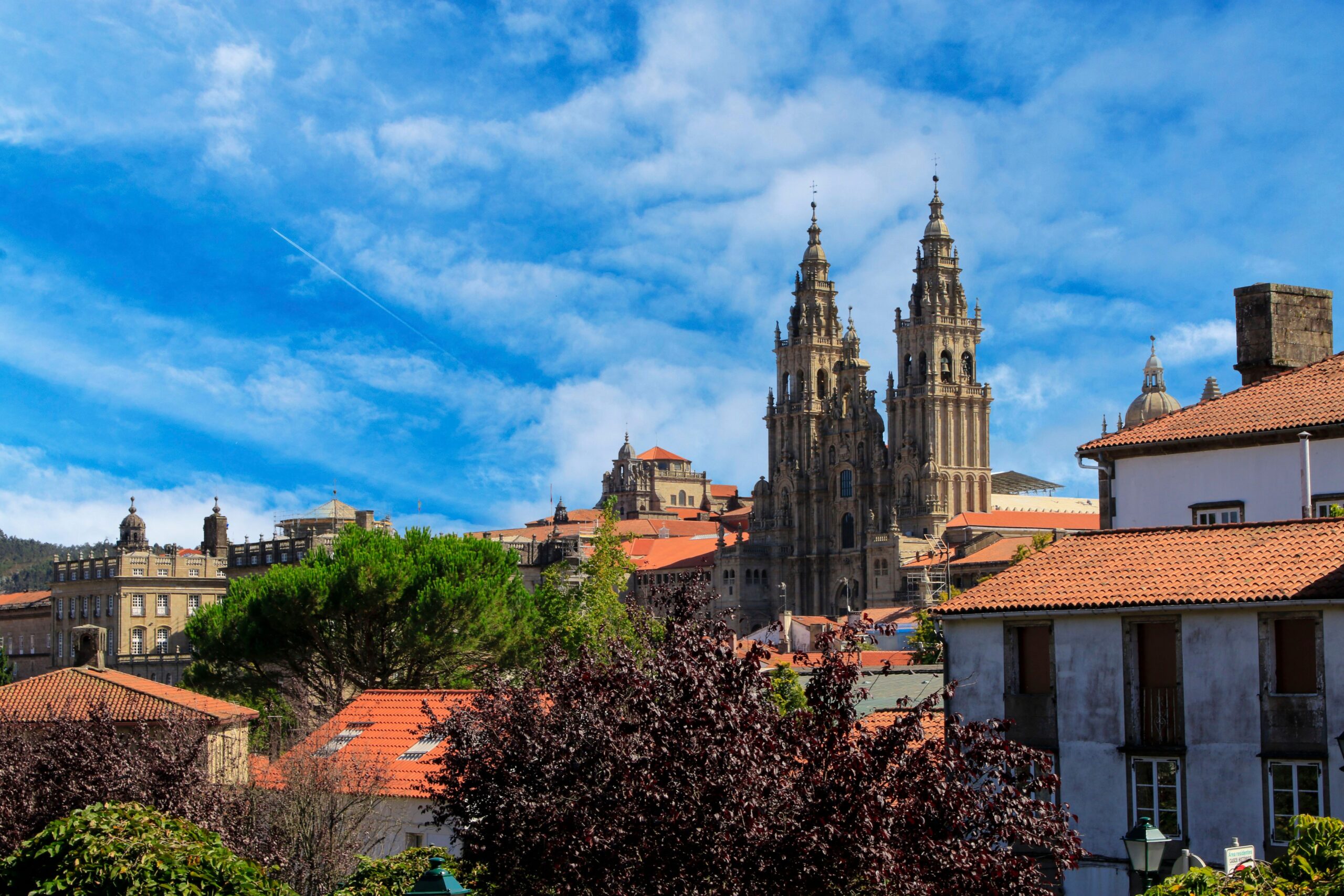
The longest and most significant day, arriving at Santiago de Compostela’s cathedral, the destination for pilgrims following any Camino route.
- Terrain: a mix of rural and increasingly urban paths as the route approaches Santiago itself
- Arrival at Santiago Cathedral: free to enter, though the specific pilgrim mass times and the famous botafumeiro incense ceremony (not held daily, worth checking the schedule in advance) draw significant crowds
- Compostela certificate: collected at the Pilgrim’s Office near the cathedral, requiring the stamped credencial as proof of completing the minimum required distance
- Accommodation: a wider range of hotels and pensións in Santiago itself, from 15-30 EUR (£12.90-£25.80)
Day 7: Santiago (Rest and Exploration)
A full day in Santiago allows time to properly see the cathedral, explore the old town, and decompress after six consecutive walking days.
- Cathedral museum and rooftop tour: 12 EUR (£10.30), offering access to areas not included in the standard free entry
- Mercado de Abastos: Santiago’s central market, worth a visit for genuinely good, affordable local food and produce
What £280-£380 Actually Covers
| Category | Total for 7 Days (GBP, per person) |
|---|---|
| Accommodation (7 nights, albergues/budget pensións) | £90-£150 |
| Food (three meals daily) | £110-£150 |
| Local transport (arrival to Tui, departure from Santiago) | £30-£50 |
| Pilgrim credential and Compostela | £3-£5 |
| Total | £233-£355 |
Solo travellers should expect costs toward the higher end of this range, since some accommodation (particularly pensións rather than shared albergue dorms) doesn’t split as favourably as it does for pairs.
Step-by-Step: Preparing for This Route
- Break in walking boots or shoes well before departure. A minimum of several weeks of regular wear beforehand avoids the blisters that derail more first-time Camino attempts than any other single factor.
- Get the pilgrim credential before starting, either in advance through a Camino association in your home country or on arrival at Tui’s cathedral or pilgrim office.
- Pack light, genuinely light. A pack weighing more than 10% of body weight becomes noticeably harder to manage over consecutive walking days; most experienced pilgrims recommend carrying no more than a small daypack’s worth of clothing and essentials, with luggage transfer services available for those wanting to send a larger bag ahead each day.
- Book the first night in Tui ahead, but stay flexible on subsequent albergue bookings, since most operate on a first-come basis and the route’s popularity varies significantly by season.
- Carry cash for smaller albergues and rural cafes, since card acceptance drops off noticeably away from the larger stage towns.
Frequently Asked Questions
Do UK citizens need a visa to walk the Camino de Santiago?
No. As Spain is part of the Schengen Area, UK passport holders can visit visa-free for stays up to 90 days within any 180-day period, comfortably covering this 7-day route.
How difficult is the Camino Português compared to other Camino routes?
Generally considered one of the more moderate routes in terms of terrain, with fewer significant elevation changes than the French Way’s mountain crossings. It remains a genuine physical undertaking requiring reasonable fitness, but suits first-time long-distance walkers well.
What is the minimum distance required for the Compostela certificate?
100km on foot (or 200km by bicycle), which is why this route starts at Tui rather than further north in Porto, ensuring the full distance walked exceeds the certificate’s minimum requirement with some margin.
What is the best time of year to walk this route?
May-June and September offer the best combination of comfortable walking temperatures and manageable pilgrim numbers. July-August sees the highest volume of walkers, leading to busier albergues and, on the most popular stages, a genuine risk of shared dorm accommodation selling out by early afternoon.
Do you need to book albergues in advance?
Most traditional municipal and donation-based albergues operate on a first-come, first-served basis and don’t take advance bookings, which is part of the route’s traditional character. Private albergues and pensións, however, often do accept bookings, worth using during peak summer months for greater certainty of a bed at the end of a long walking day.
The Bottom Line
This 7-day stretch delivers a genuine Camino experience, the shared albergue culture, the daily rhythm of walking and arrival, and the significant moment of reaching Santiago’s cathedral, without requiring the multi-week commitment of a full Camino route from further afield. The trade-off is a route popular enough that summer months require earlier daily starts to secure accommodation, worth factoring into the timing of this trip.