

Tokyo and Kyoto absorb the vast majority of UK visitors to Japan, leaving the Hokuriku and Hida regions genuinely under-visited despite direct bullet train access from either city. This route covers Kanazawa’s samurai districts and gardens, Takayama’s preserved Edo-era streets, and the Shirakawa-go thatched-roof villages between them.
Quick answer: 7 days covering Kanazawa, Takayama, and Shirakawa-go costs roughly £520-£620 per person excluding international flights, based on mid-range ryokan and hotel stays, three meals a day, and JR rail passes. UK passport holders can enter Japan visa-free for stays up to 90 days.
The 7-Day Route at a Glance
| Days | Location | Highlight | Accommodation Cost |
|---|---|---|---|
| 1-3 | Kanazawa | Kenroku-en Garden, Higashi Chaya district | £55-£90/night |
| 4 | Shirakawa-go | Thatched-roof village, Ogimachi | Day trip (no overnight needed) |
| 5-7 | Takayama | Sanmachi Suji old town, morning markets | £50-£85/night |
The Hokuriku Shinkansen connects Tokyo directly to Kanazawa in around 2.5 hours, and a scenic bus route links Kanazawa to Takayama via Shirakawa-go, making this route workable without a rental car.
Day-by-Day Breakdown
Days 1-3: Kanazawa
Kanazawa avoided the bombing raids that flattened much of Japan’s other major cities during the Second World War, leaving its Edo-period samurai and geisha districts genuinely intact rather than reconstructed.
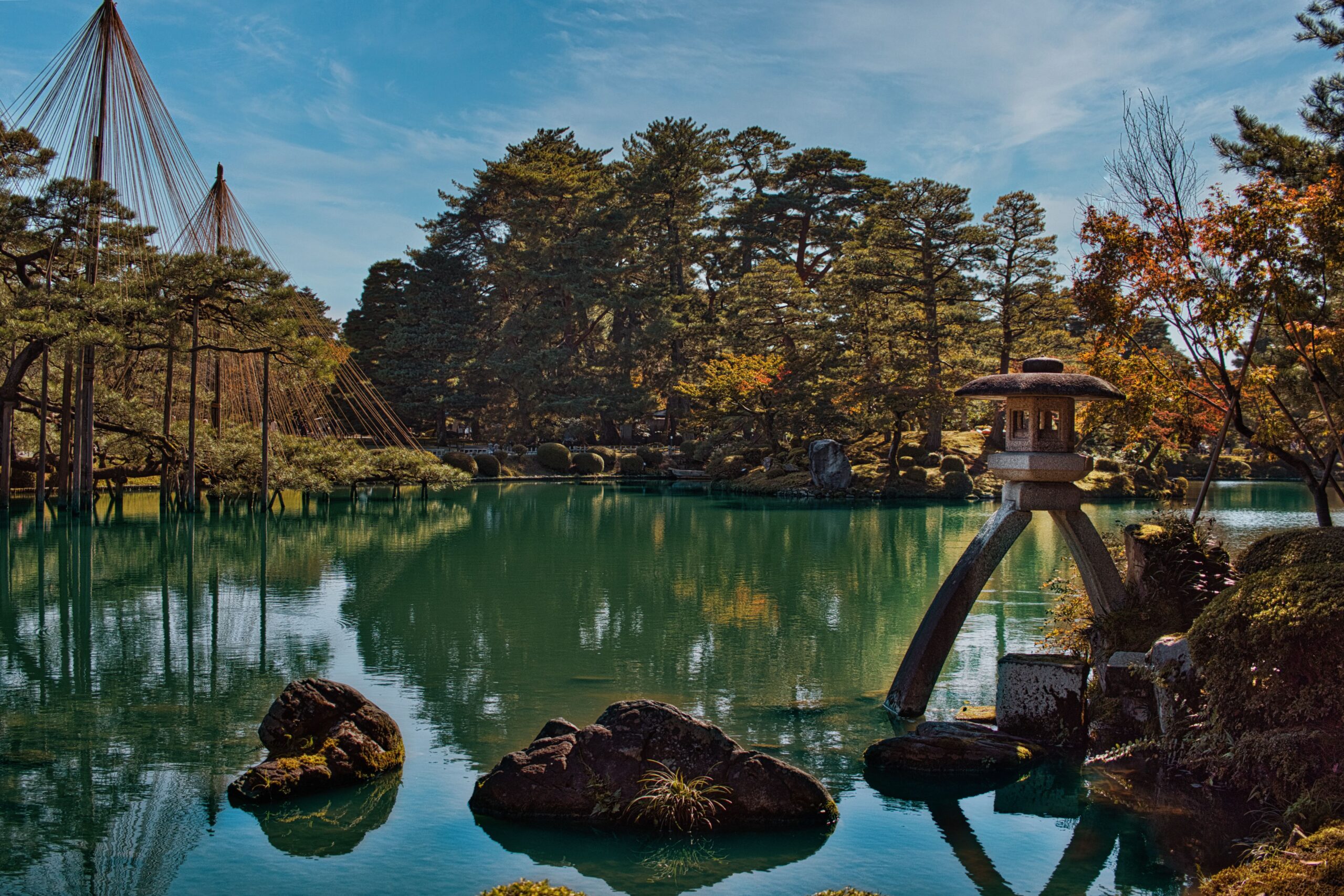
- Kenroku-en Garden: 320 JPY (£1.70), consistently ranked among Japan’s three most celebrated gardens, best visited at opening (7am in summer, later in winter) before tour groups arrive
- Higashi Chaya geisha district: free to walk, with several former teahouses now open as shops and cafes; Shima teahouse offers a paid interior visit for 500 JPY (£2.65)
- Nagamachi samurai district: free to walk, with the Nomura Samurai House offering a paid interior and garden visit for 550 JPY (£2.90)
- 21st Century Museum of Contemporary Art: 460 JPY (£2.45) for the exhibition areas, though the free public zones (including the famous Swimming Pool installation viewed from below) are worth a visit alone
- Dinner: a full meal at Omicho Market’s evening restaurants, Kanazawa is known for exceptional seafood given its position on the Sea of Japan, runs 1,500-2,500 JPY (£8-£13.30)
- Accommodation: ryokans and hotels near the city centre from £55-£90/night
The 6am principle applies most strongly at Kenroku-en. The garden’s most photographed spots, particularly the Kotoji-toro stone lantern by the pond, are genuinely crowd-free only in the first hour after opening.
Day 4: Shirakawa-go (Day Trip)
Direct buses run from Kanazawa to Shirakawa-go in around 1 hour 15 minutes, making it an easy day trip rather than requiring an overnight stay, though the village’s gassho-zukuri thatched-roof farmhouses (some dating back over 250 years) reward an early arrival before day-trippers from both Kanazawa and Takayama converge.
- Bus fare (return): roughly 3,600-4,600 JPY (£19-£24.50) depending on the operator
- Shiroyama Viewpoint: free, a short uphill walk (or shuttle bus for a small fee) offering the classic elevated view over the entire thatched-roof village
- Wada House (largest preserved farmhouse, open to visitors): 400 JPY (£2.15)
- Lunch: a full soba noodle meal at one of the village’s small restaurants runs 900-1,400 JPY (£4.80-£7.45)
The honest verdict on Shirakawa-go: it’s genuinely worth the detour, but strictly as a day trip. The village itself is small enough to cover thoroughly in three to four hours, and overnight accommodation within Shirakawa-go, while available in a handful of working farmhouses, is limited and priced at a premium relative to what it offers beyond the after-dark photo opportunity.
Gokayama: The Quieter Neighbour
A short additional bus ride from Shirakawa-go leads to Gokayama, a smaller cluster of gassho-zukuri villages (Ainokura and Suganuma) that receive a fraction of Shirakawa-go’s visitor numbers despite sharing the same UNESCO World Heritage designation and architectural style. For travellers willing to add half a day, Gokayama offers essentially the same experience with genuinely empty streets, a version of Shirakawa-go from a decade or more ago before its wider popularity took hold.
Days 5-7: Takayama
The bus from Shirakawa-go to Takayama takes around 50 minutes, making it practical to route the day trip as a stopover between Kanazawa and Takayama rather than a separate return journey.
Takayama’s Sanmachi Suji old town preserves entire streets of dark wooden merchant houses from the Edo period, still functioning as sake breweries, craft shops, and restaurants rather than a museum-piece reconstruction.
- Sanmachi Suji old town: free to walk, with individual sake brewery tours and tastings typically 500-1,000 JPY (£2.65-£5.30)
- Takayama morning markets (Miyagawa and Jinya-mae): free to browse, running daily from around 7am to noon, strongest for local produce, pickles, and craft goods
- Takayama Jinya (former government house): 440 JPY (£2.35), one of the only surviving Edo-period administrative buildings in Japan
- Hida beef dinner: Takayama’s regional specialty, a premium wagyu-grade beef, a proper Hida beef dinner runs 3,000-5,000 JPY (£16-£26.50), noticeably cheaper than equivalent wagyu experiences in Tokyo
- Accommodation: ryokans in or near the old town from £50-£85/night
What £520-£620 Actually Covers
| Category | Total for 7 Days (GBP, per person) |
|---|---|
| Accommodation (6 nights, split two ways) | £165-£265 |
| Food (three meals daily) | £110-£150 |
| Rail and bus transport (Kanazawa-Shirakawa-go-Takayama) | £50-£70 |
| JR Hokuriku Shinkansen leg (from Tokyo) | £55-£75 |
| Activities/entry fees | £20-£35 |
| Total | £400-£595 |
A JR regional rail pass covering the Hokuriku and Takayama-Hokuriku areas can reduce the transport total further if the itinerary includes additional side trips, though for this specific three-stop route, point-to-point tickets are often comparably priced once the pass’s activation cost is factored in.
Step-by-Step: Booking This Route
- Book Kenroku-en’s early opening hours around your jet lag, not against it. Most UK arrivals land in Tokyo mid-afternoon; a Kanazawa arrival two to three days into the trip aligns naturally with an early body clock still adjusting to the time difference, making the 6am garden visit easier than it would be later in the trip.
- Reserve the Kanazawa-Shirakawa-go-Takayama bus route in advance during spring (cherry blossom) and autumn (foliage) seasons, when seats sell out days ahead.
- Confirm ryokan meal plans when booking. Many traditional ryokans include a multi-course kaiseki dinner and breakfast in the room rate; confirm whether this is included, since it substantially changes the food budget calculation.
- Get an IC card (Suica or ICOCA) in Tokyo before travelling to Kanazawa, since it covers most local transport and convenience store purchases throughout the route without needing separate cash transactions.
- Pack for genuinely cold winters if visiting December-February. This region, particularly Shirakawa-go and Takayama, sits in one of Japan’s heaviest snowfall zones, which is part of its appeal for winter photography but requires proper winter clothing.
Frequently Asked Questions
Do UK citizens need a visa for Japan?
No, UK passport holders can enter Japan visa-free for tourism stays of up to 90 days.
Is Shirakawa-go worth visiting if you’ve already seen Kyoto?
Yes, they offer genuinely different experiences. Kyoto’s temples and gardens are formal and urban; Shirakawa-go’s thatched-roof farmhouses reflect a rural, mountain-village architectural tradition with no real equivalent in Kyoto.
How does Kanazawa compare to Kyoto for a first-time Japan visitor?
Kanazawa offers a similar concentration of preserved historic districts and gardens at a fraction of Kyoto’s visitor numbers, making it a strong choice for travellers who want the atmosphere of old Japan without Kyoto’s increasingly heavy crowding at major sites.
What is the best season to visit Shirakawa-go?
Winter (particularly January-February) is famous for the illuminated snow-covered thatched roofs, though this requires advance booking and cold-weather preparation. Autumn (October-November) offers a strong alternative with foliage colour and more manageable crowds than the winter illumination events.
Can this route be done without speaking any Japanese?
Yes. Kanazawa and Takayama both see enough tourism to have English signage at major sites and stations, and most ryokans in this route are accustomed to non-Japanese-speaking guests. Rural bus timetables and smaller local restaurants are the main spots where basic Japanese phrases or a translation app genuinely help.
Is the JR Hokuriku Shinkansen from Tokyo worth booking in advance?
Yes, particularly during cherry blossom (late March-April) and autumn foliage (October-November) seasons, when reserved seating on the direct Tokyo-Kanazawa service sells out several days ahead. Unreserved carriages exist but offer no guarantee of a seat on a journey that’s otherwise a comfortable 2.5 hours.
The Bottom Line
This route delivers three genuinely distinct historic Japanese townscapes, samurai-era Kanazawa, mountain-village Shirakawa-go, and Edo-period Takayama, connected by reliable rail and bus links, at a lower cost and crowd density than an equivalent week split between Tokyo and Kyoto. The trade-off is a slightly more complex booking process across three separate transport legs rather than a single point-to-point Shinkansen route.