



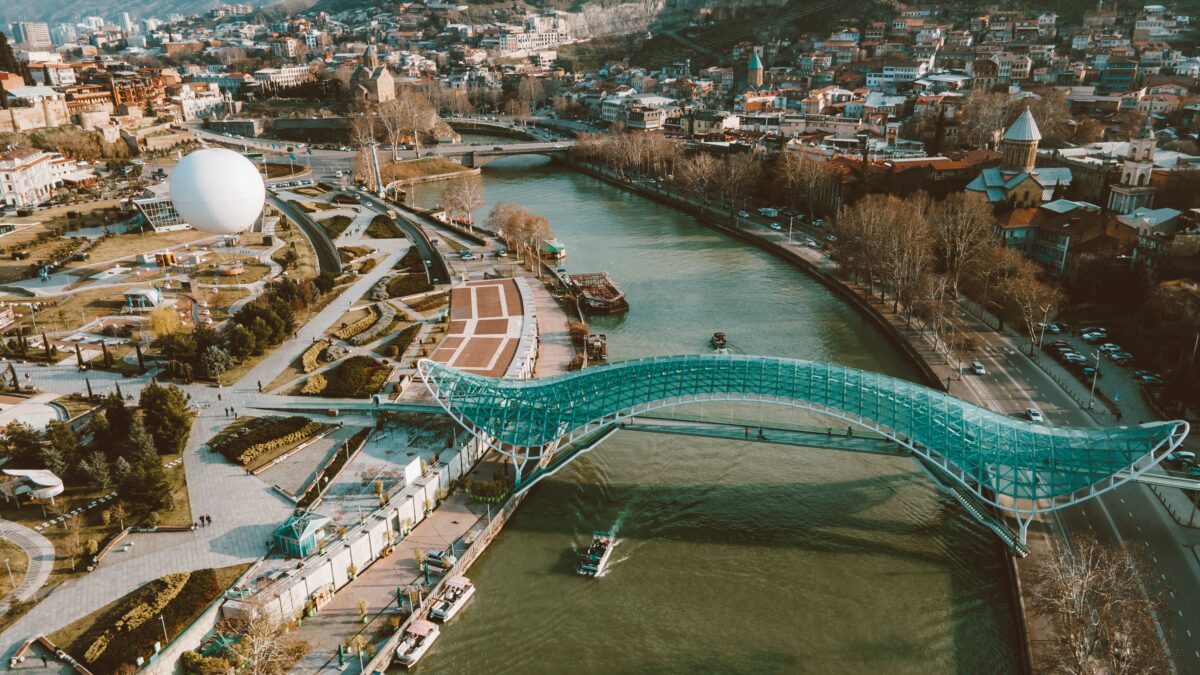
Tbilisi has quietly become one of Europe’s best-value remote work bases, helped by a 365-day visa-free stay for UK citizens, genuinely fast internet, and a city small enough to navigate without the sensory overload of bigger nomad hubs like Lisbon or Bali. This guide covers the practical setup: where to live, where to work, and what it actually costs to stay a month.
Quick answer: a month in Tbilisi for a remote worker costs roughly £650-£900 all-in, covering a private one-bedroom apartment, coworking access, and food, well below Lisbon or Barcelona equivalents. UK passport holders get a full year of visa-free entry, removing the visa-run logistics that complicate longer stays elsewhere.
Tbilisi vs Other Nomad Hubs
| Factor | Tbilisi | Lisbon | Bali (Canggu) |
|---|---|---|---|
| Monthly apartment (1-bed, central) | £350-£500 | £900-£1,300 | £450-£700 |
| Average internet speed | 60-100 Mbps | 100-200 Mbps | 30-60 Mbps |
| Coworking (monthly) | £60-£100 | £150-£220 | £120-£180 |
| Visa-free stay for UK citizens | 365 days | 90 days (Schengen) | 30 days (extendable) |
| Time zone from UK | GMT+4 | GMT+0/1 | GMT+7/8 |
The time zone is the main trade-off. Four hours ahead of the UK works fine for asynchronous work but cuts real-time overlap short if a job needs consistent afternoon meetings with a UK-based team.
Where to Live
Sololaki: The Quiet, Central Option
Sololaki’s crumbling Art Nouveau buildings and low-key cafe scene make it the natural fit for anyone who wants central without the noise of Tbilisi’s more nightlife-heavy districts. Rent for a renovated one-bedroom runs £380-£480/month, walkable to most of the old town and a 10-15 minute walk to Freedom Square’s transit connections.
Vera: The Practical, Slightly Cheaper Alternative
Vera sits just north of Rustaveli Avenue and offers similar walkability with rents typically £50-£80/month lower than Sololaki, at the cost of slightly less architectural charm. It’s a solid choice for a longer stay where budget matters more than the exact aesthetic of the building.
Marjanishvili: Younger, Louder, Cheaper Still
Marjanishvili has the highest concentration of bars and late-opening cafes, useful if that’s the scene you want but a genuine downside for anyone prioritising quiet evenings. Rents here run £300-£420/month, the lowest of the three central districts.
Where to Work
Fabrika is Tbilisi’s best-known coworking-and-community space, a converted Soviet sewing factory with a courtyard that functions as an informal nomad meeting point most evenings. Day passes run 25 GEL (£7), monthly membership around 350 GEL (£95).
For a quieter alternative, several cafes in Sololaki and Vera offer genuinely reliable wifi and long-stay tolerance without the social pressure of a coworking space:
- Coffee Lab (Vera): strong wifi, minimal foot traffic before 11am, good for focused morning work
- Stamba Hotel lobby (Sololaki): free wifi with a purchase, quieter than Fabrika but with a similar aesthetic
- Home Buffet (various locations): functional rather than atmospheric, but reliably empty and well-priced for a full workday
For introverts specifically: Tbilisi’s advantage over bigger nomad hubs is the option to genuinely disappear. Unlike Lisbon or Chiang Mai, there’s no dominant nomad social calendar that pulls at your evenings unless you seek it out at Fabrika. A month here can be as social or as solitary as you choose, without either extreme feeling forced.
The Old Town Wine Bars Nobody Mentions
Tbilisi’s old town (Kala) sits a short walk from Sololaki and hosts a growing number of natural wine bars run by small, independent Georgian producers rather than the tourist-facing chains near Freedom Square. Vino Underground and 8000 Vintages both offer tastings from local qvevri (clay vessel) wines for 15-25 GEL (£4-£6.80) a glass, a genuinely different experience from the supermarket wine most visitors default to, and a low-key way to spend an evening without the noise of Fabrika’s courtyard.
Step-by-Step: Setting Up for a Month
- Book a serviced apartment for the first week only. Platforms like Airbnb work fine for an initial landing, giving time to view longer-term options in person before committing to a full month.
- Get a local SIM at the airport or in the city centre. Magti and Beeline both offer tourist SIM packages from 20-30 GEL (£5.50-£8), with data speeds sufficient for video calls in most central neighbourhoods.
- Open a Wise or Revolut account before arrival rather than relying solely on a UK bank card, since some smaller Tbilisi businesses and market vendors are cash-preferred.
- Register with local authorities if staying beyond 90 days. While the visa-free period runs a full year, some longer-term rentals and services require a local registration document; check current requirements directly with your landlord or a local relocation agency.
- Join the Tbilisi Digital Nomads Facebook or Telegram group before arrival for apartment leads that rarely make it to Airbnb, often at 15-20% below listed platform rates.
- Set up a local Georgian bank account if staying beyond two months. TBC Bank and Bank of Georgia both offer relatively straightforward account opening for foreigners with a passport and local address, useful for avoiding repeated international transaction fees on longer stays.
- Budget a slower first week than usual. Tbilisi’s hilly terrain and occasionally inconsistent pavement quality in Sololaki mean walking times take longer than Google Maps suggests, worth factoring in before scheduling back-to-back calls around the city.
What a Month Actually Costs
| Category | Monthly Cost (GBP) |
|---|---|
| One-bedroom apartment (Sololaki/Vera) | £350-£500 |
| Coworking or cafe work costs | £60-£100 |
| Food (mix of cooking and eating out) | £150-£220 |
| Local transport (metro, occasional taxi) | £15-£25 |
| SIM/data | £6-£10 |
| Total | £581-£855 |
Compare this against Lisbon’s equivalent (typically £1,400-£1,800/month all-in) and the gap is significant enough to fund a genuinely longer stay or a substantially better apartment for the same overall budget.
Getting Around Without a Car
Tbilisi’s metro covers the central districts well, with a flat 1 GEL (27p) fare regardless of distance, though it doesn’t extend to the outer neighbourhoods some longer-term renters choose for lower rent. The Bolt and Yandex Go ride-hailing apps both operate reliably and cheaply, a cross-town ride typically costing 8-15 GEL (£2.20-£4.10), making a car genuinely unnecessary for a month-long stay centred on Sololaki, Vera, or Marjanishvili.
Tbilisi Frequently Asked Questions
Do UK citizens need a visa to work remotely from Georgia?
UK passport holders can stay visa-free for up to 365 days, though this technically covers tourism rather than local employment. Remote work for a foreign employer while physically in Georgia generally falls into a legal grey area common across most visa-free nomad destinations; Georgia’s dedicated “Remotely from Georgia” programme offers a clearer legal route for longer stays.
Is Tbilisi safe for solo travellers, including women?
Tbilisi is generally considered safe, with low rates of violent crime in the central districts covered in this guide. Standard precautions around late-night solo travel apply, as in most capital cities.
How fast is the internet in Tbilisi for remote work?
Central Tbilisi apartments and coworking spaces typically deliver 60-100 Mbps, sufficient for video calls and most remote work needs. Speeds drop meaningfully outside the central districts, so confirm connection speed before committing to an apartment further out.
What is the best month to move to Tbilisi as a digital nomad?
April-June and September-October offer the most comfortable working conditions, avoiding both the summer heat (regularly above 30°C) and the sharper winter cold that makes older Sololaki buildings, many without central heating, genuinely uncomfortable.
Do I need a local bank account to live in Tbilisi long-term?
Not strictly, since most day-to-day costs can be handled via Wise or Revolut with a Georgian SIM for local top-ups. A local account becomes worthwhile past the two-to-three month mark, mainly for avoiding repeated card fees on rent payments and larger transactions.
What visa route exists for staying in Georgia beyond a year?
Georgia’s “Remotely from Georgia” programme and its individual entrepreneur tax status both offer legal routes for longer stays, with the latter carrying a notably low flat tax rate for freelancers and small business owners. Both require separate applications distinct from the automatic 365-day tourist entry and are worth researching directly through Georgia’s official government portals before the first year runs out.
The Bottom Line
Tbilisi delivers the rare combination of genuinely low cost, a full year of visa-free stay, and a pace that suits introverts without feeling isolating. The trade-off is the four-hour time difference from the UK and the legal grey area around remote employment that most visa-free nomad destinations share, worth resolving through Georgia’s dedicated remote worker programme for anything beyond a short stay.