
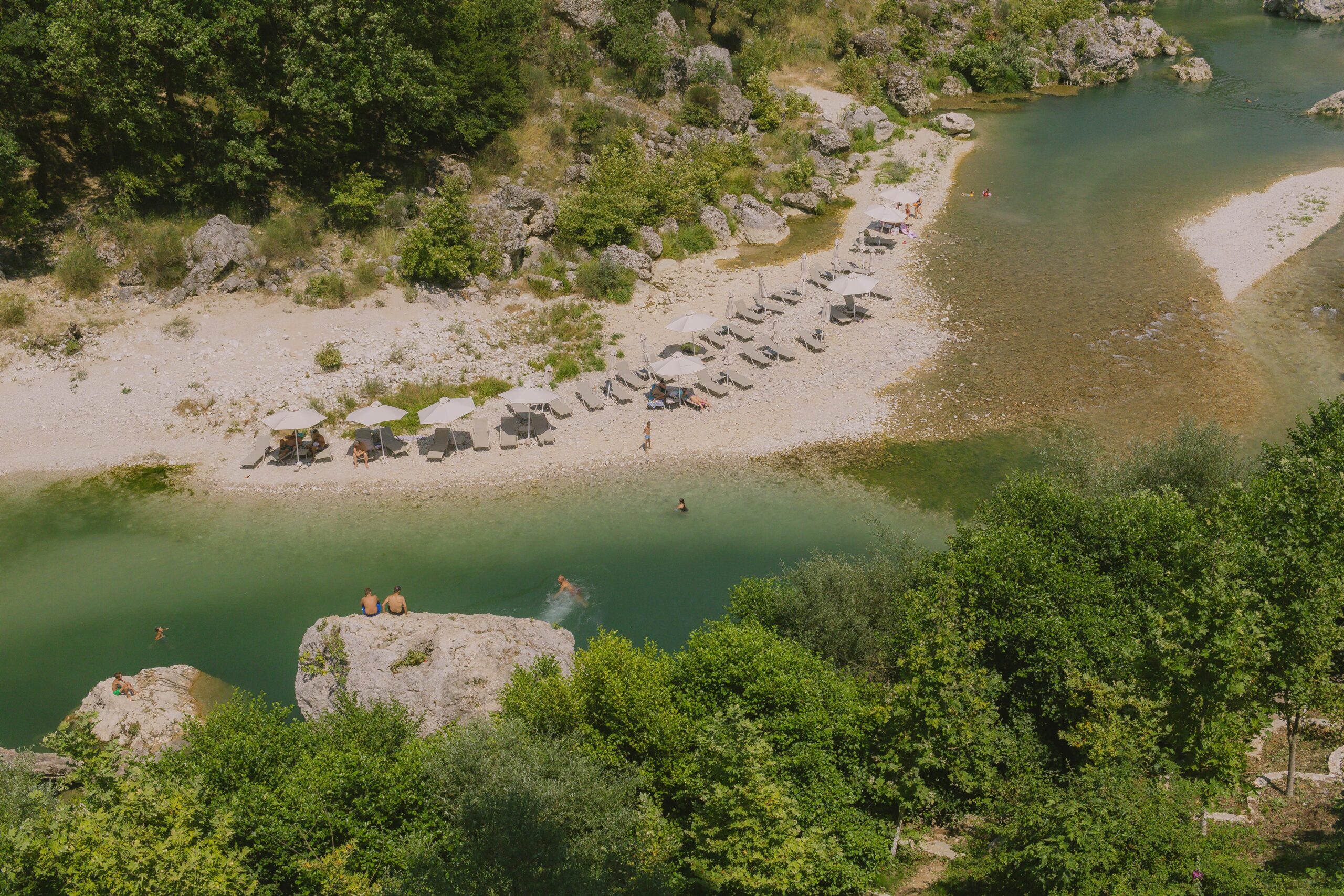
Albania is one of the last places in Europe where £40 a day still covers a private room, three real meals, and transport between towns without scraping by. This is the exact 7-day route: Tirana, Berat, and the Albanian Riviera, with real prices in GBP and Albanian Lek (ALL) throughout.
Quick answer: 7 days covering Tirana, Berat, and the Riviera costs roughly £280 per person excluding flights, based on a private room, three meals a day, and inter-city transport via furgon (shared minivan). Flights from London start around £60 return with Wizz Air in shoulder season.
The 7-Day Route at a Glance
| Day | Location | Highlight | Accommodation Cost |
|---|---|---|---|
| 1-2 | Tirana | Bunk’Art, Blloku district, Dajti cable car | £18-£25/night |
| 3 | Berat | UNESCO old town, castle at sunrise | £20-£28/night |
| 4-6 | Himara/Dhermi (Riviera) | Beach days, boat trip to Gjipe | £25-£35/night |
| 7 | Tirana | Buffer day, flight home | £18-£25/night |
Albania visa-free entry for UK passport holders currently extends to 365 days, so no paperwork is needed beyond a valid passport with six months remaining.
Day-by-Day Breakdown
Days 1-2: Tirana
Tirana isn’t a city that needs three days, but it’s worth two. Skip the Skanderbeg Square photo stop and head straight to Bunk’Art 2, a Cold War-era bunker converted into a museum on Albania’s communist surveillance state. It’s genuinely one of the most striking small museums in the Balkans.
- Bunk’Art 2: 500 ALL (£4)
- Dajti Ekspres cable car: 1,500 ALL (£12) return, book the early car to avoid the midday queue
- Dinner in Blloku district: a full meal with a glass of raki costs 800-1,200 ALL (£7-£10) at local spots like Salt or Otium
- Accommodation: guesthouses near Blloku from £18-£25/night for a private double
The 6am principle applies at Bunk’Art too. It opens at 9am and gets a steady tour-bus crowd by 11am. Arriving at opening avoids the worst of it, though it’s less crowd-dependent than most sights on this list.
What to Skip in Tirana
Skanderbeg Square itself is worth a walk-through but not a dedicated stop; it’s a large, largely empty plaza that photographs better than it feels in person. The National History Museum has a striking communist-era mosaic on the facade but a dated, text-heavy interior that most travellers find more skippable than advertised. Spend that time in Blloku instead, the former Communist Party elite quarter now home to most of the city’s independent cafes and bars.
Day 3: Berat
The furgon from Tirana to Berat takes roughly 2.5 hours and costs 400-500 ALL (£3-£4) each way, departing from the South Station (Kombinat) roughly every hour until early afternoon.
Berat’s UNESCO old town, with its stacked Ottoman-era houses climbing the hillside, is best seen at two specific times: sunrise from the castle (Kalaja e Beratit, free entry to walk the grounds) and sunset from Gorica bridge looking back across the river. Both avoid the midday heat and the tour groups that arrive by coach from 10am onward.
- Castle grounds: free (individual church/museum entries inside range 100-200 ALL)
- Dinner: a full meal at Homemade Food Restaurant runs 900-1,300 ALL (£7-£11)
- Accommodation: guesthouses within the old town from £20-£28/night
Days 4-6: The Albanian Riviera (Himara or Dhermi)
From Berat, the furgon connection to the coast typically routes back through Tirana or via Vlorë; direct services are limited, so budget a half-day for the transfer. The Riviera towns of Himara and Dhermi both work well as a base, with Himara slightly cheaper and Dhermi slightly more polished.
- Beach days: free at most public stretches; sunbed hire runs 300-500 ALL (£2.50-£4) per day at quieter beaches, more at Dhermi’s main strip
- Boat trip to Gjipe Beach: roughly 1,500-2,000 ALL (£12-£16) per person for a shared boat, or a 45-minute hike down from the coast road for free
- Seafood dinner: a full fish dinner for two with wine runs 3,000-4,000 ALL (£24-£32) at family-run tavernas along the seafront
- Accommodation: private rooms or small guesthouses from £25-£35/night in high season, less in May or September
The honest verdict on timing: July and August prices roughly double and the beaches genuinely crowd out. June and September deliver the same water temperature with a fraction of the people and closer to the £40/day target.
Himara vs Dhermi: Which to Base In
Himara has a longer, more built-up town centre with a wider range of budget guesthouses and a genuinely local feel outside the main beach strip. Dhermi is smaller, more scenic, and increasingly popular with a younger crowd drawn by beach clubs like Havana, which pushes prices up accordingly. For the £40/day target, Himara is the better base, with Dhermi worth a half-day trip by furgon (roughly 20 minutes, 200 ALL/£1.60) rather than a full stay.
Day 7: Back to Tirana
Budget a full travel day. Furgons from the Riviera back to Tirana run 3-4 hours depending on the exact departure point, costing 800-1,000 ALL (£6.50-£8). Land with enough buffer for an evening flight rather than cutting it close on a route with no fixed timetable.
What £40/Day Actually Covers
| Category | Daily Cost (GBP) |
|---|---|
| Accommodation (private double, split two ways) | £10-£17 |
| Food (three meals) | £12-£18 |
| Local transport (furgon, taxis) | £3-£6 |
| Activities/entry fees | £2-£8 |
| Total per person | £27-£49 |
Most days land comfortably under £40 once accommodation is split between two travellers. Solo travellers should budget closer to £45-£55/day, since private rooms don’t split and furgon fares stay flat regardless of group size.
Step-by-Step: Booking This Route
- Book flights first, at least 6-8 weeks out for the best Wizz Air fares from Gatwick or Luton.
- Don’t pre-book every night. Furgon schedules in Albania shift with demand, and guesthouses in Berat and the Riviera rarely fill up outside August, so booking a day or two ahead keeps flexibility without risking a sold-out night.
- Withdraw Lek at a bank ATM in Tirana on arrival. Airport exchange counters and Riviera-town ATMs both carry worse rates.
- Confirm furgon departure points before travel day. They leave from informal stations that shift by city, not always from anywhere marked “bus station” on Google Maps.
- Carry cash for the Riviera. Card acceptance is patchy outside the main hotels in Himara and Dhermi.
- Pack for both mountain and coast. Berat and any Riviera hiking (the Gjipe trail especially) call for proper footwear, while the coast itself is flip-flops and swimwear for days at a time. Layering beats packing two separate wardrobes.
- Learn a handful of Albanian phrases. English is widely spoken in Tirana and along the coast, but a basic “faleminderit” (thank you) goes a long way in smaller Berat guesthouses and family-run tavernas off the main strip.
Frequently Asked Questions
Do UK citizens need a visa for Albania?
No. UK passport holders can enter Albania visa-free for tourism stays of up to 365 days, one of the longest visa-free allowances in Europe.
Is Albania safe to travel in as a solo tourist?
Albania is generally considered safe for tourists, including solo travellers, with petty crime rates in tourist areas comparable to or lower than most Western European cities. Standard precautions apply, particularly around night-time travel on unlit coastal roads.
What is the best month to visit the Albanian Riviera on a budget?
June and September offer the best balance of warm sea temperatures and lower prices, with accommodation costs roughly 30-40% below the July-August peak.
How do you get from Tirana to the Albanian Riviera without a car?
Furgon (shared minivan) services connect Tirana to Riviera towns like Himara and Dhermi, typically taking 3.5-4.5 hours and costing 800-1,200 ALL (£6.50-£10) depending on the exact route and season.
Is Albania cheaper than Greece or Croatia for a coastal holiday?
Yes, noticeably. A comparable week on the Croatian or Greek coast typically runs 40-60% more once accommodation and dining are factored in, largely because Albania’s Riviera infrastructure is newer and less geared toward the premium pricing seen in more established Mediterranean tourist areas.
Can you drink tap water in Albania?
Tirana’s tap water is generally treated and safe, though most locals and travellers alike default to bottled water, widely available for 40-60 ALL (30-50p) per litre. Smaller towns and the Riviera are less consistent, so bottled water is the safer default outside the capital.
The Bottom Line
Albania delivers a genuine week’s trip, UNESCO old towns, Riviera beaches, and Tirana’s museums included, for around £280 per person excluding flights. The trade-off is a transport system built on informal furgon schedules rather than fixed timetables, which rewards travellers who stay flexible over those who plan every hour in advance.