



Most UK travellers to Thailand see Bangkok, Phuket, and maybe Chiang Mai, then leave. This route skips the islands entirely in favour of Chiang Rai’s temples and Isan, Thailand’s largest and least-visited region, covering food, ruins, and a genuinely different side of the country most travellers never see.
Quick answer: 7 days covering Chiang Rai and Isan (via Khon Kaen and Nakhon Ratchasima) costs roughly £240-£300 per person excluding flights, based on private guesthouse rooms, three meals a day, and bus or train transport. UK passport holders can enter Thailand visa-free for stays up to 60 days as of the current tourism visa exemption.
The 7-Day Route at a Glance
| Days | Location | Highlight | Accommodation Cost |
|---|---|---|---|
| 1-2 | Chiang Rai | White Temple, Blue Temple, Golden Triangle | £14-£25/night |
| 3-4 | Khon Kaen | Isan food scene, Wat Nong Wang | £12-£20/night |
| 5-6 | Phimai | Khmer temple ruins, night market | £10-£18/night |
| 7 | Nakhon Ratchasima (Korat) | Buffer day, flight/train connection | £14-£22/night |
Chiang Rai to Isan isn’t a direct short hop; expect a full travel day or an overnight sleeper train to bridge the two regions, since they sit on opposite sides of northern and northeastern Thailand.
Day-by-Day Breakdown
Days 1-2: Chiang Rai
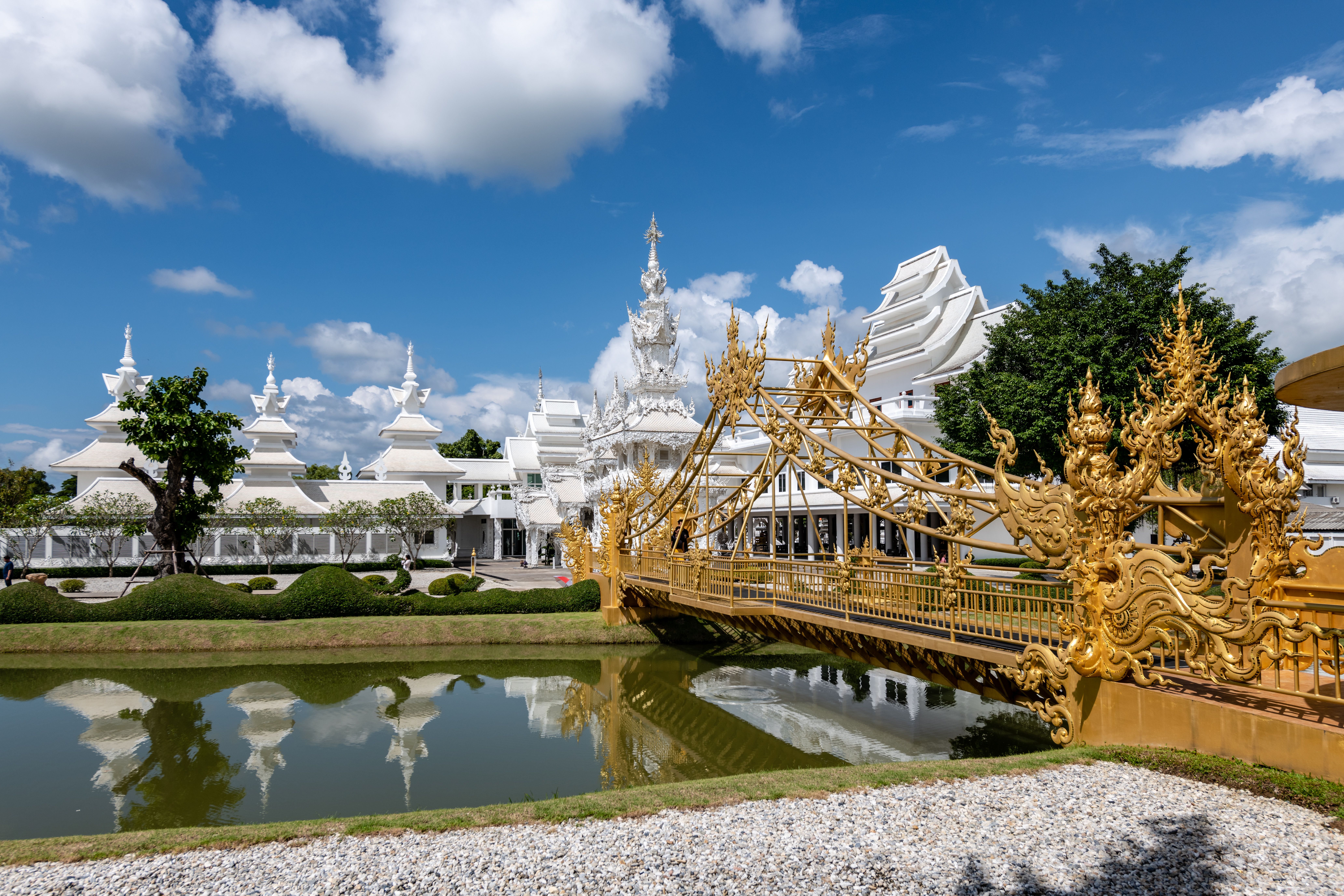
Chiang Rai gets a fraction of Chiang Mai’s tourist numbers despite having equally striking temples, chief among them Wat Rong Khun (the White Temple), an ongoing contemporary art project by artist Chalermchai Kositpipat rather than a historic site.
- White Temple entry: 100 THB (£2.20), best visited at opening (8am) before the tour buses from Chiang Mai arrive around 10am
- Blue Temple (Wat Rong Suea Ten): free entry, a striking and far less crowded alternative a short songthaew ride from the centre
- Golden Triangle day trip: the point where Thailand, Laos, and Myanmar meet, reachable by rented scooter or shared minivan (250-400 THB/£5.50-£8.80), including the Hall of Opium museum (200 THB/£4.40)
- Dinner: a full northern Thai meal (khao soi, the region’s signature curry noodle dish, is a must) runs 60-100 THB (£1.30-£2.20)
- Accommodation: guesthouses in Chiang Rai from £14-£25/night
The 6am principle applies directly at the White Temple. By 10am, coach tours from Chiang Mai fill the walkways and photo spots that are genuinely empty at opening.
Days 3-4: Khon Kaen
Getting from Chiang Rai to Khon Kaen typically means a flight via Bangkok (the direct overland route is long and impractical) or a combination of bus and train covering roughly 12-14 hours; most travellers on a genuine 7-day window should factor in a short domestic flight for this leg, adding roughly £30-£50 to the budget beyond the core cost breakdown.
Khon Kaen is Isan’s unofficial food capital, and the region’s cuisine, built around sticky rice, som tam (green papaya salad), and grilled meats, is noticeably spicier and more fermented-forward than the Thai food most UK visitors know from central Thailand.
- Bueng Kaen Nakhon lake park: free, a pleasant evening walk with food stalls setting up around sunset
- Wat Nong Wang: 20 THB (£0.44), a nine-tier pagoda offering city views from the top level
- Dinner: a full Isan meal, som tam, sticky rice, and grilled chicken (gai yang), runs 60-90 THB (£1.30-£2)
- Accommodation: guesthouses in Khon Kaen from £12-£20/night
Days 5-6: Phimai
The bus from Khon Kaen to Phimai (via Nakhon Ratchasima) takes roughly 3-3.5 hours and costs 150-200 THB (£3.30-£4.40).
Phimai Historical Park is a Khmer temple complex predating Angkor Wat by several decades, built by the same Khmer empire and sharing clear architectural DNA with Cambodia’s more famous ruins, at a fraction of the visitor numbers.
- Phimai Historical Park entry: 100 THB (£2.20)
- Phimai night market: free to browse, a smaller and more local version of the markets found in bigger Thai cities, with genuinely low prices reflecting the lack of tourist pricing
- Dinner: a full meal at the night market runs 40-70 THB (£0.90-£1.55)
- Accommodation: guesthouses in Phimai from £10-£18/night
The honest verdict on Phimai: the temple itself rivals some of Cambodia’s better-known Angkor-era sites in architectural interest, with almost none of the crowds. It’s the strongest single argument on this route for travellers who’ve already done Angkor Wat and want the same era without repeating the experience.
Prasat Hin Phanom Rung: The Extension Worth Adding
For travellers with an extra day, Prasat Hin Phanom Rung, another Khmer-era temple complex roughly 2 hours from Phimai, sits atop an extinct volcano and is considered by many to be Thailand’s single finest Khmer ruin. Four times a year, the sunrise or sunset aligns directly through all fifteen doorways of the main sanctuary, drawing modest crowds of photographers and locals for the alignment dates specifically, but the site itself remains quiet and worth visiting regardless of timing.
Day 7: Nakhon Ratchasima (Korat)
A short bus ride back to Korat (roughly 1 hour, 60-90 THB/£1.30-£2) sets up the return journey, whether flying out via Bangkok or continuing the trip elsewhere. Korat itself has a compact old town worth a half-day if time allows, centred on the Thao Suranari Monument.
What £240-£300 Actually Covers
| Category | Total for 7 Days (GBP, per person) |
|---|---|
| Accommodation (6 nights, split two ways) | £45-£65 |
| Food (three meals daily) | £45-£65 |
| Regional buses/trains | £15-£25 |
| Domestic flight (Chiang Rai to Isan connection) | £30-£50 |
| Activities/entry fees | £10-£20 |
| Total | £145-£225 |
The gap between this total and the £240-£300 headline figure accounts for the return leg out of Isan and standard trip contingency; this route runs meaningfully cheaper than most Thailand itineraries once the islands, and their associated boat transfers and beach-resort pricing, are removed entirely.
Step-by-Step: Booking This Route
- Book the Chiang Rai to Isan domestic flight early, since routes via Bangkok on this leg have limited daily frequency compared to Thailand’s more heavily serviced tourist corridors.
- Confirm visa-free entry length before booking a longer trip. UK passport holders currently get 60 days visa-free for tourism, extendable once at a local immigration office for a further 30 days.
- Rent a scooter in Chiang Rai for the Golden Triangle day trip, rather than relying solely on shared minivans, for more flexibility around the border-area viewpoints.
- Carry small denomination Thai baht for Isan. Rural areas and night markets in Khon Kaen and Phimai are far more cash-reliant than Bangkok or the islands.
- Learn basic spice-level phrases before eating in Isan. “Mai phet” (not spicy) is worth knowing, since Isan cuisine runs noticeably hotter than central or northern Thai food by default.
Frequently Asked Questions
Do UK citizens need a visa for Thailand?
No, UK passport holders can currently enter Thailand visa-free for tourism stays of up to 60 days, extendable once for a further 30 days at a local immigration office.
Is Isan safe for tourists, given how few visit?
Yes, Isan is generally considered very safe, with low tourist numbers reflecting a lack of beach or nightlife draw rather than any safety concern. Standard travel precautions apply as anywhere in Thailand.
How does Phimai compare to Cambodia’s Angkor Wat?
Phimai is smaller in scale but shares the same Khmer architectural style and predates Angkor Wat by several decades. It offers a genuinely comparable experience for a fraction of the visitor numbers, though it shouldn’t be seen as a full substitute for Angkor’s scale.
What is the best time of year to visit northern and northeastern Thailand?
November to February offers the coolest, driest weather across both Chiang Rai and Isan. March to May brings significant heat and, in Chiang Rai specifically, seasonal agricultural burning that can affect air quality.
Is Isan cuisine very different from the Thai food served in the UK?
Yes, noticeably. Most Thai restaurants in the UK serve central Thai dishes (pad thai, green curry), which differ significantly from Isan’s fermented, grilled, and raw-vegetable-forward cooking. Som tam, larb (a minced meat salad with lime and chilli), and grilled sticky rice dishes are the closest most UK visitors get to a genuinely unfamiliar version of Thai food they thought they already knew.
The Bottom Line
This route delivers striking contemporary temple art in Chiang Rai and genuine Khmer-era ruins in Isan, all at meaningfully lower cost than Thailand’s island circuits, with almost none of the tourist crowds either region’s attractions would draw if better known. The trade-off is a genuinely inconvenient connection between the two halves of the route, requiring either a domestic flight or a long overland transfer that most Thailand itineraries don’t need to plan around.