

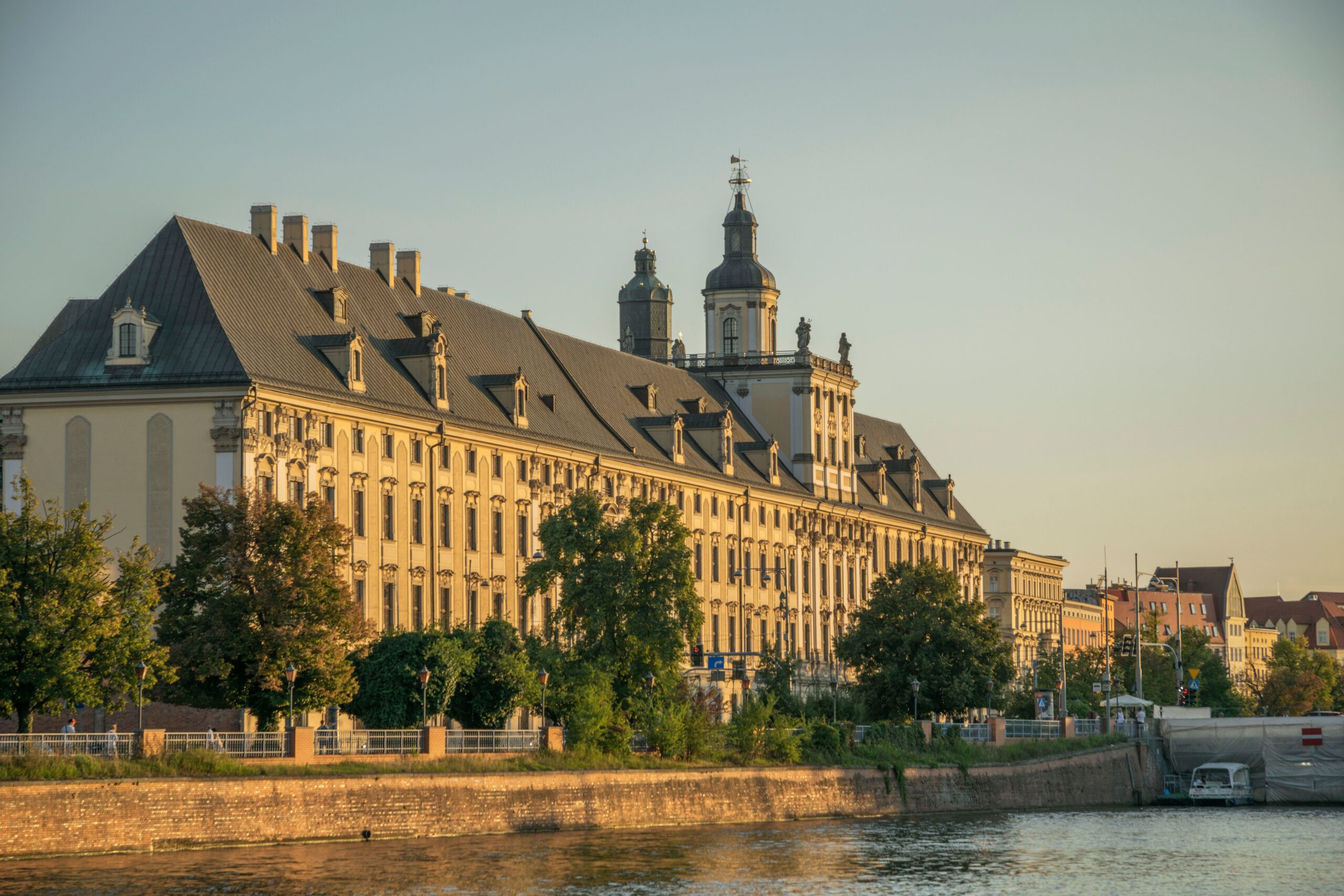
Kraków’s status as Poland’s undisputed tourist capital has brought genuine crowding to its main square and Kazimierz district, particularly during peak summer season and around major holidays. Wrocław, a similarly striking Polish city further west, offers comparable old town beauty with noticeably more breathing room and a genuinely unique dwarf statue trail found nowhere else in Poland.
Quick answer: swap Kraków for Wrocław if the priority is genuine Polish old town charm without Kraków’s tourist density. Keep Kraków on the itinerary if proximity to Auschwitz-Birkenau and Wieliczka Salt Mine specifically is the trip’s purpose, since Wrocław doesn’t offer comparable day-trip access to either.
Kraków vs Wrocław: Head-to-Head
| Factor | Kraków | Wrocław |
|---|---|---|
| Annual visitors | Roughly 14 million | A fraction of Kraków’s total |
| Signature feature | Wawel Castle, Kazimierz district | Market Square, dwarf statue trail |
| Accommodation (mid-range, per night) | 280-420 PLN (£55-£82.50) | 220-350 PLN (£43.30-£68.85) |
| Day-trip access | Auschwitz-Birkenau, Wieliczka Salt Mine | Limited comparable day trips |
| Old town character | Genuinely striking but crowded | Comparably striking, considerably calmer |
What Wrocław Actually Offers
Wrocław’s Market Square (Rynek), one of the largest medieval market squares in Europe, offers comparable architectural drama to Kraków’s Rynek Główny, with genuinely fewer crowds even during peak Polish tourist season.
- The dwarf statue trail: over 600 small bronze dwarf statues scattered throughout the city, a genuinely unique and whimsical civic art project unlike anything found in Kraków, offering a distinctive, family-friendly scavenger-hunt element to exploring the city
- Ostrów Tumski (Cathedral Island): Wrocław’s oldest district, a genuinely atmospheric island setting with striking Gothic architecture, offering a comparable historic quarter experience to Kraków’s Kazimierz without the same crowd density
- Centennial Hall: a UNESCO World Heritage-listed early 20th-century architectural landmark, genuinely significant and largely overlooked by international visitors compared to Kraków’s more heavily marketed sights
- Wrocław’s canals: the city sits across multiple islands and waterways, giving it a genuinely different, more waterside character than Kraków’s more compact, single-river setting
Why Kraków Still Wins for Specific Things
Kraków’s proximity to Auschwitz-Birkenau and Wieliczka Salt Mine, both genuinely significant and widely visited day-trip destinations, represents a combination Wrocław simply cannot replicate. For travellers specifically wanting to include either of these historically essential sites, that requires basing in or near Kraków.
The honest verdict: if Auschwitz-Birkenau or Wieliczka Salt Mine access is part of the trip’s purpose, that requires Kraków despite its crowds. For travellers wanting genuine Polish old town charm at a more relaxed pace, Wrocław delivers a meaningfully calmer, equally striking alternative.
What a Weekend Actually Costs
| Category | Kraków (2 nights, per person) | Wrocław (2 nights, per person) |
|---|---|---|
| Accommodation (split two ways) | £55-£82.50 | £43.30-£68.85 |
| Food | £40-£65 | £35-£55 |
| Activities/entry fees | £20-£40 | £12-£25 |
| Total | £115-£187.50 | £90.30-£148.85 |
Wrocław runs roughly 20-25% cheaper than Kraków, a meaningful gap for a genuinely comparable Polish city break weekend.
Step-by-Step: Planning a Wrocław Trip
- Fly directly into Wrocław Airport, served by a growing number of direct UK routes, particularly from budget carriers, removing any need to route through Kraków or Warsaw.
- Download a dwarf statue map or app before arrival, since finding a meaningful selection of the over 600 statues genuinely benefits from some guidance rather than purely random wandering.
- Visit Ostrów Tumski in the evening, when the cathedral island’s gas lamps (still lit by hand each evening in a genuine local tradition) create a particularly atmospheric setting.
- Book Centennial Hall’s interior access in advance if a specific event or exhibition aligns with travel dates, since the building’s primary function as an event venue means interior access varies by schedule.
- Consider combining with Kraków if wanting both cities, since a direct train connection (roughly 4-4.5 hours) makes a combined itinerary genuinely feasible for a longer trip.
Frequently Asked Questions
Is Wrocław as beautiful as Kraków?
Genuinely comparable in its old town architecture, though Kraków’s specific combination of Wawel Castle and its broader historical significance as Poland’s former royal capital gives it a slightly different, more layered historical weight that Wrocław’s equally striking but differently positioned history doesn’t fully replicate.
How do you get to Wrocław from the UK?
Direct flights serve Wrocław Airport from several UK airports, particularly budget carriers, making it genuinely accessible without requiring a connection through Warsaw or Kraków.
Is Wrocław worth visiting if you’ve already done Kraków?
Yes, genuinely offering a different, calmer atmosphere alongside comparably significant architecture, making it a strong second Poland destination rather than a repeat of the same experience.
What is the best time of year to visit Wrocław?
May-June and September offer the strongest combination of comfortable weather and manageable crowds, with Wrocław’s Christmas markets (December) also drawing a genuinely strong seasonal visit.
Wrocław’s Genuine University City Energy
Home to Wrocław University, one of Poland’s oldest and most respected academic institutions, the city carries a noticeably livelier, younger evening atmosphere than some comparably sized Polish cities, reflected in its strong independent bar and cafe scene around the Market Square and surrounding streets. This gives Wrocław’s evenings a genuine local energy distinct from Kraków’s more purely tourist-oriented Kazimierz nightlife district, where much of the crowd is other visitors rather than local students and residents.
Food Worth Seeking Out in Wrocław
Beyond standard Polish staples available throughout the country, Wrocław’s position in Lower Silesia gives it access to regional specialties reflecting the area’s historic German influence prior to post-WWII border changes, including a stronger tradition of hearty, Central European-style dumplings and roasted meats than found further east. Milk bars (bary mleczne) remain genuinely operational throughout the city, offering the same extremely affordable traditional Polish home cooking found in Kraków, at prices that similarly undercut standard restaurant dining significantly.
Getting Around Wrocław Without a Car
Wrocław’s old town and main sights covered in this itinerary are genuinely walkable from most central accommodation, though the city’s tram network offers a practical, cheap way to reach slightly further-flung areas like Centennial Hall, which sits a short distance from the historic centre. A single tram ticket costs a few złoty, making public transport a negligible addition to the overall trip budget for anyone wanting to venture beyond the immediate old town area.
The Bottom Line
Wrocław delivers genuinely comparable Polish old town charm, striking medieval and Gothic architecture, and a distinctive dwarf statue trail found nowhere else, at a meaningfully lower cost and crowd density than Kraków. The trade-off is losing proximity to Auschwitz-Birkenau and Wieliczka Salt Mine, both genuinely significant sites best accessed from a Kraków base.