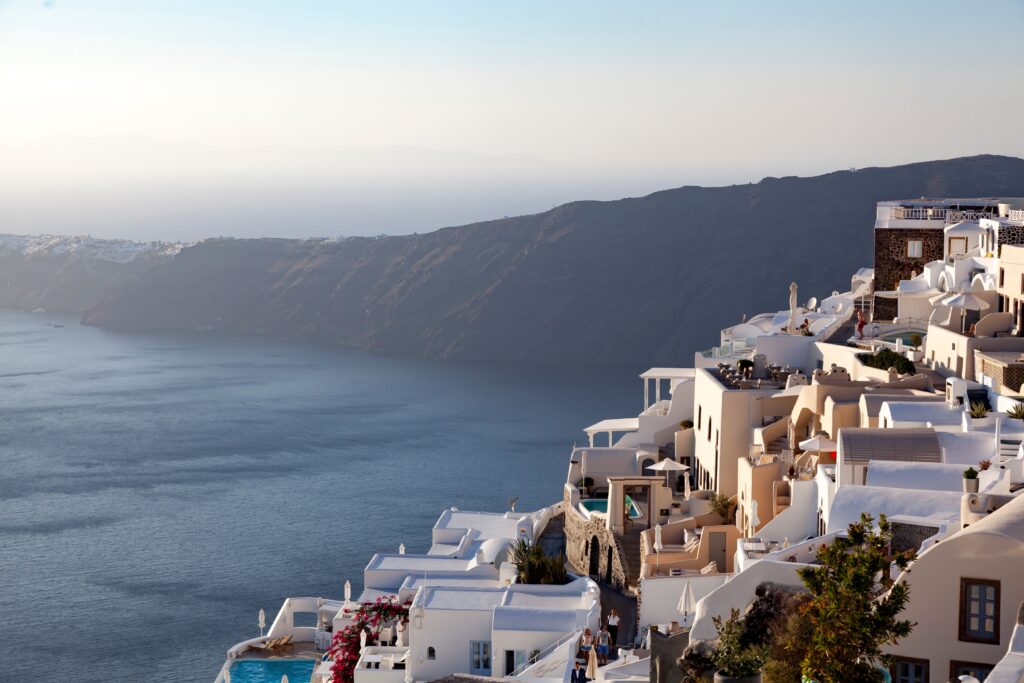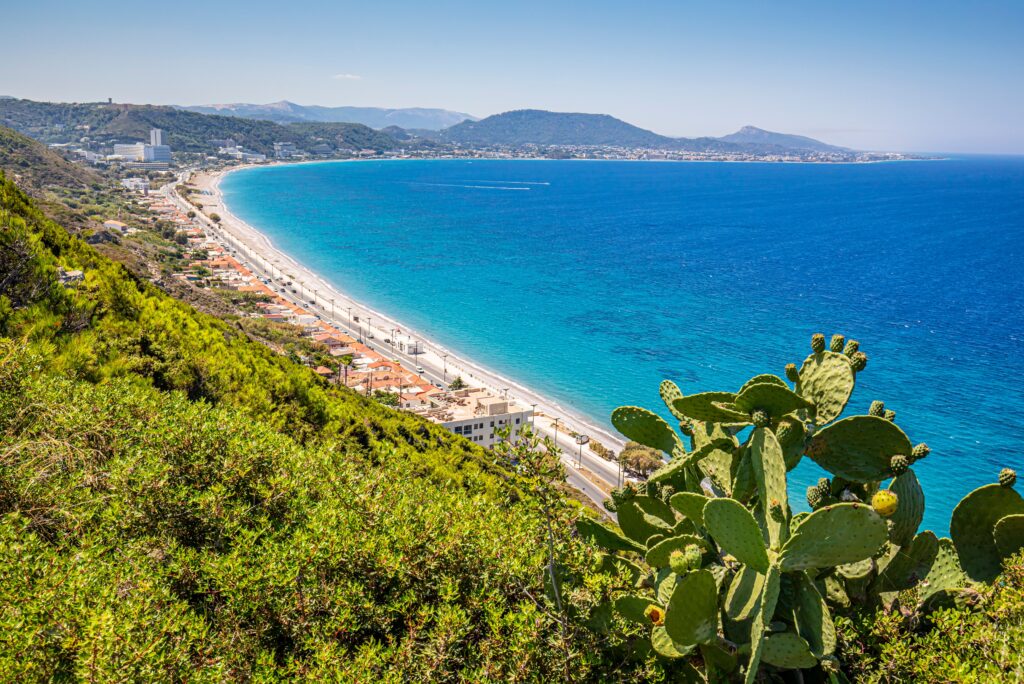



Greece’s most famous islands have seen accommodation and dining costs climb steadily as international demand has intensified, particularly across Santorini, Mykonos, and increasingly even the second-tier islands. Turkey’s Turquoise Coast, sharing the same Aegean and Mediterranean waters, offers comparably striking coastal scenery at noticeably lower prices.
Quick answer: swap the Greek Islands for Turkey’s Turquoise Coast if the priority is genuine Aegean and Mediterranean coastal beauty at meaningfully lower cost. Keep the Greek Islands on the itinerary if their specific whitewashed Cycladic architecture and particular island-hopping ferry culture are the non-negotiable draw, since Turkey’s coastline, while comparably beautiful, offers a different architectural and cultural character.
Greek Islands vs Turkish Turquoise Coast: Head-to-Head
| Factor | Greek Islands | Turkish Turquoise Coast |
|---|---|---|
| Accommodation (mid-range, per night) | €90-€250 (£77.15-£214.30) | £35-£90 |
| Currency advantage | Euro, no specific exchange benefit | Turkish lira, genuinely favourable for GBP travellers |
| Signature scenery | Whitewashed Cycladic villages, caldera views | Dramatic pine-covered cliffs, turquoise coves |
| Ancient history | Extensive, Greek antiquity | Extensive, both Greek and Roman-era ruins |
| Food cost | Increasingly premium-priced | Genuinely affordable |
What the Turquoise Coast Actually Offers
Turkey’s southwestern coastline, running roughly from Bodrum to Antalya, delivers comparably dramatic Mediterranean and Aegean scenery to the Greek Islands, reflecting the same geological and coastal character shared across this connected sea.
- Ölüdeniz: a genuinely striking lagoon beach backed by dramatic pine-covered mountains, widely considered one of the most photographed beaches in the entire Mediterranean region
- Kaş: a smaller, genuinely charming coastal town with strong diving access to ancient sunken ruins, offering an atmosphere comparable to a quieter Greek island town at a fraction of the cost
- Ephesus: one of the best-preserved ancient Roman cities anywhere in the Mediterranean, genuinely rivalling any Greek archaeological site in scale and significance, a short drive from the coast near Kuşadası
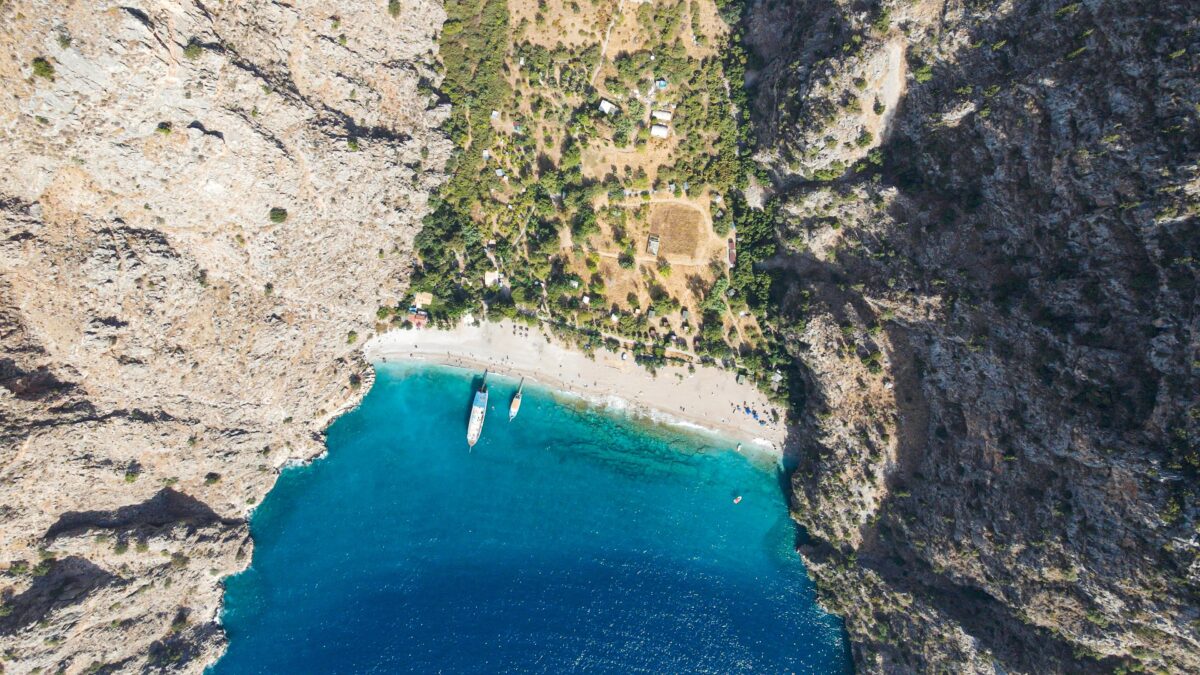
- Butterfly Valley: a dramatic, boat-access-only canyon beach near Ölüdeniz, offering a genuinely secluded alternative to more developed coastal spots
Why the Greek Islands Still Win for Specific Things
The specific whitewashed, blue-domed Cycladic architecture found on Santorini, Mykonos, and similar islands represents a genuinely unique visual identity that Turkey’s coastline, while beautiful, doesn’t replicate. Similarly, Greece’s specific island-hopping ferry culture, moving between distinct island identities within a single trip, offers a particular kind of travel experience Turkey’s more continuous coastline doesn’t match in the same way.
The honest verdict: if the specific Cycladic architecture and island-hopping ferry experience are the trip’s purpose, that requires the Greek Islands despite the cost. For travellers wanting comparably dramatic Mediterranean coastal scenery at meaningfully lower prices, Turkey’s Turquoise Coast delivers considerably more value.
What a Week Actually Costs
| Category | Greek Islands (per person) | Turkish Turquoise Coast (per person) |
|---|---|---|
| Accommodation (6 nights, split two ways) | £231.45-£642.90 | £105-£270 |
| Food | £180-£280 | £90-£150 |
| Activities/boat trips | £70-£140 | £50-£100 |
| Total (excluding flights) | £481.45-£1,062.90 | £245-£520 |
Turkey’s Turquoise Coast runs roughly 45-50% cheaper than a comparable Greek Islands trip, one of the more significant cost gaps between two genuinely comparable Mediterranean coastal destinations.
Step-by-Step: Planning a Turquoise Coast Trip
- Fly into Dalaman or Antalya, both served by direct UK flights, with Dalaman positioned closer to Ölüdeniz and Kaş, and Antalya closer to Ephesus and the eastern stretch of the coast.
- Rent a car or use organised transfers to cover the coast’s spread-out highlights, since the region’s best beaches and towns benefit from independent transport.
- Book a Blue Cruise (traditional wooden gulet boat trip) for a genuine multi-day sailing experience along the coast, typically costing considerably less than a comparable Greek island-hopping itinerary.
- Visit Ephesus early in the day, since this significant archaeological site draws substantial visitor numbers, particularly from cruise ship day-trippers, by mid-morning.
- Confirm current UK-Turkey entry requirements before booking, since Turkey’s visa policy for UK citizens has shifted periodically and should be reconfirmed close to travel dates.
Frequently Asked Questions
Do UK citizens need a visa for Turkey?
Requirements have shifted periodically in recent years; confirm current entry requirements on Turkey’s official e-Government site or with the Turkish consulate before booking, since assuming previous rules still apply carries genuine risk.
Is the Turkish Turquoise Coast as safe as the Greek Islands for tourists?
Yes, generally considered safe for tourists, with the main coastal resort towns seeing extensive, well-established tourism infrastructure and standard travel precautions applying as with most Mediterranean destinations.
How does the Turquoise Coast compare to the Greek Islands for ancient history specifically?
Genuinely comparable, with Ephesus rivalling any single Greek archaeological site in scale and preservation, reflecting the region’s shared history as part of the ancient Greek and later Roman world before Ottoman rule.
What is the best time of year to visit Turkey’s Turquoise Coast?
May-June and September offer the strongest combination of warm sea temperatures and lower crowds, with July-August bringing peak heat and the busiest tourist season along this specific coastline.
The Blue Cruise: Turkey’s Genuine Answer to Greek Island Hopping
The traditional gulet Blue Cruise, sailing along the Turquoise Coast aboard a wooden boat with onboard cabins, offers a genuine equivalent to Greek island hopping, moving between secluded bays and coastal towns over several days rather than relying on scheduled ferries between fixed island destinations. These cruises typically cost considerably less than a comparable multi-day Greek Islands boat experience, while delivering a similarly immersive, slow-paced coastal sailing experience that many travellers find just as memorable as the more famous Greek equivalent.
Currency Volatility: A Genuine Consideration
Turkey’s lira has experienced significant volatility in recent years, generally working in favour of GBP-holding travellers given the currency’s relative weakness, but this also means prices can shift meaningfully between when a trip is planned and when it’s taken. Checking current exchange rates close to departure, rather than relying on figures from months earlier, is worth doing given how much this can affect the overall budget calculation compared to the more currency-stable Eurozone pricing of the Greek Islands.
Turkish Hospitality Culture: A Genuine Point of Difference
Beyond cost and scenery, Turkey’s tourism industry places genuine cultural emphasis on hospitality, reflected in everything from complimentary tea offered at shops and restaurants to the warmth with which many family-run guesthouses treat their guests, often extending beyond a purely transactional service relationship. This isn’t to suggest Greek hospitality falls short, but Turkey’s specific cultural approach to welcoming visitors is worth experiencing on its own terms as part of the broader case for this swap.
The Bottom Line
Turkey’s Turquoise Coast delivers genuinely comparable Mediterranean and Aegean coastal beauty, dramatic beaches, significant ancient ruins, and boat trip culture, at roughly half the cost of an equivalent Greek Islands trip. The trade-off is losing the Greek Islands’ specific whitewashed Cycladic architecture and particular island-hopping ferry experience, both genuinely unique to that specific part of the Aegean.