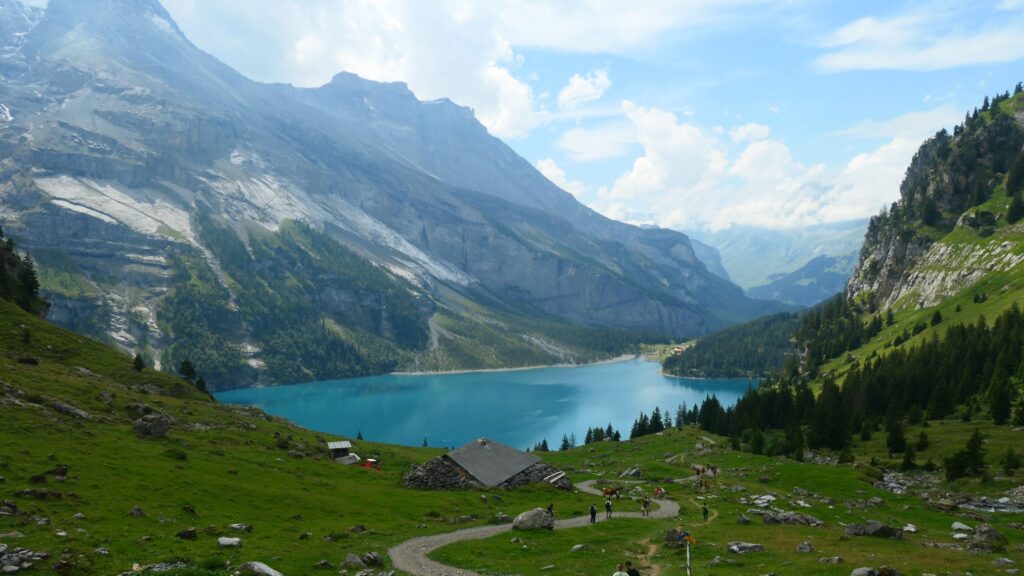

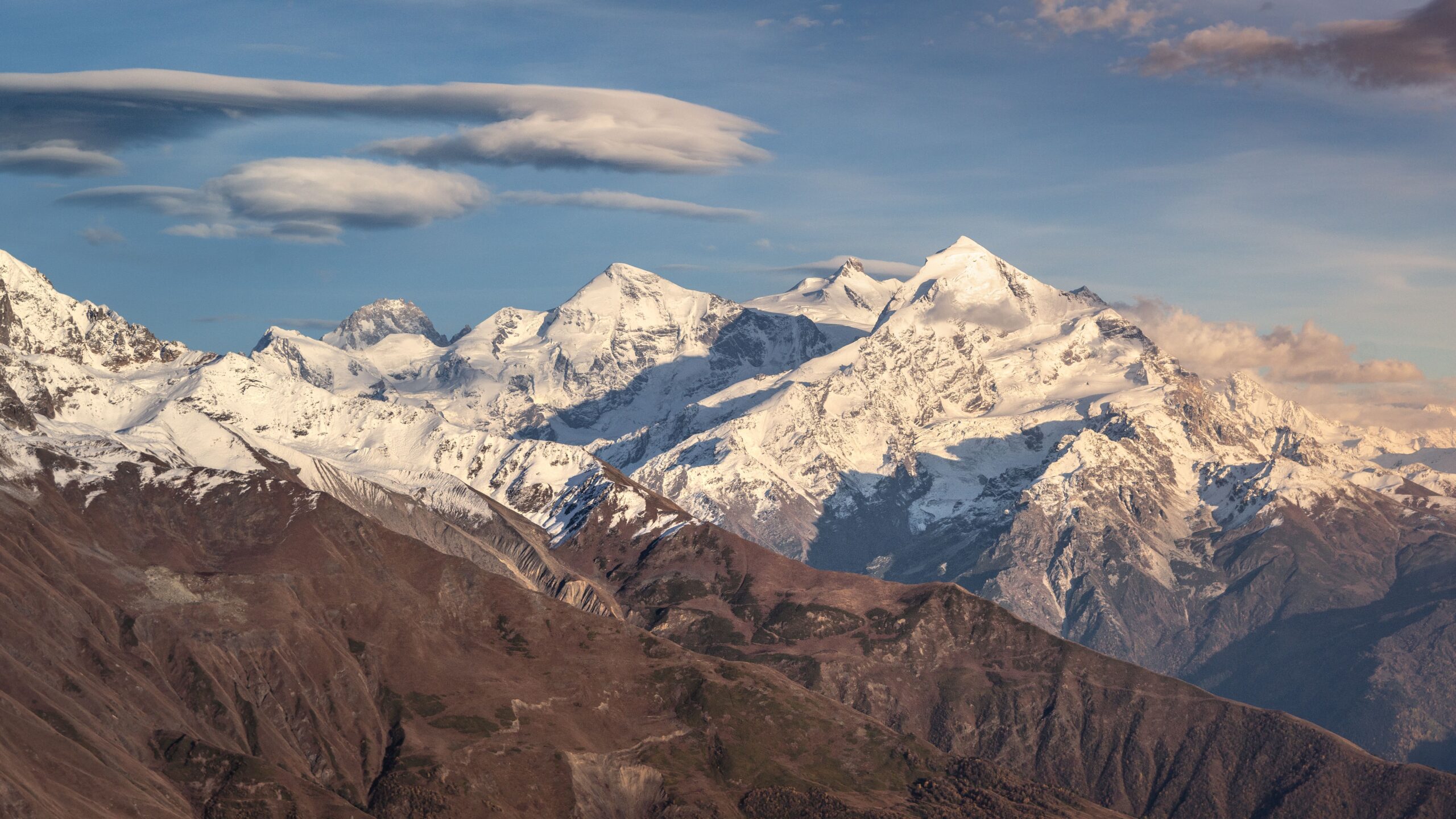
Switzerland’s Alpine scenery comes at a genuinely premium cost, with even budget-conscious hiking trips running into hundreds of pounds daily once accommodation, food, and transport are combined. Georgia’s Caucasus Mountains offer comparably dramatic peaks and genuine mountain village culture at a fraction of the price.
Quick answer: swap the Swiss Alps for the Georgian Caucasus if the priority is genuine dramatic mountain scenery and hiking without Switzerland’s premium pricing. Keep the Swiss Alps on the itinerary if their specific, highly developed cable car and mountain railway infrastructure is the non-negotiable draw, since Georgia’s more rugged, less-developed mountain access doesn’t replicate that particular convenience.
Swiss Alps vs Georgian Caucasus: Head-to-Head
| Factor | Swiss Alps | Georgian Caucasus (Mestia & Kazbegi) |
|---|---|---|
| Daily budget (accommodation, food, activities) | CHF 150-300+ (£133-£266+) | £25-£40 |
| Mountain access infrastructure | Extensive cable cars, rail | More basic, genuine hiking-focused access |
| Signature peaks | Matterhorn, Eiger, Jungfrau | Ushba, Mount Kazbek |
| Village character | Polished, tourism-developed | Genuinely traditional, Svan tower villages |
| Visa requirements for UK citizens | None (Schengen) | None, Georgia visa-free for up to 365 days |
What the Georgian Caucasus Actually Offers
Svaneti’s genuinely dramatic peaks and traditional stone defensive towers, unique to this specific region of Georgia, offer a mountain culture experience Switzerland’s more developed resort infrastructure simply doesn’t have.
- Mestia and the Svan towers: medieval defensive stone towers scattered throughout Svaneti’s villages, a genuinely unique architectural feature unlike anything in the Swiss Alps, reflecting centuries of local clan history
- Ushba and the surrounding peaks: dramatic, genuinely challenging mountain scenery comparable to the Matterhorn’s iconic silhouette, though considerably less developed for tourism
- Kazbegi (Stepantsminda) and Gergeti Trinity Church: a striking church perched at 2,170 metres beneath Mount Kazbek, reachable by a genuinely rewarding hike, offering a spiritual and scenic combination without a direct Swiss equivalent
- Homestay culture: Georgian mountain villages retain a genuine homestay tradition, offering travellers direct interaction with local families and traditional Georgian hospitality, including the famous supra (feast) culture, at costs far below any comparable Swiss mountain lodge
Why the Swiss Alps Still Win for Specific Things
Switzerland’s extensive cable car and mountain railway network, including genuinely engineering-marvel routes like the Jungfraujoch railway, offers a level of accessible high-altitude mountain access that Georgia’s more rugged infrastructure doesn’t match. For travellers specifically wanting to reach dramatic viewpoints without extensive hiking, or wanting the polished, highly organised Swiss mountain tourism experience, that requires Switzerland itself.
The honest verdict: if Switzerland’s specific cable car infrastructure and polished mountain resort experience are the trip’s purpose, that requires accepting the premium cost. For travellers wanting genuine, less-developed mountain culture and dramatic peaks at a fraction of the price, Georgia’s Caucasus delivers a meaningfully different, more rugged experience.
What a Week Actually Costs
| Category | Swiss Alps (per person) | Georgian Caucasus (per person) |
|---|---|---|
| Accommodation (6 nights, split two ways) | £400-£800 | £75-£150 |
| Food | £250-£400 | £70-£120 |
| Activities/cable cars/guides | £150-£300 | £40-£80 |
| Total (excluding flights) | £800-£1,500 | £185-£350 |
Georgia’s Caucasus region runs at roughly a fifth to a quarter of the Swiss Alps’ total cost, one of the most significant cost gaps between two genuinely comparable mountain destinations.
Step-by-Step: Planning a Georgian Caucasus Trip
- Fly into Tbilisi, Georgia’s capital, with the drive to Mestia (roughly 8-9 hours by road, or a shorter domestic flight to Mestia’s own small airport) requiring some genuine planning given the region’s remote position.
- Book homestay accommodation directly or through a local agency, since this remains the most authentic and cost-effective lodging option throughout rural Svaneti and Kazbegi.
- Hire a local guide for the more demanding Ushba-area treks, since trail marking and infrastructure are considerably more basic than Switzerland’s well-signposted routes.
- Try khinkali (Georgian dumplings) and the traditional supra feast at a homestay, a genuine cultural experience central to Georgian mountain hospitality.
- Check road conditions before driving to Kazbegi or Mestia independently, since mountain roads in this region can be genuinely challenging, particularly outside peak summer months.
Frequently Asked Questions
Is the Georgian Caucasus as scenic as the Swiss Alps?
Genuinely comparable in dramatic peak scenery, with Georgia’s more rugged, less-developed character offering a different but equally striking mountain experience compared to Switzerland’s more polished, infrastructure-heavy Alpine setting.
Do UK citizens need a visa for Georgia?
No. UK passport holders can enter Georgia visa-free for stays of up to 365 days, one of the most generous visa-free allowances available to UK travellers anywhere in the world.
Is hiking in the Georgian Caucasus safe for less experienced hikers?
Many routes, particularly around Kazbegi’s Gergeti Trinity Church, are accessible to reasonably fit hikers without technical experience, though the more demanding Svaneti routes around Ushba genuinely benefit from a local guide given more basic trail infrastructure.
What is the best time of year to visit the Georgian Caucasus?
June through September offers the most reliable hiking conditions, with the region’s higher routes remaining snow-affected well into late spring in many years.
Tbilisi as a Genuine Complement to the Mountains
Georgia’s capital, Tbilisi, offers a genuinely worthwhile addition to a Caucasus mountain trip, combining old town architecture, a strong wine culture, and thermal bath tradition within a short journey of both Mestia and Kazbegi. This gives a Georgian Caucasus trip a natural city-and-mountain combination that a purely Swiss Alps itinerary, typically confined to mountain towns and resorts, doesn’t offer in quite the same accessible way given Georgia’s more compact overall geography.
Georgian Wine Culture: A Genuine Bonus Beyond the Mountains
Georgia holds a genuine claim as one of the world’s oldest wine-producing regions, with archaeological evidence of winemaking dating back roughly 8,000 years. The Kakheti wine region, reachable as a separate day trip from Tbilisi, offers a distinctly different but equally worthwhile addition to a Caucasus itinerary, using traditional qvevri (clay vessel) winemaking methods genuinely unique to Georgian tradition and unavailable anywhere in the Swiss Alps’ equivalent wine regions.
The Bottom Line
Georgia’s Caucasus Mountains deliver genuinely dramatic peak scenery, unique Svan tower architecture, and authentic mountain village hospitality, at a fraction of the Swiss Alps’ cost, all within a generous 365-day visa-free allowance for UK travellers. The trade-off is accepting considerably more basic mountain access infrastructure in place of Switzerland’s extensive, highly developed cable car and rail network.