


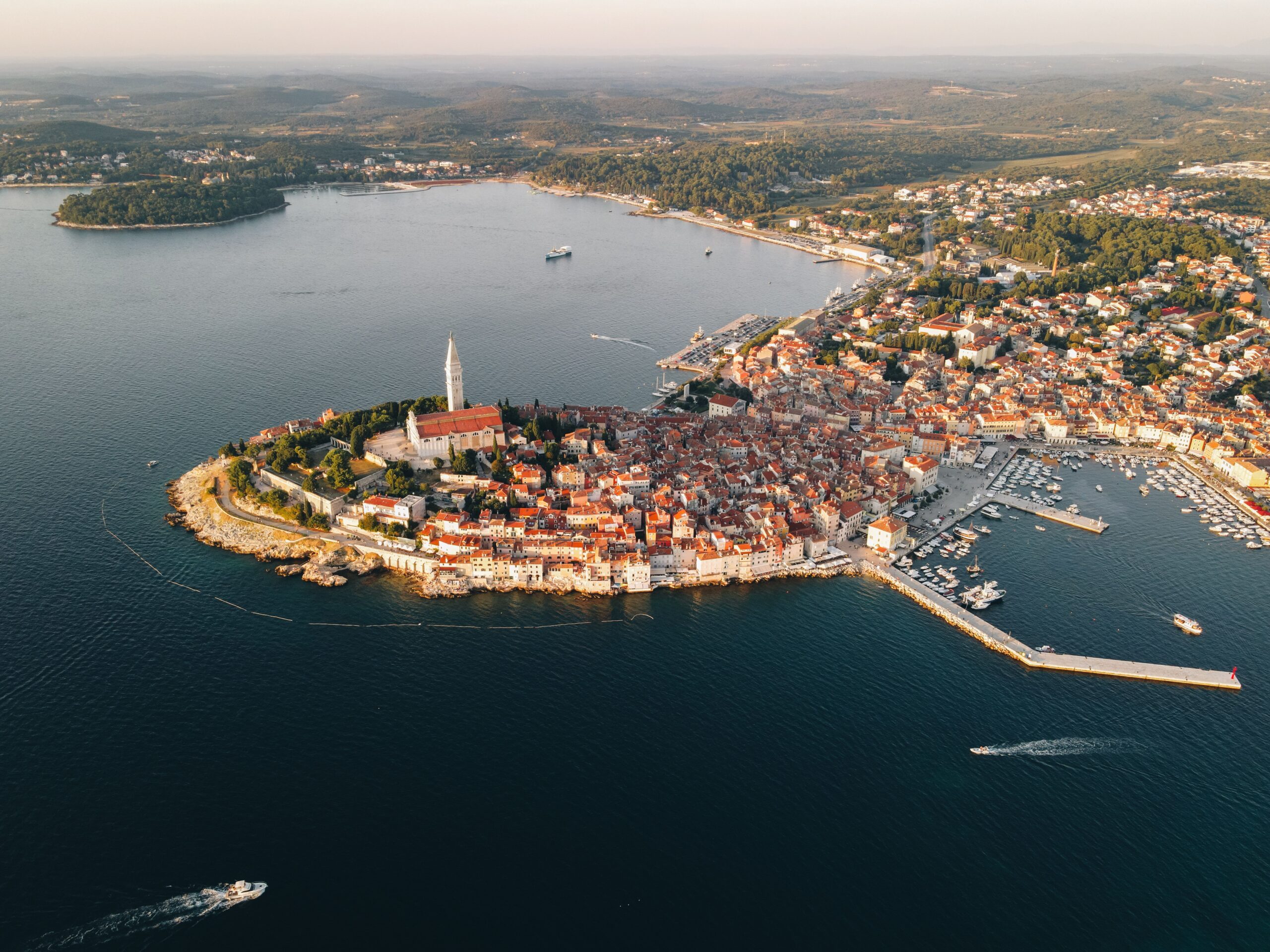
Dubrovnik’s southern Adriatic fame has made it Croatia’s default coastal recommendation, but the country’s northern Istrian Peninsula offers genuinely comparable Venetian-influenced architecture, a significant Roman amphitheatre, and one of Europe’s most celebrated truffle regions, all at noticeably lower cost.
Quick answer: swap Dubrovnik for Istria if the priority is genuine Venetian coastal charm, Roman history, and exceptional local food culture without Dubrovnik’s cruise-ship crowding. Keep Dubrovnik on the itinerary if its specific UNESCO-listed walled Old Town is the non-negotiable draw, since Istria’s more low-key coastal towns don’t replicate that particular fortified grandeur.
Dubrovnik vs Istria: Head-to-Head
| Factor | Dubrovnik | Istria (Rovinj & Pula) |
|---|---|---|
| Annual visitors | Over 1.5 million | A fraction of that total |
| Signature architecture | Walled Old Town | Venetian-influenced Rovinj, Roman Pula |
| Accommodation (mid-range, per night) | €100-€180 (£85.70-£154.30) | €65-€120 (£55.70-£102.85) |
| Signature food culture | Standard Croatian coastal cuisine | Truffle region, genuinely renowned |
| Roman history | Limited | Significant, including a well-preserved amphitheatre |
What Istria Actually Offers
Istria’s history under Venetian rule for centuries has left the peninsula with a genuinely distinctive architectural character, particularly visible in Rovinj’s hillside old town, while Pula’s Roman heritage offers a historical dimension Dubrovnik’s medieval focus doesn’t match.
- Rovinj’s old town: a hillside cluster of pastel-coloured buildings climbing toward the Church of St. Euphemia, genuinely evoking a small Venetian town, with narrow cobbled streets and a working fishing harbour
- Pula Arena: one of the best-preserved Roman amphitheatres in the world, still used for concerts and events today, offering a genuinely significant piece of ancient history absent from Dubrovnik’s predominantly medieval architecture
- Istrian truffle region: the forests around Motovun and Buzet produce genuinely world-class truffles, both white and black varieties, with truffle-hunting tours and tastings offering a distinctive culinary experience unavailable along the Dalmatian coast
- Motovun and the hilltop towns: Istria’s interior holds numerous hilltop medieval towns, genuinely comparable to Tuscany’s own hilltop circuit, offering a strong inland complement to the coastal towns
Why Dubrovnik Still Wins for Specific Things
Dubrovnik’s specific UNESCO-listed walled Old Town, one of the best-preserved medieval fortified cities anywhere in the world, and its dramatic Adriatic coastal setting represent a combination Istria’s more scattered, Venetian-influenced towns don’t replicate. For travellers specifically wanting that particular fortified-city grandeur, that requires Dubrovnik itself.
The honest verdict: if Dubrovnik’s specific walled Old Town and UNESCO fame are the trip’s purpose, that requires accepting the crowds. For travellers wanting genuine Venetian coastal charm, significant Roman history, and exceptional truffle-based cuisine, Istria delivers a meaningfully different, calmer experience.
What a Week Actually Costs
| Category | Dubrovnik (per person) | Istria (per person) |
|---|---|---|
| Accommodation (6 nights, split two ways) | £257.10-£462 | £167.10-£308.55 |
| Food | £180-£280 | £130-£200 |
| Activities/truffle tours | £60-£120 | £50-£100 |
| Total (excluding flights) | £497.10-£862 | £347.10-£608.55 |
Istria runs roughly 30-35% cheaper than Dubrovnik, a meaningful gap for a genuinely comparable Croatian coastal experience.
Step-by-Step: Planning an Istria Trip
- Fly into Pula Airport, served by direct UK routes particularly in summer season, or into Trieste (just across the Italian border) as an alternative gateway.
- Rent a car for the full stay, since Istria’s coastal towns and inland hilltop villages benefit significantly from independent transport.
- Book a truffle-hunting tour in the Motovun area, a genuinely distinctive activity unavailable elsewhere in Croatia, typically including a tasting session afterward.
- Visit Pula Arena for an evening concert if timing allows, since experiencing the amphitheatre in active use offers a genuinely different perspective from a standard daytime visit.
- Walk Rovinj’s old town at sunset, when the light on the pastel buildings and the church spire creates a particularly striking scene.
Frequently Asked Questions
Is Istria as beautiful as Dubrovnik?
Differently beautiful, offering genuine Venetian coastal charm and Roman history rather than Dubrovnik’s specific fortified medieval grandeur, with both regions sharing the same broader Adriatic coastal appeal.
How do you get to Istria from the UK?
Direct flights serve Pula Airport particularly in summer season, with Trieste (just across the Italian border) offering a year-round alternative gateway reachable by a short drive.
Is Istria suitable for a food-focused trip specifically?
Yes, genuinely one of Croatia’s strongest food destinations, with the truffle region, strong olive oil production, and Istrian wine all offering a distinctive culinary dimension beyond standard Dalmatian coastal cuisine.
What is the best time of year to visit Istria?
May-June and September offer the strongest combination of comfortable weather and lower crowds, with truffle season (particularly white truffles, September-December) adding a genuinely worthwhile reason for an autumn visit specifically.
Istria’s Wine Region: A Genuine Bonus
Beyond truffles, Istria produces genuinely well-regarded wines, particularly Malvazija (a distinctive white varietal) and Teran (a robust red), with numerous small wineries throughout the peninsula’s interior offering direct tastings. This wine culture, considerably less commercialised than more famous European wine regions, offers a genuine complement to the truffle-hunting experience, worth building into an inland day trip alongside the coastal sightseeing.
Getting Around Istria’s Coastal Towns
Istria’s main coastal towns, Rovinj, Poreč, and Pula, are connected by regular bus services, though a rental car genuinely improves access to the peninsula’s inland hilltop towns and truffle region, areas public transport doesn’t serve as comprehensively. This mirrors the general pattern across most of Croatia’s coastal regions, where independent transport significantly expands what’s realistically achievable within a single trip.
Poreč: A Third Coastal Town Worth Adding
Beyond Rovinj and Pula, Poreč offers a further genuine highlight, home to the Euphrasian Basilica, a UNESCO World Heritage Site in its own right featuring exceptional Byzantine mosaics dating back to the 6th century. This adds a third distinct historical layer to an Istria trip, Byzantine alongside the Roman and Venetian influences already covered, worth including for travellers with a genuine interest in the peninsula’s full architectural and historical range.
The Bottom Line
Istria delivers genuine Venetian-influenced coastal charm, significant Roman history at Pula Arena, and world-renowned truffle cuisine, at roughly two-thirds the cost of Dubrovnik and without its cruise-ship crowding. The trade-off is losing Dubrovnik’s specific UNESCO-listed walled Old Town grandeur, genuinely unique to that particular fortified city.