

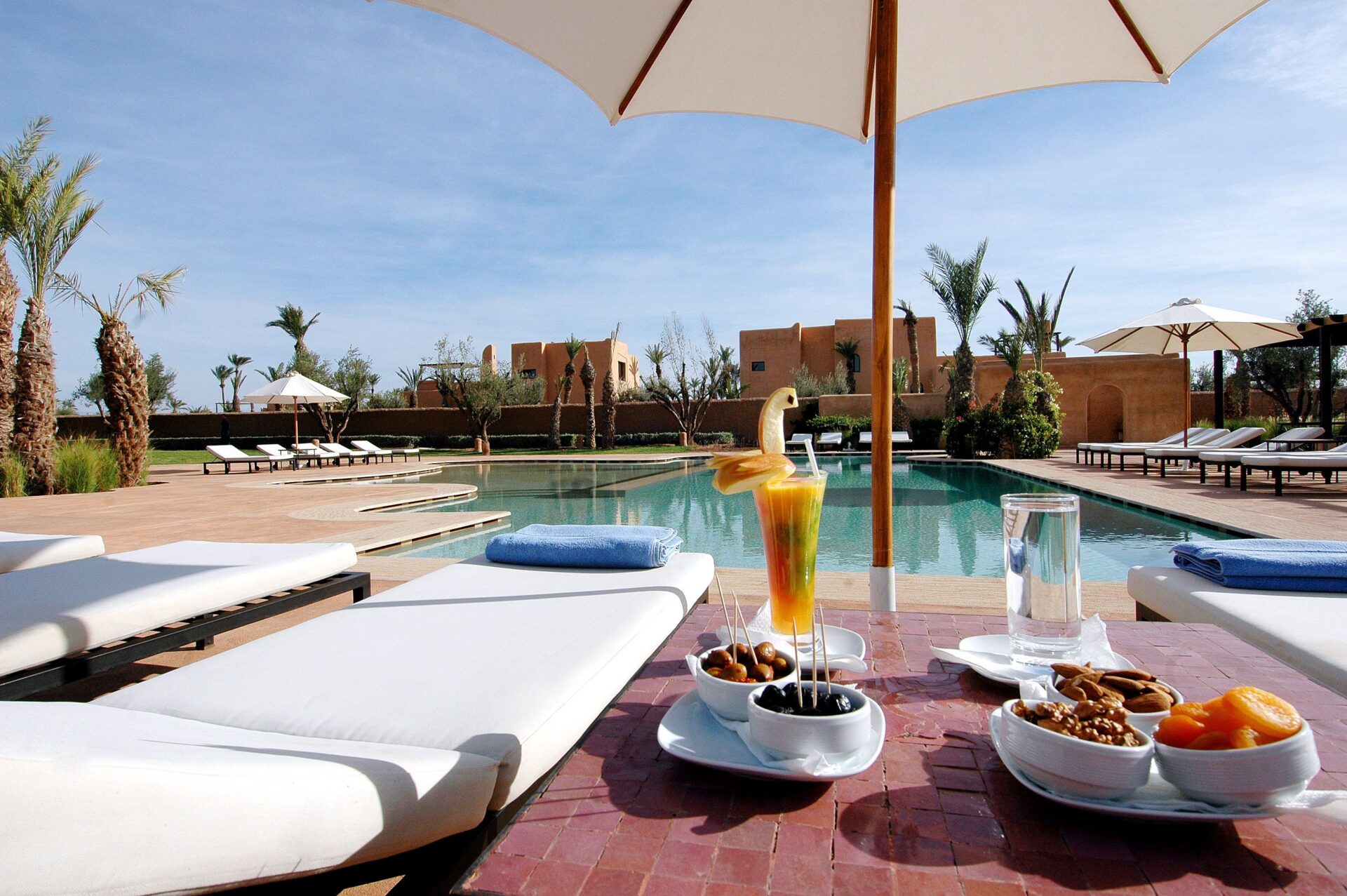
The honest answer about Morocco with children: the riads work magnificently (the central courtyard, the fountain, the rooftop terrace, the cat that belongs to the riad and that the children will claim within the first morning), the souks work with specific preparation (the Marrakech souk with a 5-year-old requires the riad owner’s escort recommendation rather than independent navigation on the first attempt), and the Sahara is a two-day drive each way from Marrakech and requires children who can manage 8 hours in a car without the word “are we nearly there” becoming a recurring theme. This guide gives the Sahara alternative for families who want the desert without the drive, and the specific Morocco that works for every age group from 4 to 14.
Reading time: 10 minutes | Last updated: 2026
Morocco is the family adventure destination that most UK families haven’t considered and should. The flight from any UK regional airport is 3.5 hours. The riad accommodation format (the private courtyard house — the riad’s interior courtyard the family’s private outdoor space, the rooftop terrace the family’s outdoor dining room) is the most child-friendly accommodation format in the Mediterranean world. The food (the tagine, the couscous, the merguez, the fresh flatbread from the clay oven) is universally accessible. And the specific Morocco that families encounter — the colour, the smell, the sound of the medina, the first sight of the Atlas Mountains above the palm trees — is the kind of travel experience that children remember specifically rather than generally.
When to Go
March-May: The spring Morocco — the Atlas Mountains still snow-capped, the wildflowers in the valleys, the temperature in Marrakech at 24-27°C (the correct family temperature, before the July-August 38°C). The school Easter holiday falls within this window.
September-October: The post-summer Morocco — the crowds reduced, the heat breaking, the temperatures returning to the 24-28°C range that the family outdoor experience requires. The October half-term in Morocco: excellent.
July-August: The heat (Marrakech 35-42°C in August) makes the daytime activity difficult for young children. The Essaouira coast (the Atlantic coastal town 3 hours from Marrakech, the cooling wind from the Atlantic making it 8-12°C cooler than Marrakech) is the correct July-August family Morocco base.
December-February: The cool Morocco — Marrakech at 18-22°C, the mountains accessible for snow, the Atlas ski resort of Oukaïmeden (accessible from Marrakech in 1.5 hours) open. The February half-term family Morocco: the riad by the fire, the tagine for dinner, the Atlas in the snow.
Marrakech with Kids
The Medina Morning (Ages 4+)
The correct first medina visit:
The Marrakech medina with young children requires the specific strategy of the morning entry. At 8am, the Djemaa el-Fna (the main square) is the market square rather than the performance square — the orange juice vendors setting up, the dried fruit and nut sellers arranging the displays, the specific Marrakech morning that gives the child the market rather than the spectacle.
The 8am instruction: enter the medina from the north (the Bab Doukkala gate) rather than the tourist approach through the Djemaa el-Fna. The north medina at 8am is the residential medina — the bread being carried from the communal clay oven to the neighbourhood homes, the children going to school, the donkeys delivering supplies through the lanes too narrow for vehicles.
The riad visit:
The riad courtyard experience (the lunch eaten at the central table below the open sky of the interior courtyard — the light changing through the day, the swallows nesting above): the most specifically Moroccan domestic experience accessible to the family visitor. Every riad in the Marrakech medina will serve lunch in the courtyard by arrangement.
The Musée de la Palmeraie and the Palms (Ages 5+)
The Marrakech Palmeraie (the palm grove north of the medina — the 150,000 palms planted by the Almoravid dynasty in the 11th century, the family camel ride available from the palm grove operators at MAD 100-200 / £7.44-14.89 per person for 30 minutes): the correct Marrakech outdoor activity for families.
The camel ride instruction: the first camel ride is significant for children of 5-8 — the specific elevation (2.5 metres to the camel’s back when seated) and the lurching movement of the mount produce a specific combination of alarm and delight that the parents describe identically regardless of nationality.
The Tanneries (Ages 9+)
The Chouara Tannery (the leather dyeing quarter of Fez — the vats of dye visible from the surrounding terrace shops, the specifically Moroccan craft visible in full production): the Fez tannery is the most striking single visual experience in Morocco and the one most specifically comprehensible to the older child who can understand the craft context.
The specific tannery instruction: the terrace views are available from the shops surrounding the tannery (the shop owners offer free viewings in exchange for the browsing opportunity — the commitment to purchase is not required, the polite decline is accepted). The mint sprigs offered at the terrace entrance (the tanneries smell strongly of the pigeon guano used in the leather softening process — the mint is the traditional olfactory counter-measure).
Beyond Marrakech: The Accessible Morocco for Families
The Aït Benhaddou (Ages 5+)
The Aït Benhaddou (the UNESCO-listed ksar — the fortified earthen city 190km from Marrakech over the Tizi n’Tichka pass on the N9 road): the most visually dramatic single site in Morocco and the one most consistently cited by children who have visited as “the best thing in Morocco.”
The ksar: the 11th-century Berber fortified village built from the specific pinkish-red pisé (the compressed earth construction), the watchtowers, the 1,000+ earthen buildings, the specific desert architecture that is the visual reference for a hundred fantasy and historical films (the site has appeared in Gladiator, Game of Thrones, and Babel). Entry MAD 10 / £0.74.
The Tizi n’Tichka pass (2,260 metres — the mountain pass that gives the high Atlas from the road, the snowfields visible above in winter, the mule caravans on the path below the road): the specific Moroccan landscape change from the Marrakech palm trees to the alpine environment in 3 hours of driving.
The Aït Benhaddou for families: The ksar is entirely walkable (the flat earthen streets, the stairs to the watchtower accessible to children of 5+, the guardian at the entrance who speaks French and some English and who will explain the construction and the history if engaged directly). The village at dusk (the pisé turning from pink to amber to dark red as the light moves): the photograph that the child will show everyone when they return.
The Essaouira Coast (Ages 3+)
Essaouira (the Atlantic port town 3 hours from Marrakech on the coast road — the UNESCO-listed medina, the ramparts above the Atlantic, the beach immediately outside the medina walls, the specific Essaouira wind that makes the town the kite-surfing capital of Morocco and that makes it 10°C cooler than Marrakech in summer):
The Essaouira beach (the 12km of sand immediately south of the ramparts — the flat, sheltered inner section close to the medina walls accessible to young children, the Atlantic surf the further from the town you go): the most accessible family beach in Morocco.
The Essaouira medina (smaller and less intense than Marrakech — the grid-like French-era streets, the argan oil cooperatives visible in the working quarter, the wood-carved inlay workshop (the thuya wood specific to the Essaouira region — the artisans visible carving at the workshop benches)): the medina that the 5-year-old can navigate without the sensory overload of Marrakech.
The argan oil cooperative visit (the women’s cooperative that processes the argan nut — the cracking, the grinding, the pressing visible in the workshop): the most accessible single Moroccan craft process, the argan cosmetic oil and the culinary oil both produced at the same facility.
The Age-by-Age Morocco Guide
Ages 3-6
What works: The riad courtyard (the enclosed outdoor space, the fountain, the cat). The camel in the Palmeraie. The hammam experience (many riads have a family hammam — the specific Morocco hot room experience requires the child to be comfortable with the steam and the scrubbing, which most under-5s are not). The fresh orange juice from the Djemaa el-Fna vendor (MAD 4-7 / £0.30-0.52 per glass — the most efficient single Morocco food experience). The Essaouira beach.
What needs management: The medina at noon (the density, the heat, the narrow lanes, the specific overstimulation that affects the 4-year-old before it affects the adult). The Djemaa el-Fna in the evening (the snake charmers and the entertainment acts are visually compelling and some are genuinely distressing for very young children — the henna pressure is persistent).
Ages 7-12
What works: Everything in the 3-6 list plus: the souk navigation with the riad guide recommendation (the child who is given a specific item to find in the souk — a copper lantern, a specific pottery style — and who navigates to it has an experience that the child who is pulled through the souk does not), the Aït Benhaddou (the Game of Thrones connection is the specific engagement hook for the 10-year-old), the tagine cooking class (the Marrakech cooking schools that offer family classes with the market visit).
The tagine instruction: The traditional Moroccan tagine (the clay pot, the conical lid, the slow-cooked lamb with the preserved lemon and the olives, the prunes with the almonds, the chicken with the artichokes and the peas): the meal that most children find accessible in the lamb-and-apricot version and discover has no UK equivalent.
Ages 12-16
The desert alternative to the Sahara drive:
The Agafay Desert (40km from Marrakech — the rocky desert at the edge of the Haouz plain, the Atlas Mountains visible above, the camp accessible in 1 hour by road): the desert aesthetic without the 8-hour drive. The Agafay gives the tent, the camel, the sunset, the Atlas backdrop — at a fraction of the Erg Chebbi drive time. The specific teenage instruction: the quad biking in the Agafay (the off-road circuit through the piste, the Atlas visible throughout): MAD 400-600 / £29.78-44.67 per person per hour.
The Riad — The Correct Family Accommodation
The riad (the traditional Moroccan courtyard house, the ground floor commercial space converted to the guesthouse around the central fountain courtyard) is the most family-appropriate accommodation format in the Marrakech medina for several specific reasons:
The interior courtyard (the outdoor space that is private rather than shared, the family’s morning breakfast and evening dinner available in the courtyard without the restaurant formality — the riad owner or the cook preparing the meal to order, the children eating at the courtyard table at whatever hour the family requires).
The roof terrace (the rooftop accessible to the family exclusively, the Marrakech medina roofscape visible in all directions, the Atlas visible on clear days to the south, the specific Marrakech view available only from above).
The cat (every riad has one).
The riad selection for families:
Look for: the ground floor room (the stairs in the traditional riad are steep — the family with young children should request the ground floor room), the rooftop accessible without steep external stairs, the family room or the connecting room option.
The reference riads for families: Riad Dar Justo (Marrakech, the family suite with the private courtyard section: MAD 800-1,400 / £59.56-104.23/night), the Riad Papillon (the 4-room riad that books as a whole property for families — the exclusive use format, MAD 3,000-5,000 / £223.34-372.24/night for the full riad).
What It Costs — Family of Four
| Category | Budget | Mid-Range |
|---|---|---|
| Return flights (UK-Marrakech, 4 persons) | £600-1,000 | £800-1,400 |
| 10 nights accommodation (riad) | £600-1,200 | £1,200-2,400 |
| Food (10 days, tagine + market) | £250-450 | £450-800 |
| Activities (camel, cooking, Aït Benhaddou) | £150-280 | £250-450 |
| Transport (Aït Benhaddou, Essaouira) | £100-200 | £150-300 |
| Total (10 nights) | £1,700-3,130 | £2,850-5,350 |