


Spain’s high-speed AVE rail network makes Andalusia’s three defining cities genuinely easy to connect without a rental car, covering Islamic-era architecture spanning nearly a thousand years of history across three consecutive train journeys, none longer than 90 minutes.
Quick answer: 7 days covering Seville, Córdoba, and Granada costs roughly £420-£520 per person excluding flights, based on mid-range hotels, three meals a day, and AVE rail tickets between all three cities. UK passport holders travel visa-free for stays under 90 days as part of the Schengen agreement.
The 7-Day Route at a Glance
| Days | City | Highlight | Accommodation Cost |
|---|---|---|---|
| 1-3 | Seville | Real Alcázar, Seville Cathedral, flamenco | £60-£110/night |
| 4-5 | Córdoba | Mezquita-Catedral, Jewish Quarter | £50-£90/night |
| 6-7 | Granada | Alhambra, Albaicín district | £55-£95/night |
The AVE high-speed train connects Seville to Córdoba in around 45 minutes and Córdoba to Granada in roughly 1 hour 45 minutes, making this one of the most efficient rail routes for covering Spain’s Moorish architectural heritage.
Day-by-Day Breakdown
Days 1-3: Seville
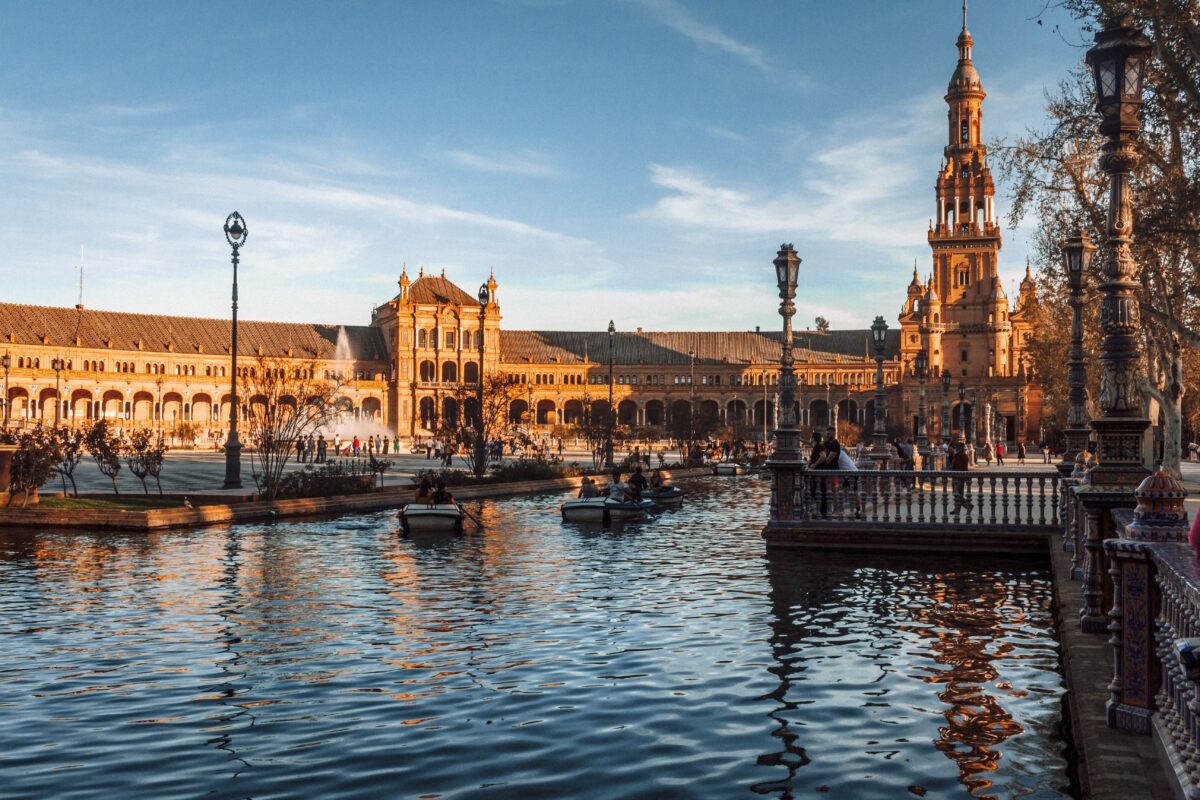
Seville anchors this route both geographically and historically, home to the largest Gothic cathedral in the world and the Real Alcázar, a royal palace still used by the Spanish royal family today.
- Real Alcázar: €13.50 (£11.55), a stunning example of Mudéjar architecture (Islamic-influenced design created by Christian rulers after the Reconquista), book timed-entry tickets online well in advance
- Seville Cathedral and Giralda Tower: €11 (£9.40), climbing the tower via ramps rather than stairs, a design choice originally intended to allow horseback ascent
- Flamenco show: €20-€35 (£17.10-£30) at a genuine tablao (flamenco venue) rather than a tourist-trap dinner-show package, Casa de la Memoria offers a well-regarded, more intimate option
- Dinner: a full tapas crawl across 3-4 bars runs €25-€40 (£21.35-£34.20) per person, genuinely the best way to experience Seville’s food culture
- Accommodation: guesthouses in the Santa Cruz district from £60-£110/night
The 6am principle applies most directly at the Real Alcázar. Even with timed-entry tickets, arriving at the earliest available slot avoids the tour group crush that builds from mid-morning, particularly in the palace’s most photographed courtyards.
Days 4-5: Córdoba
The AVE from Seville to Córdoba takes just 45 minutes, one of the shortest high-speed rail hops in Europe between two genuinely significant historic cities.
Córdoba’s Mezquita-Catedral is the single most striking building on this entire route: a former mosque, its forest of over 850 columns and horseshoe arches, later converted into a cathedral with a Renaissance nave inserted directly into its centre, creating one of the most architecturally unusual religious buildings anywhere in the world.
- Mezquita-Catedral entry: €13 (£11.10), with a free early-morning entry window (roughly 8:30-9:30am) offering a genuinely different, more contemplative experience than the paid daytime visit
- Jewish Quarter (Judería): free to wander, a maze of whitewashed streets and flower-filled patios, particularly striking during May’s Patio Festival if timing allows
- Alcázar de los Reyes Cristianos: €5 (£4.30), a fortress-palace with gardens genuinely worth the modest entry fee
- Dinner: a full Córdoban meal (salmorejo, a thicker relative of gazpacho, is the dish to try) runs €18-€28 (£15.40-£24) per person
- Accommodation: guesthouses near the Mezquita from £50-£90/night
The honest verdict on the free early entry to the Mezquita: it’s genuinely one of the best value experiences on this entire route, offering a quieter, more atmospheric visit than the standard paid daytime ticket, though it doesn’t include access to every area covered by the paid entry.
The Patio Festival: A Reason to Time Córdoba Around Spring
Córdoba’s Fiesta de los Patios, held annually each May, opens dozens of private courtyards across the city to public visitors, a UNESCO-recognised tradition where residents compete for the most striking flower-filled patio display. Outside this specific window, many of these same courtyards remain closed to visitors behind unassuming doorways, meaning a May visit unlocks a genuinely different, more intimate side of the city compared to any other time of year.
Days 6-7: Granada
The AVE from Córdoba to Granada takes roughly 1 hour 45 minutes, completing the route’s journey from Seville’s Mudéjar palace through Córdoba’s mosque-cathedral to the last great Moorish stronghold in Spain.
The Alhambra, the fortress-palace complex overlooking Granada, was the final seat of Moorish rule in Spain before the 1492 Reconquista, and remains one of the most visited sites in the country.
- Alhambra general entry: €19.60 (£16.75), tickets released in batches and selling out weeks or months ahead during peak season, book as early as possible
- Albaicín district: free to wander, Granada’s old Moorish quarter, with the Mirador de San Nicolás offering the single best sunset view of the Alhambra across the valley
- Sacromonte caves: free to view from outside, historic cave dwellings now partly converted to flamenco venues and small museums
- Dinner: a full meal in the Albaicín runs €18-€30 (£15.40-£25.65) per person, with many Granada bars still offering the traditional free tapa with every drink ordered
- Accommodation: guesthouses in the Albaicín from £55-£95/night
What £420-£520 Actually Covers
| Category | Total for 7 Days (GBP, per person) |
|---|---|
| Accommodation (6 nights, split two ways) | £125-£200 |
| Food (three meals daily) | £115-£165 |
| AVE rail (Seville-Córdoba-Granada) | £35-£55 |
| Activities/entry fees | £45-£65 |
| Total | £320-£485 |
Step-by-Step: Booking This Route
- Book Alhambra tickets the moment dates are confirmed, ideally 2-3 months ahead during peak season (spring and autumn), since this is the single most likely booking bottleneck on the entire route.
- Book AVE tickets a few weeks ahead for the best fares, though this route doesn’t require the months-ahead booking some European high-speed rail demands.
- Time the Mezquita-Catedral visit for the free early-morning window if a quieter, more contemplative experience matters more than covering every corner of the building.
- Base in each city’s historic quarter (Santa Cruz in Seville, near the Mezquita in Córdoba, the Albaicín in Granada) for the most atmospheric, walkable stays.
- Check the May Patio Festival dates if visiting Córdoba in spring, since this UNESCO-recognised event opens numerous private flower-filled courtyards to the public, a genuinely unique addition if the timing aligns.
Frequently Asked Questions
Do UK citizens need a visa for this trip?
No. Spain is part of the Schengen Area, allowing UK passport holders to visit visa-free for stays up to 90 days within any 180-day period.
How far in advance should Alhambra tickets be booked?
As early as possible, ideally 2-3 months ahead for spring or autumn visits, since tickets are released in batches and consistently sell out during peak season.
Is a rental car necessary for this route?
No, the AVE high-speed rail network connects all three cities efficiently, making a rental car unnecessary and, given parking and navigation challenges in each city’s historic centre, often more of a hindrance than a help.
What is the best time of year for this route?
April-May and September-October offer the strongest combination of comfortable temperatures and manageable crowds. Summer (June-August) brings intense heat, particularly in Seville and Córdoba, both notorious for some of the highest temperatures in mainland Europe.
Is this route suitable for a first-time visit to Spain?
Yes, genuinely one of the strongest first-time Spain itineraries available, since it covers a concentrated, historically connected thread (Moorish Andalusia) rather than requiring travellers to piece together disparate regions on their own.
The Bottom Line
This route delivers nearly a thousand years of Moorish architectural history across three cities, Seville’s palace, Córdoba’s mosque-cathedral, and Granada’s Alhambra fortress, connected by some of the fastest, most reliable rail links in Europe. The trade-off is genuinely intense summer heat across the region, making spring or autumn travel the clear recommendation over a July or August booking.