


Lombok has long been marketed as “the peaceful alternative to Bali,” but Bali’s own tourism development has accelerated so much in the past decade that the comparison itself needs updating. This is an honest look at whether Lombok and the Gili Islands still deliver on that promise in 2026.
Lombok and the Gilis remain noticeably quieter than Bali’s main tourist hubs (Kuta, Seminyak, Canggu), but the Gili Islands specifically, Gili Trawangan in particular, have developed a genuine party scene of their own over the past several years. For genuine peace and quiet, Lombok’s mainland and the smaller Gili Meno or Gili Air deliver more reliably than the original “escape Bali” pitch suggested.
Bali vs Lombok & the Gilis: Head-to-Head
| Factor | Bali (Kuta/Seminyak/Canggu) | Lombok Mainland | Gili Trawangan | Gili Air/Meno |
|---|---|---|---|---|
| Development level | Heavy | Light to moderate | Heavy (nightlife-focused) | Light |
| Traffic | Severe in main tourist areas | Minimal | None (no motorised vehicles) | None (no motorised vehicles) |
| Nightlife | Extensive | Limited | Extensive, genuinely rivals Bali’s party scene | Minimal, quiet evenings |
| Accommodation (mid-range, per night) | £45-£90 | £25-£50 | £30-£65 | £25-£55 |
| Flight time from UK | 16-18h via hub | 16-18h via hub, plus domestic connection or ferry | Same as Lombok, plus boat transfer | Same as Lombok, plus boat transfer |
What’s Genuinely Changed About This Comparison
Gili Trawangan has developed its own significant nightlife scene, with beach bars, fire shows, and a party reputation that has drawn comparisons to Bali’s Kuta in miniature. Travellers specifically seeking Lombok’s Gilis as a quiet escape from Bali’s party areas should know this particular island no longer delivers that promise as reliably as it once did, though the absence of any motorised vehicles (transport is entirely by bicycle or horse cart) still gives it a fundamentally different pace than mainland Bali’s traffic-heavy tourist strips.
- Gili Trawangan: the largest and most developed of the three Gili islands, genuinely lively rather than peaceful, best suited to travellers wanting island scenery with a party scene attached
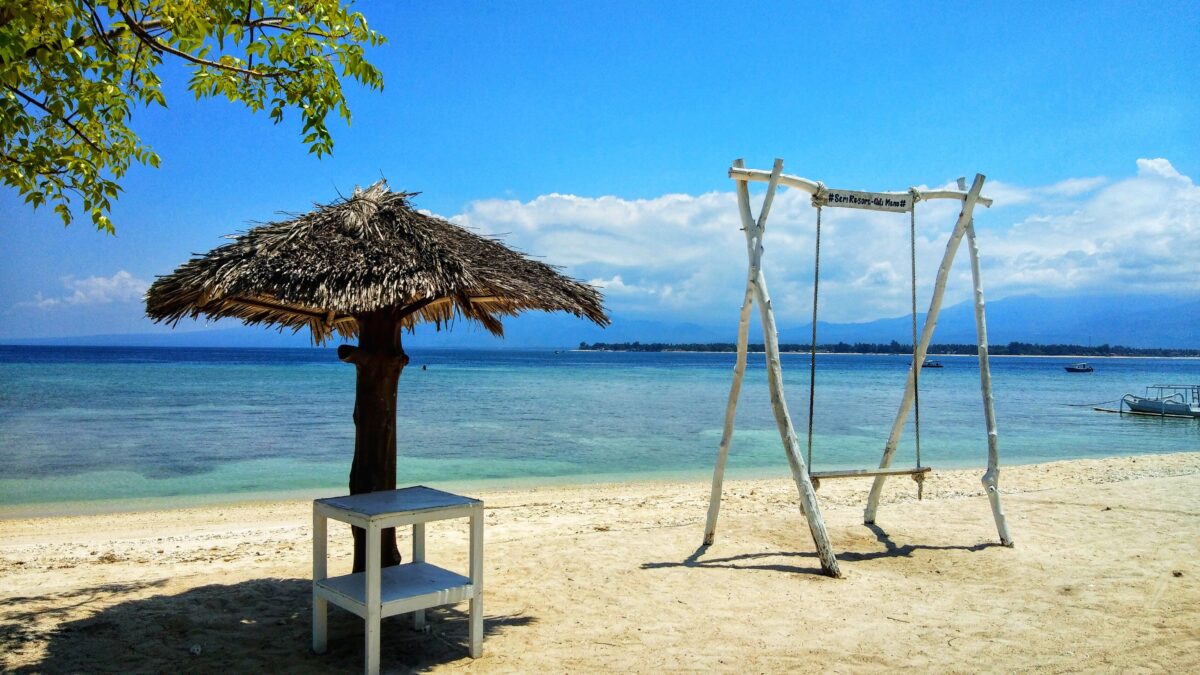
- Gili Meno: the smallest and quietest, genuinely delivering on the original “peaceful alternative” positioning, with limited accommodation and a noticeably slower pace
- Gili Air: a middle ground between the two, offering some restaurant and bar options without Trawangan’s full nightlife intensity
Lombok’s Mainland: The Genuinely Underrated Option
Away from the Gilis entirely, Lombok’s mainland offers a different kind of appeal, closer to what Bali’s Ubud or interior regions offered before their own tourism development intensified.
- Mount Rinjani: an active volcano and one of Indonesia’s most significant trekking destinations, offering multi-day hikes with genuinely spectacular crater lake views, without the crowd density now common on Bali’s own popular hiking routes like Mount Batur
- Kuta Lombok (not to be confused with Bali’s Kuta): a genuinely quieter beach town with strong surf breaks, developing steadily but still noticeably calmer than its Bali namesake
- Sasak traditional villages: several villages near Kuta Lombok offer a genuine window into Lombok’s indigenous Sasak culture, distinct from Bali’s Hindu-majority culture
Why Bali Still Wins for Infrastructure and Range
Bali’s tourism infrastructure remains significantly more developed, offering a far wider range of accommodation, dining, wellness, and activity options than Lombok or the Gilis can currently match. For travellers wanting genuine variety, world-class dining, extensive spa and wellness culture, and infrastructure that simply works reliably, Bali’s more developed areas still deliver more consistently.
The honest verdict: Bali’s quieter regions (parts of Ubud’s rice-terrace areas, the north coast around Lovina) still offer genuine calm if chosen carefully, meaning the Bali-vs-Lombok decision isn’t as simple as “developed vs peaceful” anymore. Both destinations now require choosing the right specific area within them to achieve a quiet trip.
Diving and Snorkelling: Where Each Destination Genuinely Excels
The Gili Islands, Gili Trawangan and Gili Air in particular, offer some of the most accessible and consistently good snorkelling and diving in the region, with sea turtles regularly spotted just metres from shore without needing a boat trip. Bali’s dive sites (Amed, Tulamben’s USS Liberty wreck) are excellent but generally require more travel and planning to reach from the main tourist hubs. For travellers whose trip centres specifically on diving or snorkelling, the Gilis’ combination of easy access and consistent marine life sightings gives them a genuine edge over Bali’s more spread-out dive scene.
What a Week Actually Costs
| Category | Bali (developed areas, per person) | Lombok Mainland + Gili Meno/Air (per person) |
|---|---|---|
| Accommodation (6 nights, split two ways) | £270-£540 | £150-£315 |
| Food | £120-£200 | £90-£150 |
| Activities (surfing, diving, trekking) | £80-£150 | £60-£120 |
| Total (excluding flights) | £470-£890 | £300-£585 |
Lombok and the quieter Gilis run roughly 35-40% cheaper than equivalent Bali accommodation and dining, though the gap has narrowed somewhat as Lombok’s own tourism infrastructure has developed.
Step-by-Step: Planning This Trip
- Choose the specific Gili island deliberately, not by default. Gili Trawangan for nightlife, Gili Meno for genuine quiet, Gili Air as a middle ground, rather than assuming all three deliver the same peaceful experience.
- Book Mount Rinjani treks well in advance if trekking is a priority, since permit numbers are limited and the trek requires a licensed guide.
- Fly into Lombok International Airport directly if available on your route, rather than routing through Bali’s Denpasar airport and adding a domestic flight or ferry transfer.
- Confirm ferry schedules to the Gilis before finalising accommodation, since services from Lombok’s mainland (Bangsal harbour) run on a schedule that can shift with weather and season.
- Pack for genuinely limited infrastructure on Gili Meno and Air specifically, since ATMs and larger shops are less common than on Trawangan or mainland Lombok.
Frequently Asked Questions
Is Lombok safe for tourists?
Yes, generally considered safe, with standard travel precautions applying as with most Southeast Asian destinations. Mount Rinjani treks specifically should only be undertaken with a licensed guide given the genuine physical demands and occasional weather-related risks at altitude.
Do UK citizens need a visa for Indonesia (covering both Bali and Lombok)?
UK passport holders can currently obtain a visa on arrival for short tourist stays, though this involves a fee and should be reconfirmed against current Indonesian immigration policy before travel.
Is Gili Trawangan still worth visiting if avoiding nightlife?
It can be, staying in a quieter part of the island away from the main strip, but Gili Meno or Gili Air deliver a more reliably calm experience for travellers specifically prioritising peace and quiet.
How do you get from Lombok’s airport to the Gili Islands?
A combination of road transfer to Bangsal harbour (roughly 1.5-2 hours) followed by a boat crossing (20-40 minutes depending on the specific Gili island), or a faster but pricier fast boat option departing more directly from areas closer to the airport.
Is Lombok’s mainland genuinely safe for solo trekking on Mount Rinjani?
No, solo trekking is not recommended and, in practice, not permitted without a licensed guide. The route involves genuine altitude and weather risks, and all reputable trekking operators require a guide as standard practice, not an optional add-on.
How does the food scene compare between Bali and Lombok?
Bali’s more developed tourism infrastructure supports a considerably wider range of dining, from high-end international restaurants to health-focused cafes, particularly in areas like Ubud and Canggu. Lombok’s food scene is more traditional and less internationally varied, though genuinely good local Sasak cuisine is readily available and noticeably cheaper than Bali’s more tourist-oriented restaurant scene.
The Bottom Line
Lombok and the Gilis remain genuinely cheaper and, in the right specific areas, quieter than Bali’s main tourist hubs, but the blanket “peaceful alternative” pitch needs updating given Gili Trawangan’s own developed party scene. The honest recommendation is choosing the right specific island or region within Lombok deliberately, Gili Meno or the mainland’s Kuta Lombok for genuine quiet, rather than assuming the entire destination automatically delivers on the original comparison.