


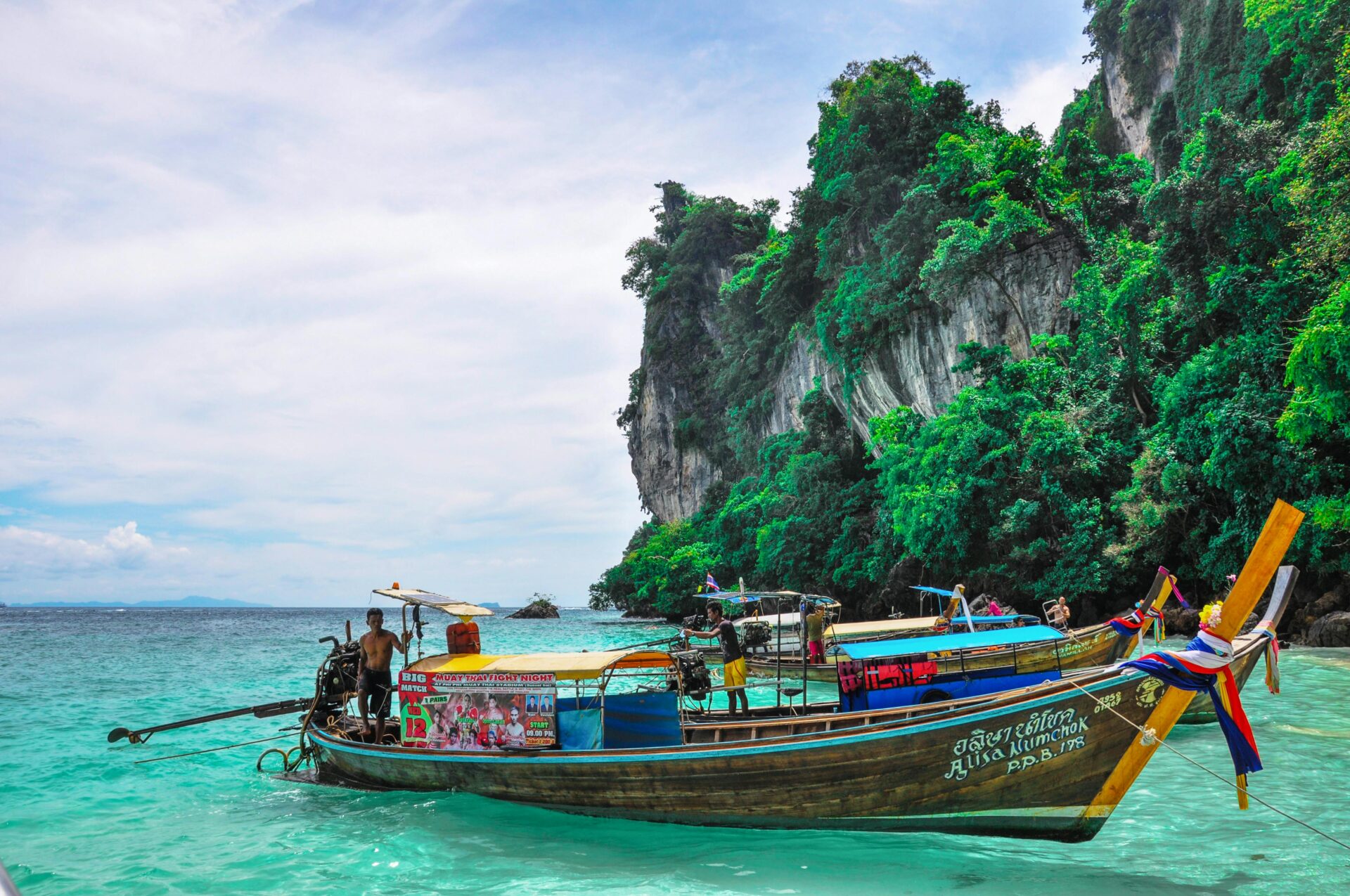
The complete guide for travellers: where to go, what it costs, which islands to actually book, and the things nobody puts in a Thailand list of things to do and see!
Reading time: 18 minutes | Last updated: 2026
I’ve been to Thailand five times. The first trip I did everything wrong — too long in Bangkok, Koh Phi Phi at peak season with nowhere to stay, back on a plane before I’d understood what I was actually standing in the middle of.
By the second trip I was starting to get it. By the third I had stopped consulting the internet and started asking the person cooking my breakfast.
This guide is what I wish I’d had before trip one. Not a collection of hotel affiliate links dressed up as advice, not a “top 10 things to do in Thailand” list that’s been copied from another blog that copied it from a guidebook published in 2019.
Practical. Opinionated. Honest about the parts that are genuinely extraordinary and the parts that are genuinely overhyped.
Thailand will get under your skin faster than almost anywhere else you’ll visit. This guide tells you where to point yourself when it does.
Quick Navigation
- Why Thailand — The Honest Case
- When to Go — The Month-by-Month Reality
- Where to Go — The Regions
- Bangkok — How to Actually Do It
- Chiang Mai and the North
- The Islands — Which Ones and Why
- Hidden Gems — The Places Worth the Extra Effort
- What It Costs — Real Numbers
- How to Get Around
- Eating in Thailand — A Brief Religion
- Practical Information
- The 7-Day Itinerary — The Route That Works
Why Thailand — The Honest Case
There is a version of this section that tells you about the golden temples and the smiling locals and the unbelievable food. All of that is true. You’ve also probably already heard it.
Here’s the version that’s actually useful.
Thailand works as a first big trip because the infrastructure is genuinely excellent. English is spoken widely enough that you can navigate without speaking Thai. The transport network — flights, buses, ferries, trains — connects almost everywhere you’d want to go. The food is extraordinary at every price point. The country is enormous enough that you can have a completely different experience depending on which direction you head from Bangkok.
It works as a return trip because every time I’ve gone back I’ve found something I missed. The south doesn’t prepare you for the north. The islands don’t prepare you for the mountains. The tourist trail doesn’t prepare you for the moment you get off it.
Thailand is also, by any honest accounting, one of the best-value mid-range destinations accessible from the UK. A week in Thailand costs roughly the same as a week in Spain — except the food is dramatically better, the accommodation-to-price ratio is extraordinary, and the beaches don’t have a queue for the sun loungers.
The caveats exist too. Some parts of Thailand are genuinely overcrowded in peak season. Some of the famous islands have been so thoroughly optimised for tourists that they’ve stopped feeling like places and started feeling like products. This guide will tell you which ones those are.
When to Go — The Month-by-Month Reality
The standard advice is “go November to February.” That’s also when everyone else goes. Here’s the fuller picture.
November to February — Peak Season The dry season. Cool(ish) in the north, perfect on the islands, low humidity in Bangkok. The downside: accommodation prices spike 30–40%, the famous islands are busy, and flights booked late cost significantly more. If this is your window, book 3–4 months ahead.
March to May — Shoulder Season South, Burning Season North The south stays good until April. The north — Chiang Mai, Pai, Chiang Rai — gets hit by burning season from March through April, when farmers burn fields and the air quality becomes genuinely poor. Avoid the north during this window. Bangkok is hot. Very hot.
June to October — Monsoon Season This is where it gets more nuanced than most guides admit. The Gulf of Thailand coast (Koh Samui, Koh Tao, Koh Phangan) stays mostly dry June–October while the Andaman coast (Phuket, Krabi, Koh Lanta, Koh Phi Phi) gets significant rain. The islands on the Andaman side close many guesthouses from June to September.
The sweet spot most people miss: October. The Andaman coast is still wet but the last weeks of October see it drying out. Prices are 30% lower. The north has fresh air after the rains. The rice terraces in Pai are the greenest they’ll be all year. If you’re flexible, October is one of the best months to be in northern Thailand.
Where to Go — The Regions
Thailand divides roughly into four zones. Most first-time trips touch three of them. The fourth — the deep south and the islands beyond Koh Lanta — takes a second or third trip to reach.
The Central Region — Bangkok and Surrounds
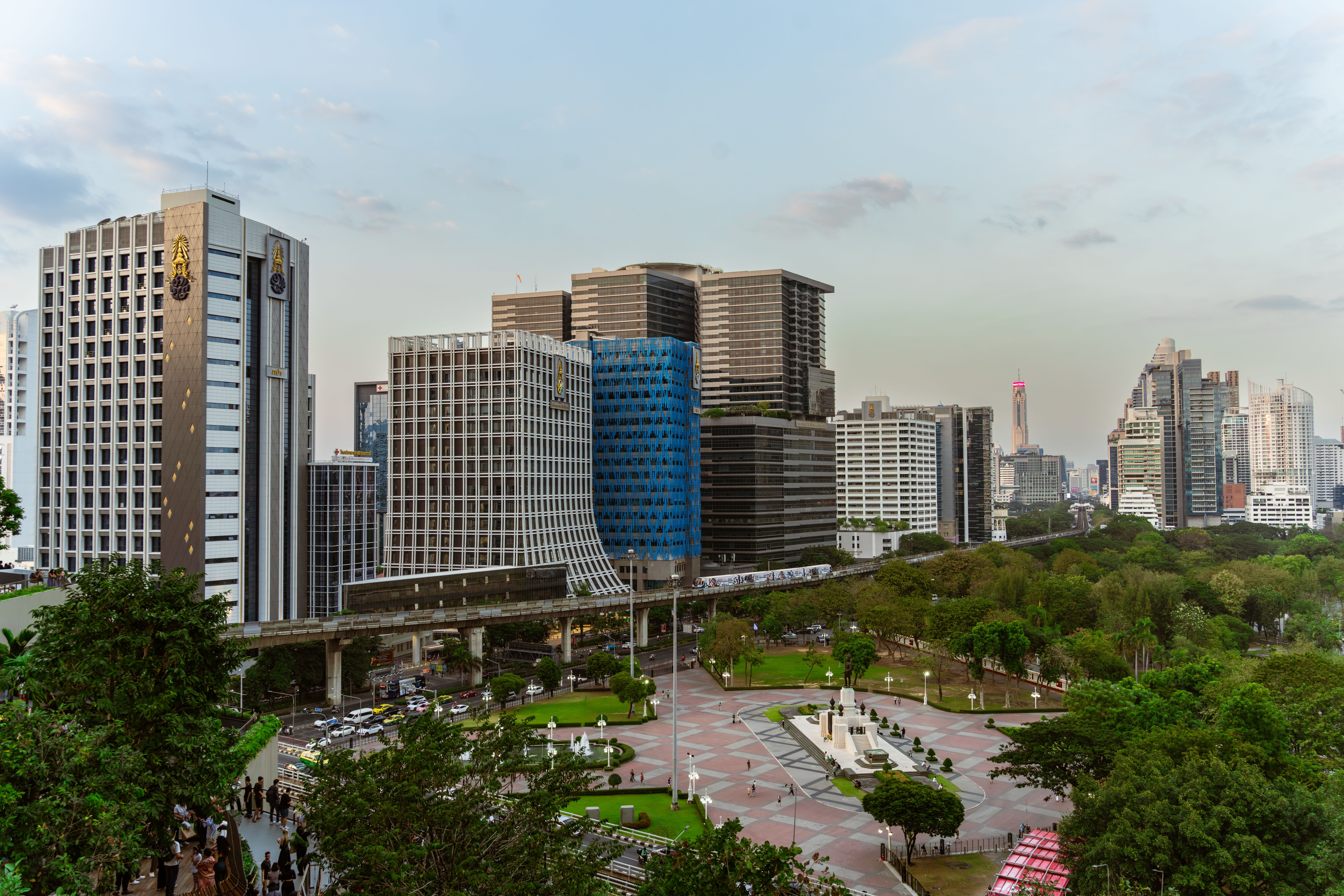
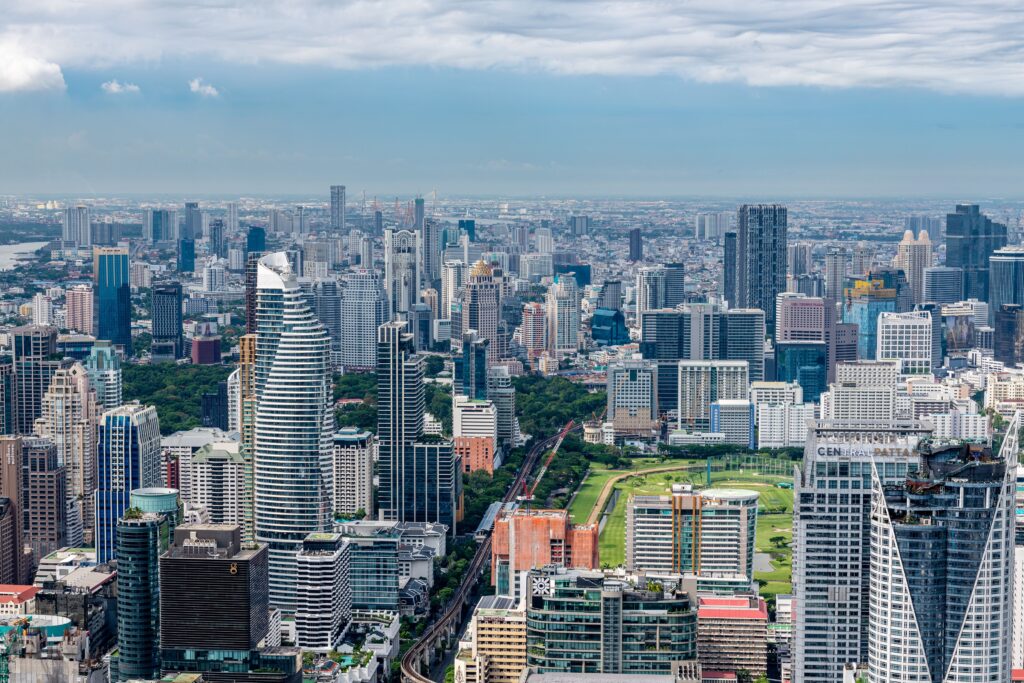
The arrival hub for most UK flights. Don’t spend more than 3 nights here on your first trip. The city is extraordinary but it’s also endless — people spend a week and still feel like they’ve barely scratched it. For a first-timer, 2 nights is enough to cover the essentials. The temples, the markets, the food. Then move.
The North — Chiang Mai, Pai, Chiang Rai
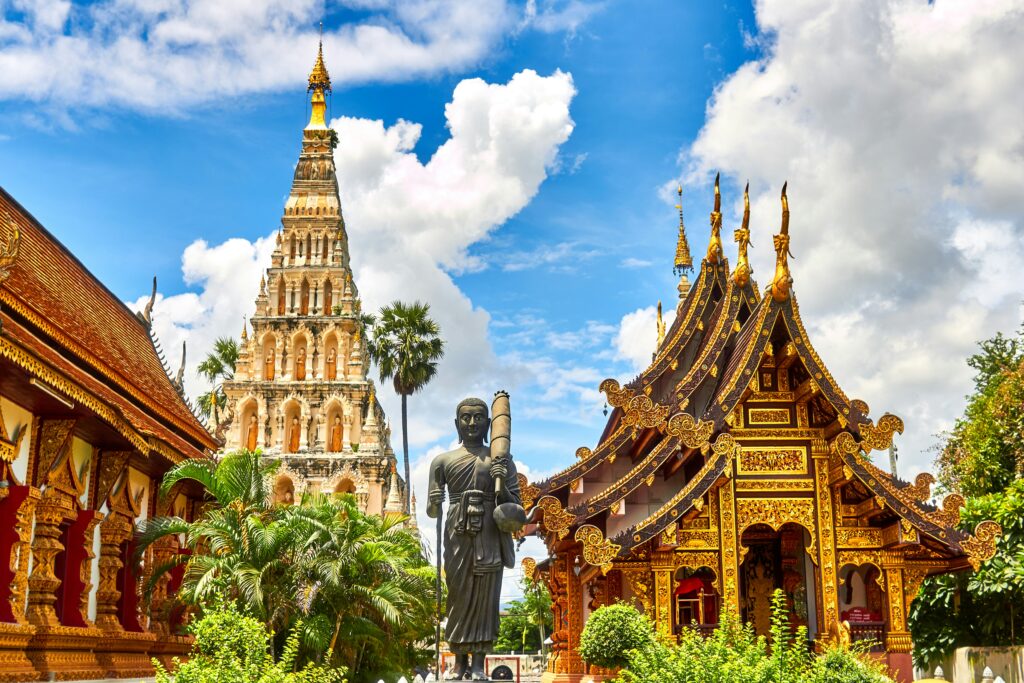
A completely different country from the south. Mountains instead of sea. Buddhist monastery culture instead of beach bars. The food is different (Khao Soi, the northern noodle curry, is one of the finest dishes in Thailand). The pace is slower. The air is cooler. I know people who went for three days and stayed for three months.
The Gulf Coast — Koh Samui, Koh Tao, Koh Phangan
The islands of the eastern gulf. Koh Samui is the most developed — big resort hotels, international restaurants, the full package. Koh Tao is the dive island — the most affordable dive training in the world. Koh Phangan is famous for the Full Moon Party and increasingly famous for the people who go there and hate the Full Moon Party. The diving and quieter bays are its better side.
The Andaman Coast — Phuket, Krabi, Koh Lanta, the Hidden Islands
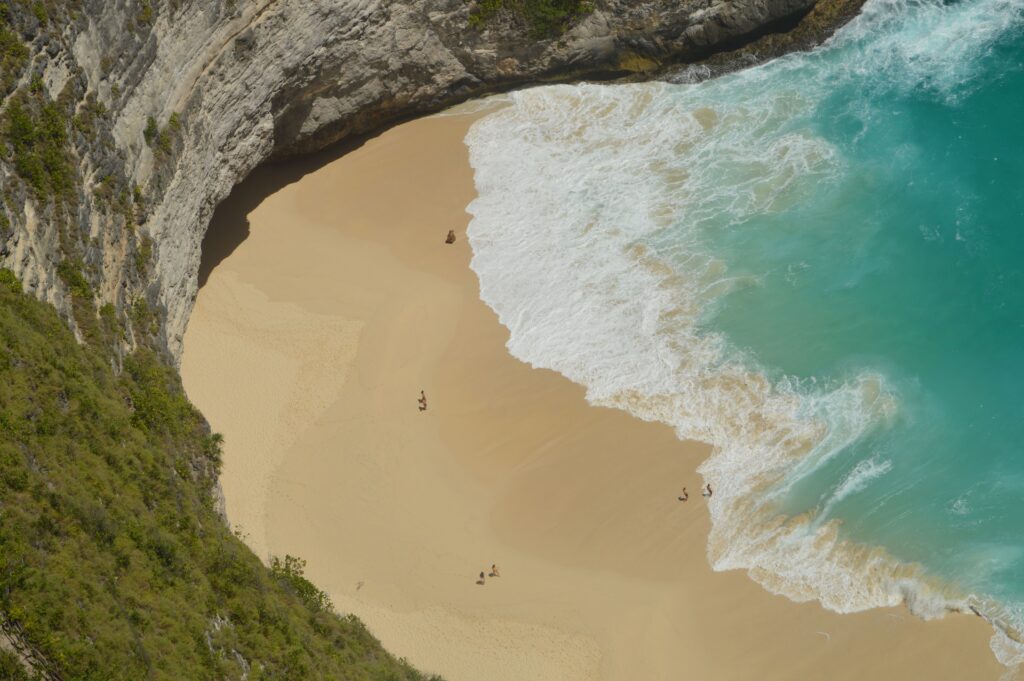
This is where the postcards come from. The limestone karsts. The turquoise water. The beaches that genuinely don’t look real. Phuket itself has been so comprehensively touristed that I find it hard to recommend over the surrounding islands. Krabi is the gateway. Koh Lanta is where you actually want to be.
Bangkok — How to Actually Do It
Bangkok is the most overwhelming city I’ve ever been in. I mean that as the highest possible compliment.
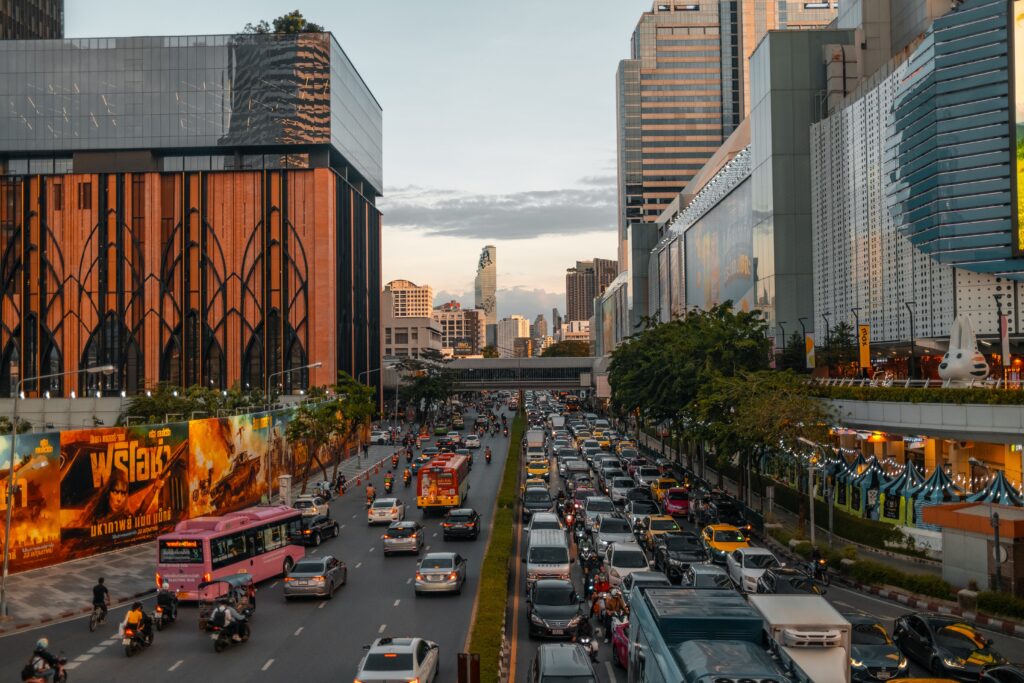
It doesn’t ease you in. It arrives all at once — the heat, the noise, the traffic, the street food vendors next to the tuk-tuks next to the saffron-robed monks next to the 7-Eleven. And within 12 hours, if you let yourself stop fighting it and start watching it, it becomes one of the most electrifying places you’ve ever stood.
The Essential Two Days
Day One
Get to the Grand Palace early. By 8am if you can manage it. The palace opens at 8:30am and the tour buses arrive by 9am. In the gap between those two facts you’ll have one of the finest architectural sites in Southeast Asia almost to yourself.
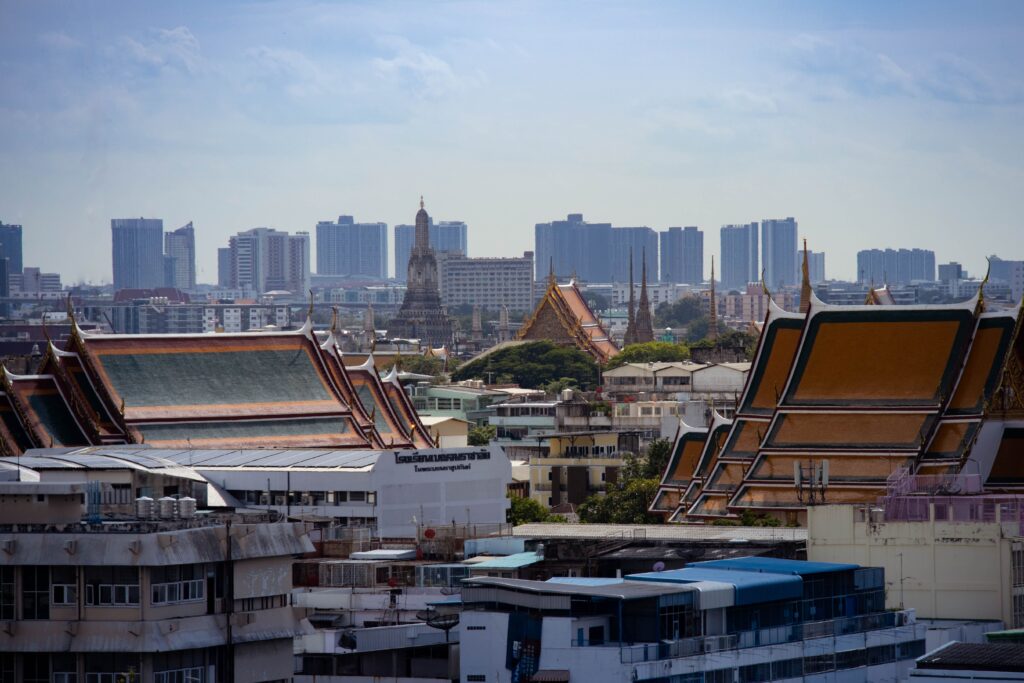
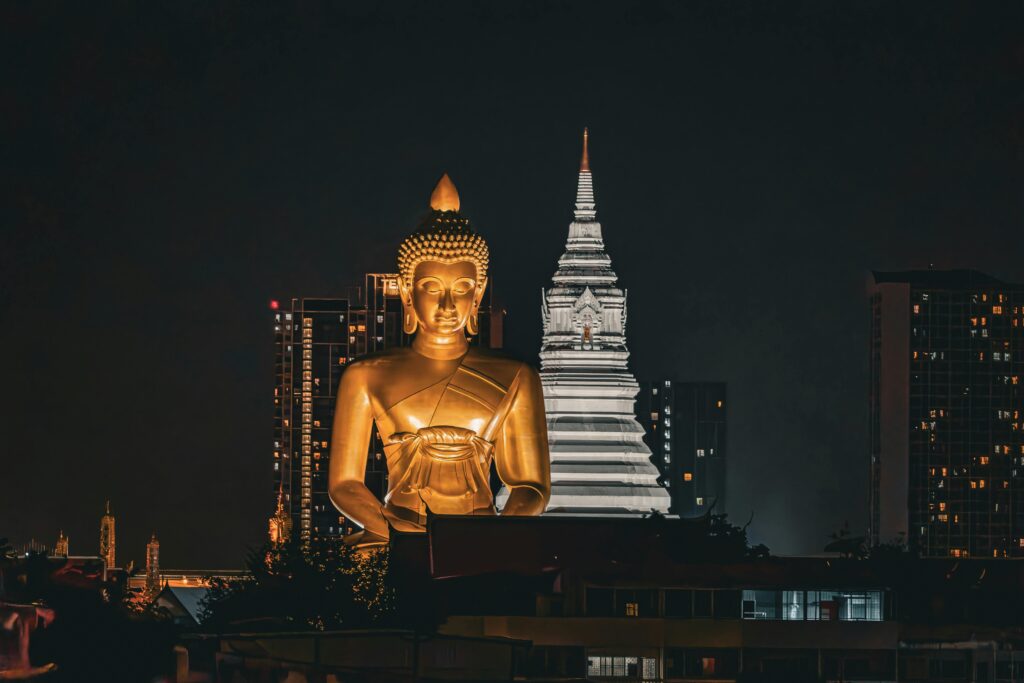
From the Grand Palace, walk to Wat Pho — the temple of the reclining Buddha — which is immediately next door and often overlooked by people who’ve spent all their energy on the palace. The reclining Buddha is 46 metres long and gold from ear to toe. You will need to readjust your understanding of the word “large.”
Afternoon: take the river ferry (Chao Phraya Express, 15 baht, about 35p) north to Chatuchak if it’s the weekend. The world’s largest weekend market. 15,000 stalls. Budget two hours and an exit strategy.
Evening belongs to Chinatown. Yaowarat Road comes alive after 6pm in a way that suggests the daytime is just the warm-up act. Hoi Tod (crispy oyster omelette), Pad Kra Pao (basil pork with fried egg on rice), mango sticky rice. Eat at the places where there’s a queue at a plastic stool outside. Those queues are accurate market research.
Day Two
Wat Arun in the morning — across the river from Wat Pho, covered in tiny ceramic fragments, best seen from the river at sunrise or from the Wat Pho side just after dawn when the light hits it at the right angle.
The Jim Thompson House in the afternoon — an American silk entrepreneur who disappeared in Malaysia in 1967, leaving behind a compound of traditional Thai houses filled with extraordinary Asian art. 200 baht entry (about £4.60). One of Bangkok’s most underrated hours.
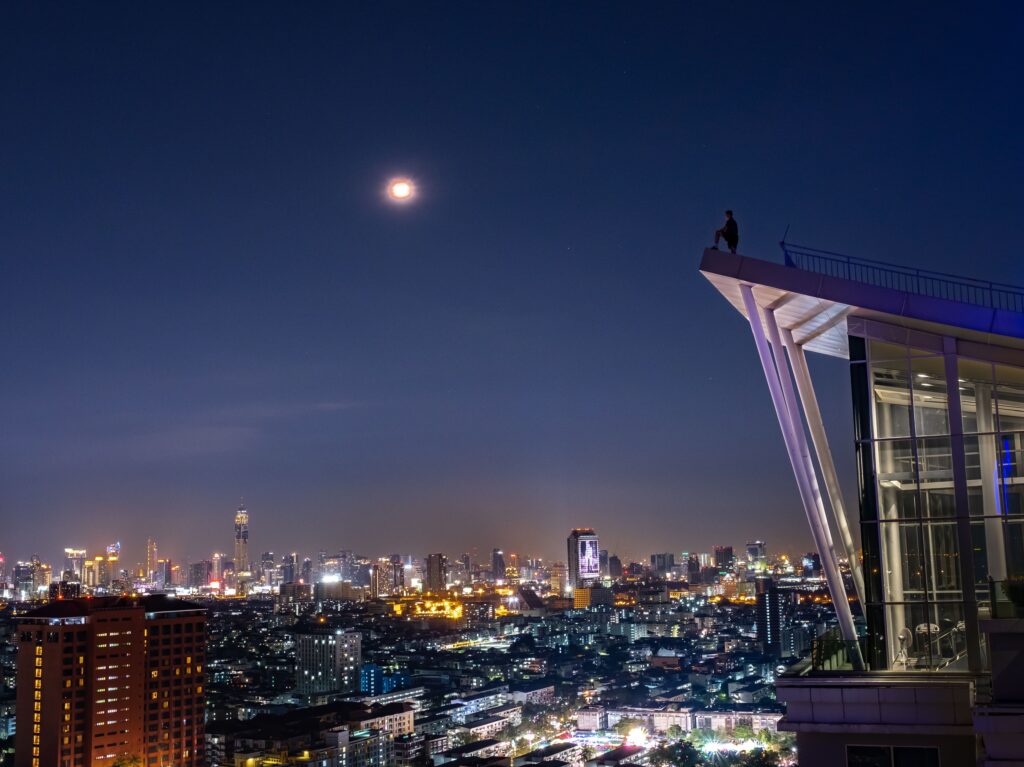
Evening: skip the rooftop bars. Grab a beer from a 7-Eleven and walk to the Chao Phraya riverbank. Stand next to the river as it reflects the city lights. This costs nothing and is more Bangkok than any cocktail menu.
What to Skip in Bangkok
The Khao San Road experience. One visit is educational. After that it’s just backpackers being loud in a tourist bubble. There’s a city outside it.
Floating markets within day-trip distance of Bangkok. Not because they’re not beautiful, but because most of them have been tourism-optimised to the point where the “floating market experience” has been entirely separated from anything resembling an actual market. Damnoen Saduak has photos. Amphawa is slightly more authentic. Neither is essential.
Tuk-tuk tours to gem shops. This is a scam that has existed since roughly 1987 and continues to work because people don’t know about it. The tuk-tuk driver is getting a commission from the shop. The gems are not bargains. Walk.
Bangkok — Where to Stay
Budget: Khao San Road area puts you near the temples and the backpacker infrastructure. Noisy. Convenient. £8–15/night for a guesthouse.
Mid-range: Silom or Sukhumvit. Better transport links, better restaurants, the city feels more real. £25–50/night for a good hotel.
One splurge: The Sala Rattanakosin is an eight-room hotel directly opposite Wat Arun. The view from the rooftop at sunset is one of the finest in Bangkok. Worth a single night if the budget stretches.
Chiang Mai and the North
I used to think of Chiang Mai as the warm-up act before the islands. Then I spent a week there and stopped thinking that.
The city has more temples per square kilometre than anywhere else in Thailand. It has a moat around the Old City, a night market that runs seven nights a week, and a cooking class culture that has been refined over thirty years of practice. The surrounding mountains contain Doi Suthep (one of the most sacred temples in the country, accessible by road, visible from the city below at dawn), elephant sanctuaries run with genuine ethics, and villages connected by roads that make for extraordinary motorcycle rides.
Doi Suthep Temple
Go early. By 7am if you can. The temple sits at 1,073m above sea level, 15km from the city centre. The road up is lined with vendors selling fresh-pressed sugarcane juice. The temple itself — gold spires, prayer flags, the bell tower rung by pilgrims every morning — is busy by 9am. At 7am it belongs to the monks and the mist.
Take the songthaew (red shared truck) from the base of Thanon Huay Kaew — 60 baht each way (about £1.40), waits until it fills up. Or hire a motorbike if you’re comfortable riding, which gives you the flexibility to stop on the way up for the views over the city.
The Elephant Question
I’ll address this directly because it comes up on every Thailand research thread and the advice is inconsistent.
Riding elephants is not ethical. This covers any establishment that offers elephant riding, elephant painting, or any form of performance. The training process for these activities is cruel and has been extensively documented.
Genuine sanctuaries — where elephants live in a semi-wild state, where you can walk alongside them, feed them, and watch them in the river — exist and are worth visiting. Elephant Nature Park (run by Lek Chailert) is the most established. Elephant Jungle Sanctuary in Chiang Mai has consistently good reviews. Book directly with the sanctuary rather than through a hotel desk.
The Night Bazaar vs The Walking Streets
The Night Bazaar runs every night in the eastern part of the city. Good for browsing, reasonable for buying handicrafts, slightly predictable in its selection.
The Sunday Walking Street (Wualai Road) and the Saturday Walking Street (same route, different day) are where Chiang Mai locals actually come to eat and shop. More interesting food, more interesting craft work, more interesting atmosphere. Time your visit to catch one.
Pai
Three hours from Chiang Mai by minivan (762 bends in the road — if you’re prone to motion sickness, take medication before you board). The journey is uncomfortable. The destination is worth it.
Pai is a small valley town that has been “discovered” by travellers and then sort of re-discovered by travellers who heard it was discovered and wanted to see what everyone was talking about, and through all of that has somehow retained a character that most destinations lose when this happens to them. The valley at dawn — when the mist fills the bowl between the mountains and the rice fields emerge slowly from the white — is one of the finest natural views in northern Thailand.
Stay at least two nights. Three is better.
Chiang Rai — Closer Than Most People Think
Three hours from Chiang Mai by bus (130 baht, about £3). Most people day-trip it. You can do the White Temple (Wat Rong Khun), the Blue Temple (Wat Rong Suea Ten), and the Golden Triangle in a day. But staying a night means you get the dawn at the White Temple before anyone else arrives, and the dawn there is extraordinary.
The Islands — Which Ones and Why
The island question is where most Thailand planning either succeeds or fails. There are hundreds of islands. Most people have heard of five. Here’s an honest guide to which ones are worth your time and which have been so thoroughly colonised by the tourism economy that they’ve stopped resembling the thing they were selling.

The Islands Most People Book
Koh Phi Phi Beautiful. Genuinely beautiful. The Phi Phi viewpoint hike is extraordinary. The snorkelling around Koh Phi Phi Leh is some of the best in Thailand. The main beach (Hat Tonsai) is also 4,000 tourists a day in peak season on an island the size of a small town with limited infrastructure to support them.
I’d go back to Koh Phi Phi in May when the crowds thin and the water is still good. I wouldn’t go in December.
Koh Samui The most developed island in Thailand. Big hotels, international restaurants, a functioning airport. Good if you want resort infrastructure. Less good if you want Thailand. The northern beaches (Maenam, Bo Phut) are quieter and more characterful than Chaweng.
Koh Phangan The Full Moon Party is worth doing once, at a specific age, with the right attitude toward spending the following day horizontal. Outside the party window, Koh Phangan has some excellent quieter beaches on the northern and western coasts — Haad Yao, Haad Salad — and a yoga and wellness infrastructure that’s either ideal or annoying depending on your disposition.
The Islands You Should Actually Be Booking
Koh Lanta Four kilometres of Long Beach stretching south from the main ferry pier. Bigger than Koh Phi Phi and a fraction of the crowds. The accommodation ranges from £8 guesthouses to mid-range beach resorts in the £50–80/night range that genuinely feel like they should cost twice that. The sea is warm, flat, and clear. The pace is slow. This is the island for people who want to stop moving and start actually being somewhere.
Best beach: Long Beach (Klong Dao). Best area: the middle section of Long Beach, away from the pier. Getting there: ferry from Krabi pier (1h 30m) or from Ko Lanta pier via speedboat (45m). From Koh Phi Phi: 1h 45m.
Koh Kood (Koh Kut) My personal favourite in Thailand. Turquoise rivers that run from the jungle interior down to the sea — a phenomenon you don’t see anywhere else in the country. 90% jungle, 10% beach. Almost no development. The snorkelling around the southern and eastern coasts is excellent.
Getting there is slightly more effort: bus from Bangkok to Trat (5 hours, then speedboat from Laem Sok pier (2 hours). The effort is part of why it’s still quiet.
Koh Mak Smaller and quieter than Koh Kood, and even less developed. No ATMs (bring cash from the mainland). No 7-Elevens. Under 50 guesthouses on the whole island. The sea is consistently flat and clear. The island is almost entirely circular, making it bicycle-able in a couple of hours.
For: slow travel, couples, people who genuinely want to read a book without being interrupted. Not for: nightlife, restaurant variety, anyone who needs to check Instagram more than once a day.
Koh Lipe A small island near the Malaysian border that gets exceptional reviews for its water quality and coral. More developed than Koh Mak but less than Koh Lanta. Gets genuinely crowded in December–February — the shoulder months (October, early November) are the sweet spot.
Koh Yao Noi Sits in the bay between Phuket and Krabi, 30 minutes by longtail from either. Rubber plantations, rice paddies, a fishing community that hasn’t been entirely reorganised around tourism. The beaches are not the finest in Thailand. The experience of being on an island where people actually live and work is better than most beaches.
Koh Kradan One of the best snorkelling spots in Thailand, directly off the beach — no boat trip required. The beach itself is legitimately extraordinary. Small, quiet, mostly accessible by boat from Koh Lanta. Peak season only (November–April).
Hidden Gems — The Places Worth the Extra Effort
Pai Canyon (Kong Lan)
Most people who go to Pai walk the main street, eat at the Saturday market, and maybe rent a scooter for a half-day ride. Pai Canyon is 8km south of town — a narrow ridge above a series of red-clay ravines, best in the late afternoon when the light turns everything amber. Free entry. Almost always quiet.
The Similan Islands
Some of the clearest water in Southeast Asia. A marine national park 70km off the Khao Lak coast. Day trips run from Khao Lak (£45) but the liveaboard experience — 2–3 nights on a dive boat — is significantly better. The park is closed May through October for conservation.
Kbal Spean, Nan Province
A river full of Hindu carvings — lingas and Vishnus cut directly into the riverbed, only visible in clear water at certain times of year. Four hours from Chiang Mai. Almost no tourists. One of the most quietly extraordinary places in northern Thailand.
Kanchanaburi and the Death Railway
Two hours west of Bangkok. The history here is significant — the Bridge on the River Kwai (the real one, not the film set), the Death Railway Museum, the JEATH War Museum. Combine with a night on a raft house on the river. Worth a detour from Bangkok on any trip of a week or longer.
Sukhothai
The ruins of Thailand’s first capital, 440km north of Bangkok. Less visited than Ayutthaya (the second capital, closer to Bangkok) and significantly more atmospheric. The historical park at dawn, when the mist sits between the lotus ponds and the ancient chedis, is one of the finest morning walks in the country.
What It Costs — Real Numbers
Thailand has a reputation for being cheap. This is true in the way that “London is expensive” is true — there are a lot of variables.
Daily Budget Breakdown
Budget traveller (£20–30/day)
- Accommodation: hostel dorm or budget guesthouse (£5–10)
- Food: street food and local restaurants only (£6–10)
- Transport: local buses and songthaews
- Activities: temples (most are free or under £1), beaches (free)
This is genuinely achievable and doesn’t mean sacrificing much. Thai street food is among the best in the world at any price point.
Mid-range (£45–65/day)
- Accommodation: private room with air conditioning, en suite, good reviews (£20–35)
- Food: mix of local restaurants and mid-range places (£10–18)
- Transport: occasional taxis, one or two internal flights
- Activities: cooking class, day trip, snorkelling excursion
This is comfortable. You’ll sleep well, eat well, and not be counting baht every hour.
Comfortable (£80–120/day)
- Accommodation: boutique hotel or beach resort (£40–80)
- Food: good restaurants, the occasional splurge (£20–30)
- Transport: pre-booked transfers, domestic flights
- Activities: whatever you want
At this budget in Thailand you’re travelling in a style that would cost two or three times as much in Europe.
What a Week in Thailand Actually Costs from the UK
| Category | Budget | Mid-Range |
|---|---|---|
| Return flights (book 3 months ahead) | £450–550 | £550–650 |
| 7 nights accommodation | £70–100 | £175–245 |
| Food (7 days) | £70–90 | £100–140 |
| Activities and entry fees | £30–50 | £80–120 |
| Internal transport | £50–80 | £80–120 |
| Total | £670–870 | £985–1,275 |
These numbers assume you’re not on a package holiday. They assume you’re booking flights directly, staying in locally-run guesthouses and hotels, and eating where the food is good rather than where the menu is laminated.
How to Get Around
Getting to Thailand from the UK
Return flights Bangkok: £450–700 booked 2–4 months ahead. Prices spike significantly in peak season (December–February). Thai Airways, British Airways, and Emirates serve Bangkok direct or via one connection. Budget: Thai AirAsia via Bangkok, Air Arabia via Sharjah.
Fly into Suvarnabhumi (BKK) rather than Don Mueang (DMK) unless you’re specifically connecting to a domestic AirAsia flight. Suvarnabhumi has better transport links into the city.
Airport to city: The Suvarnabhumi Airport Rail Link runs directly to Phaya Thai station (30 minutes, 45 baht / about £1.05). The taxi queue from the arrivals hall uses a metered system — budget £8–12 to central Bangkok depending on traffic. Avoid touts offering fixed-price rides.
Getting Around Inside Thailand
Domestic flights: AirAsia and Bangkok Airways connect Bangkok to Chiang Mai (1h), Phuket (1h 30m), Koh Samui (1h 30m), and Krabi (1h 45m). Book in advance for prices from £25–60 one way. Book last minute and pay £100+.
Overnight trains: The State Railway of Thailand’s overnight sleepers are one of the genuine pleasures of the country. Bangkok to Chiang Mai in a 2nd class sleeper: 700–800 baht (about £16–18), leaves Bangkok around 6pm, arrives Chiang Mai around 7am. The rocking of the train through the night, waking up in the mountains — this is a travel experience, not just transport. Book at 12go.asia or at Hua Lamphong station.
Overnight buses: Cheaper than the train for some routes. Nakonchai Air and Nakhon Chai Air buses are the most reliable operators. Bangkok to Chiang Mai, Bangkok to Surat Thani (for the islands). VIP seats have lie-flat chairs. Book through your guesthouse or online.
Ferries: The island-to-island ferry network is extensive. Lomprayah and Songserm are the two main operators for the Gulf islands. Ao Nang and Klong Jilad in Krabi for the Andaman. Schedules change seasonally — always verify directly with the ferry operator before committing to onward plans.
Songthaews: Red trucks with bench seats in the back that function as shared taxis. Essential for getting around Chiang Mai. Essential for getting from the Koh Lanta ferry pier to your accommodation. Budget 30–60 baht for most journeys.
Motorbikes: Available for hire throughout Thailand for £4–8/day. If you’re comfortable riding one, they unlock the country. If you’re not comfortable on one, don’t start in Thailand — the roads are not a learning environment. International driving licences technically required; enforced variably.
Eating in Thailand — A Brief Religion
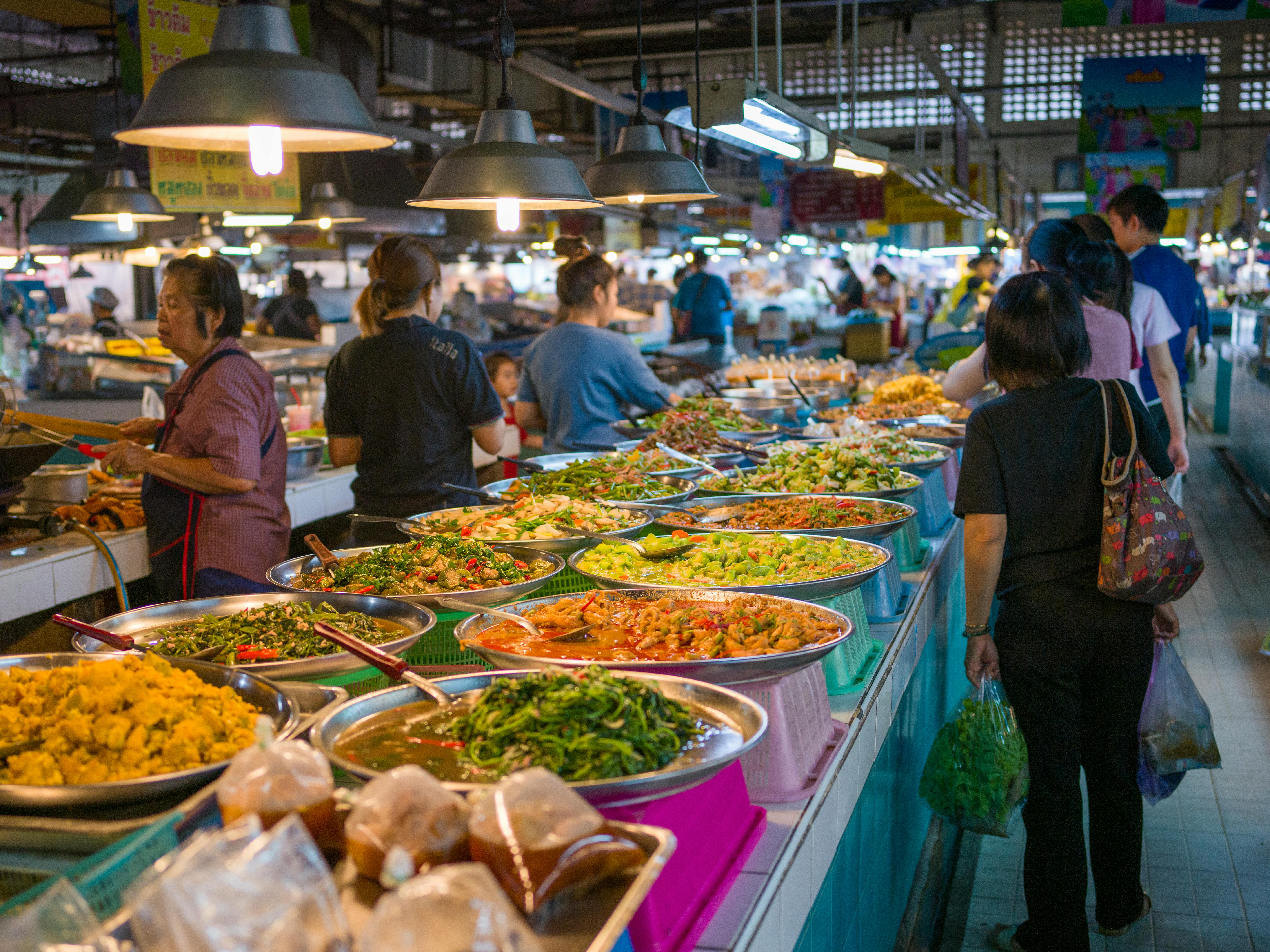
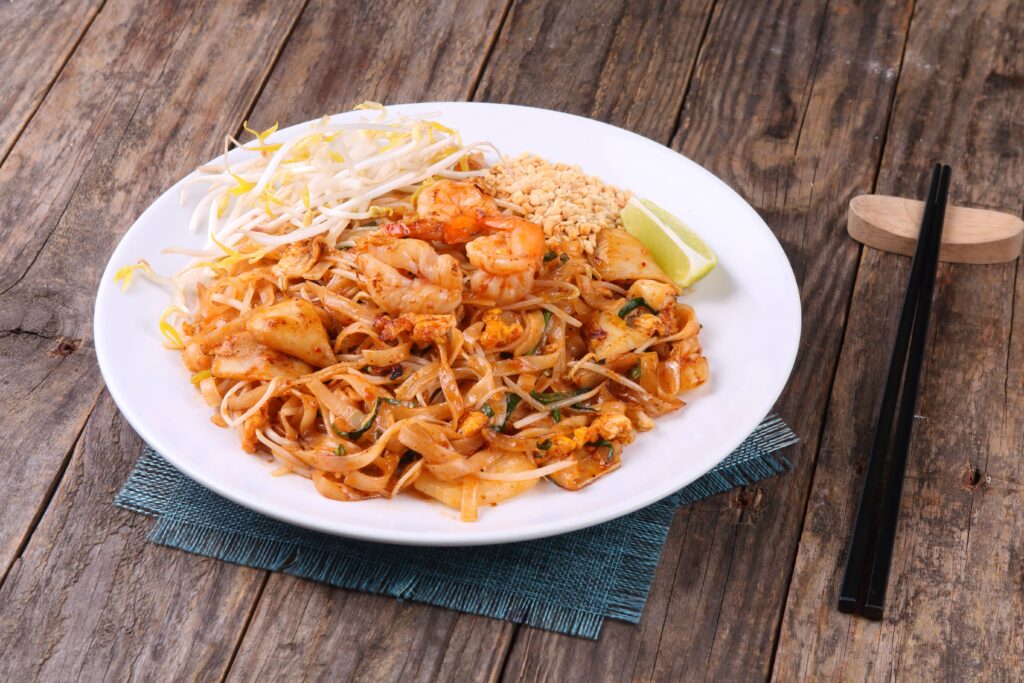
Thai food is one of the great cuisines of the world. It is not one thing. Northern Thai food and southern Thai food and central Thai food are as different from each other as Italian and Spanish. The pad thai served to tourists at Khao San Road has roughly the same relationship to actual Thai food as a chicken tikka masala has to a Hyderabadi biryani.
Here’s how to eat well.
The Queue Rule Eat where there’s a queue. A queue means high turnover. High turnover means food doesn’t sit. A queue means locals have made a collective decision about quality. These are all things you want.
The Plastic Stool Rule The plastic stool establishments — small, no menu in English, serving three or four dishes — are almost always excellent. Point at what someone else has. This works 90% of the time.
The Dishes Worth Seeking
Pad Kra Pao — minced pork or chicken stir-fried with holy basil, oyster sauce, fish sauce, and a fried egg on top. The true national dish, eaten for breakfast, lunch, and dinner by millions of Thais every day. Should cost 50–70 baht (£1.15–1.60) from a street stall.
Boat Noodles (Kuay Teow Rua) — small bowls of rich broth with noodles and meat, originally sold from boats in the canals. Victory Monument in Bangkok has the highest concentration of boat noodle stalls in the country. 35–40 baht per bowl (£0.80–0.90). Order several.
Khao Soi — a northern Thai coconut curry broth with egg noodles, served with pickled mustard greens, shallots, and lime. The defining dish of Chiang Mai. Available at Khao Soi Khun Yai (the old lady’s stall near the Nimmanhaemin intersection) for 60 baht (£1.40).
Som Tum — green papaya salad. Crunchy, sour, salty, and spicy. The national palate cleaner. Made to order, specify “mai phet” (not spicy) or “phet nit noi” (a little spicy) unless you want something that will reorganise your relationship with capsaicin.
Mango Sticky Rice — ripe yellow mango over glutinous rice, coconut cream poured over the top. A dessert that is so consistently good across Thailand that I find it difficult to have a bad one. 60–80 baht (£1.40–1.85). Or Tor Kor Market in Bangkok does the finest version I’ve encountered.
Hoi Tod — crispy oyster omelette, Yaowarat Road in Bangkok’s Chinatown, late evening. Not for everyone. For the right person, life-changing.
The Markets
Or Tor Kor Market, Bangkok — the best produce market in Bangkok. Also has prepared food stalls that are excellent. Not the cheapest, but the quality is significantly higher than the tourist night markets.
Warorot Market, Chiang Mai — a covered market in the eastern part of the city that functions as the daily shopping destination for the local population. Dried goods, textiles, fresh food, prepared dishes. Go at 7am.
Chatuchak Weekend Market — for everything else: clothes, homewares, handicrafts, street food. Saturday and Sunday only. The food section is in sections 26–27.
Night Bazaar, Chiang Mai (daily) — good for browsing. Reasonable for buying. Best for eating from the food stalls at the back where the tour groups don’t reach.
Practical Information
Visa
UK passport holders get a 30-day visa exemption on arrival. No application, no fee, no advance registration required. You’ll receive a stamp in your passport at the immigration counter. Extensions of 30 days are available from immigration offices within Thailand for 1,900 baht (about £44).
If you’re planning to stay longer than 60 days, look into the TR (Tourist) visa available in advance from the Thai embassy in London.
Currency
Thai Baht (THB). £1 ≈ 44 baht at the time of writing (verify before you travel — exchange rates move).
ATMs are ubiquitous throughout Thailand. Most charge a fixed fee of 220–250 baht (around £5–6) per withdrawal on top of whatever your bank charges. The Wise card (formerly TransferWise) is the best option for minimising fees — it uses the real exchange rate with no markup and has limited free ATM withdrawals per month.
Avoid the “dynamic currency conversion” option at ATMs — always pay in Thai baht rather than having the machine convert to pounds.
Getting a SIM
Buy a tourist SIM at the airport on arrival. AIS, DTAC, and TrueMove are the three main networks. A 30-day SIM with 30–50GB of data costs 300–500 baht (£7–12). AIS has the most consistent coverage in rural areas and islands. Data speeds in cities are excellent; remote islands vary.
Alternatively, buy an Airalo eSIM before you travel — you can activate it before you land and have data from the moment you step off the plane.
Safety
Thailand is a relatively safe destination for UK travellers. The most common problems are: motorbike accidents (the single most significant risk), bag snatching in crowded tourist areas (less common than in many cities but not unknown), and scams (see above re: tuk-tuk gem shop tours).
Drink-spiking occurs in areas with heavy nightlife — Khao San Road, Koh Phangan Full Moon Party, Koh Samui’s Chaweng. Keep your drink with you. Don’t accept drinks from people you’ve just met in a bar.
Health
No mandatory vaccinations for UK travellers, but recommended: Hepatitis A, Typhoid, and ensuring your routine vaccinations are up to date. Malaria is a risk in some border regions and jungle areas — not in major tourist destinations. Consult a travel clinic before you go.
Sun and heat: the sun in Thailand is significantly stronger than in the UK. Factor 50 sunscreen, applied before you go outside, not when you arrive at the beach. Reef-safe formulas — the marine ecosystems will thank you.
Travel insurance: not optional. Medical evacuation from a remote Thai island costs £15,000–50,000. Insurance for two weeks costs £25–45. Do the maths.
Etiquette
The things that matter:
- Temple dress code: shoulders and knees covered. Most temples have sarongs available for hire or loan at the entrance.
- The monarchy: deeply revered. Do not make jokes. Do not make political statements. This is not a cultural nuance — it has legal consequences under Thai law.
- The wai: the palms-pressed greeting. You don’t need to initiate it, but returning it when someone greets you this way is respectful.
- Shoes: off at temple entrances and many guesthouses. Follow what others are doing.
The 7-Day Itinerary — The Route That Works
This is the itinerary I’d give to someone planning their first trip and taking one week. It’s not the only way to do Thailand. It’s the one that flows naturally, doesn’t waste time backtracking, and covers north, central, and south without feeling rushed.
Days 1–2: Bangkok Land, recover. Day 2: Grand Palace (arrive by 8am), Wat Pho, Chinatown evening.
Day 3: Fly to Chiang Mai Morning flight from Suvarnabhumi to Chiang Mai (book in advance on AirAsia — from £25–35). Afternoon: Nimman Road area, mango shake, acclimatise. Evening: whichever walking street market falls on your day.
Day 4: Chiang Mai Doi Suthep at 7am. Come back down, recover. Cooking class in the afternoon (book via GetYourGuide — from £25). Night: find a local restaurant and order Khao Soi.
Day 5: Fly to the Islands Morning flight from Chiang Mai to Krabi (via Bangkok or direct — check AirAsia). Ferry to Koh Lanta from Klong Jilad pier. Check in. Beach. Seafood dinner.
Day 6: Island Day Hire a kayak or book a snorkelling trip (from £20–35, book the night before). Afternoon: nothing. This is the point.
Day 7: Head Home (or Stay) Don’t book a flight before 3pm. Island ferry logistics are unpredictable. Ferry back to the mainland from Koh Lanta, connect to Krabi airport for your Bangkok connection and onward flight home.
The Total Cost Return flights UK → Bangkok: £450–650 (booked 3 months ahead) Bangkok → Chiang Mai flight: £25–35 Chiang Mai → Krabi flight: £35–60 Island ferry: £15–25 7 nights accommodation (budget–mid): £120–200 Food and activities (7 days): £150–200 Total: £800–1,150 all in
For the full day-by-day version with accommodation picks, restaurant names, exact ferry times, and what to book in advance, the 7 Days in Thailand Itinerary PDF is available on Gumroad for £9.
Final Thailand Thoughts
Thailand rewards people who slow down.
The best thing I’ve found there wasn’t on any list: a Tuesday afternoon in Pai when I had no plans and walked in the wrong direction and ended up at a waterfall I couldn’t name with three local kids who were swimming and found my inability to communicate in Thai extremely funny.
That doesn’t happen if you’ve booked every day of a week-long trip. It happens in the gaps. Leave some.
Have a question about Thailand that this guide doesn’t answer? Drop it in the comments below — I read every one and reply to most.
Planning a longer trip? The SE Asia 3-Week Route PDF covers Thailand → Vietnam → Cambodia → Laos with day-by-day structure and real costs.