



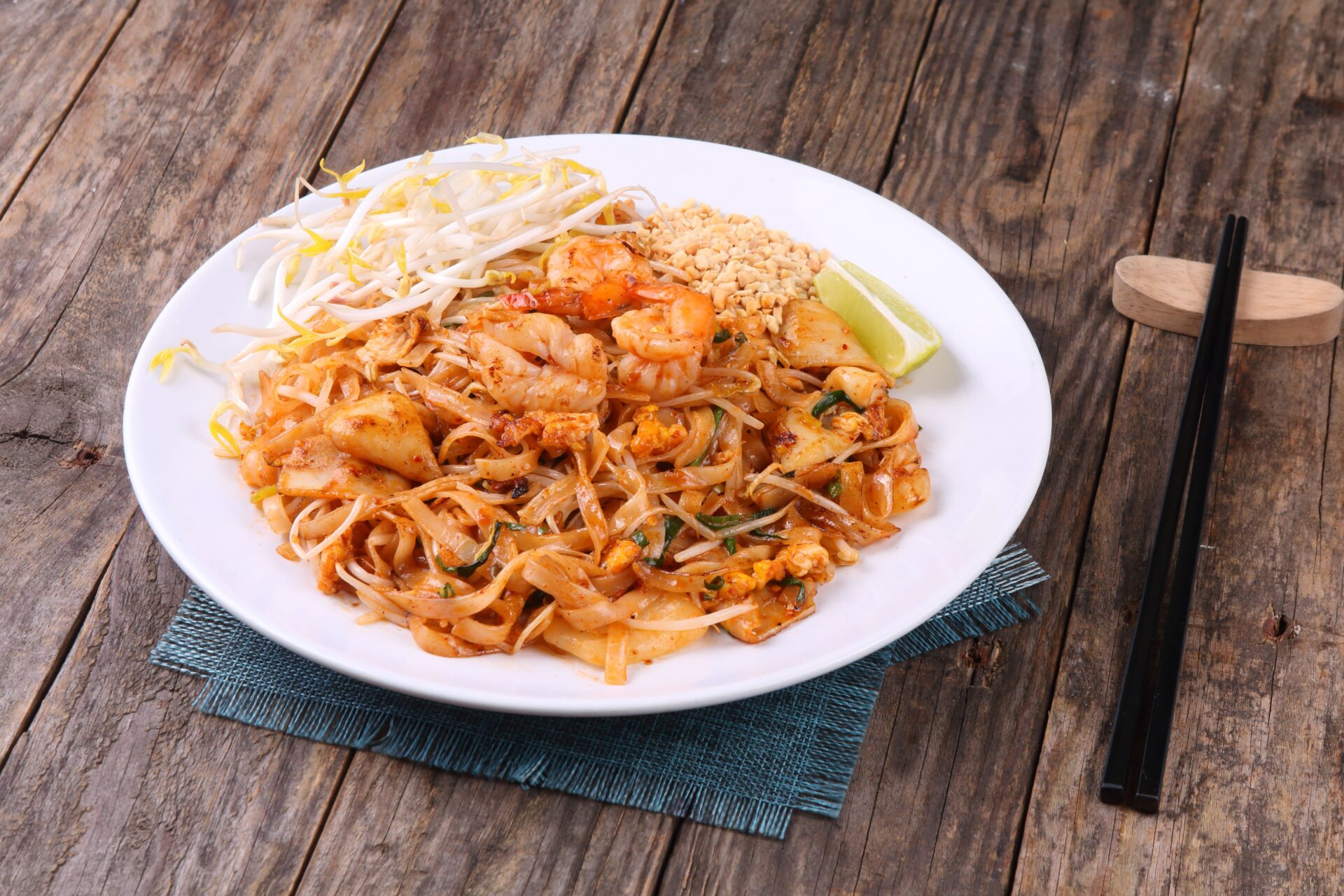
The specific pad thai problem: the recipe in the UK recipe book that uses the ketchup (the common substitution for the tamarind paste that British supermarkets have not historically stocked consistently) produces a dish that is identifiably related to pad thai in the way that the supermarket sushi roll is identifiably related to the omakase at the counter — structurally similar, fundamentally different. The recipe below uses the tamarind paste (available in every UK Asian supermarket and on Amazon), the dried shrimp (optional but correct), and the specific cooking sequence (the noodle first, the egg second, not simultaneously) that the Bangkok street cart has been using since the 1940s. The context: pad thai is not an ancient Thai dish. It is a 1940s invention of the Thai wartime government.
Reading time: 7 minutes | Last updated: 2026
The Context
Pad thai was invented in 1944. The Phibun government of Thailand, seeking to promote Thai nationalism and reduce rice consumption during a rice shortage, promoted the stir-fried noodle dish as the national street food. The dish was designed by Plaek Phibunsongkhram’s kitchen and distributed as a recipe to be sold from street carts — the government-promoted street food, the nationalist dish.
This is not a diminishment. The pad thai that the Bangkok street cart vendor has been refining for 80 years is the specific product of the national decision to make this dish everywhere, every day, at the price that the working population could afford. The refinement over 80 years of daily production at scale gives the dish its specific quality.
The tamarind paste is the key. The ketchup substitute (the British recipe’s accommodation for the ingredient gap) changes the acid profile of the sauce from the specific tamarind sourness to the vinegar-and-tomato hybrid. Both are edible. Only one is pad thai.
The Recipe
Serves 2. The restaurant pad thai is cooked one portion at a time in the single-portion wok — the home version scales by repeating rather than doubling.
The Pad Thai Sauce (make in advance)
Ingredients:
- 3 tbsp tamarind paste (the block tamarind dissolved in hot water and strained, or the ready-made tamarind paste)
- 2 tbsp fish sauce (nam pla — the Thai fish sauce specifically, not the Vietnamese nước chấm)
- 1.5 tbsp palm sugar (or light brown sugar — the palm sugar gives the specific caramel note that the white sugar does not)
- 1 tsp oyster sauce
Method: Combine in a small saucepan over low heat, stirring until the sugar dissolves. Taste: the sauce should be simultaneously sour (the tamarind), salty (the fish sauce), and sweet (the sugar). Adjust in the direction of your taste preference. Make enough for 4 servings and store in the refrigerator for up to 2 weeks.
The Pad Thai
Ingredients (per portion):
- 80g dried rice noodles (the medium-width flat rice noodle — the sen lek in Thai, the 3mm width noodle, soaked in cold water for 30 minutes until pliable but not soft)
- 100g protein (the traditional: dried shrimp + tofu; the accessible: 100g prawns or 100g chicken breast thinly sliced)
- 2 eggs
- 3 tbsp pad thai sauce (from above)
- 1 tbsp vegetable oil
- 2 tbsp dried shrimp (gung haeng — optional but correct; available at the Asian supermarket, gives the specific umami depth that the fresh shrimp alone does not)
- 30g firm tofu, cubed and fried until golden (optional but traditional)
- 2 tbsp preserved turnip (chai poh — the salted, preserved radish, finely chopped; available at the Asian supermarket; gives the specific sweet-salty crunch)
- 2 spring onions, sliced into 3cm lengths
- Handful of beansprouts
Garnish (the non-negotiable):
- Crushed roasted peanuts
- Lime wedge
- Chilli flakes (prik bon)
- Sugar (white, at the table for the diner to add)
- Fish sauce (at the table)
The Cooking Method
1. The wok at maximum heat. The wok must be smoking before the oil goes in — the wok hei (the breath of the wok) requires the temperature that the typical home hob approaches but does not fully achieve. The cast iron wok retains heat better than the stainless steel for this purpose.
2. Add the oil, then the tofu (if using). Fry until the tofu surfaces colour (30 seconds). Add the dried shrimp and the preserved turnip. Stir for 15 seconds.
3. Add the drained noodles. Pour the sauce over the noodles immediately. Stir to coat the noodles, pressing them flat against the wok surface — the noodles must contact the wok surface to develop the specific char. 45 seconds.
4. Push the noodles to one side of the wok. Crack both eggs into the empty space. Scramble briefly (10 seconds) then fold the noodles over the egg before the egg is fully set — the egg should be ribbons through the noodle, not a scrambled mass beneath it.
5. Add the protein (the prawns, the chicken). Stir through. 60 seconds for prawns (they cook in the residual heat); 90 seconds for the chicken.
6. Add the spring onion and the beansprouts. Toss once. Remove from the heat immediately — the beansprouts must retain crunch.
7. Plate, garnish, serve with the lime wedge and the table condiments.
The table condiments: The specific Thai table setup for pad thai includes 4 condiments in small vessels: sugar, fish sauce, chilli flakes, and chilli in vinegar. The diner adds each to personal preference after the first bite. This is not a sign that the dish is under-seasoned — it is the specific Thai approach to the individual calibration of the balanced dish.
Where to Eat the Original in Bangkok
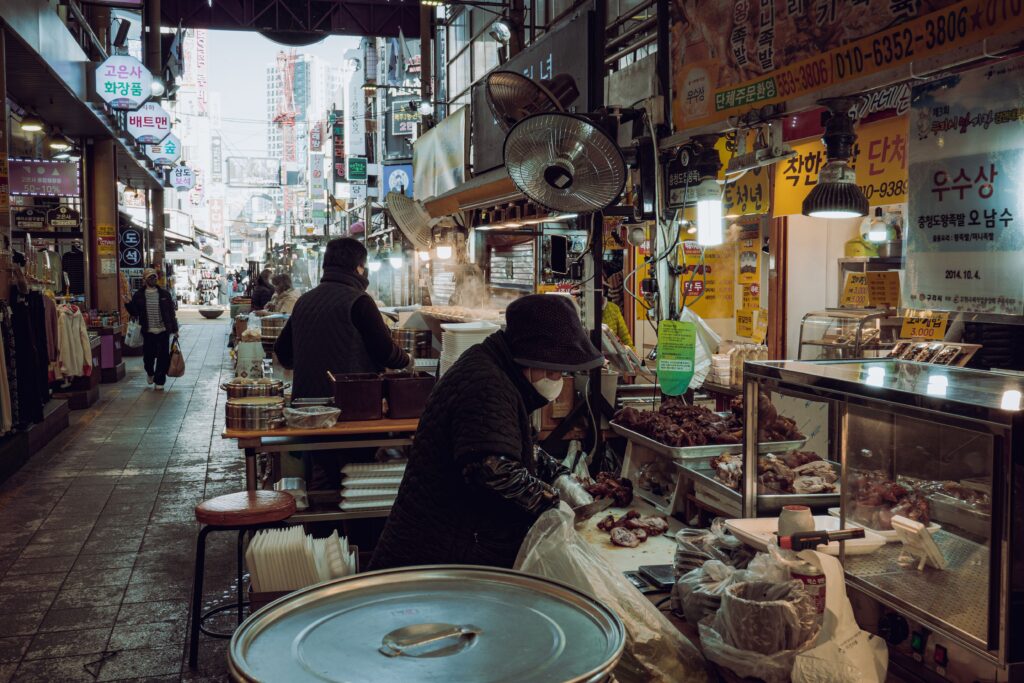
The Bangkok street pad thai: the Thip Samai (313 Maha Chai Road, Samran Rat — the pad thai restaurant that Bangkok residents use as the reference, the queues from 5pm daily, the wrapped-in-egg pad thai (pad thai hor khai — the pad thai wrapped in a thin omelette, the egg enclosing the noodle in the specific Thip Samai preparation that no other Bangkok stall replicates)): THB 90-200 / £1.99-4.42.
The hoy tod (the oyster omelette — the alternative street food order at the same Bangkok market stall, the oyster in the egg in the starch batter on the cast-iron pan): the dish to order when the pad thai queue is 25 minutes.