


The breakfast ranking for the traveller who has discovered that the quality of the first meal of the day determines more about the quality of the day than any other single variable: Vienna for the Frühstück that is not a meal but a ceremony (the Viennese café breakfast at the marble table, the Melange coffee, the Semmel roll with the butter and the Waldviertler honey, the boiled egg, the newspaper on the reading rack, the specific understanding that the Viennese café is a room hired by the coffee for as long as the coffee lasts), Lisbon for the pastel de nata at 8am at the Pastéis de Belém when the custard is still warm and the cinnamon is freshly ground, and Istanbul for the Turkish breakfast spread (kahvaltı) that requires two people to finish and that the Karaköy lokantası assembles from 14 separate small dishes at the price that makes the London hotel breakfast feel like a provocation.
Reading time: 7 minutes | Last updated: 2026
1. Vienna — The Café as Institution
The Viennese Frühstück at the Kaffeehaus is not breakfast in the nutritional sense. It is the specific ritual that the 19th-century Viennese bourgeoisie developed — the café as the third space between home and office, the room where the writer wrote and the politician plotted and the merchant read the newspaper and the philosopher argued, all sustained by the single coffee for as long as the coffee lasted.
The specific Vienna breakfast at the Café Landtmann (Dr.-Karl-Lueger-Ring 4 — the most celebrated surviving Viennese café, the table available for as long as you occupy it with a coffee, the newspaper on the reading rack provided free): the Großes Frühstück (the large breakfast — the Melange (the Viennese coffee, the espresso with the hot milk), the Semmel (the Kaiser roll, the specific Viennese bread), the butter, the honey, the orange juice, the boiled egg): €14.50 / £12.50.
The Café Hawelka (Dorotheergasse 6 — the oldest operating Viennese café, the buchteln (the sweet yeast pastry filled with the plum jam, baked in the afternoon and available from 10pm — the specific Hawelka timing): €3.80 / £3.28 per piece.
Why Vienna is first: The Viennese café gives the breakfast as a philosophical position — the understanding that the first two hours of the day are not to be hurried. No European city has produced this specific institution in the same form.
2. Lisbon — The Pastel de Nata
The pastel de nata at the Pastéis de Belém (Rua de Belém 84-92 — the bakery that invented the custard tart in 1837 from the recipe that the monks of the Jerónimos Monastery had used since the 18th century): the tart still warm from the oven (the baked at 2-hour intervals, the tart available fresh from 8am), the cinnamon and the powdered sugar dispensed from the counter shakers, the bica (the Lisbon espresso, the coffee served in the small cup with the thick crema):
Cost: €1.30-1.50 / £1.12-1.29 per tart. The most affordable luxury breakfast in Europe.
The full Lisbon breakfast circuit: The torrada (the toast with the butter — the Portuguese toast that uses the pão de forma, the specific Portuguese bread, the toast that arrives at the counter already buttered and sliced diagonally, the breakfast item that requires no English), the galão (the milky coffee, served in the tall glass, the specific Lisbon version of the café con leche):
Why Lisbon is second: The pastry alone would give Lisbon a place on this list. The Pastéis de Belém tart warm from the oven is the most perfect single breakfast item in Europe.
3. Istanbul — The Turkish Breakfast
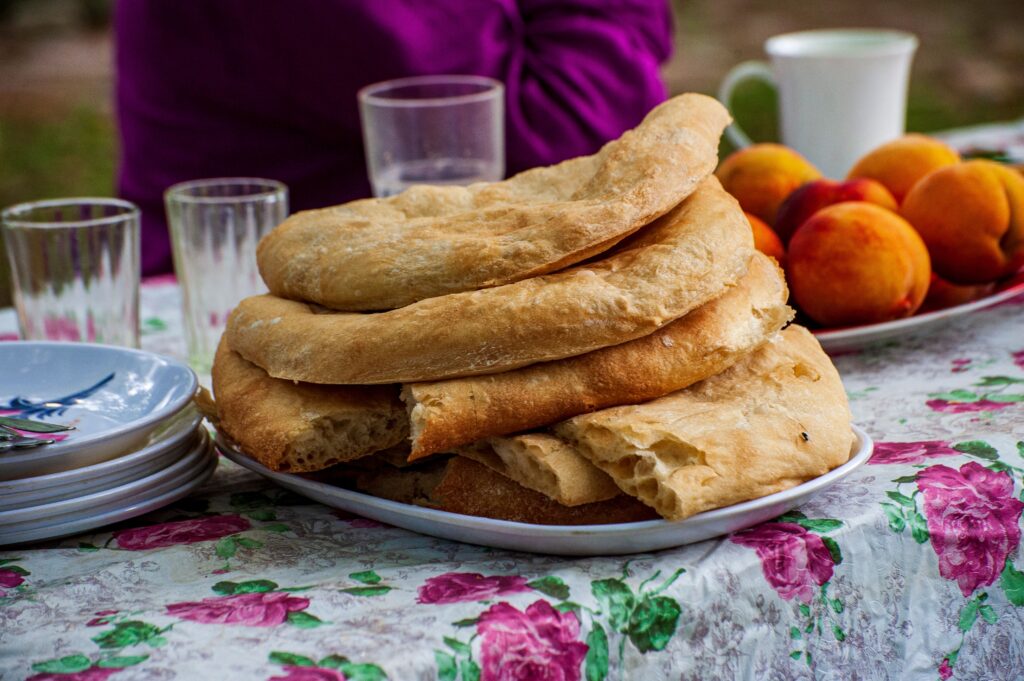
The kahvaltı (the Turkish breakfast — the spread that requires 14 dishes and two people and 90 minutes to complete): the simit (the sesame ring bread, carried by the simit vendor throughout Istanbul from 6am), the white cheese (beyaz peynir — the feta-adjacent Turkish cheese), the kaşar (the yellow cheese), the olives (the black and the green, the olive grower’s morning and the olive trader’s morning combined), the bal (the Turkish honey) and the kaymak (the thick clotted cream, the specific Anatolian dairy product), the sliced tomato and the cucumber, the menemen (the egg scrambled with the tomato and the pepper in the copper pan), the sucuk (the dried spiced sausage) fried with the egg, and the çay (the Turkish tea, the small tulip-shaped glass, the tea brewed in the double pot for the specific Istanbul clarity):
Cost: TRY 200-400 / £5.19-10.38 per person for the full spread.
Where in Istanbul: The Karaköy Güllüoğlu courtyard (the baklava bakery that serves the full Turkish breakfast in the courtyard of the shop); the neighbourhood tea house in the Balat district (the most local-facing Turkish breakfast available in Istanbul, the specific neighbourhood Istanbul morning visible from the tea house window).
4. Naples — The Cornetto and the Caffè
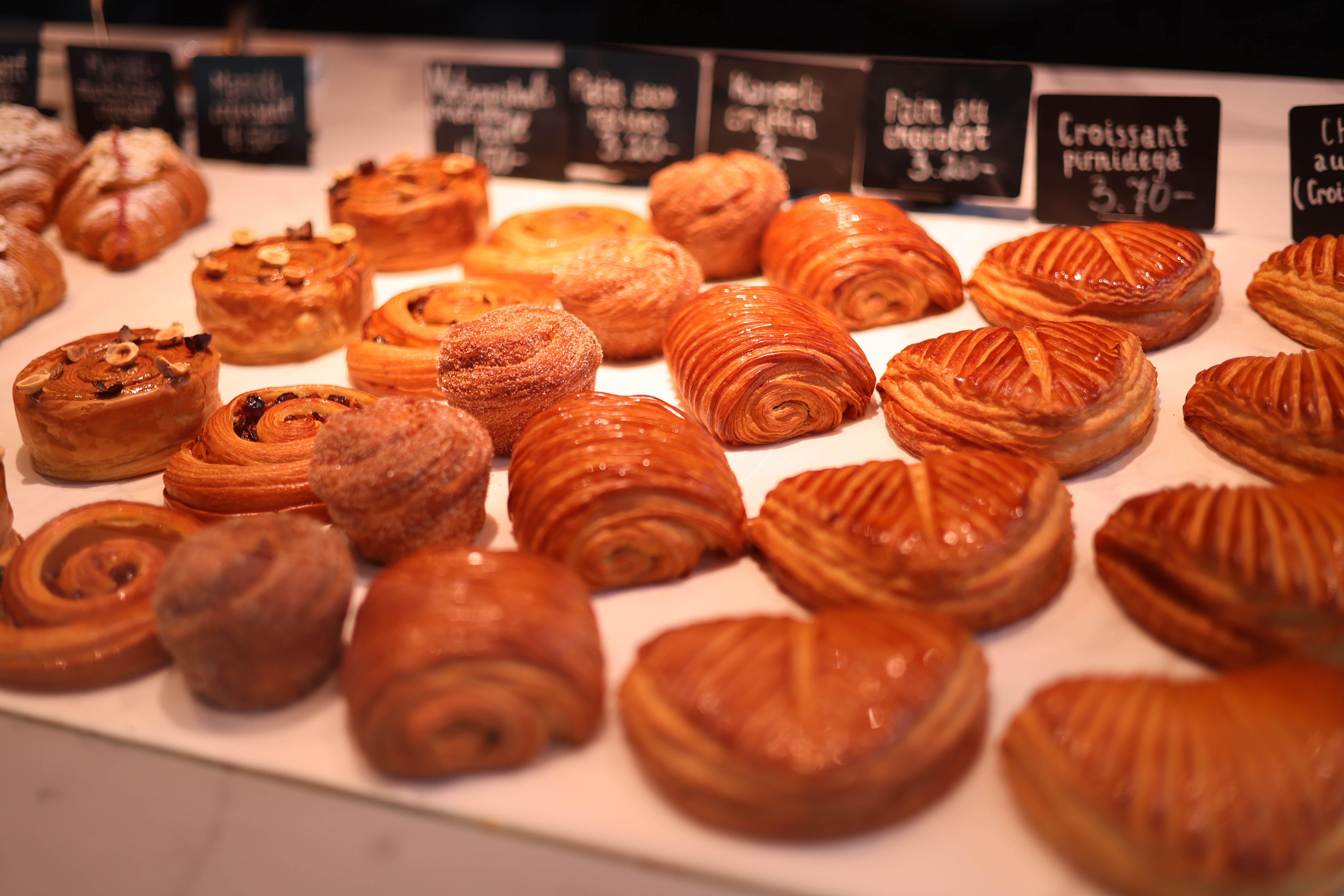
The Naples breakfast at the bar (the cornetto — the Italian croissant, the al forno version (baked, not fried), the alla crema (filled with the pastry cream), or the vuoto (empty, for the Napolitano purist) — and the caffè (the espresso, the Naples caffè at the specifically Neapolitan temperature and pressure that the Naples coffee tradition considers the only correct version)):
The Caffè Gambrinus (Via Chiaia 1-2 — the 1860 café, the most historic in Naples, the pastry case containing the sfogliatelle (the shell-shaped pastry, the layered filo dough filled with the ricotta and the citrus — the most specifically Neapolitan pastry) and the baba al rum (the yeast cake soaked in rum syrup)):
Cost: €1.20-1.50 / £1.03-1.29 per espresso at the bar (standing). The Naples bar breakfast culture (the standing coffee at the counter, the 90-second transaction, the specific informality of the Neapolitan morning) is the most efficient form of urban breakfast in Europe.
5. Copenhagen — The Smørrebrød at 8am
Full guide in Copenhagen in 48 Hours and Best Street Markets in Europe. The specific ranking entry: the Torvehallerne at 8:30am gives the finest single café-market breakfast in Northern Europe. The Coffee Collective flat white (DKK 46 / £5.11) and the assembled smørrebrød from the Hallernes counter (DKK 60-90 / £6.67-10) give the breakfast that the Copenhagen resident uses to start the week.