



The specific Georgian food argument: the khachapuri (the bread boat filled with the egg and the cheese and the butter that you tear apart and dip and eat and then want again), the khinkali (the soup dumpling whose structural integrity requires the specific pinch-and-twist that takes 3 minutes to learn and produces the soup explosion when breached), the mtsvadi (the pork skewer grilled over the vine wood, the specific smoke that the vine wood gives), and the qvevri orange wine (the skin-contact white wine aged underground in the clay amphora, the drink that the natural wine movement adopted and that the Georgian winemaker has been making in the same way for 8,000 years without requiring the natural wine movement’s approval). Georgia feeds its guests as an act of hospitality so fundamental that the word for guest — sტუმარი (stumari) — shares its root with the word for god. This guide explains what to eat, where to eat it, and what it means.
Reading time: 9 minutes | Last updated: 2026
Georgia is on every food travel list published in the past five years — the country’s culinary tradition (the Silk Road crossroads, the Persian-Ottoman-Russian-Caucasian food influences overlaying the Georgian-Kartvelian base) gives a cuisine that is simultaneously familiar to the European palate (the bread, the cheese, the grilled meat) and entirely unlike anything the European food tradition produces.
The guide below covers the specific dishes, the correct eating sequence, and the specific places (in Tbilisi, in Kakheti, and in the high mountain regions) where each dish is available at its best.
The Essential Dishes
Khachapuri
The khachapuri (the cheese bread — the Georgian national dish in the specific sense that the Adjaran khachapuri is the most internationally recognised and the most immediately comprehensible):
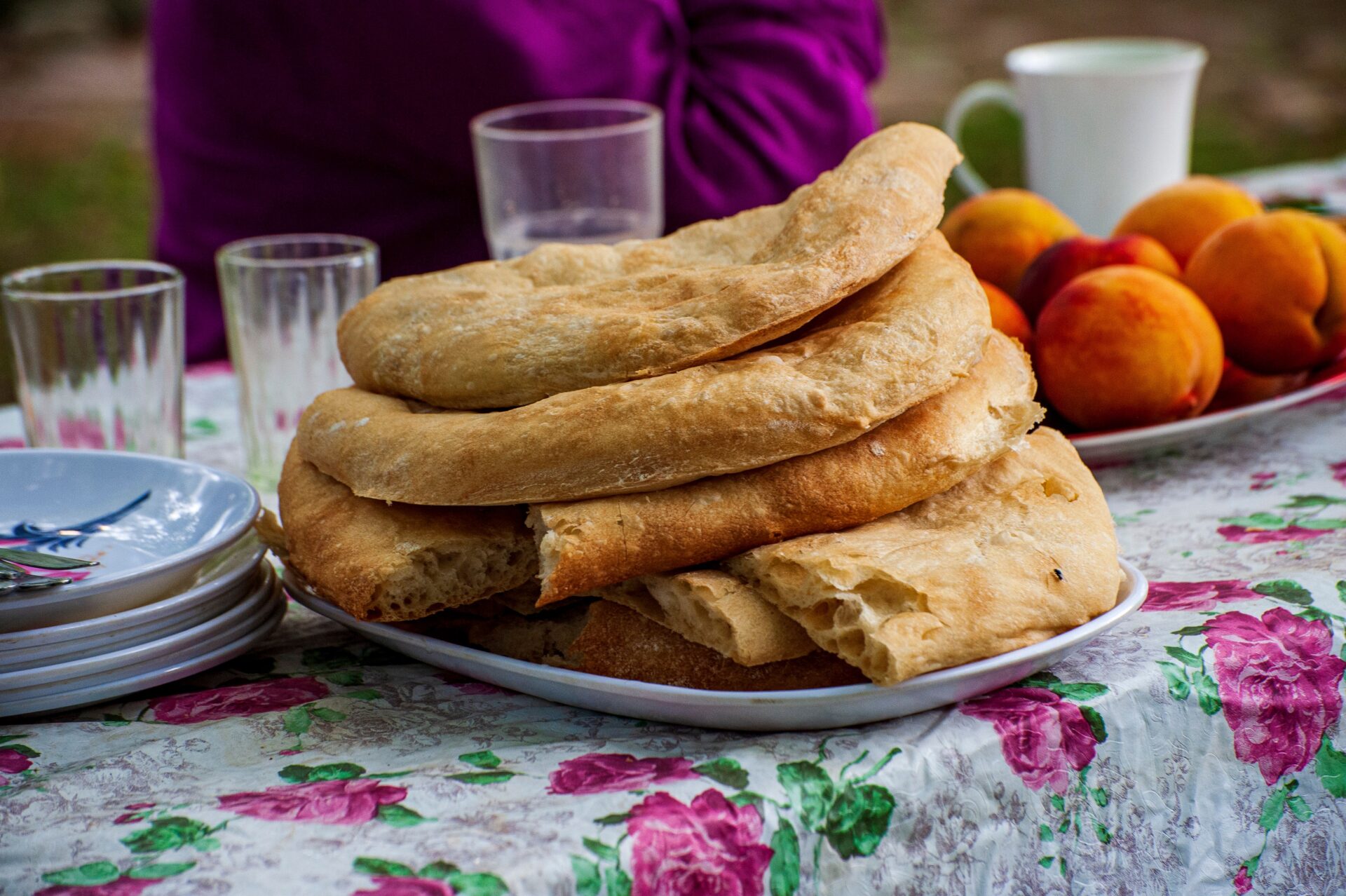
The Adjaran Khachapuri (the boat): The bread shaped into the boat (the puri — the leavened Georgian bread dough, the specific texture between the flatbread and the focaccia), the interior filled with the imeruli cheese (the Georgian fresh white cheese, the specific salinity that distinguishes it from the ricotta it resembles), the egg cracked into the cheese at the moment of service, the butter added on top, the dish arriving at the table with the cheese still bubbling.
The eating method: tear the pointed end of the bread (the prow of the boat — the specific bread-end that is the first sacrifice to the cheese), dip it into the cheese and egg mixture that has been stirred together at the table, eat. Repeat until the bread has been consumed and the cheese mixture requires the fork. The specific pleasure of the Adjaran khachapuri is in the tearing and dipping — the dish does not yield to the fork as its first interaction.
The Imeruli Khachapuri (the round): The Imereti-style khachapuri (the round bread with the cheese inside rather than on top — the bread baked with the cheese enclosed, the cheese melting inside the crust, the dish served as the bread loaf to be cut at the table) is the version more commonly found outside Adjara. Less dramatic than the boat; equally correct.
Where to eat it: Every Georgian restaurant, every Georgian household, and the Retro bakery in the Abanotubani (Tbilisi) for the earliest morning khachapuri, available from 6am.
Price in Tbilisi: GEL 8-15 / £2.24-4.19 per khachapuri.
Khinkali
The khinkali (the Georgian soup dumpling — the twisted pasta parcel filled with the spiced minced meat and the meat broth, the specific pinch-and-twist closure at the top that creates the khinkali’s signature topknot):
The eating method (and why it matters): the khinkali is a soup dumpling — the interior contains both the meat filling and the liquid broth that forms during cooking. The incorrect eating method (the fork-and-knife approach) releases the soup onto the plate before the eating — the broth is lost. The correct method: hold the topknot (the kudi — the knot of dough at the summit, the part that is not eaten but serves as the handle), bite a small hole in the side of the dumpling, suck the broth, then eat the dumpling. Count the topknots (the Georgians count the consumed topknots as the measure of the feast — the pile of topknots on the plate is the evidence of the meal).
The filling variants: The standard filling (the lamb and pork mince, the coriander, the onion, the black pepper, the specific spice mix of the Georgian dumpling tradition), the mushroom filling (the wild mushroom from the Caucasus forest), and the potato and cheese filling (the non-meat khinkali, the specific vegetarian version).
Where to eat it: The Khinkali Queen (Sharden 3, Tbilisi) and the Machakhela chain (multiple Tbilisi locations) for the accessible tourist-facing khinkali. The roadside khinkali house on the Georgian Military Highway (the specific khinkali available only at the mountain roadside — the dumpling that the road traveller eats with the hands in the car park, the mountain visible above):
Price in Tbilisi: GEL 1.50-2.50 / £0.42-0.70 per khinkali (the dumpling sold individually — the standard order is 8-12 per person).
Mtsvadi
The mtsvadi (the Georgian pork skewer — the cubed pork marinated in the pomegranate juice and the white wine and the onion, the skewer grilled over the vine wood coals): the vine wood is the specific Georgian fuel for the mtsvadi — the smoke from the pruned grapevines gives the specific aromatic compound that the charcoal and the gas cannot replicate.
The tkemali: The green plum sauce — the tkemali, the wild green plum purée with the garlic and the pennyroyal herb (the specific Georgian herb unavailable in the UK), served with the mtsvadi as the standard accompaniment. The combination (the smoke of the vine wood mtsvadi, the sourness of the tkemali, the Georgian white wine in the glass beside) is the specific Georgian outdoor meal that every Georgian supra eventually provides if it is held outside.
Where to eat it: Any Georgian restaurant with an outdoor grill. The roadside restaurants on the Georgian Military Highway between Mtskheta and Kazbegi give the specific mtsvadi with the mountain behind — the most atmospheric single eating environment in Georgia.
The Supra
The supra (the Georgian feast — the formal and the informal feast that the Georgian hospitality tradition produces for any occasion that warrants a gathering): the most important single cultural experience available in Georgia and the one most difficult to access without the specific invitation.
The tamada (the toastmaster — the role assigned at every supra, the person responsible for leading the toasts in the prescribed sequence): the Georgian toast is not the British clink-and-sip. The Georgian toast is a speech — the tamada speaks for 2-5 minutes on the subject of the toast (the first toast to Georgia, the second to peace, the third to the family, and so on through the prescribed sequence), the guests listen, and then everyone drinks the wine together.
The wine at the supra is drunk in a specific sequence and in a specific quantity — the tamada sets the pace. The guest who drinks ahead of the tamada is committing the specific Georgian social error.
How to access the supra: The most accessible supras for the visitor are the cooking class supras offered by the Tbilisi food tour companies (the cooking class that ends in the meal is the scaled-down supra), the family guesthouse supper (the guesthouse in Kakheti or Kazbegi whose host sets the table for the guests), and the cultural tour supra (the Tbilisi tour operator who arranges the village supra visit). GEL 80-200 / £22.38-55.94 per person for the organised supra experience.
The Qvevri Wine
The qvevri wine (the full guide in 7 Days in Georgia and Best Wine Regions for Non-Experts):
The amber wine: The skin-contact white wine fermented in the clay amphora underground — the amber colour from the extended skin contact (where conventional white wine has the skins removed before fermentation, the Georgian traditional method keeps the skins, the pips, and the stems in contact with the fermenting wine for months), the tannin structure that gives the amber wine its texture, and the specific flavour compounds (the walnut, the dried apricot, the tea, the honey) that the clay vessel and the extended maceration produce.
The wine with the food: The Georgian amber wine is the correct pairing for the Georgian food — the tannin and the texture of the orange wine cut through the richness of the khachapuri cheese in the way that a light white wine cannot. The Georgians discovered this 8,000 years ago and have not needed the sommelier’s confirmation.
Where to buy: The Ghvino Underground wine bar (Sharden 14, Tbilisi — the natural wine bar with the most comprehensive qvevri wine list in Tbilisi), the family winery in Kakheti (the Pheasant’s Tears, the Iago’s Wine, the Schuchmann Wines — the wineries that receive visitors in the Signaghi and Telavi area).