


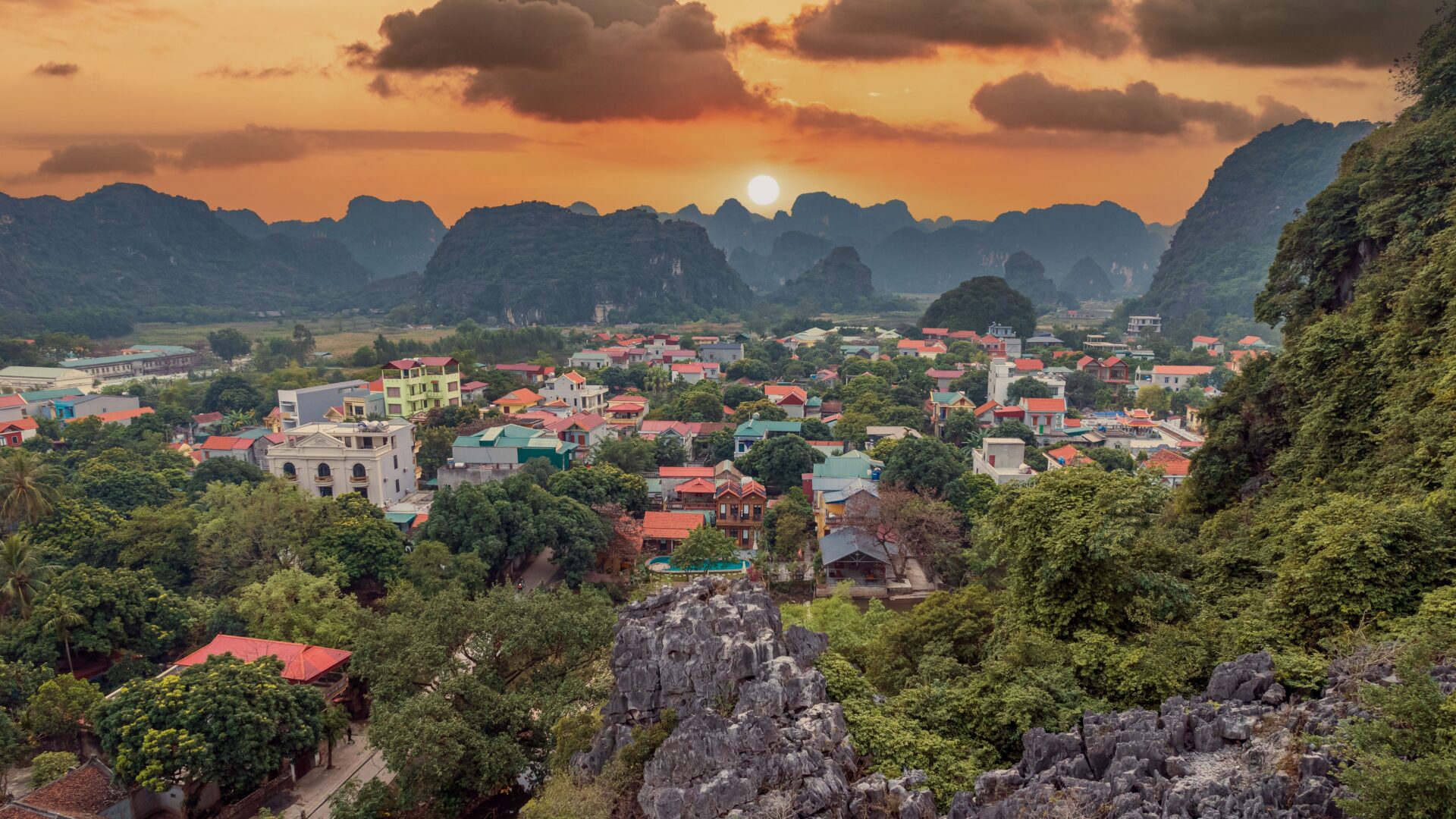
The most frequently asked question in UK travel planning after “where should I go in Southeast Asia?” is “Thailand or Vietnam?” — and the answer is: they are not substitutes for each other. Thailand gives the island infrastructure, the muay thai, the jungle trek infrastructure, and the specific Bangkok street food density. Vietnam gives the northern mountain landscape, the Hội An tailors, the Ha Long Bay, and the specific Vietnamese culinary tradition that is more regionally varied and more historically layered than Thailand’s. This guide makes the choice clear by being specific about what each country actually gives and what it doesn’t.
Reading time: 8 minutes | Last updated: 2026
The Honest Framework
The Vietnam-vs-Thailand decision is made 90% of the time on one of three bases:
- The beach: Thailand wins. Koh Lanta, Koh Samui, the Phi Phi islands give the sand-and-snorkel holiday infrastructure that Vietnam’s beaches (Mỹ Khê, Phú Quốc) approach but do not equal.
- The history: Vietnam wins. The Cham temples at Mỹ Sơn, the Imperial City at Huế, the Ancient Town of Hội An, the war history of the 20th century — Vietnam’s historical layering (Chinese, Cham, French, American) is more visible and more varied than Thailand’s.
- The food: Draw — but for different reasons. Thai street food (pad kra pao, boat noodles, the Isaan grill) is the densest single street food tradition in the world by stall count. Vietnamese food (the pho, the bánh mì, the bún bò Huế, the cao lầu at Hội An) is the most regionally varied in Southeast Asia — the same dish prepared differently in Hanoi, Hội An, and Ho Chi Minh City with distinct local identities.
Category by Category
The Beach
Thailand wins for:
- The Andaman coast (Ko Lanta, the Phi Phi Islands, Railay Beach) — the most accessible world-class beach in Southeast Asia from the UK
- The Gulf coast (Ko Samui, Koh Phangan, Ko Tao) — the dive training capital of Asia
- The island infrastructure (the bungalows, the dive schools, the long-tail boats) — 40 years of beach tourism investment visible in every coconut palm
Vietnam wins for:
- Phú Quốc (the island off the Cambodian coast, the most underdeveloped of the Vietnamese islands, the pepper plantations and the fish sauce factories visible from the beach road)
- The Central Coast beaches (Mỹ Khê near Đà Nẵng, the Lăng Cô Bay) for the combination with Hội An
- The uniqueness: the Vietnamese coast is the correct choice for the traveller who has already done the Thai islands and wants the next version
Verdict: Thailand for the dedicated beach holiday. Vietnam if the beach is one component of a multi-experience week.
The Street Food
Thailand wins on density:
Bangkok has approximately 300,000 street food vendors. The density of the street food — the cart every 50 metres, the choice of 15 dishes within a 200-metre radius — is without equivalent in Southeast Asia. The pad kra pao (the holy basil stir-fry), the boat noodles, the mango sticky rice, the papaya salad: the Thai street food at the cart is better than the Thai street food at the restaurant and costs 30% of the restaurant price.
Vietnam wins on variety:
The regional variation of Vietnamese food is the characteristic that distinguishes it from the Thai. The pho in Hanoi (the clear broth, the wide noodle, the garnish of the spring onion and the sliced ginger — not the bean sprout and the basil that the southern version adds) is a different dish from the pho in Ho Chi Minh City even though the same word names both. The bún bò Huế (the spicy beef noodle soup, the lemongrass and the chilli shrimp paste in the broth, the thick round noodle) is available only in Huế and the restaurants that claim to replicate it. The cao lầu (the Hội An noodle dish, the specific water from the Hội An Ba Lễ well that authenticates it) is available only in Hội An.
Verdict: Thailand for the traveller who wants the best single street food city in the world (Bangkok). Vietnam for the traveller who wants the most regionally varied food tradition in Southeast Asia.
The History and Culture
Vietnam wins clearly:
The historical depth of Vietnam is the country’s primary distinction from Thailand. The specific events:
The American War period: The Cu Chi Tunnels (the 250km tunnel network dug by the Viet Cong under the American-held territories of Cu Lao hamlet — the tunnels accessible from Ho Chi Minh City, the war history visible in the preserved tunnel sections and the weapons displays), the War Remnants Museum (the most confronting single museum in Southeast Asia — the photographs from the My Lai massacre, the Agent Orange aftermath, the specific American military hardware displayed in the museum courtyard).
The Imperial Vietnam: The Hội An Ancient Town (the 15th-19th century trading port town, the Japanese, Chinese, and European merchant communities visible in the architecture), the Imperial City of Huế (the 1804 walled city built by the Nguyễn dynasty, the 14 emperors’ tombs in the surrounding hills — the most concentrated imperial heritage in Southeast Asia).
The Cham civilisation: The Mỹ Sơn temple complex (the 4th-14th century Hindu temple ruins of the Cham kingdom, the most important archaeological site in Vietnam — the temple towers in the jungle clearing, the Cham art in the adjacent museum).
Thailand wins on accessibility:
The Thai temples (the Wat Pho, the Wat Arun, the Chiang Mai temple circuit) are accessible, photogenic, and explained in English with a consistency that the Vietnamese historical sites do not uniformly match. The Ayutthaya ruins (the former Thai capital, 80km from Bangkok — the headless Buddha statues, the temple towers, the specific Thai-Khmer architectural synthesis) give the accessible history day trip from Bangkok that Vietnam’s dispersed historical sites require more planning to replicate.
Verdict: Vietnam for the traveller who came for the history. Thailand for the traveller who wants the accessible cultural experience alongside the beach.
The Practical Comparison
| Factor | Thailand | Vietnam |
|---|---|---|
| English spoken | Widely (tourist areas) | Less widely outside cities |
| Food allergy navigation | Easier | Harder (fish sauce ubiquitous) |
| Transport infrastructure | More developed | Improving rapidly |
| Visa | 60 days visa-free (UK) | e-Visa required (£19.69) |
| Daily budget | £25-60/day | £20-50/day |
| Flight time from UK | 11-12 hours | 11-12 hours |
| Best beach season | Nov-Apr (Andaman), Apr-Oct (Gulf) | Mar-Aug (Central Coast) |
The BGGD Verdict
Go to Thailand first if:
- The beach is the primary purpose
- You want the most developed island tourism infrastructure
- It is your first long-haul trip and you want the most English-language-accessible Southeast Asia
Go to Vietnam first if:
- History and food are the primary purposes
- You want the most regionally varied food tradition in Southeast Asia
- You have already done the Thai islands and want the next level
Do both (the correct answer for the 2-week traveller): The open-jaw (London-Bangkok, Ho Chi Minh City-London, or vice versa) gives the Southern Thai islands and the Southern Vietnamese cities in 2 weeks with one transiting hour over the Gulf of Thailand.