
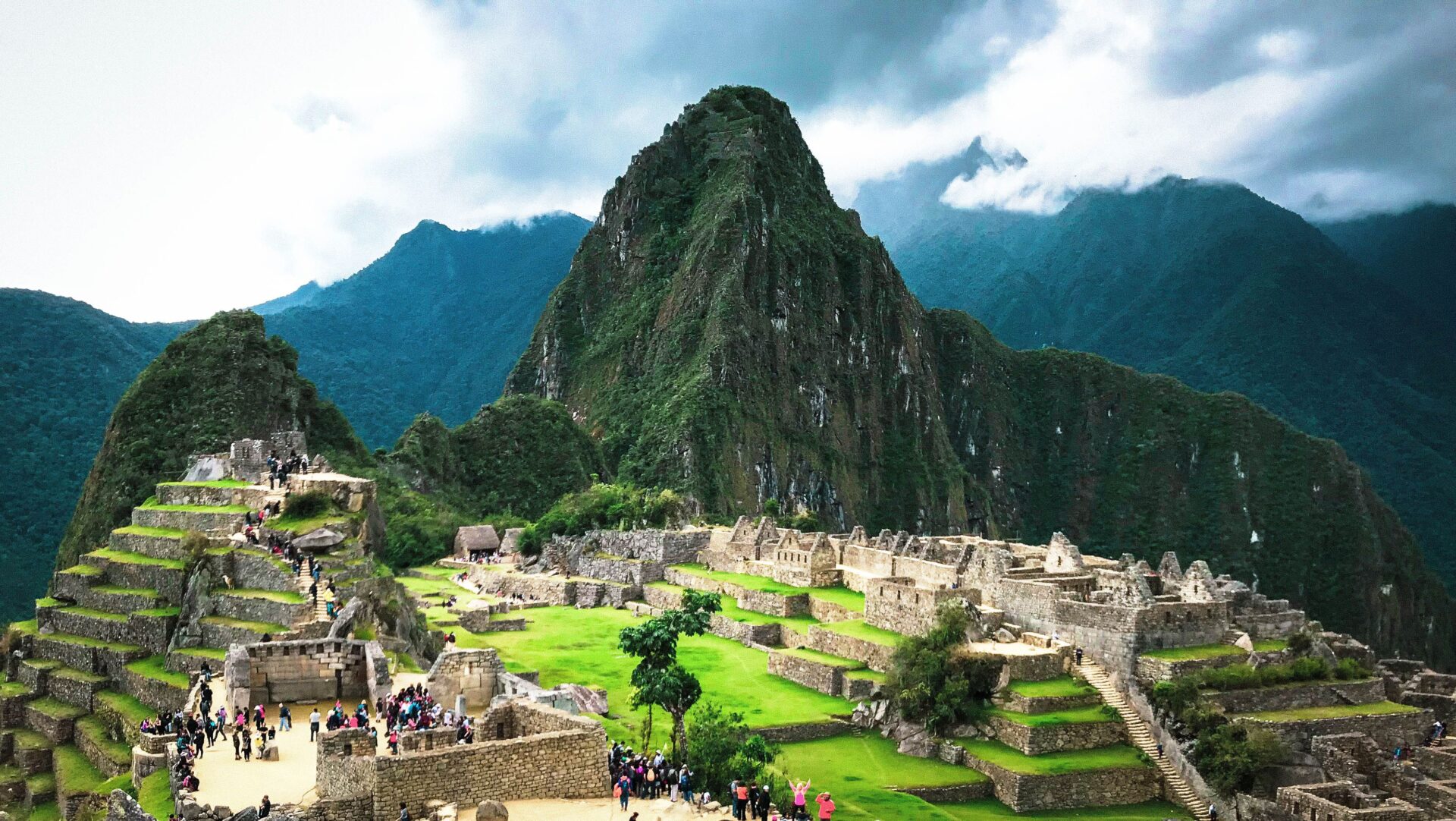
The route that gives Peru in its essential form: one day in Lima for the Larco Museum and the ceviche at the market that costs £2.50 and is better than the ceviche at the restaurant that costs £25, three days in Cusco for the acclimatisation that the altitude demands and the San Blas neighbourhood and the Sacred Valley day trip that shows what the Inca built when they were not building Machu Picchu, and three days on the Classic Inca Trail — the route from km88 that gives the mountain forest, the Inca road, the Sun Gate at dawn, and the specific arrival at Machu Picchu from above rather than from the bus, which is the only arrival that the site deserves.
Reading time: 11 minutes | Last updated: 2026
Peru is the country that gives South America its defining archaeological argument — the Inca Empire at its greatest extent was the largest in the pre-Columbian Americas, and the specific Inca achievement of high-altitude construction (the Machu Picchu at 2,430 metres, the Pisac terraces above the Sacred Valley, the Qorikancha temple in Cusco built with fitted stonework so precise that a knife blade cannot be inserted between the blocks) is visible throughout the country.
Seven days covers the essential circuit: Lima as the Pacific gateway, Cusco as the Inca capital, and the Classic Inca Trail as the approach that respects the destination.
Before You Leave
The altitude: Cusco sits at 3,400 metres. The altitude sickness risk (the headache, the fatigue, the breathlessness — acute mountain sickness) is significant at this elevation and affects approximately 25-30% of visitors on the first day. The mitigation: arrive from Lima (sea level), allow 2 full days in Cusco before the Inca Trail begins, drink coca leaf tea (available everywhere in Cusco, the specific altitude remedy), and consider the Diamox prescription (the acetazolamide medication from your GP that reduces AMS symptoms — start 24 hours before arrival at altitude).
The Inca Trail permit: The Machu Picchu Inca Trail Classic (the 4-day, 3-night trail from km88 to Machu Picchu — the only route that gives the Sun Gate arrival) has a maximum 500 permits per day (including guides and porters) — the permits sell out 6 months ahead in peak season (June-August). Book through a licensed operator at peru.travel or through the registered operators at camino.pe. Cost: approximately USD 600-800 / £472.44-629.92 per person including the guide, the permit, the camping equipment, the meals, and the porters.
The alternative: The Inca Trail alternative for those who cannot get permits or who have mobility limitations — the Salkantay Trek (the 5-day alternative that approaches Machu Picchu from the southwest, the Salkantay Pass at 4,600 metres giving the mountain landscape that the Classic Trail doesn’t reach) or the Lares Trek (the cultural trek through the remote Andean communities).
The Route
Lima (1 night) → Cusco (3 nights, fly Lima-Cusco) → Inca Trail (3 nights, km88 to Machu Picchu) → return bus to Aguas Calientes, train to Cusco, fly Lima → home
The 7 Days
DAY 1 — Lima
The Lima morning:
Fly London-Lima (British Airways or LATAM, 14-15 hours). Most UK flights arrive in Lima in the morning or early afternoon. The Lima airport (the Jorge Chávez International, Callao) is 12km from Miraflores — the Uber from the airport to Miraflores: approximately PEN 35-55 / £6.93-10.89.
The Larco Museum:
The Museo Larco (Bolívar 1515, Pueblo Libre — the private museum of pre-Columbian art, the 45,000-piece collection the largest in the world, the galleries arranged chronologically from the earliest Peruvian cultures through the Inca): the specific collection that changes the understanding of Peru from “Machu Picchu” to the 3,000 years of civilisation that preceded and surrounded the Inca.
The Mochica portrait vessels (the ceramic faces of the Mochica culture, 100-700 CE — the specific individuals visible in the clay, the portraits that are the first realistic portraiture in the Americas), the Inca textile collection (the finest in any museum, the cumpi cloth — the cloth woven from vicuña wool for the Inca ruling class, the fineness exceeding cashmere), and the erotic gallery (the explicit ceramic collection that the museum wisely placed in a separate room — the most discussed collection in any Peruvian museum by volume).
Entry: PEN 45 / £8.91.
The ceviche at the Mercado de Surquillo:
The Mercado de Surquillo (the neighbourhood market of the Surquillo district, adjacent to Miraflores): the ceviche stall at the market’s seafood section (the freshly prepared ceviche — the sole or the corvina cubed and cured in lime juice with the red onion and the ají amarillo and the cilantro, the leche de tigre — the curing liquid, drunk as a shot at the end of the plate): PEN 12-18 / £2.37-3.56.
This is why Lima is the food capital of South America. The ceviche at the market costs £3. The ceviche at the Miraflores restaurants costs £25. The market version is correct.
Fly Lima-Cusco in the evening (LATAM, Avianca — 1.5 hours): arrive Cusco by 9pm. Drink the coca tea. Sleep.
DAYS 2-3 — Cusco: Acclimatisation
Day 2: The Cusco Circuit (slow pace)
The critical instruction: do nothing strenuous on the first day in Cusco. Walk slowly. Drink the tea. Sleep if needed. The altitude sickness that ruins the Inca Trail starts on Day 1 in Cusco when the visitor attempts to see everything immediately.
The Plaza de Armas (the central square — the Cathedral of Cusco, the most important Catholic building in Peru, built over the Inca Kiswarkancha palace using Inca stonework as the foundation — the specific Spanish colonial overlay on the Inca base visible at the plaza level), the Qorikancha (the Temple of the Sun — the most sacred Inca temple, converted to the Santo Domingo Convent by the Spanish, the original Inca stonework visible on three sides of the convent courtyard, the fitted stone that has survived every earthquake since 1650 while the Spanish construction above it collapsed): entry PEN 15 / £2.97.
The San Blas neighbourhood (the ceramics quarter above the Plaza de Armas — the pottery workshops visible through the open doors, the clay dogs and the Andean pots and the specific Cusco craft tradition visible in the production rather than in the finished product in the tourist shop).
Day 3: The Sacred Valley Day Trip
The Sacred Valley (the Urubamba River valley below Cusco — the agricultural heartland of the Inca Empire, the terraces visible on every hillside):
The Pisac Market (the Sunday market in the Pisac village — the Andean community market, the textiles and the ceramics and the vegetables from the Sacred Valley farms, the specific highland Andean market that has been operating on this site for 500 years): most impressive on Sunday mornings.
The Pisac Ruins (the Inca site above the village — the agricultural terraces, the religious compound at the summit, the view over the Sacred Valley visible from the highest terrace): entry included in the Cusco Boleto Turístico (PEN 130 / £25.74).
The Ollantaytambo Fortress (the best-preserved Inca site in Peru — the massive stone terraces above the town, the Sun Temple at the top with the specific unfinished construction visible (the Spanish conquest interrupted the construction in 1536), the Sacred Valley visible from the fortress walls): included in the Boleto Turístico.
DAYS 4-7 — The Classic Inca Trail
The Inca Trail day by day:
Day 4 (km88 to Ayapata, 12km, 5-6 hours): The trail begins at the km88 checkpoint on the Urubamba River. The first day is the easiest of the four — the trail following the river before the first Inca ruins at Llaqtapata (visible across the valley, the terraces overgrown but the layout clear), the ascent to the first camp at Ayapata (3,000 metres). The first night in the tent. The specific Inca Trail smell of the camp: the eucalyptus smoke from the cook tent, the cold altitude air, the Andes stars at 3,000 metres.
Day 5 (Ayapata to Pacaymayo, 12km, 6-8 hours): The Dead Woman’s Pass (Warmiwañusca in Quechua — the highest point of the trail at 4,215 metres, visible ahead from the second hour of the day’s walking, the pass that the guides describe as “like the silhouette of a lying woman”). The ascent is the most physically demanding section of the trail — the 1,200 metres of altitude gain over 6km, the oxygen at this altitude 40% less than at sea level. The pass at the top: the view south into the Cloud Forest and north back toward the Andes, the porters arriving 45 minutes before the last hikers.
The descent to the second camp at Pacaymayo: the knee-testing stone staircase descent, the camp in the valley at 3,600 metres.
Day 6 (Pacaymayo to Wiñay Wayna, 16km, 7-9 hours): The second pass (the Runkurakay Pass at 3,950 metres — easier than the first), the Runkurakay ruins (the Inca waystation, the circular structure), the Sayacmarca ruins (the “inaccessible town” — the Inca site on the exposed promontory, the 360-degree view of the Cloud Forest), and the Phuyupatamarca ruins (“town above the clouds” — the terraced site with the ritual baths, the Cloud Forest visible below in the valley, the evening camp at Wiñay Wayna).
The Wiñay Wayna ruins at sunset (the most impressive Inca site on the trail — the agricultural terraces, the ritual baths with the water still flowing from the Inca channel system after 500 years, the Cloud Forest surrounding the site): the specific Inca Trail moment that the visitors remember when they’ve forgotten the physical effort.
Day 7 (Wiñay Wayna to Machu Picchu and departure): The 3:30am wake-up. The queue at the checkpoint gate (the gate opens at 5:30am, the trail through the forest, the Sun Gate visible ahead in the pre-dawn dark).
The Sun Gate (Inti Punku) at dawn (the Inca gateway, the first view of Machu Picchu — the citadel below, the Huayna Picchu behind it, the valley of the Urubamba 400 metres below, the specific arrival that the bus-from-Aguas-Calientes visitor never has): this moment justifies the three days of walking. The bus visitor arrives at the site from below. The Inca Trail hiker arrives from above, from the direction that the Inca intended.
Return: the Aguas Calientes train to Cusco (the Vistadome, PEN 250-350 / £49.50-69.30), the flight Cusco-Lima, the connection home.
What It Costs
| Category | Budget | Mid-Range |
|---|---|---|
| Return flights (UK-Lima) | £550-850 | £700-1,100 |
| Lima-Cusco flights (return) | £80-160 | £100-200 |
| Lima accommodation (1 night) | £20-50 | £60-120 |
| Cusco accommodation (3 nights) | £30-90 | £90-210 |
| Classic Inca Trail permit + operator | £472-630 | £500-700 |
| Aguas Calientes train return | £50-70 | £70-100 |
| Food and activities | £80-160 | £180-350 |
| Total | £1,282-2,010 | £1,700-2,780 |