
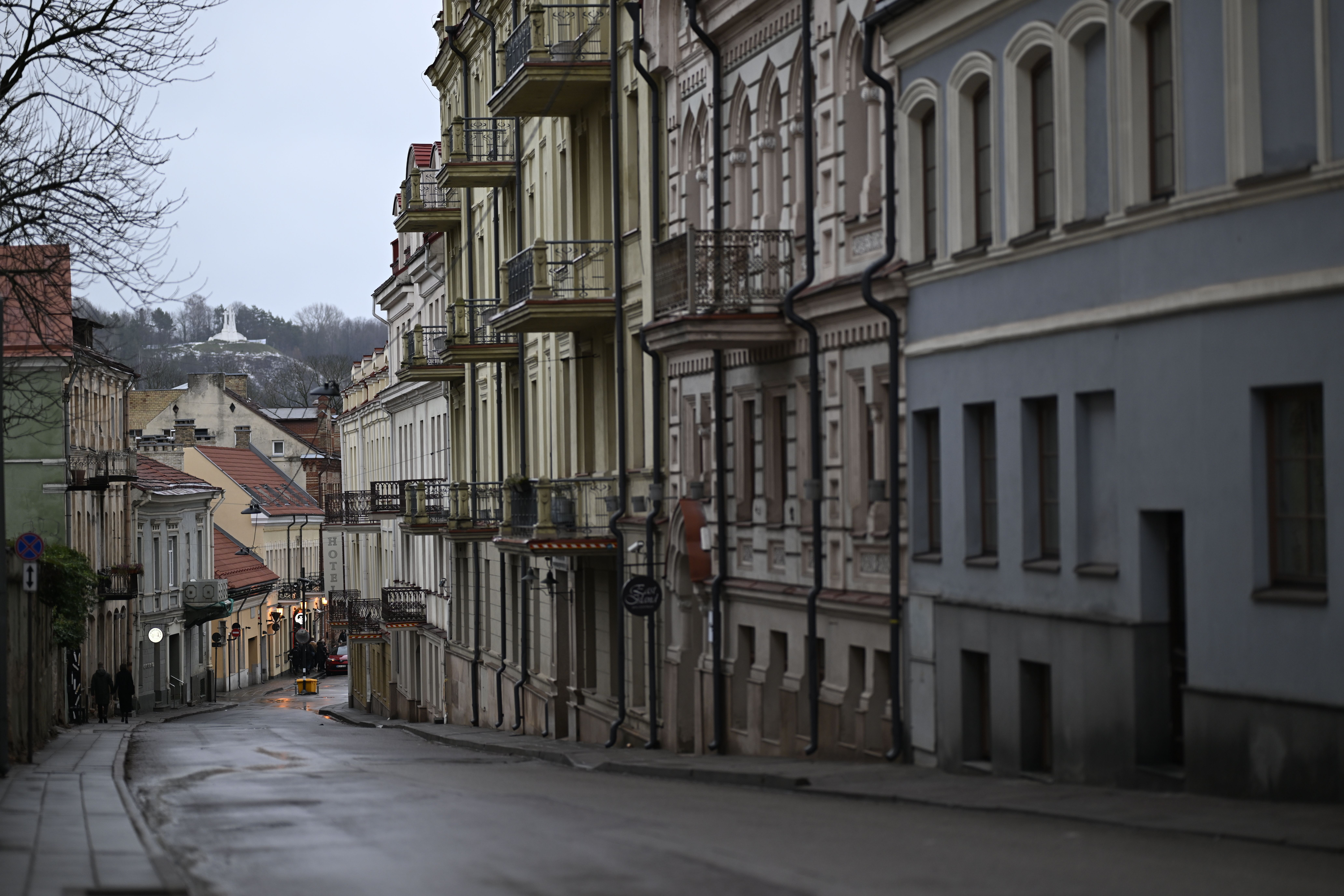
The Hill of Three Crosses at 6am when the three white crosses are in the first light above the Neris River and the entire baroque skyline of the old city is visible below in the morning mist and you are, in all probability, the only person on the hill, the Užupis neighbourhood before 9am when the artists who declared independence from Lithuania in 1998 are walking their dogs and the bohemian republic’s constitution (inscribed in 41 languages on mirrored plaques on the Paupio Street wall) can be read without anyone waiting for your spot, and why Vilnius — the Baroque city that the Lonely Planet named Europe’s hidden gem in 2024 and that still has no queue at any of its churches — rewards the visitor who arrives with low expectations and leaves with specific, genuine astonishment.
Reading time: 9 minutes | Last updated: 2026
Vilnius is the capital of Lithuania — a country of 2.8 million people on the Baltic Sea, the city on the Neris and Vilnia rivers that was the capital of the Grand Duchy of Lithuania (the largest state in 15th-century Europe, stretching from the Baltic to the Black Sea) and that spent the 20th century under Soviet occupation before re-independence in 1990. The specific Vilnius quality: the largest baroque old town in Eastern Europe (the old city covers 359 hectares, the UNESCO-listed historic centre containing 1,500 historic buildings), the complete absence of mass tourism, and the specific Lithuanian-Jewish history (the Jerusalem of Lithuania — the Litvak Jewish cultural capital, the home of the Vilna Gaon, the city that was 40% Jewish before the Holocaust and whose Jewish quarter has almost entirely disappeared leaving only the traces visible to those who know where to look).
The 48 Hours
DAY ONE
6:00am — The Hill of Three Crosses
The Hill of Three Crosses (Kryžių kalnas — the hill above the Neris River north of the old city, the three white concrete crosses visible from across the city): the path from the Kalnai Park below (15 minutes on foot from the old city).
The crosses are the third installation on this site — the original wooden crosses were erected in the 17th century for the Franciscan monks martyred here, destroyed by the Soviets in 1950, rebuilt in concrete in 1989 as one of the first visible acts of Lithuanian resistance before independence. The story of the crosses — the destruction and the rebuilding — is the Lithuanian independence narrative in miniature.
At 6am: the Vilnius old city below in the morning mist, the bell towers of the baroque churches visible above the roofline, the Gediminas Tower on the castle hill to the south. Free access.
8:00am — Breakfast: the Halės Market
The Halės Turgus (the covered market in the Užupis area — the 1906 Art Nouveau market building, the food market serving the Vilnius old city and the Užupis neighbourhoods): at 8am, the market in its working state.
The Lithuanian breakfast: the rūgštynių sriuba (the sorrel soup, hot, the Lithuanian morning soup served with the sour cream and the hard-boiled egg — the most specifically Lithuanian single dish, available at the market café), the varškės apkepas (the baked cottage cheese cake — the sweet breakfast pastry, the Lithuanian equivalent of the cheesecake, served warm from the bakery counter), and the kibinai from the Karaite community stall (the lamb-filled pastries that the Karaite community has been making in Lithuania since the 14th century when Grand Duke Vytautas brought them from the Crimea as his personal bodyguard): €1.50-3 / £1.29-2.59 each.
9:00am — The Užupis Republic
Užupis (the neighbourhood east of the old city, across the Vilnelė River — the bohemian district that declared independence from Lithuania on April 1, 1998 as a performance art project that has since become a functioning artistic community with its own president, its own constitution, its own border guards on April 1 each year):
The Užupis Constitution (the 41 articles inscribed in 41 languages on the mirrored plaques on Paupio Street — the constitution that includes: “Everyone has the right to be happy,” “Everyone has the right to be unhappy,” “Everyone has the right to be unique,” and “A dog has the right to be a dog”): the most specific public art installation in the Baltic States.
The Užupis at 9am: the neighbourhood in its morning version — the artists’ studios visible through the ground floor windows, the cats on the walls (the Vilnius cat culture, less organised than the Istanbul version but equally pervasive), the galleries that don’t open until noon, the café that opens at 8am and serves the neighbourhood rather than the visitor.
11:00am — The Cathedral and the Gediminas Tower
The Vilnius Cathedral (the neoclassical cathedral at the centre of the old city — the cathedral that has been the religious centre of Lithuania since the baptism of the Grand Duchy in 1387, the most significant Christian building in the Baltic States by historical weight): the interior (the chapels, the crypt with the Grand Duchy tombs, the specific Catholic heritage of a country whose neighbours — Estonia and Latvia — are predominantly Lutheran): free.
The Gediminas Tower (the surviving tower of the Upper Castle, the 14th-century limestone fortification on the castle hill visible from across the city — the National Museum exhibition inside the tower, the view from the tower ramparts over the old city and the Neris): entry €5 / £4.31.
1:00pm — Lunch: the Bernardinai Garden and the Literary Quarter
The Bernardinai Garden (the park in the old city, the summer café, the Lithuanian beer garden culture visible on weekday afternoons): the lunch from the old city restaurants:
The Snekutis (the traditional Lithuanian pub in the old city — the cepelinai (the potato dumplings filled with the minced pork, the specific Lithuanian comfort food, the dumplings the size of the airship they’re named for), the Lithuanian dark beer): €15-25 / £12.93-21.55 per person.
3:00pm — The Lithuanian Art Museum
The Lithuanian Art Museum (Didžioji 4 — the national collection in the restored old town building, the collection of Lithuanian art from the 14th century through the contemporary):
The Jewish Lithuanian heritage exhibition (the museum’s most specific and most important collection — the documentary evidence of the Litvak Jewish culture that made Vilnius the intellectual capital of European Jewish life for 300 years, the portraits of the Vilna Gaon, the ritual objects from the destroyed Great Synagogue of Vilnius): the most important single exhibition in Vilnius for understanding the city’s full historical identity.
6:00pm — The Baroque Circuit at Dusk
Vilnius has more baroque churches per square kilometre than any city in Northern Europe — the Jesuit baroque (the Church of St. Casimir, the first baroque church in Lithuania), the late baroque (the Church of St. Anne, the most photographed facade in Vilnius — the 33 different types of Gothic brick visible in the facade, the church that Napoleon reportedly wanted to carry to Paris on the palm of his hand), and the Lithuanian baroque (the Church of St. Peter and Paul, the interior of 2,000 white stucco figures covering the walls and ceiling — the most extraordinary single interior in Vilnius).
Entry to all churches: free (donation).
8:00pm — Dinner: the Laisvės Alėja Area
The restaurants in the old city lanes: the Sweet Root (the tasting menu restaurant using Lithuanian foraged and grown ingredients, the most ambitious cooking in Vilnius, two Michelin stars): €85-120 / £73.28-103.45 per person. Book at sweetroot.lt.
The accessible alternative: the Lokys (Stiklių 8 — the game restaurant, the wild boar stew and the beaver ragout and the traditional Lithuanian hunting cuisine in the 15th-century cellar): €25-40 / £21.55-34.48 per person.
DAY TWO
9:00am — The Paneriai Memorial
The Paneriai Memorial (10km south of Vilnius — the site of the mass murder of 100,000 people (70,000 of them Jewish) by the German Einsatzgruppen and Lithuanian collaborators between 1941 and 1944, the pits visible in the forest where the victims were shot): the most important memorial site in Lithuania and the one that most Vilnius visitors omit because it is outside the city.
The specific Paneriai instruction: the memorial is accessible by the suburban train from Vilnius Central Station (the Paneriai station, 10 minutes, €0.70 / £0.60) and by the 15-minute walk from the station to the memorial. The museum at the site (the exhibition covering the specific events) is open from 10am. Entry: free.
Afternoon: Trakai
Trakai (28km from Vilnius — the medieval capital of the Grand Duchy of Lithuania, the island castle on Lake Galvė, the most visited day-trip destination from Vilnius): the bus from the Vilnius bus station (40 minutes, €2 / £1.72) or the hire car.
The Trakai Island Castle (the 15th-century Gothic castle on the island, the red brick visible from the lakeside, the museum of the Grand Duchy inside): entry €8 / £6.90. The rowing boat to the island from the mainland (€3-5 / £2.59-4.31 per person each way).
The kibinai in Trakai (the Karaite pastry, the best version available in the Karaite community restaurant on the lakeside — the community whose ancestors Grand Duke Vytautas brought to guard the castle): €3-5 / £2.59-4.31 each.
The Essentials
Getting to Vilnius: Ryanair, Wizz Air, airBaltic direct from UK airports (Stansted, Luton, Edinburgh). 2.5 hours. Return: £50-160.
Getting around: Walking for the old city (the entire historic centre is 20 minutes across). The bus for the Paneriai memorial and the Trakai day trip. Bolt (the Baltic taxi app) for the Hill of Three Crosses.
Where to stay: The Hotel Pacai (the 17th-century palace, the most atmospheric hotel in Vilnius: £100-200/night), the Artagonist Hotel (the boutique design hotel: £60-110/night), the Hostel B&B (Skapo 15: private rooms from £20-40/night).
The Closing Moment
I was in the Church of St. Peter and Paul at 4:17pm. The 2,000 white stucco figures covering the walls and ceiling — the biblical scenes, the hunting scenes, the allegorical figures, the specific Lithuanian baroque excess that the Jesuits commissioned and that has been in progress since 1668 and was not completed until 1704.
Two elderly women were praying in the front pews. The figures above them were oblivious. The light from the west windows was catching the stucco at an angle that made the figures appear to move.
Vilnius is the baroque city that nobody told you about. The church of St. Peter and Paul is the reason that sentence is true. Entry is free. Nobody is waiting for your spot.