



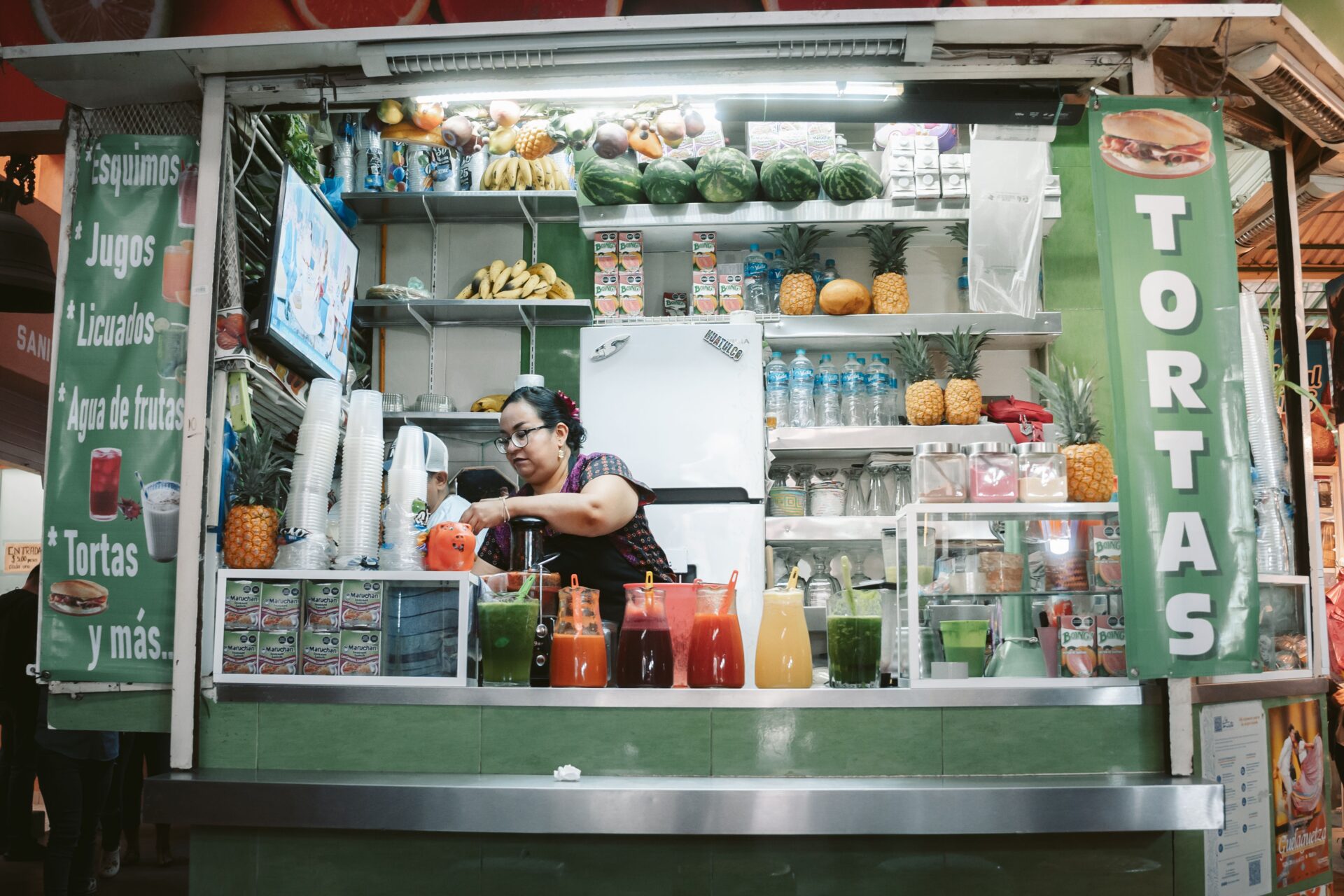
The specific Oaxaca food instruction: the 19 varieties of mole that the state produces (the negro with the chocolate and the mulato chile, the coloradito with the ancho and the chihuacle, the amarillo with the tomatillo and the chilhuacle amarillo) are the deepest culinary tradition in the Americas and the specific reason Oaxaca is UNESCO-listed as an Intangible Cultural Heritage. The Mercado Benito Juárez at 7am when the tlayudas are being assembled on the griddles. The mezcal distillery in the valley where the espadín agave is cooked in the underground pit for 5 days before distillation. And the cooking class that begins at the market and ends at the table and where the teacher’s grandmother’s recipe for the mole negro is not written down anywhere and will not be after this class either.
Reading time: 9 minutes | Last updated: 2026
Oaxaca is the food capital of Mexico — the claim made by the Mexican food press against the competing claims of Mexico City (the street food depth), Puebla (the mole and the chile en nogada), and the Yucatán (the cochinita pibil and the sopa de lima). The Oaxacan case: the state’s indigenous communities (the Zapotec and the Mixtec civilisations, the oldest continuous cultural traditions in Mexico) maintained culinary traditions across 3,000 years that the Spanish conquest did not erase because the communities were sufficiently remote to resist the complete culinary colonialism that flattened cooking in the more accessible parts of Mexico.
The 19 moles are the evidence. The tlayuda is the evidence. The quesillo (the Oaxacan string cheese) pulled from the ball in front of you at the market stall is the evidence.
Seven days in Oaxaca eating deliberately — the market in the morning, the cooking class, the mezcal distillery, the village cook — gives the deepest available immersion in the food tradition of the Americas.
Before You Leave
Getting to Oaxaca: Fly Mexico City-Oaxaca (Aeroméxico, VivaAerobus, Volaris — 1 hour, MXN 600-1,500 / £26.09-65.22). From the UK: Heathrow-Mexico City (BA direct, 11 hours), then the connection. Return from the UK: £450-700 for the full journey.
The altitude: Oaxaca city sits at 1,550 metres — mild altitude effects possible on the first day, resolved within 24 hours for most visitors.
The mezcal: The mezcal produced in the Oaxacan villages (the artisanal mezcal, the single-village production, the agave species visible in the distillery) is the reason Oaxaca is the mezcal capital of Mexico. Bring an extra bag for the bottles.
The 7 Days
DAY 1 — Arrive and Eat Immediately
The Mercado Benito Juárez (7am):
The Benito Juárez Market (the covered market in the city centre, the food market operating from 6am): at 7am, the tlayuda stalls assembling the morning meal.
The tlayuda (the large, crispy tortilla — the Oaxacan equivalent of the pizza base, the corn tortilla dried and toasted to a semi-crisp base, then covered with the black bean paste, the quesillo (the Oaxacan string cheese), the asiento (the unrefined pork fat), the tasajo (the dried beef) or the chorizo or the mushroom or the squash, the cabbage, the salsa, the avocado): assembled at the griddle, eaten immediately. MXN 60-120 / £2.61-5.22.
The first Oaxacan meal. The first understanding that the tlayuda is not a tostada and is not a pizza and is not related to either.
The mezcal at 8pm:
The first mezcal at the Bar Bósforo or the In Situ (the mezcal bars in the Jalatlaco neighbourhood, the curated mezcal list, the bartender who explains the agave species and the village of origin before the pour). MXN 80-200 / £3.48-8.70 per glass.
The mezcal instruction: the mezcal is not drunk as a shot. It is sipped — the glass held at the nose for the aroma (the smoky-sweet compound of the roasted agave, the specific village terroir visible in the smell), then sipped slowly. The mezcal that requires shooting is not the mezcal worth drinking.
DAY 2 — The Mole Class
The Oaxacan cooking class (full day):
The cooking class that begins at the Benito Juárez market at 8am: the identification of the dried chiles (the mulato, the chihuacle negro, the ancho, the pasilla, the chile de agua — the palette that produces the mole negro), the toasting of the chiles (the specific instruction: toast until blistered but not burned, the line between the development of the flavour compound and the destruction of it), the soaking, the blending with the chocolate and the plantain and the spices, and the grinding in the metate (the stone grinding table that has been used in the Oaxacan kitchen for 3,000 years).
The mole negro (the most complex of the 19 Oaxacan moles — the 30+ ingredient preparation, the 4-hour cook from the toasted chile to the finished sauce): the class conclusion, the lunch with the mole negro over the turkey, the tamale, and the enmoladas (the enchiladas in the mole sauce). MXN 1,500-2,500 / £65.22-108.70 per person for the full-day class with the market visit.
The reference cooking schools: the Casa de los Sabores (Elena Reyes, the most cited Oaxacan cooking teacher), the Seasons of My Heart (Susana Trilling, the author and the cooking school director, the 30-year Oaxacan food education institution): book at susanatrilling.com.
DAY 3 — The Mezcal Distillery
The Santiago Matatlán distillery visit:
Santiago Matatlán (the village 48km from Oaxaca — the mezcal capital of the world, the village with the highest concentration of mezcal producers in Mexico, the agave fields visible in every direction from the road): the Zapotec-speaking community that has been distilling mezcal since at least the 16th century.
The palenque visit (the traditional mezcal distillery — the underground pit where the agave hearts are roasted on volcanic rock for 3-7 days, the tahonas (the stone wheel pulled by the horse or the donkey, grinding the roasted agave into the fibrous mash), the fermentation in the wooden vats using only the wild yeast, and the distillation in the clay pot stills): the process takes 15-25 days from agave harvest to bottle.
The specific instruction: the tour that begins at the agave field (the maturation of the espadín agave — 7-10 years from planting to harvest, the specific commitment required by the production) and ends at the still (the mezcal coming off the still at 55-60% alcohol, the nose at the receiving cup, the immediate sweetness of the fresh distillate) is the complete mezcal education.
Tour: MXN 200-500 / £8.70-21.74 per person at the artisanal palenque (contact through the Santiago Matatlán municipal office or through the Mezcal tours from Oaxaca city — MXN 800-1,400 / £34.78-60.87 per person for the guided day trip).
The mezcal tasting at the palenque:
The specific mezcal tasting at the distillery: the espadín (the dominant agave species, the baseline), the tobalá (the wild agave that cannot be cultivated, harvested from the hillsides after 15-20 years of wild growth, the most specific terroir-driven mezcal available), and the ensemble (the blend of multiple agave species distilled together):
The price at the distillery versus the export market: the espadín mezcal that costs £40-60 per bottle in the UK costs MXN 200-400 / £8.70-17.39 at the distillery. Bring an empty bag.
DAY 4 — Monte Albán and the Village Cook
The morning: Monte Albán
The Monte Albán archaeological site (9km from Oaxaca — the Zapotec city that was the capital of a state controlling most of what is now Oaxaca from 500 BCE to 700 CE, the flat-topped mountain summit with the ball court, the observatory, the temple platforms, the tombs): the most important pre-Columbian site in southern Mexico. Entry MXN 90 / £3.91. Open from 8am.
At 8am: the site in the first hour before the tour buses from Oaxaca city arrive at 9:30am. The Monte Albán at 8am with the Oaxacan valley visible in the morning haze in every direction from the platform above.
The afternoon: Dinner with a Village Cook
The village cooking experience (the local tourism initiatives in the villages surrounding Oaxaca that give access to the home cook and the family kitchen):
The Teotitlán del Valle (the weaving village 30km from Oaxaca, the Zapotec-speaking community that produces the hand-woven wool rugs from the natural dyes — the indigo, the cochineal, the marigold — and that offers the cooking experience in the family kitchen): the tostadas with the black bean, the local cheese, and the chapulines (the grasshoppers, toasted with the lime and the chile — the indigenous Oaxacan protein source, the most polarising of the Oaxacan foods and the most specifically pre-Columbian in origin). Cooking experience: MXN 600-1,200 / £26.09-52.17 per person through the village tourism cooperative.
DAYS 5-7 — The Market Circuit and the Specific Dishes
Day 5: The Mercado de Abastos
The Abastos Market (the wholesale market on the western edge of the city — the largest market in Oaxaca, the market that supplies the city’s restaurants and the surrounding villages, operating daily from 5am):
The specific Abastos morning: the chocolate grinding (the Oaxacan chocolate — the tablets ground to order from the cacao and the cinnamon and the sugar at the molinos, the grinding mills inside the market — the hot chocolate dissolved in the milk for the morning cup): MXN 150-250 / £6.52-10.87 per tablet. The memelas (the oval masa cakes on the comal, the black bean inside, the red salsa and the Oaxacan cheese on top): MXN 25-40 / £1.09-1.74.
Day 6: The Etla Market (Wednesday)
The Etla market (the Wednesday outdoor market in the town of Etla, 18km north of Oaxaca — the market that the Oaxacan food press treats as the most authentic of the valley markets, the fresh produce from the Etla valley farms, the specific cheeses of the Etla region):
The Etla quesillo (the fresh string cheese, pulled from the ball in front of the buyer at the cheese stall — the cheese is pulled immediately before sale, the warm cheese stretched into the strings): MXN 80-150 / £3.48-6.52 per ball. The warm quesillo from the Etla market is the finest single food item available in Oaxaca.
Day 7: The Final Meal — the Restaurant Criollo
The Criollo (Calzada de la República 102 — the restaurant of the Spanish chef Jorge Vallejo in collaboration with the Oaxacan food tradition, the menu built from the Oaxacan produce and the Zapotec culinary vocabulary in the finest dining context available in the state): MXN 1,500-2,500 / £65.22-108.70 per person for the tasting menu. Book at criollo.mx.
The alternative final meal: the Itanoni (the tortilla restaurant and the corn archive — the restaurant that serves only Oaxacan heirloom corn preparations, the tortillas from the 40 native corn varieties, the tlayuda from the corn that is specific to a single village within 100km of Oaxaca): MXN 100-200 / £4.35-8.70 per dish. The most politically and gastronomically significant restaurant in Oaxaca.
What to Buy
The mezcal: The espadín from the artisanal distillery at Santiago Matatlán. The tobalá if budget allows. The ensemble for the most complex flavour.
The chocolate: The Oaxacan chocolate tablet from the Abastos molino (the grinding mill). MXN 150-250 / £6.52-10.87 per tablet. Take home 4.
The dried chiles: The chihuacle negro and the chihuacle amarillo (the chiles specific to Oaxaca, not reliably available in the UK). MXN 80-200 / £3.48-8.70 per 250g.
The quesillo: Fresh quesillo is not exportable (the fresh cheese spoils within a week). The aged version (the añejo — the hard, dry Oaxacan cheese) travels. Available vacuum-packed at the market: MXN 100-200 / £4.35-8.70 per 200g.